BookBrief
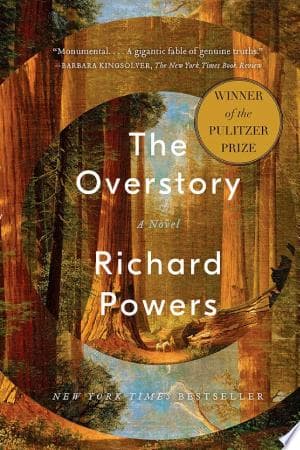
The Overstory: A Novel cover
Archivist's Choice

The Overstory: A Novel

Richard Powers (2018)

Genre

Fiction

Reading Time

12 Minutes

Key Themes

See below

Track Your Reading

Sign in to track this book

Nine lives, bound by the silent wisdom of trees, unite in a desperate fight against humanity's destruction of nature.

Synopsis

"The Overstory" weaves together the seemingly disparate lives of nine Americans, each touched by trees in profound and unique ways, from a woman inheriting a photographic archive of a century-old chestnut to a video game developer with a near-death experience in a redwood. Their individual narratives, initially isolated, gradually converge as they awaken to the intelligence and interconnectedness of the natural world, particularly forests. This realization propels them toward environmental activism, leading some to radical acts of resistance against deforestation and ecological destruction. The novel explores the deep, often overlooked, relationship between humanity and nature, highlighting the urgent need to understand and protect the planet's arboreal life. The story unfolds across different timelines and locations, from the antebellum era to the present-day Pacific Northwest, illustrating the long history of human interaction with trees and the escalating environmental crisis. As the characters grapple with personal tragedies, scientific discoveries, and moral dilemmas, they become increasingly intertwined with a larger, non-human world, ultimately transforming their understanding of life, death, and interconnectedness.
Difficulty
Medium
Pacing
Moderate
Mood
Thought-provoking, awe-inspiring, melancholic, hopeful, urgent

Plot Summary

Roots and Branches

The novel introduces several individuals who seem unconnected, yet each has a strong, often inherited, bond with trees. We meet Patricia Westerford, a botanist criticized for her theories on tree communication; Nick Hoel, whose family photographs a specific chestnut tree for generations; Mimi Ma, who finds comfort in a banyan after a family tragedy; Adam Appich, a psychology student interested in human behavior; and Olivia Vandergriff, whose near-death experience gives her a heightened perception of nature. Douglas Pavlicek, a Vietnam veteran, plants a sapling for every life lost, while Neelay Mehta, a software engineer, creates a virtual world based on trees. Ray Brink and Dorothy Cazaly's love story involves a dying mulberry tree. These short stories show how humans interact with and see the arboreal world, setting the stage for their eventual meeting.

Seeds of Activism

Olivia Vandergriff's life changes dramatically after a near-fatal electrocution. This experience leaves her with an altered state of consciousness, where she perceives a deep, interconnected intelligence in nature, especially trees. She feels called to protect them. Compelled, she leaves college and meets Douglas Pavlicek, who has dedicated his life to planting trees. Together, they begin to plan a more active resistance against deforestation. Olivia's vision and Douglas's experience prepare them for their future in environmental activism, moving from individual appreciation to collective action.

The Forest Summons

The characters begin to come together in the redwood forests of the Pacific Northwest, drawn by a shared, though often subconscious, need to protect them. Olivia and Douglas become key figures in a radical environmental group called 'Biocentric Earth.' Adam Appich, initially studying the group's psychology, becomes more involved in their cause. Mimi Ma, seeking purpose after her family's struggles, also joins. Nick Hoel, whose family's chestnut tree has been lost, feels a deep connection to the ancient forests and gets involved. This convergence shows how their individual connections to trees become a collective, passionate, and sometimes desperate, effort to save these ecosystems from logging.

Tree Sits and Sabotage

The activism of 'Biocentric Earth' grows from peaceful protests to more radical actions, including tree-sitting and property destruction. Olivia, Nick, Adam, and Mimi become deeply involved, living in the canopy of ancient redwoods to prevent their cutting. The group faces increasing pressure from logging companies and law enforcement. Their actions, though controversial, draw attention to the forests' plight. The characters struggle with the morality of their choices, the risks they take, and the effectiveness of their methods. Their bond strengthens as they face hardship and danger together, united by their commitment to the trees.

The Fall of the Redwood

The long tree-sit ends tragically. After months in the canopy, a violent storm hits, causing the tree where Olivia and Nick are perched to collapse. Olivia falls to her death, a tragedy that shatters the group and deeply affects Nick. This event is a turning point, showing the extreme dangers of their activism and the high cost of their commitment. Olivia's loss fuels a renewed, though more desperate, resolve in the remaining members, but also forces them to confront the limits of their direct action and the personal sacrifices they are making to save the forests.

Aftermath and Dispersal

After Olivia's death and increased scrutiny from authorities, 'Biocentric Earth' breaks up. Nick Hoel, devastated and radicalized, becomes involved in more extreme acts of sabotage, including burning logging equipment. Adam Appich, struggling with the moral complexities and personal toll, eventually cooperates with the FBI, betraying his former comrades. Mimi Ma tries to find a new path, reconciling her past with her future. Douglas Pavlicek continues his quieter, personal mission of tree planting, disillusioned with direct action but still committed to the cause. The characters navigate the legal and emotional aftermath of their activism, each taking a different path, marked by their shared experiences and losses.

Patricia's Vindication

Meanwhile, Patricia Westerford, the botanist who was criticized for her theories on tree communication, is vindicated. Her research, initially dismissed as unscientific, gains widespread acceptance as new technologies and studies confirm her findings about the complex, interconnected 'wood wide web.' Her book, 'The Secret Forest,' becomes a bestseller, changing the scientific understanding of trees and inspiring a new generation of researchers and environmentalists. Patricia's story runs parallel to the activists', showing a different, equally powerful, form of advocacy and change through scientific discovery and intellectual perseverance.

Neelay's Digital Forest

Neelay Mehta, the brilliant software engineer, dedicates his life to creating a vast, virtual reality world called 'Mastery,' which meticulously recreates and simulates entire ecosystems, focusing on trees. Initially driven by technological curiosity, his project becomes an attempt to preserve and understand the arboreal world, especially as real forests face destruction. His virtual forest becomes a sanctuary, a place where people can experience the beauty and complexity of nature, even if the physical world continues to suffer. Neelay's work is a different kind of preservation, a digital legacy for a disappearing natural world, and a tool for creating empathy and understanding.

Adam's Redemption

Adam Appich, haunted by his betrayal of 'Biocentric Earth' and his role in the FBI investigation, struggles with immense guilt and a crisis of identity. He tries to reconcile his past actions with his present self, struggling to find meaning and redemption. His academic pursuits lead him back to studying human behavior, but with a deeper, more personal understanding of the complexities of morality and loyalty. Adam's journey reflects the psychological toll of activism and the difficulty of finding one's place in a world where environmental destruction continues, and personal choices have far-reaching consequences. He seeks to understand the motivations behind his actions and those of his former comrades.

Ray and Dorothy's Legacy

Ray Brink and Dorothy Cazaly's story, woven throughout the novel, is a poignant counterpoint to the more dramatic narratives of activism. Their lives are rooted in their home and the mulberry tree in their yard. As Ray succumbs to a stroke and Dorothy struggles with his decline, their shared memories and enduring love are linked to the natural world around them. Dorothy, after Ray's death, continues to find comfort and connection in the tree, seeing its life as a reflection of their own. Their story emphasizes the quiet, personal ways humans connect with nature, and the deep, lasting impact these connections have on our lives and relationships.

The Trial and the Message

Nick Hoel is eventually arrested and put on trial for his acts of eco-sabotage. His trial becomes a platform for him to express the urgent need for environmental protection and the value of the ancient forests. While facing severe legal consequences, Nick's conviction and his eloquent defense of the trees resonate with some, even as they are condemned by others. His story highlights the conflict between legal justice and ecological justice, and the lengths to which individuals will go when they feel the natural world is under existential threat. It forces society to confront the motivations behind radical environmentalism.

A New Kind of Forest

The novel ends with a varied outlook on the future of trees and humanity's relationship with them. Patricia Westerford's scientific discoveries continue to inspire, Neelay Mehta's 'Mastery' world offers a digital sanctuary, and the scattered activists, though scarred, carry their commitment forward in different forms. Douglas continues his quiet work, Mimi finds a new path, and Adam seeks to atone. The main message is one of interconnectedness: between humans, between trees, and between generations. Despite the ongoing destruction, there is hope in the growing awareness and the diverse ways individuals are trying to understand, protect, and reconnect with the vast, slow, and intelligent world of the overstory.

Principal Figures

Patricia Westerford

The Supporting

From an outcast scientist, Patricia is ultimately vindicated as her theories are proven true, revolutionizing our understanding of trees.

Nick Hoel

The Protagonist

Nick transforms from an artist with a historical connection to trees into a radical environmental activist, suffering profound loss and facing legal consequences for his actions.

Olivia Vandergriff

The Protagonist

Olivia's near-death experience grants her a profound connection to trees, leading her to become a radical activist who ultimately sacrifices her life for the cause.

Adam Appich

The Protagonist

Adam moves from an academic observer of human behavior to an active participant in environmental activism, only to later betray his comrades, leading to a long struggle with guilt and redemption.

Mimi Ma

The Supporting

Mimi, after personal tragedy, finds purpose and a new community in environmental activism, evolving into a steadfast defender of trees.

Douglas Pavlicek

The Supporting

Douglas transforms his wartime trauma into a lifelong mission of planting trees, eventually becoming a pragmatic supporter of radical environmental activism.

Neelay Mehta

The Supporting

Neelay, after a personal epiphany, dedicates his life to creating a digital sanctuary for trees, offering an alternative form of preservation.

Ray Brink

The Supporting

Ray's life, marked by love and a deep connection to his home tree, ends with his passing, leaving a legacy of shared memories intertwined with nature.

Dorothy Cazaly

The Supporting

Dorothy navigates love, loss, and aging, finding enduring solace and connection to her shared past through the mulberry tree.

Themes & Insights

Interconnectedness of Life

The novel explores interconnectedness, showing how all life, especially human and arboreal, is deeply intertwined. Patricia Westerford's scientific discoveries reveal the 'wood wide web,' a network of communication and resource sharing among trees, mirroring the complex relationships among the human characters. The novel's structure, with its initially separate storylines converging, reinforces this idea. The characters' individual fates are linked to the health of the forests, emphasizing that humans are not separate from nature but a part of a larger, living system. This theme calls for recognizing our shared existence and mutual reliance.

The world is a web, and you can't touch one strand without sending shivers through all the others.

Narrator

Environmental Activism and Resistance

A central theme is the urgent need for environmental activism and the varied forms resistance can take. The novel depicts the escalation from quiet, individual care (like Douglas planting trees) to radical, direct action (tree-sitting, sabotage by 'Biocentric Earth'). It explores the moral ambiguities, personal sacrifices, and legal consequences faced by those who fight to protect nature. The novel questions the effectiveness of different approaches, from scientific advocacy to civil disobedience and even violence. This theme highlights the desperation and conviction that drive individuals to extreme measures when they perceive an existential threat to the natural world, prompting readers to consider their own roles in environmental stewardship.

This is not a battle to win. This is a battle to keep on fighting.

Olivia Vandergriff

Human Perception vs. Nature's Reality

The novel often contrasts humanity's limited view of nature with the vast, ancient, and intelligent reality of the arboreal world. Early chapters show characters initially unaware of the deeper life of trees, seeing them as resources or backdrops. Patricia Westerford's scientific work challenges this, revealing complex communication and community among trees. Olivia's post-electrocution experience gives her a heightened, almost spiritual, perception. The story argues that humans must learn to 'see' and 'hear' nature on its own terms, moving beyond a utilitarian view to understand its inherent value and intricate systems. This shift in perception is presented as essential for humanity's survival and for forming a more respectful relationship with the planet.

There are things you can see only when you slow to the speed of the world.

Narrator

The Power of Story and Legacy

The novel emphasizes the lasting power of stories, both personal and collective, and the legacies they create. From Nick Hoel's family photographs documenting a chestnut tree across generations to Patricia Westerford's influential book, 'The Secret Forest,' narratives shape how humans understand and interact with the natural world. The stories of the activists, their triumphs and tragedies, become part of a larger environmental narrative that inspires and informs future generations. Even Ray and Dorothy's quiet love story, intertwined with their mulberry tree, creates a personal legacy. The novel itself, through its structure and interwoven tales, supports this theme, suggesting that stories are vital tools for memory, connection, and causing change.

The best arguments in the world won't change a person's mind. The only thing that can do that is a good story.

Patricia Westerford

Time and Deep Time

The concept of time, especially 'deep time' compared to human lifespans, is a pervasive theme. Trees, with their centuries-long existence, embody a scale of time that challenges human impatience and short-term thinking. The novel places the rapid pace of human destruction against the slow, deliberate processes of forest growth and evolution. Characters like Nick Hoel inherit generations of tree-related history, while the ancient redwoods stand as living monuments to millennia. This theme encourages readers to consider the long-term consequences of their actions and to adopt a more patient, respectful perspective towards the natural world, recognizing that ecological processes unfold over timescales far beyond individual human lives.

There are no individuals in a forest, only the forest itself. And the forest is not a collection of trees, but a single, vast, slow, interconnected organism.

Patricia Westerford

Plot Devices & Literary Techniques

Interweaving Narratives

Connecting disparate lives through a central theme

The novel employs a complex, non-linear narrative structure that introduces several seemingly unrelated characters in distinct vignettes. These individual stories, each exploring a unique relationship with trees, gradually converge as the characters are drawn into a collective struggle to protect the forests. This device mirrors the interconnectedness of the 'wood wide web' described by Patricia Westerford, emphasizing how individual lives, like tree roots, ultimately meet and influence one another. It allows the author to explore diverse perspectives on environmentalism and human nature, building a rich, multifaceted tapestry of themes and experiences.

Foreshadowing and Prophecy

Hints of future events and the 'call' of nature

Foreshadowing is used subtly throughout the novel, particularly in the early lives of the characters, hinting at their future roles in environmental activism. Olivia Vandergriff's near-death experience and subsequent 'hearing' of the trees acts as a form of prophecy, guiding her and others towards their destiny. The recurring imagery of trees as wise, ancient beings also foreshadows the eventual scientific understanding of their intelligence. This device creates a sense of inevitability and destiny, suggesting that the characters are not merely making choices, but responding to a deeper, ancient call from the natural world itself, pulling them into the unfolding ecological crisis.

Symbolism of Trees

Trees as characters, metaphors, and spiritual anchors

Trees are not merely a backdrop but central symbolic characters in the novel. They represent life, interconnectedness, memory, resilience, and deep time. The American chestnut symbolizes loss and the fragility of ecosystems, while the ancient redwoods embody wisdom, endurance, and the sacred. The mulberry tree in Ray and Dorothy's yard symbolizes enduring love and the quiet presence of nature in human lives. Each character's specific tree connection serves as a metaphor for their personal journey and their relationship with the wider natural world, making the trees powerful emotional and thematic anchors throughout the narrative.

Parallel Plotlines

Scientific discovery alongside direct action

The novel uses parallel plotlines to explore different facets of the human-nature relationship. While one major plotline follows the radical environmental activists engaged in direct action, another tracks Patricia Westerford's scientific quest to understand tree communication. A third follows Neelay Mehta's technological endeavor to create a virtual forest. These parallel stories, though seemingly disparate, ultimately reinforce the central themes of interconnectedness and the multifaceted ways humans engage with and impact the natural world. They demonstrate that change can come through various means: scientific revelation, direct resistance, or technological innovation.

Critical analysis

Notable Quotes

Quiz

Test Your Knowledge

Ready to see how well you understood this book? Take our interactive quiz with 10 questions.

10
Questions
~5
Minutes
?
Best Score

Key Questions (FAQ)

"The Overstory" tells the interconnected stories of a diverse group of people whose lives are profoundly shaped by trees. It explores humanity's relationship with the natural world and the urgent need for environmental activism and resistance.

About the author

Richard Powers

Richard Powers is an American novelist whose works explore the effects of modern science and technology. His novel The Echo Maker won the 2006 National Book Award for Fiction. He has also won many other awards over the course of his career, including a MacArthur Fellowship. As of 2023, Powers has published thirteen novels and has taught at the University of Illinois and Stanford University. He won the 2019 Pulitzer Prize for Fiction for The Overstory.