“The night is for hunting. We are the prey. We are the hunted.”
— Ellie's reflection on their new reality in the wilderness.

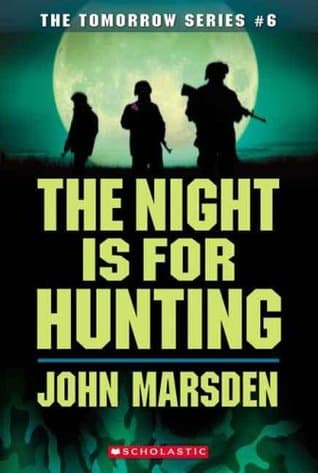
John Marsden (1999)
Genre
Science Fiction / Young Adult
Reading Time
243 min
Key Themes
See below
Sign in to track this book
Ellie and her friends' hidden refuge fills with war orphans, forcing them to face both the enemy outside and challenges within their sanctuary when visitors arrive.
After the dramatic events at their last hideout, Ellie, Homer, Fi, Lee, and Kevin move to a more isolated and defensible spot. They choose a deep, hidden valley in the Wirrawee wilderness, believing it is too rugged for the invading forces to find easily. Their first days are spent securing their new sanctuary, setting up routines for scavenging, and trying to create a sense of normal life during the war. They are always alert, knowing the enemy could be anywhere. This new base is meant to be a long-term solution, a place to hide and plan their next moves against the invaders, offering a temporary break from the constant threat after their recent losses and close calls.
During a dangerous mission for supplies and information, Ellie and Homer go deeper into the wilderness. They find a disturbing sight: a group of children, from toddlers to pre-teens, living in a primitive, wild state. These children are clearly war orphans, abandoned and left to survive alone for a long time. They are messy, hungry, and act aggressively, having lost much of their social skills. Ellie and Homer, despite their shock and the huge challenges, feel they must help these lost children. They decide to bring the children back to their hidden valley, a choice that will greatly affect their sanctuary and test their leadership.
Bringing the ten war orphans back to the valley is an immediate and huge challenge. The children, named by Ellie based on their looks or a feature – like Little Johnny, Quiet Kid, and Freckles – are hard to manage. They are uncooperative, distrustful, and prone to outbursts, reflecting their trauma. Their lack of discipline, hygiene, and basic social skills strains Ellie's group's limited resources and patience. Fi, Lee, and Kevin struggle with the new situation, arguing over food, safety, and the noise and chaos the children bring. The sanctuary, once a quiet haven, becomes a loud and often frustrating place, making the original five rethink their roles and duties.
Ellie and Homer, seeing the urgency, lead the efforts to integrate the orphans. They quickly realize that old discipline methods do not work. Instead, they try to set routines, teach basic hygiene, and provide a sense of security and structure the children badly need. Ellie, using her natural empathy and practical skills, tries to understand their individual needs and fears. Homer, with his more assertive nature, tries to bring order and safety. They face constant problems, but their resolve to help these vulnerable children grows stronger. This new role makes them mature quickly, shifting their focus from just surviving to actively caring for and protecting a new, dependent community within their group.
During a scouting trip to a nearby abandoned farm, Ellie and Homer find unsettling signs of recent human presence that do not belong to the invaders. They find fresh tracks, discarded food wrappers, and other small clues suggesting someone else has been in the area. This discovery immediately raises their alert level; their sanctuary might not be as secret as they thought. The possibility of other survivors is both hopeful and scary – hopeful for allies, but scary that these new people could be dangerous, or worse, lead the enemy directly to their hidden valley. The incident adds a new layer of paranoia and urgency to their already uncertain lives, making them increase their vigilance and re-evaluate their security.
The group's fears come true when a small, unfamiliar plane is seen flying directly over their hidden valley. The sight of the aircraft terrifies everyone, especially the children who are clearly upset. This aerial sighting confirms their sanctuary has been found, or at least its general location is known. The plane's presence indicates a serious search effort, more than they expected. The group immediately goes into hiding, concealing themselves and the children, and putting out all fires to avoid detection. The incident shatters their sense of security, making them face the immediate threat of a direct confrontation. They realize they must act fast to understand who these visitors are and what they want.
Driven to protect their group, Ellie and Homer decide to investigate the source of the recent intrusions. They carefully track the movements of the mysterious visitors, using their guerrilla skills to stay hidden. Their scouting leads them to a secluded camp, where they observe a small group of people who appear to be a mix of military personnel and civilians, possibly a special forces or intelligence unit. The situation is unclear; it is unknown if these individuals are allies, a new enemy, or part of the existing invasion force. The tension is clear as Ellie and Homer gather information, knowing that one mistake could expose their entire group and the children's safety.
After careful observation, Ellie and Homer decide to contact the mysterious group. To their surprise and relief, the individuals are Australian special forces, part of a secret operation to gather information and support any remaining resistance. Led by a practical and experienced officer named Major Harvey, this unit offers hope. They confirm that pockets of resistance still exist and that the war, though terrible, is not completely lost. This meeting is a turning point, giving the group important information, a connection to the larger conflict, and the chance for coordinated action. The special forces are, in turn, impressed by the teenagers' resilience and resourcefulness.
Major Harvey, recognizing the teenagers' knowledge of the local area and their proven guerrilla tactics, asks Ellie's group to join a key scouting mission. Their task is to observe an enemy base, gathering information on troop movements, defenses, and any weak points. This mission is very dangerous, requiring them to operate deep in enemy territory. The stakes are higher than ever, as the information they gather could be vital for future resistance operations. The special forces give them better equipment and communication devices, but the mission relies on Ellie, Homer, and their friends' stealth, courage, and understanding of the local environment. This partnership means a shift from just surviving to actively fighting in the war.
The scouting mission is difficult. Ellie's group, working with the special forces, navigates tough terrain and avoids enemy patrols. They successfully gather important information on the enemy base, but the mission has a high cost. During an intense fight or a close call with an enemy patrol, one of Ellie's core group, Kevin, is badly wounded. Despite their efforts to save him and the special forces' medical help, Kevin dies from his injuries. His death is a deep blow, reminding everyone of the brutal reality of war and the constant threat of loss. The group is left sad and shaken, questioning the cost of their resistance and the ongoing sacrifices they must make in their fight for freedom.
Devastated by Kevin's death, Ellie, Homer, Fi, and Lee return to their hidden valley. Despite their grief, they carry the vital information gathered during the mission, which they give to Major Harvey. The information proves very useful for the larger resistance effort. The special forces, seeing the group's courage and sacrifice, offer them more support and a clearer understanding of the broader war strategy. While Kevin's loss leaves a deep wound, it also strengthens their resolve. They understand that their fight is part of something bigger, and their actions have real consequences. They return to the orphans, now with heavier hearts but also a renewed sense of purpose, knowing they are fighting not just for themselves, but for their country's future and the innocent children they protect.
With the information delivered and Kevin mourned, the remaining members of Ellie's group – Ellie, Homer, Fi, and Lee – begin to prepare for what is next. They continue to care for the orphans, who, despite their ongoing challenges, have shown some improvement under their care. The alliance with the special forces offers a strategic advantage, providing chances for more coordinated attacks and resistance efforts. However, the group remains committed to protecting the children, knowing their safety is most important. They train, strategize, and adapt, knowing the war is far from over and more sacrifices may be needed. The future is uncertain, but they face it with determination, bound by their shared experiences and their commitment to each other and the children.
The Protagonist
Ellie further develops her leadership skills, expanding her capacity for empathy and responsibility by taking on the care of the orphans, and forming an alliance with the special forces.
The Co-Protagonist/Supporting
Homer grows in his leadership capabilities, taking on more responsibility in caring for the orphans and strategizing alongside Ellie.
The Supporting
Fi further develops her resilience and empathy, finding strength in caring for the orphans despite her personal struggles with the war's horrors.
The Supporting
Lee grapples with the emotional toll of war and the challenges of caring for the orphans, finding strength in his relationship with Ellie and his contributions to the group.
The Supporting
Kevin's arc culminates in his ultimate sacrifice, solidifying his role as a loyal and brave member of the group.
The Supporting
Major Harvey acts as a catalyst for the group's involvement in larger military operations, representing a shift from isolated survival to strategic resistance.
The Supporting
The orphans gradually begin to heal and regain some of their socialization under the care of Ellie's group, symbolizing the resilience of the human spirit amidst trauma.
This theme is strongly shown through the war orphans. Their wild state, distrust, and aggressive behavior clearly show the terrible psychological impact of long conflict and abandonment on children. Ellie and her friends, though tough from their own experiences, must face a new level of trauma. The orphans' struggle to rejoin society, learning basic hygiene and trust, reflects the larger group's own fight to stay human during the brutality. Kevin's death further highlights the permanent loss war brings, reminding the survivors that no one is truly safe.
“We were fighting a war that was taking away not just our homes and our freedom, but our very childhoods, and now we were seeing it steal the childhoods of others, even more completely.”
Ellie and Homer's leadership grows greatly with the orphans' arrival. They are no longer just responsible for their small group's survival, but for the well-being, discipline, and re-socialization of ten traumatized children. This makes them mature quickly, making tough decisions about resources, safety, and moral duties. Their alliance with Major Harvey also adds a new layer of responsibility, as they become key to a larger military effort, requiring them to make strategic choices that affect more than just themselves. The weight of these responsibilities drives the story.
“It wasn't just about us anymore. It was about them, too. Every decision we made, every risk we took, had their little lives hanging in the balance.”
The book explores what it means to be human without societal norms. The orphans, living wildly, show humanity at its most basic and animalistic, driven only by survival. Ellie's group struggles to restore humanity and trust in them. On the other hand, the moral choices made by Ellie and her friends – taking in the orphans, mourning Kevin, fighting for a larger cause – highlight their commitment to compassion and community, even in great hardship. The story asks how much one can endure before losing their core self, and how acts of kindness can preserve it.
“Sometimes I wondered if we were becoming as wild as the country we lived in, as wild as the children we were trying to tame.”
The story moves between deep despair and glimpses of hope. The discovery of the orphans, their traumatized state, and Kevin's death are strong reminders of the war's cruelty and the high cost of their fight. These moments could easily lead to total despair. However, the unexpected alliance with Major Harvey and the Australian special forces brings a needed sense of hope, suggesting they are not alone and that a larger resistance is active. This balance of hope and despair strengthens their determination, keeping them from giving up while forcing them to face the harsh realities of their situation.
“We were a tiny spark in a vast darkness, but sometimes, a tiny spark was all it took to start a fire.”
A seemingly impenetrable wilderness valley that becomes a temporary refuge.
The Wirrawee wilderness valley serves as the group's primary hidden sanctuary. Initially, it functions as a symbol of hope and security, a place where they can regroup and escape the immediate dangers of the war. However, its discovery by the mysterious plane and later the special forces transforms it into a more ambiguous space, highlighting the illusion of absolute safety in wartime. The sanctuary's role expands when it becomes home to the orphans, forcing the group to reconsider its purpose and how to protect a larger, more vulnerable community within its confines.
A group of traumatized war orphans who challenge the protagonists' morality and resources.
The war orphans are a crucial plot device. They act as a catalyst for significant character development, particularly for Ellie and Homer, forcing them to take on greater responsibilities and confront the profound human cost of the war. Their initial feral state underscores the theme of lost innocence and the trauma of conflict. They also create immense logistical and emotional challenges for the group, straining their resources and testing their patience, but ultimately solidifying their bond through shared purpose and compassion. They represent the future that Ellie's group is fighting for.
An unknown external force that initially threatens but later aids the protagonists.
This plot device introduces suspense and shifts the narrative's direction. The initial sighting of unknown human activity and the plane flying over the valley creates intense paranoia and fear, suggesting their sanctuary has been compromised. This unknown element forces Ellie and Homer into a dangerous reconnaissance mission. The reveal that these visitors are Australian special forces is a significant turning point, providing the group with crucial information, a connection to the larger war effort, and a renewed sense of hope and purpose. They act as a bridge between the isolated guerrilla war and the broader military conflict.
A dangerous intelligence-gathering operation that results in a tragic loss.
The reconnaissance mission is a classic plot device used to advance the plot, raise the stakes, and provide crucial information to the protagonists and the larger resistance. It showcases the group's guerrilla skills and bravery while operating in hostile territory. More significantly, it serves as a vehicle for the tragic loss of Kevin, which profoundly impacts the remaining characters and underscores the brutal realities of war. The mission's success in gathering intelligence, despite the personal cost, reinforces the theme of sacrifice for the greater good and propels the narrative towards future conflicts.
“The night is for hunting. We are the prey. We are the hunted.”
— Ellie's reflection on their new reality in the wilderness.
“We were learning that things could always get worse. And that even when they did, you still had to keep going.”
— Ellie contemplating their deteriorating situation and resilience.
“It was like the whole world had just been turned upside down, and we were clinging on for dear life, trying to make sense of it.”
— Ellie describing the chaotic aftermath of the invasion.
“You don't know what you've got till it's gone. And then you really know.”
— Ellie reflecting on their lost normal lives.
“We were not soldiers. We were just kids, trying to survive.”
— Ellie's internal struggle with their new roles.
“Fear is a powerful thing. It can make you do things you never thought you'd do, and it can stop you from doing things you should.”
— Ellie's observation on the effects of fear on her group.
“Sometimes you just have to do what you have to do, even if it's terrifying.”
— Ellie justifying a difficult decision or action.
“The silence was almost as bad as the noise. It was a silence that meant no one was left.”
— Ellie experiencing the eerie quiet of an abandoned town.
“We were like ghosts, moving through the world, unseen and unheard.”
— Ellie describing their stealthy movements to avoid detection.
“Every day was a battle. Not just with them, but with ourselves.”
— Ellie's internal and external struggles.
“You can't give up. Not ever. Not when there's still a chance.”
— Robyn encouraging the group during a low moment.
“We were still human, even if the world around us wasn't.”
— Ellie reflecting on maintaining their humanity amidst savagery.
“The worst thing about war isn't the dying, it's the living.”
— Corrie's cynical remark about the prolonged suffering.
“It's amazing how quickly you can learn to live without things you thought you couldn't live without.”
— Ellie observing their adaptation to a minimalist lifestyle.
Ready to see how well you understood this book? Take our interactive quiz with 10 questions.

Biography coming soon.