“It was a good place to buy things. It was a good place to be.”
— Nick reflecting on the general store in 'The Doctor and the Doctor's Wife'.

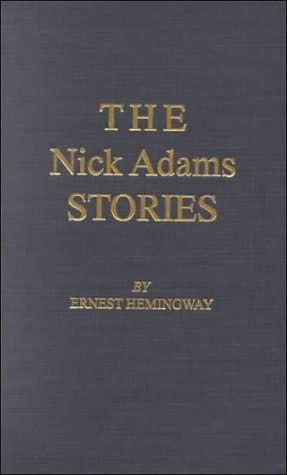
Ernest Hemingway (1972)
Genre
Fiction
Reading Time
240 min
Key Themes
See below
Sign in to track this book
Follow Nick Adams from innocent boyhood fishing trips and encounters with Native Americans to the battlefields of war, the quiet struggles of a veteran's return, and the complex relationships of adulthood, mirroring the raw experiences that shaped Hemingway himself.
Nick Adams, a young boy, goes with his doctor father to an Ojibwe Indian camp to help with a difficult childbirth. His father, Dr. Adams, performs a crude but successful C-section on an Ojibwe woman without anesthetic, while Nick is made to watch the painful process. In a nearby bunk, the woman's husband, unable to bear his wife's screams, kills himself by slitting his throat. Dr. Adams tries to shield Nick from the full horror of the suicide, but Nick sees the bloody scene. The experience deeply bothers Nick, leaving him with questions about life, death, and suffering, and a deep sense of disillusionment that begins to shape his view of the world.
Dr. Adams tries to get some logs that a group of Ojibwe Indians had cut for him, but Dick Boulton and his son, Billy, refuse to give them up, claiming they cut them first. A tense argument follows, with racial undertones, and Dr. Adams eventually backs down, unable to solve the conflict peacefully. He returns home to find his wife, Nick's mother, reading the Bible and showing disapproval of his actions and the Ojibwe people. Nick observes the unspoken tension and resentment between his parents, understanding that his father feels powerless because of his wife's passive aggression and moral superiority. Nick later goes fishing, seeking comfort and escape from the domestic conflict he witnessed.
After being thrown off a freight train, Nick Adams walks along the tracks and meets Ad Francis, a former professional boxer whose career ended after he was hit too many times, leaving him severely brain-damaged and prone to violent outbursts. Ad lives with Bugs, a Black man who cares for him and cooks. Bugs explains Ad's condition and the tragic details of his life, including that Ad married his own sister, who later died. Nick shares a meal with them, observing the strange dynamic and the deep sadness of Ad's existence. The encounter leaves Nick with a sense of how fragile the human mind is and the devastating effects of life's hardships.
Two hitmen, Al and Max, arrive in Summit, Illinois, looking for Ole Andreson, a former boxer who betrayed a syndicate. They hold up a lunchroom owned by George, where Nick Adams is eating. The killers tie up Nick and the cook, Sam, while waiting for Andreson to arrive. When Andreson does not show, Nick is sent to warn him. Nick finds Andreson lying in his room, fully aware that the killers are after him, and accepting his fate. Andreson refuses to flee, expressing a deep tiredness with life. Nick, disturbed by Andreson's fatalism and the casual brutality of the killers, leaves Summit, unable to understand such passive acceptance of death.
During World War I, Nick Adams, a soldier recovering from a serious injury, experiences insomnia and a deep fear of the dark. To fight his anxiety and keep his soul from leaving his body, Nick develops a nightly ritual of praying for everyone he has ever known, recounting every detail of their lives. He lies in bed, listening to the silkworms eating mulberry leaves outside and the conversations of the other soldiers in the ward. The rituals give him a temporary sense of control and comfort in the face of war's trauma and uncertainty. The story highlights Nick's internal struggle with fear and his search for meaning amidst chaos.
Nick Adams, a World War I veteran, is still recovering from his injuries and the psychological scars of combat. He visits the site of a previous battle, trying to match his memories with the present reality. He tries to talk with a general and other soldiers, but his mind is fragmented, and he struggles to speak clearly. He has vivid hallucinations and cannot tell the difference between past and present, often reliving moments of intense fear and violence. The story shows Nick's deep shell shock and his inability to escape the haunting images of war, illustrating the lasting psychological damage from his experiences.
Nick Adams, along with other American and Italian soldiers, receives physical therapy for their war injuries in a Milan hospital. The doctors are hopeful about the new machines and treatments, but the soldiers, especially Nick, doubt their effectiveness. Nick connects with a group of Italian officers, including a major who was a champion fencer and lost his hand. The major initially expresses great hope in the machines, but his wife unexpectedly dies, breaking his composure and revealing the deep grief beneath his disciplined exterior. The story explores themes of loss, the pointlessness of hope in the face of suffering, and the camaraderie among those who share similar traumas.
Nick Adams returns from the war and goes on a solo fishing trip to the Big Two-Hearted River in Michigan. The town of Seney, which he passes through, has been destroyed by a fire, reflecting Nick's own inner emptiness. Nick carefully prepares his camp and fishing gear, finding a calming routine in the physical demands and precise actions of setting up. He fishes for trout, focusing intently on the present moment and nature, avoiding the swampy, deeper parts of the river, which symbolize the darker, more traumatic memories he is trying to avoid. The trip acts as a form of self-therapy, a way for Nick to process his war experiences and slowly begin to heal.
Nick Adams and his girlfriend, Marjorie, are at their summer cottage on Hortons Bay, a former mill town. Nick has grown restless and unhappy with their relationship, feeling a sense of emptiness and a need for change. While fishing, Nick tells Marjorie that their relationship 'isn't fun anymore' and that he feels 'it's not worth while going on.' Marjorie is hurt and leaves. Nick's friend, Bill, arrives shortly after, and they discuss the breakup. The story captures Nick's youthful anxiety and his struggle to express his feelings, highlighting the painful shift from adolescence to adulthood and the inevitable end of certain life phases.
An older Nick Adams is driving with his young son, Nick Jr., and thinks about his own complex relationship with his deceased father, Dr. Adams. He recalls memories of his father teaching him about nature, hunting, and fishing, but also remembers his father's sometimes rigid and distant nature. Nick recognizes the deep influence his father had on him, both good and bad. He considers the certainty of his son growing up and having his own experiences, and the cyclical nature of family relationships. The story explores themes of inheritance, memory, and the changing understanding between generations, as Nick deals with his past and his role as a parent.
The Protagonist
Nick evolves from a naive boy into a disillusioned and shell-shocked veteran, eventually finding a fragile peace and reflection as a writer and father, continually seeking meaning and healing through nature.
The Supporting
Remains largely static, serving as a formative influence on Nick, representing both admirable qualities and the limitations of traditional masculinity.
The Supporting
Remains static, a symbol of domestic constraint and moral judgment, contributing to Nick's early disillusionment.
The Supporting
Undergoes the pain of being left by Nick, marking the end of a significant youthful relationship.
The Supporting
Remains a consistent, supportive friend to Nick during his younger years.
The Supporting
A static character whose tragic state profoundly impacts Nick's understanding of human suffering.
The Supporting
Remains a steadfast and compassionate figure, providing stability in Ad's chaotic life.
The Supporting
A static character whose resignation to death profoundly affects Nick.
The Supporting
Experiences a shattering personal tragedy that breaks his stoicism, revealing the depths of human grief.
A main theme is Nick's gradual loss of innocence as he faces life's harsh realities. From witnessing a traumatic birth and suicide in 'Indian Camp,' to the marital conflict in 'The Doctor and the Doctor's Wife,' and the casual brutality of 'The Killers,' Nick's youthful idealism is slowly worn away. The deepest disappointment comes from his experiences in World War I, which leave him physically and psychologically scarred, unable to fully adjust to the world he knew. This theme explores the painful process of growing up and the often-grim truths that break naive perceptions.
“"He felt he had been through something terrible. He felt he had been changed. He was not the same any more. He was not the same as he had been before he went to the war."”
Nature, especially fishing and the wilderness, is a refuge and source of comfort for Nick Adams throughout his life. In 'Big Two-Hearted River,' Nick carefully prepares his camp and fishes for trout, using the precise routines of the outdoors to bring order to his traumatized mind and avoid facing his war memories directly. Even as a child, in 'The Doctor and the Doctor's Wife,' Nick escapes domestic tension by going fishing. Nature provides a space for thought, physical activity, and a return to basic rhythms that offer temporary relief and a path to psychological recovery from the complexities and traumas of human society.
“"He was happy. He had seen the river and he knew he would be all right."”
The collection clearly shows the deep and lasting psychological impact of war on Nick Adams. Stories like 'Now I Lay Me,' 'A Way You'll Never Be,' and 'In Another Country' directly address his shell shock, insomnia, hallucinations, and inability to reconcile his wartime experiences with civilian life. Nick's inner struggles appear as rituals, fragmented thoughts, and a deep sense of isolation. The war leaves him with a permanent mark, shaping his worldview and his relationships, and forcing him to constantly find ways to cope with the memories and anxieties that bother him long after the fighting has ended.
“"It was a way you could get through the nights. He tried to think of all the people he had ever known, and to pray for them, one by one."”
The stories explore different aspects of manhood and the challenges of finding a sense of male identity. Nick observes various models of masculinity, from his doctor father's stoicism and outdoor skill, to the brutal, damaged masculinity of figures like Ad Francis and Ole Andreson, to the camaraderie of soldiers. Nick himself struggles with defining his own manhood, especially in his relationships and his difficulty expressing emotions ('The End of Something'). Hemingway often connects true masculinity to self-reliance, physical ability, and a certain stoicism in the face of hardship, though he also shows its weaknesses and limits, especially in emotional expression and dealing with trauma.
“"He had been having a good time while he had been with Marjorie. But now he did not feel like it. He did not feel he was having a good time."”
The collection examines the complexities of human relationships at different stages of Nick's life. Early stories show the strained and unspoken tensions within his family ('The Doctor and the Doctor's Wife'). His youthful romance with Marjorie explores love, its joys, and its painful endings ('The End of Something'). Friendship, especially with Bill, offers camaraderie and a space for processing emotions. Later, as a father, Nick thinks about the cyclical nature of family bonds and the legacy passed between generations ('Fathers and Sons'). Throughout, relationships are shown as sources of both deep connection and deep pain, shaping Nick's emotional state.
“"It isn't fun any more. Not any of it."”
Meaning is conveyed through what is left unsaid and understated.
Hemingway's famous 'Iceberg Theory' is prominent, where much of the story's meaning and emotional depth lies beneath the surface of the sparse, declarative prose. Characters' true feelings, motivations, and the profound trauma Nick experiences are rarely stated directly but are implied through dialogue, actions, and subtle observations. For example, in 'Big Two-Hearted River,' Nick's war trauma is never explicitly detailed, but it is deeply felt through his meticulous rituals, his avoidance of the swamp, and his intense focus on fishing as a coping mechanism. This technique forces the reader to actively engage in interpreting the unspoken, creating a powerful sense of underlying tension and emotion.
The natural world and the act of fishing represent healing, order, and escape.
Nature, particularly rivers and the act of fishing, serves as a recurring and potent symbol throughout the stories. For Nick, fishing is not merely a pastime but a ritualistic activity that brings order, focus, and a sense of control to his chaotic internal world. In 'Big Two-Hearted River,' the river itself symbolizes a path to recovery, with the clear, flowing water representing mental clarity, and the avoided swamp representing the dark, unresolved traumas. The precise actions involved in fishing—tying flies, casting, reading the water—become a form of meditation and self-therapy, offering a temporary escape from his psychological wounds and a way to reconnect with a simpler, more fundamental reality.
The collection traces Nick's development from childhood to adulthood.
The entire collection functions as a coming-of-age narrative, chronicling Nick Adams's journey from an impressionable boy to a disillusioned young man, and finally to a reflective adult. The stories are arranged to show his progression through various formative experiences: witnessing birth and death, confronting marital discord, experiencing romance and heartbreak, enduring the horrors of war, and grappling with fatherhood. Each story marks a significant step in his emotional and psychological development, illustrating how these events shape his character, his worldview, and his understanding of himself and the world around him. The narrative arc reflects a universal human experience of growth, loss, and the search for meaning.
A series of interconnected short stories forming a larger character study.
The book is structured as a collection of short stories, each a self-contained episode, but collectively forming a coherent, chronological narrative of Nick Adams's life. This episodic structure allows for focused exploration of specific moments and experiences that are pivotal to Nick's development, without requiring a continuous, overarching plot. The connections between stories are thematic and psychological, building a cumulative portrait of Nick's character and his evolving responses to life's challenges. This structure highlights the idea that life is experienced as a series of distinct, impactful events that gradually shape an individual over time, rather than a single, continuous flow.
“It was a good place to buy things. It was a good place to be.”
— Nick reflecting on the general store in 'The Doctor and the Doctor's Wife'.
“He felt he had been very close to death.”
— Nick's feelings after being wounded in 'A Way You'll Never Be'.
“The world was a good place to live in. He was a part of it.”
— Nick's sense of belonging while fishing in 'Big Two-Hearted River: Part I'.
“It was a pleasure to fish.”
— Nick's simple enjoyment of his activity in 'Big Two-Hearted River: Part I'.
“He did not want to think about anything but fishing.”
— Nick's deliberate focus on the present moment in 'Big Two-Hearted River: Part II'.
“It was a fine day. The sun was hot. The sky was clear.”
— Describing the setting in 'Indian Camp' before the tragic events unfold.
“He felt hollow and happy.”
— Nick's complex emotions after his father's actions in 'The Doctor and the Doctor's Wife'.
“He was learning to be lonely.”
— Nick's growing awareness of his isolation in 'The End of Something'.
“It was all over. It was a good thing for it to be over.”
— Nick's feelings after breaking up with Marjorie in 'The End of Something'.
“He did not like to think about it.”
— Nick's avoidance of a difficult memory in 'A Way You'll Never Be'.
“He had never seen a man as dead as that before.”
— Nick's first encounter with death in 'Indian Camp'.
“He was not thinking. He was just doing things.”
— Nick's automatic actions while fishing, a coping mechanism in 'Big Two-Hearted River: Part II'.
“He knew that he was going to be all right.”
— Nick's hopeful resolve at the end of 'Big Two-Hearted River: Part II'.
“It was a good town.”
— Nick's simple assessment of the town in 'The Killers'.
Ready to see how well you understood this book? Take our interactive quiz with 10 questions.
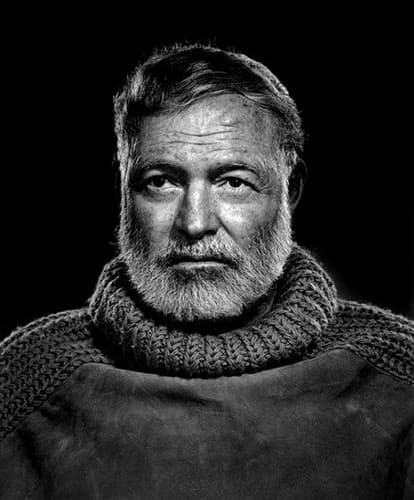
Ernest Miller Hemingway was an American novelist, short-story writer, and journalist. His economical and understated style—which included his iceberg theory—had a strong influence on 20th-century fiction, while his adventurous lifestyle and public image brought him admiration from later generations. Hemingway produced most of his work between the mid-1920s and the mid-1950s, and he was awarded the 1954 Nobel Prize in Literature. He published seven novels, six short-story collections, and two nonfiction works. Three of his novels, four short-story collections, and three nonfiction works were published posthumously. Many of his works are considered classics of American literature.

Ashley Antoinette
4.6

Mark McDonald
4.4
Luo Guanzhong
4.4

Mia McKenzie
4.3
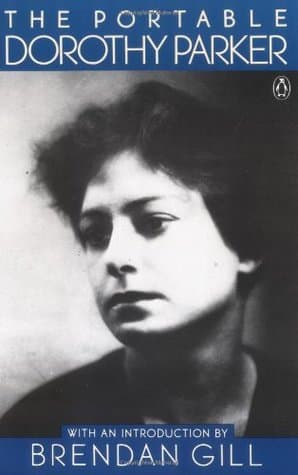
Dorothy Parker
4.3

Joaquim Maria Machado de Assis
4.3
James Thurber
4.2

Terry Kay
4.2