“The devil, they say, is not so black as he is painted.”
— A common saying, but here used to describe the perception of the portrait's subject.

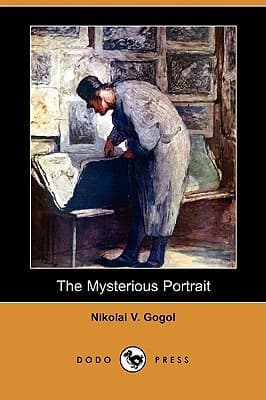
Nikolai Gogol (2016)
Genre
Fiction
Reading Time
45 min
Key Themes
See below
Sign in to track this book
An artist's life changes after he buys a haunting portrait with lifelike eyes, making him question ambition and the soul's corruption.
The story begins with Chartkov, a young, poor artist, browsing a small art shop in Shchukin Dvor. He feels disappointed with his artistic progress. He is drawn to a portrait of an old man with piercing, lifelike eyes that seem to follow him. The portrait is so realistic it is unsettling, and Chartkov feels he must buy it, despite being very poor. He pays twenty kopecks, an amount he can barely afford, and carries the heavy painting back to his humble apartment. The portrait's eyes continue to disturb him, setting an ominous tone for his future.
In his studio, Chartkov tries to sleep, but the portrait's eyes unnerve him. He dreams of the old man coming to life and counting gold. Waking in a fright, he notices a slight bulge in the portrait's frame. He finds a hidden compartment with gold coins. Overjoyed by this unexpected fortune, Chartkov immediately imagines a life free from poverty, where he can follow his artistic ambitions without money worries. This discovery is a turning point, offering him an escape from destitution, but also bringing new temptations.
With the gold, Chartkov quickly abandons his simple life and his dedication to pure art. He moves into a luxurious apartment, dresses lavishly, and starts going to fashionable social events. He pays for articles praising his work in newspapers, hires a publicist, and begins taking commissions for portraits from rich clients. His initial artistic integrity is soon replaced by a desire for quick fame and easy money. He sacrifices his true talent for superficial flattery and trends, painting portraits that please clients instead of challenging himself. The gold, first a blessing, becomes a cause for his artistic and moral decline.
As Chartkov becomes more popular, his artistic skill lessens. He develops a formula for portraits, using techniques that flatter subjects instead of capturing their true essence. His work becomes superficial, lacking the depth and originality he once wanted. He paints fashionable ladies with sweet smiles and wealthy gentlemen with dignified but empty looks. His studio, once a place of earnest effort, turns into a factory for commercial art. He becomes arrogant and dismisses real artistic criticism, surrounding himself with people who praise his every brushstroke. The spark of genius he once had fades, replaced by cynical professionalism.
Years later, Chartkov attends an exhibition and is deeply moved by a painting by a former fellow student. This painting, showing the Nativity, is a work of great beauty, spiritual depth, and technical skill, the result of years of dedicated study and self-sacrifice. It contrasts sharply with Chartkov's own superficial creations. Seeing this true masterpiece, Chartkov is overwhelmed by self-reproach and bitter regret. He sees the huge difference between his commercial success and the genuine artistic achievement of his contemporary. This encounter with authentic art makes him face the emptiness of his own career.
Realizing his artistic failure and wasted talent, Chartkov falls into deep despair. He becomes consumed by envy for other artists, especially those whose work has the integrity he lost. He starts buying masterpieces, not to appreciate them, but to destroy them in fits of rage and jealousy. His mind quickly deteriorates, haunted by the piercing eyes of the old man from the portrait. He becomes increasingly paranoid and violent, experiencing terrifying hallucinations. His once promising life as an artist ends in madness, a victim of his choices and the gold's subtle influence.
The story shifts to an auction where the same portrait of the old man is for sale. A distinguished art connoisseur steps in to share the portrait's true, chilling history, hoping to warn potential buyers. He explains that his father, a talented artist from Kolomna in the 18th century, painted the portrait. This part of the story explores the supernatural origins of the portrait's malevolent power and its creator's tragic fate, showing the deep ethical problems artists face.
The gentleman explains that his father, a young and religious artist, was asked to paint a notorious money-lender in Kolomna. This money-lender was a terrifying figure, rumored to be evil, whose piercing eyes and sinister presence brought misfortune to all who met him. He could ruin lives and families. Despite his disgust, the artist, compelled by a strange force and the money-lender's insistence, agreed to paint him. The artist's first attempts to capture the man's essence were hard, as the money-lender's eyes seemed to have a life of their own, influencing the artist's soul.
While painting the money-lender, the artist felt increasingly tormented. He felt a malevolent presence from his subject, and his own soul felt corrupted. He struggled to capture the man's essence without falling to its evil. The money-lender's eyes, especially, seemed to hold a demonic power, influencing the artist's brush. After the money-lender's death, his spirit seemed to move into the portrait, continuing to harm its owners. The artist, deeply disturbed, abandoned the portrait, recognizing its dangerous influence, and sought spiritual comfort in a monastery.
The gentleman explains that the portrait, after his father abandoned it, passed through many hands, bringing ruin, madness, and even death to every owner. It caused families to break apart, artists to lose their talent, and people to fall into despair, mirroring Chartkov's fate. The painting became a cursed object, a vessel of evil energy that corrupted all who touched it. The gentleman's father, after years in a monastery, eventually tried to destroy the portrait, but it had already disappeared, continuing its destructive journey. The story ends with the portrait mysteriously vanishing from the auction, its fate unknown.
The Protagonist
From a struggling, idealistic artist, Chartkov transforms into a commercially successful but artistically bankrupt individual, ultimately descending into madness and despair.
The Antagonist
Though physically deceased, his malevolent spirit and influence persist through the portrait, acting as a catalyst for the ruin of others.
The Supporting
He serves as a conduit for the backstory, explaining the portrait's origins and its enduring curse, without undergoing significant personal transformation.
The Supporting
From a struggling artist who accidentally created a cursed object, he transforms into a devout monk seeking spiritual atonement and understanding the true purpose of art.
The Mentioned
She remains a static symbol of Chartkov's initial poverty.
The Mentioned
A static representation of the commercial art world.
The Mentioned
His successful and pure artistic development serves as a foil to Chartkov's decline.
The story explores how wealth and the desire for superficial fame can corrupt artistic integrity and spiritual well-being. Chartkov's discovery of gold in the portrait's frame immediately pulls him from his true artistic path. Instead of using the money for higher art, he gives in to luxury, commercialism, and the desire for quick recognition. This leads to his talent's decline and his eventual madness. The money-lender embodies this theme, having used his wealth to exert malevolent power, and his portrait continues this destructive legacy. The gold, initially a blessing, becomes a curse, symbolizing how material gain can lead to spiritual and artistic ruin.
“And from that moment on, his talent began to betray him.”
Gogol examines what true art is. The story contrasts Chartkov's commercial, formulaic portraits, made for flattery and profit, with the spiritual depth and technical skill of the fellow student's Nativity painting. The original artist's struggle to paint the money-lender without giving in to his evil also highlights the artist's ethical and spiritual responsibilities. True art, the story suggests, must be more than imitation or commercial appeal; it must come from spiritual purity, dedication, and a connection to higher ideals. Art made for evil purposes or without sincere intent can corrupt.
“For art to be truly great, it must serve the divine, not merely the earthly.”
A strong supernatural element runs through the story, mainly through the cursed portrait. The money-lender's eyes are not just realistic but have an active, malevolent power that influences and eventually destroys its owners. This supernatural force is not just a plot device; it symbolizes the insidious nature of evil and temptation. The portrait acts as a way for the money-lender's corrupting spirit to work, suggesting that evil can persist and spread, infecting those who come into contact with it. This theme adds gothic horror and a moral warning, implying that certain artistic creations can carry a spiritual weight beyond their aesthetic form.
“The eyes, the eyes above all, possessed the most astounding vitality.”
The conflict between artistic integrity and compromise is central to Chartkov's character. He starts with a real desire to create meaningful art but quickly compromises his vision for money and social acceptance. He trades his unique style for popular appeal, creating portraits that are technically good but emotionally empty. This compromise leads to the loss of his talent and his eventual artistic and mental collapse. The original artist, in contrast, chooses spiritual purity over giving in to his subject's evil influence, finding redemption. The story warns against sacrificing one's artistic soul for fleeting success.
“He began to paint according to the demands of fashion and the tastes of the public.”
A painting whose malevolent eyes and hidden gold corrupt its owners.
The portrait of the money-lender is the central plot device. Its hyper-realistic, piercing eyes possess a supernatural, malevolent power that influences and eventually drives its owners to madness. The hidden gold within its frame acts as the initial catalyst for Chartkov's downfall. The portrait symbolizes the corrupting power of materialism and the potential for art to embody and transmit evil. It is a physical manifestation of temptation and a supernatural agent of destruction, linking the two parts of the story and providing the core conflict and its consequences.
The money-lender's eyes and spirit haunting Chartkov, blurring identities.
While not a literal doppelgänger, the money-lender's eyes and spirit profoundly influence Chartkov, creating a psychological mirroring. Chartkov, consumed by avarice and malevolent envy, begins to embody characteristics of the money-lender, especially in his destructive acts against other artists. The money-lender's eyes are described as having a life of their own, almost possessing Chartkov's mind. This suggests a merging of their fates and a transfer of the money-lender's evil spirit into Chartkov, highlighting the insidious nature of corruption and the loss of individual identity when succumbing to vice.
A second narrator reveals the portrait's origin, adding depth and explanation.
The story employs a frame narrative structure, where the initial tale of Chartkov is followed by a second part, told by the gentleman at the auction. This 'story within a story' provides crucial backstory for the portrait, explaining its supernatural origins and the tragic fate of its creator and previous owners. This device shifts the narrative perspective, offering a more objective and historical account that validates the supernatural elements experienced by Chartkov and adds a moral dimension, transforming the initial psychological drama into a cautionary tale with broader implications about art and evil.
Literary descriptions of visual art to explore artistic themes.
Gogol utilizes ekphrasis extensively, providing vivid literary descriptions of the portrait itself, Chartkov's commercial works, and the fellow student's masterpiece. These detailed descriptions are not merely ornamental; they are crucial to exploring the story's central themes about the nature of art. The contrasting descriptions of Chartkov's soulless portraits versus the spiritual depth of the Nativity painting highlight the difference between true art and mere craft. The unsettling description of the money-lender's eyes is central to establishing the portrait's malevolent power, making the visual art a character in itself and driving the narrative.
“The devil, they say, is not so black as he is painted.”
— A common saying, but here used to describe the perception of the portrait's subject.
“There are for everyone such moments in life when his soul seems to rise to a great height, and when he feels that he is capable of performing a great deed.”
— Reflecting on the inspiring, yet sometimes fleeting, nature of artistic ambition.
“The artist is a creator, and not a mere copyist.”
— A debate on the true purpose and nature of art, emphasizing originality.
“Money is not everything, but it is a great deal.”
— Chertkov's struggle with poverty and the practicalities of making a living as an artist.
“The true artist must live in solitude and devote himself to his art, forgetting all the world's vanities.”
— An idealistic view of the artist's life, often contrasted with reality.
“There is a demon in every man, and it is a terrible demon.”
— Referring to the destructive power of envy and pride, particularly in the artistic community.
“The brush in the hands of a genius is a powerful weapon.”
— Highlighting the transformative and impactful potential of great art.
“What is genius? It is to see what everyone else sees, and think what no one else thinks.”
— An attempt to define the elusive quality of true genius.
“Every man has his own devil, and he must wrestle with him.”
— A more personal reflection on the internal struggles faced by individuals, especially artists.
“The world is full of wonders, but man sees only what he wants to see.”
— A commentary on human perception and selective attention, often missing the profound.
“Art is a prayer.”
— A profound statement on the spiritual and reverent nature of true artistic endeavor.
“Oh, if only people knew what a terrible demon is concealed in every man!”
— Emphasizing the hidden evil or destructive potential within human beings, often leading to envy and ruin.
“The true artist must not serve the world, but be its master.”
— An assertion of artistic autonomy and the artist's role in shaping, rather than merely reflecting, reality.
“There are moments when a man is ready to embrace the whole world, and moments when he wishes to be alone with his own thoughts.”
— Describing the fluctuating emotional states and needs of the human spirit, especially an artist's.
Ready to see how well you understood this book? Take our interactive quiz with 10 questions.

Nikolai Vasilyevich Gogol was a Russian novelist, short story writer and playwright of Ukrainian origin.

Ashley Antoinette
4.6

Mark McDonald
4.4
Luo Guanzhong
4.4

Mia McKenzie
4.3
Dorothy Parker
4.3
Joaquim Maria Machado de Assis
4.3
James Thurber
4.2

Terry Kay
4.2