“The mental features discoursed of as the analytical, are, in themselves, but little susceptible of analysis.”
— Introducing the concept of analysis and its elusive nature.

Edgar Allan Poe (1841)
Genre
Mystery
Reading Time
38 min
Key Themes
See below
Sign in to track this book
In 19th-century Paris, a reclusive, brilliant amateur detective uncovers the horrifying truth behind a mother and daughter's brutal, seemingly impossible murders, revealing a killer beyond human understanding.
The unnamed narrator, an American in Paris, meets C. Auguste Dupin in a dusty library. They become friends, sharing a love of books and a preference for solitude. They decide to live together in an old, quiet mansion in the Faubourg St. Germain. The narrator describes Dupin's extraordinary analytical skills, especially his method of 'ratiocination'—logical deduction and inference. He shares a story where Dupin, by observing the narrator's thoughts and actions, correctly guesses what the narrator is thinking at that moment, surprising him.
Their peaceful lives are interrupted by a shocking news report. Madame L'Espanaye and her daughter, Camille, are found brutally murdered in their fourth-story apartment on the Rue Morgue. The elderly mother's throat is deeply cut, and her body is found in the courtyard, thrown down the chimney. Camille's body is discovered crammed headfirst into the chimney, covered in bruises and scratches. The apartment is locked from the inside, and a large sum of money is untouched, confusing both the police and the public.
The Parisian police, led by Prefect G---, investigate but are completely baffled. Witnesses give conflicting accounts of voices heard before the murders. Some heard French, others a foreign, guttural, non-human language. The locked room, the immense strength needed for the acts, and the lack of a clear motive or entry/exit point leave authorities puzzled. The press sensationalizes the case, emphasizing its inexplicable nature and the apparent impossibility of a human killer acting alone.
Dupin, interested by the sensational details and the police's failure to apply good reasoning, decides to get involved. He criticizes the police's reliance on routine and their inability to see past the obvious. He believes the crime's complexity and apparent impossibility make it solvable through careful analysis of details others ignore. He gets permission from Prefect G--- to visit the crime scene with the narrator.
Dupin and the narrator go to the apartment on the Rue Morgue. Dupin thoroughly examines the premises, focusing on details the police missed. He inspects the windows, especially their latches, and the chimney. He notes the extreme mess, bloodstains, and general violence. He pays close attention to the windows, observing how they could be secured from the inside but also how they might appear secured while actually being open. He measures the bodies' positions and the room's dimensions, collecting all physical evidence.
Through his careful examination, Dupin figures out how the locked room worked. He finds a hidden spring in one of the window latches that makes it look securely fastened from the inside, even when it is not. This explains how the killer could have entered and exited without forcing a lock. He also notices the unusual hair in Madame L'Espanaye's hand, which is not human, and the impossible strength needed for the murders, far beyond that of any ordinary man. He starts to form a new idea about the killer's identity.
Dupin tells the narrator his surprising conclusion: the murderer is not human. He points to the superhuman strength, the agility needed to climb the building, the non-human hair, the strange grip marks on Camille's throat, and the unintelligible 'foreign' language heard by witnesses—which he interprets as guttural cries. He suggests an orangutan, having escaped, committed the murders. To confirm his idea, he places an advertisement in the newspaper for a lost orangutan, hoping its owner will come forward.
A sailor responds to Dupin's advertisement. He arrives at Dupin's apartment, looking nervous. Dupin confronts him with the evidence, explaining his deductions. The terrified sailor confesses he owns an orangutan that escaped from his care. He recounts how the ape, after watching him shave, tried to imitate him, eventually grabbing a razor and escaping through a window. He followed it, witnessing the horrifying murders from outside, but could not intervene.
The sailor explains that the escaped orangutan climbed the lightning rod and entered the L'Espanaye apartment through the open window. It then attacked the two women with the razor, mimicking the shaving action, and using its immense strength. In a panic, it stuffed Camille into the chimney and threw Madame L'Espanaye out the window. The ape then escaped by swinging from the lightning rod to another window, leaving the sailor as the only horrified witness to the impossible crime. He had been too afraid of being implicated to come forward until Dupin's advertisement.
With the sailor's testimony, Dupin's deductions are fully confirmed. The sailor reclaims his orangutan, which he later sells. Prefect G---, while acknowledging the solution, remains unimpressed and somewhat resentful of Dupin's success, showing bureaucratic resistance to new methods. Dupin, however, does not care about public praise or official recognition, content with his logical triumph. The case, once a mystery, shows the power of logical thought over standard police procedures.
The Protagonist
Dupin's character remains consistent as the brilliant, detached analyst, his arc primarily demonstrating the effectiveness and superiority of his unique deductive method.
The Supporting
The narrator's understanding and appreciation of Dupin's genius deepen throughout the story, reflecting the reader's own journey of discovery.
The Victim
As a victim, Madame L'Espanaye's character does not have an arc; her role is to establish the horrifying nature of the crime.
The Victim
As a victim, Camille's character does not have an arc; her role is to establish the horrifying nature of the crime.
The Supporting
Prefect G--- remains a static character, representing the limitations of conventional authority and procedure.
The Supporting
The sailor moves from a state of fearful concealment to reluctantly revealing the truth, driven by Dupin's compelling logic.
The Antagonist
The Ourang-Outang's role is fixed as the catalyst for the murders; it does not exhibit a character arc in the human sense.
This is the main theme, showing Dupin's analytical method as better than the police's ordinary, routine intelligence. Dupin believes true skill comes from seeing 'beyond the obvious' and using logic on seemingly conflicting details. The police, represented by Prefect G---, fail because they categorize evidence and lack the imagination for new solutions. Dupin's success shows that complex problems often have simple, unexpected solutions when approached with true analytical rigor, not just standard procedures.
“''The police are all very well in their way, and are competent for all ordinary emergencies. Their energy is proverbial. But these exertions are by no means invariably such as to meet the exigencies of all cases. They have no ideas of their own, and are always looking for precedent. This case is one in which they have been utterly baffled.''”
The story constantly explores the difference between what seems true and what is actually true. The locked room appears impossible to enter, suggesting a supernatural crime, but Dupin reveals a hidden mechanism. The 'foreign' language heard by witnesses seems to point to a human culprit but is revealed to be an ape's cries. This theme highlights that initial views can be misleading, and deeper analysis is needed to find the truth, prompting the reader to question assumptions and look past surface evidence.
“''It is not so much a question of what is seen, as of what is perceived in the seeing.''”
The story looks at humanity's encounter with the monstrous, not supernaturally, but as an animalistic, irrational force beyond human understanding and ability. The orangutan's violence is beyond human malice, driven by instinct and imitation, making the murders especially horrifying and hard for conventional minds to explain. This theme shows the fragility of human order when faced with raw, untamed nature, and the fear that arises when events defy our established ways of understanding cause and effect, pushing the limits of what is possible.
“''The Ourang-Outang is a very large and formidable quadruped of the East Indian islands. Its height is about five feet. Its strength is prodigious, and its ferocity, at certain seasons, is fearful. I have seen one of them, with a single blow of a club, fell an ox to the ground.''”
Poe critiques standard law enforcement methods, showing the police as competent only for 'ordinary emergencies' but completely lost when faced with a truly unique and complex crime. Prefect G--- and his officers rely too much on established procedures and cannot make the imaginative leaps needed for such an unprecedented case. Dupin's success, in contrast to the police's failure, directly comments on the shortcomings of a system that favors routine and precedent over individual skill and new ideas, especially when dealing with the truly extraordinary.
“''The Prefect, however, was not a man to give up a point readily. He had been a successful officer, and prided himself on his acumen. But here he was at fault. He had exhausted his ingenuity, and could no longer proceed.''”
A crime committed in an apparently inaccessible room.
This is the foundational plot device. The murders occur in an apartment locked from the inside, with no apparent means of entry or exit for the perpetrator. This device creates immense suspense and bafflement for both the characters and the reader, making the crime seem impossible. Dupin's genius is highlighted by his ability to meticulously deconstruct this impossibility, revealing a hidden mechanism (the spring-loaded window catch) that reconciles the appearance of impossibility with the reality of the crime, thereby providing a rational explanation for the seemingly supernatural.
Conflicting accounts from witnesses that mislead investigators.
Witnesses provide conflicting accounts of voices heard during the murders – some heard French, others heard a foreign, guttural language. This device initially confuses the police, who try to reconcile these human testimonies. Dupin, however, uses the very contradictions to his advantage. He realizes that the 'foreign' language, when combined with other evidence, points to a non-human source, and the 'French' voices were merely fleeting exclamations. This highlights how subjective human perception can be and how a skilled detective must interpret, rather than simply accept, testimony.
A crucial piece of evidence overlooked or misinterpreted.
Several clues are disguised, meaning they are present but their significance is not immediately apparent or they are misinterpreted by conventional minds. Examples include the non-human hair found in Madame L'Espanaye's hand, the specific nature of Camille's injuries (finger marks), and the super-human strength implied by the disarray. These clues, individually dismissed or misunderstood by the police, are meticulously collected and logically connected by Dupin to form a coherent picture that leads him to the Ourang-Outang. This device underscores Dupin's superior observational and analytical skills.
Information designed to mislead the reader and police.
The untouched money in the apartment and the extreme brutality of the murders serve as red herrings. The police initially assume robbery as a motive, and the savage nature of the crime suggests a human killer driven by intense rage or madness. However, Dupin quickly dismisses robbery due to the money being left behind and recognizes that the brutality, combined with other details, points away from human agency. These elements are designed to misdirect the reader's and the police's initial assumptions, making Dupin's eventual solution all the more surprising and brilliant.
“The mental features discoursed of as the analytical, are, in themselves, but little susceptible of analysis.”
— Introducing the concept of analysis and its elusive nature.
“It is not so much a question of what we see, as of what we perceive.”
— Dupin discussing the difference between observation and inference.
“The more bizarre a thing is, the more likely it is to be a clue.”
— Dupin's approach to unusual details in a crime scene.
“To be shrewd is one thing; to be sagacious is another.”
— Distinguishing between superficial cleverness and profound insight.
“The ordinary police are good enough for ordinary occurrences.”
— Highlighting the limitations of conventional policing for extraordinary crimes.
“Had the doors been fastened from within, how could the perpetrator have escaped?”
— The central paradox of the locked-room mystery.
“It is true that the intellect of the masses is not to be despised.”
— Acknowledging the collective intelligence, but emphasizing the superiority of analytical thought.
“There are no mysteries so profound as those which are daily before our eyes.”
— Suggesting that the most obvious things can be the hardest to understand.
“The faculty of re-solution is possibly much invigorated by mathematical study.”
— Connecting mathematical skills with the ability to solve complex problems.
“I will not waste time in a vain effort to impress you with a sense of my acumen.”
— Dupin's confidence in his abilities, preferring to demonstrate rather than boast.
“It is not impossible that the murderer was a madman.”
— Early consideration of the perpetrator's state of mind.
“The species of ratiocination which Dupin here practices, he terms analysis.”
— The narrator defining Dupin's unique method of reasoning.
“He suffers nothing to escape him.”
— Describing Dupin's meticulous attention to detail.
“The wild conjectures of the police were, of course, utterly futile.”
— Critiquing the police's speculative and ineffective methods.
Ready to see how well you understood this book? Take our interactive quiz with 10 questions.
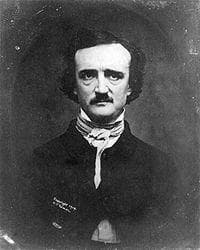
Edgar Allan Poe was an American writer, poet, editor, and literary critic who is best known for his poetry and short stories, particularly his tales of mystery and the macabre. He is widely regarded as a central figure of Romanticism in the United States, and of American literature. He was one of the country's earliest practitioners of the short story, and is considered the inventor of the detective fiction genre, as well as a significant contributor to the emerging genre of science fiction. He is the first well-known American writer to earn a living through writing alone, resulting in a financially difficult life and career.