“The young are so often cruel, Miss Barton. They don't mean to be, but they are. They haven't learned yet that the truth can be a very dangerous weapon.”
— Miss Emily Barton reflects on youth and truth.

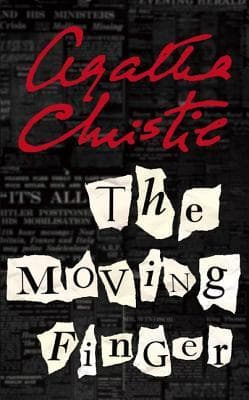
Agatha Christie (1942)
Genre
Mystery
Reading Time
300 min
Key Themes
See below
Sign in to track this book
A quiet English village, perfect for recovery, turns into a place of suspicion and suicide when anonymous, mean letters expose its secrets, all observed by Miss Marple.
Jerry Burton, recovering from a flying accident, moves with his sister Joanna to the quiet village of Lymstock. They rent Little Furze from the Symmingtons, who are away. Soon after they arrive, they get an anonymous letter accusing them of not being siblings but lovers, and Joanna of being Jerry's mistress. Jerry is amused at first, but quickly learns from their housekeeper, Mrs. Dane Calthrop, that similar letters are going around the village. The letters target different residents, making bad accusations about their private lives. The village, once peaceful, is now full of suspicion and gossip, breaking its calm.
The situation gets worse when Mrs. Symmington, an important village resident and wife of the local lawyer, is found dead after getting a very mean letter accusing her husband of cheating and her children of being illegitimate. Her death is called a suicide, as she took cyanide. However, a torn-up suicide note, seemingly in her handwriting, and the general feeling of meanness suggest a deeper mystery. Inspector Graves from Scotland Yard comes to investigate, focusing on the Symmington house, including her husband Richard, their children Elsie and Geoffrey, and the governess, Megan Hunter, who is Mrs. Symmington's stepdaughter.
As the investigation continues, Jerry and Joanna watch the village fall apart. They talk to various residents, including the kind Vicar Dane Calthrop and his smart wife, the local doctor Owen Griffith, who secretly loves Megan, and the Symmington family. Many are suspected, including Agnes, the Symmingtons' housemaid, and even the Symmington children, who are greatly affected by the scandal. The letters continue, targeting other important people like Miss Emily Barton, a local single woman, and even the Vicar's wife. The community's trust is gone, and everyone looks at each other with suspicion, wondering who the anonymous writer could be.
The Vicar's wife, Mrs. Dane Calthrop, worried by the lack of progress and the village's distress, asks her old friend, Miss Jane Marple, for help. Miss Marple, a seemingly weak older woman, arrives in Lymstock and quickly starts to make careful observations. She notices the relationships in the Symmington house, the tense feelings, and the general atmosphere of fear and anger. She points out that the anonymous letters themselves are a way to understand the person who wrote them, believing the writer's real reason might be hidden behind the seemingly random accusations. She thinks the letters are a distraction, a cover for a worse plan.
The case takes another surprising turn when Agnes, the Symmingtons' housemaid, is found dead after falling down the stairs. At first, it is thought she slipped, but the situation raises questions. Agnes had been acting strangely, hinting she knew something about the letters or Mrs. Symmington's death. Miss Marple immediately thinks it is murder, believing Agnes was silenced because she was close to finding the truth. This second death clearly changes the investigation from suicide to a double murder, showing a much more dangerous criminal in Lymstock.
Miss Marple thinks the letters were not the main goal but a clever trick. She believes the letters were meant to create chaos, distract the police, and make Mrs. Symmington's death look like a suicide from sadness, instead of a murder. She notes that the letters, while mean, are too varied in their accusations and too widespread to have one clear reason other than to cause trouble. The real reason, she suggests, is with one specific letter and one specific victim: Mrs. Symmington. The other letters were just to set a pattern.
During the mystery, Jerry Burton becomes more and more interested in Megan Hunter, Mrs. Symmington's stepdaughter. Megan is shown as wild, awkward, and very unhappy, often ignored and treated badly by her stepmother. Jerry sees an honest and sensitive side to her, and as he spends more time with her, he sees her intelligence and ability. He helps her, encourages her, and eventually falls in love with her. Their growing relationship is a contrast to the village's dark mood, offering a bit of hope and real connection.
Inspector Graves and the local police continue their careful investigation. They search for the source of the cyanide that killed Mrs. Symmington, tracing it to a local drug store and then to a specific prescription. They also try to find the typewriter used for the letters, as its unique features could point to the culprit. These technical parts of the investigation happen alongside Miss Marple's more psychological approach, as she keeps watching human behavior and reasons in the village, putting together the small clues that others miss.
Miss Marple focuses on the torn suicide note found with Mrs. Symmington. She realizes that the note, supposedly written by Mrs. Symmington, had a key detail: the signature was written *after* the note was torn. This means Mrs. Symmington did not write the note herself in sadness. Instead, someone else wrote the note, tore it to make it look like a spontaneous act, and then forced Mrs. Symmington's hand to sign it before she died, or signed it themselves, making it look real. This idea confirms her belief that Mrs. Symmington was murdered and that the letters were a cover.
Miss Marple finally solves the puzzle. She realizes the killer is not an outsider or an angry villager, but someone in the Symmington house: Mrs. Symmington herself. Or rather, the person *pretending* to be Mrs. Symmington. The real Mrs. Symmington had been killed by her husband, Richard Symmington, who then married his former lover, Elsie Holland, and presented her as his first wife. Elsie, pretending to be Mrs. Symmington, then wrote the letters to create a reason for 'her own' suicide, and killed Agnes when she became suspicious. Richard Symmington planned the whole thing to avoid scandal and keep his money.
With Miss Marple's findings, the police confirm the killer's identity and the complex plan. Richard Symmington and Elsie Holland (the second Mrs. Symmington) are arrested for the murders of the true Mrs. Symmington and Agnes. The village of Lymstock slowly starts to heal from the pain of the letters and the murders. Jerry Burton, having recovered from his accident and fallen deeply in love with Megan Hunter, asks her to marry him. Megan, changed by Jerry's affection and the end of the dark events, accepts. They plan to marry and leave Lymstock, looking forward to a new life together, free from the past.
The Protagonist
Jerry transforms from a detached observer to an active participant, finding love and purpose amidst the darkness.
The Supporting
Joanna moves from boredom to active engagement, providing a contrasting perspective to Jerry.
The Consulting Detective
Miss Marple uses her established wisdom to bring clarity and justice to a confused and fearful community.
The Supporting/Love Interest
Megan transforms from an insecure, neglected girl into a confident woman, finding love and a new life.
The Antagonist
Richard Symmington maintains his facade of respectability until his dark plot is fully exposed by Miss Marple.
The Victim
Her 'suicide' is revealed to be a carefully planned murder, central to the overarching conspiracy.
The Antagonist/Accomplice
Elsie Holland successfully impersonates the first Mrs. Symmington, only to be unmasked as an accomplice and murderer.
The Victim
Agnes's innocent discovery leads to her murder, confirming the presence of a killer.
The Supporting
Owen Griffith's unrequited love for Megan is a minor subplot, demonstrating his good character despite the suspicions against him.
The Supporting
Mrs. Dane Calthrop acts as the catalyst for Miss Marple's involvement, ensuring the truth is eventually uncovered.
The main idea of the novel looks at how anonymous meanness, spread through letters, can completely break down a peaceful community. The letters create suspicion, fear, and paranoia, turning neighbors against each other and causing tragedy. Christie shows how unchecked gossip and false accusations can ruin reputations, relationships, and even lives, demonstrating how easily social order can break when trust is lost. The seemingly harmless 'fun' of spreading rumors quickly leads to real violence and death, showing the big impact of mean words.
“''Malice is a terrible thing, Mr. Burton. It can poison a whole community.'”
This idea is very important, as the whole mystery depends on lies and hidden truths. Lymstock first seems like a perfect, quiet village, but underneath, it holds dark secrets and a killer. Characters, especially Richard Symmington and Elsie Holland, carefully build false appearances to hide their real intentions and identities. The letters themselves are a way to mislead, meant to make murder look like suicide. Miss Marple's skill is in seeing past appearances and understanding the hidden human reasons and cleverness, showing the clear difference between what seems to be and what really is.
“''People are so ready to believe the worst, aren't they? It's so much more interesting than the truth.'”
The novel looks at questions of identity, both fixed and changing. Megan Hunter changes a lot, losing her 'ugly duckling' image with Jerry's affection and encouragement, showing her real self. More darkly, Elsie Holland completely takes on the identity of the murdered Mrs. Symmington, a planned act of deception that is key to the murder plot. This idea explores how identity can be shaped by circumstances, how people see you, and planned manipulation, asking what truly defines a person and how easily one's identity can be taken or remade.
“''She was a different girl. Not just outwardly, but inside. As though someone had wiped a slate clean and written a new person on it.'”
Christie explores the sneaky nature of evil, showing how it can come from seemingly normal people and appear in planned, manipulative ways. The killer is not a typical villain but a respected person in society, driven by greed and a wish to keep a comfortable life. The evil is not just in the act of murder but in the systematic psychological harm done through the letters, which are meant to cause great distress and misdirection. The book suggests that evil can be carefully planned and carried out with cold precision, often hidden behind a respectable front.
“''There's a great deal of wickedness in the world, Mr. Burton. And it's not always the obvious kind.'”
The story shows how social order in Lymstock breaks down due to the uncontrolled meanness of the letters, and the later efforts to bring justice. The police represent formal justice, but it is Miss Marple's natural understanding of people that finally reveals the truth. The book stresses the importance of truth and accountability in keeping a healthy society. The solution of the murders and the unmasking of the people who did them symbolize the return of order and the win of justice, allowing the community to start healing and preventing more chaos.
“''It's not just finding who did it, Mr. Burton. It's understanding why. It's putting things right.'”
Jerry Burton's perspective guides the reader, but his limited knowledge creates suspense.
The story is narrated by Jerry Burton, a character directly involved in the events. This device places the reader squarely within Jerry's experience, observing the village and its inhabitants through his eyes. While Jerry is intelligent and observant, his perspective is naturally limited by what he sees, hears, and deduces, making him a subtly unreliable narrator in the sense that he does not possess all the facts until the end. This allows Christie to withhold crucial information and build suspense, as the reader discovers clues and theories alongside Jerry, often being misled by the same red herrings that he encounters.
The anonymous letters are a deliberate distraction from the true murder plot.
The poison-pen letters are the most prominent red herring in the novel. Initially, they appear to be the central crime, driving the plot and causing Mrs. Symmington's 'suicide.' However, Miss Marple shrewdly deduces that the letters are a calculated distraction, designed to create a plausible motive for suicide and mask the true murder of Mrs. Symmington. By focusing the villagers' and police's attention on the widespread malice, the real killer is able to operate with less scrutiny, making the letters a clever and integral part of the killer's intricate plan rather than the primary offense.
Megan Hunter's physical and emotional transformation symbolizes hope and new beginnings.
The character of Megan Hunter embodies the 'ugly duckling' trope. Initially presented as an unkempt, unhappy, and socially awkward young woman, she is transformed through Jerry Burton's affection, care, and belief in her. This physical and emotional metamorphosis is not merely superficial; it represents her coming into her own, shedding the neglect and mistreatment she endured. This device serves as a counterpoint to the darkness of the murders, introducing a theme of hope, redemption, and the potential for positive change, culminating in her engagement to Jerry and a promising future.
A seemingly minor detail becomes the critical clue that unravels the entire mystery.
The torn suicide note, found alongside Mrs. Symmington's body, is initially interpreted as proof of her despair. However, Miss Marple's meticulous attention to detail reveals a crucial anomaly: the signature was written *after* the note was torn. This seemingly small observation is the lynchpin that proves Mrs. Symmington was murdered and did not commit suicide. It indicates that someone else wrote the note, tore it to simulate a spontaneous act of despair, and then forced Mrs. Symmington to sign it or forged her signature. This single detail exposes the elaborate deception and redirects the entire investigation towards murder.
“The young are so often cruel, Miss Barton. They don't mean to be, but they are. They haven't learned yet that the truth can be a very dangerous weapon.”
— Miss Emily Barton reflects on youth and truth.
“It's odd, isn't it, how a letter can change everything. One moment you're living a perfectly ordinary life, the next... chaos.”
— Jerry Burton contemplates the impact of the anonymous letter.
“People are very apt to believe what they want to believe. And sometimes, what they don't want to believe, they pretend doesn't exist.”
— Superintendent Nash discusses human nature and perception.
“There are some people who seem to collect disasters, like stamps. They don't go looking for them, but disasters just seem to find them.”
— Megan Hunter observes the unfortunate circumstances of others.
“Gossip is a very potent weapon, Miss Barton. It can destroy reputations, ruin lives, and all without a single shot being fired.”
— Miss Marple comments on the power of gossip.
“The human mind is a curious thing. It can hold so many secrets, so many desires, so many fears, all hidden away.”
— Jerry reflects on the complexities of the human psyche.
“It's always the quiet ones, isn't it? The ones you least suspect, who turn out to have the most astonishing depths.”
— Miss Marple makes a characteristic observation about character.
“Sometimes the most obvious explanation is the right one, and sometimes it's merely the one designed to distract you.”
— Jerry ponders the nature of truth and misdirection.
“Fear can make people do very strange things, Miss Barton. Things they would never normally dream of.”
— Miss Emily Barton considers the influence of fear.
“There's a lot of malice in the world, Jerry. And sometimes it's all the more dangerous for being cloaked in politeness.”
— Joanna Burton discusses the hidden dangers of human interaction.
“It's a curious thing, isn't it, how quickly a community can turn on itself when suspicion takes hold.”
— Miss Marple observes the impact of suspicion on a village.
“The past has a way of catching up with people, no matter how hard they try to outrun it.”
— Superintendent Nash remarks on the inescapable nature of past events.
“One often finds that the most wicked things are done for the most trivial reasons.”
— Miss Marple muses on the motives behind evil deeds.
Ready to see how well you understood this book? Take our interactive quiz with 10 questions.
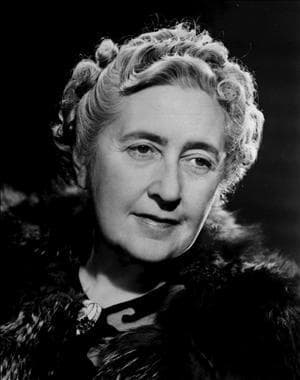
Dame Agatha Mary Clarissa Christie, Lady Mallowan, was an English writer known for her 66 detective novels and 14 short story collections, particularly those revolving around fictional detectives Hercule Poirot and Miss Marple. She also wrote the world's longest-running play, the murder mystery The Mousetrap, which has been performed in the West End since 1952. A writer during the "Golden Age of Detective Fiction", Christie has been called the "Queen of Crime". She also wrote six novels under the pseudonym Mary Westmacott. In 1971, she was made a Dame (DBE) by Queen Elizabeth II for her contributions to literature. Guinness World Records lists Christie as the best-selling fiction writer of all time, her novels having sold more than two billion copies.