“A country is not a country unless it has a mountain, a river, and a few vineyards.”
— Nuto's observation about what constitutes a true homeland.

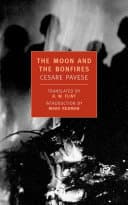
Cesare Pavese (2002)
Genre
Fiction
Reading Time
180 min
Key Themes
See below
Sign in to track this book
An American expatriate returns to his Piedmontese village, uncovering a brutal wartime history of betrayal, illicit passion, and violent reprisal that forces him to confront the past's unsettling echoes.
Anguilla, a man who left Italy as an orphan after the First World War and found success in America, returns to his native Piedmontese hills. He feels like a stranger, noticing changes in the land and people. His main goal is to reconnect with his past, especially the area around Gaminella, where he grew up. He seeks out Valino, a local farmer, and encounters Nuto, a carpenter and musician from his youth, who becomes his main confidant. Anguilla is struck by the poverty and stagnation he sees, a contrast to his romanticized memories and the wealth he gained abroad.
Anguilla's talks with Nuto bring back clear memories of his youth, particularly his time working at the Mora farm. He remembers the Gaminella family: the strict patriarch Sor Matteo, his three beautiful daughters — Irene, Silvia, and Santina — and the farm's daily life. He recalls his humble status as an orphan and farmhand, always watching the family's privileged lives from a distance. The Mora farm represents a lost paradise for Anguilla, a place where he experienced both the harshness of rural life and the first signs of desire and social class, shaping his identity.
Nuto tells Anguilla about the unfortunate lives of Sor Matteo's older daughters, Irene and Silvia. Irene, the eldest, married a wealthy man but died young, with rumors of an unhappy life. Silvia, the middle daughter, was known for her beauty and flirtatious nature. She became involved with various men, eventually marrying a man who wasted her inheritance. Her life was marked by scandal and decline, ending with her death from a botched abortion. Anguilla is deeply affected, realizing that even wealth and beauty did not guarantee happiness or protection from tragedy in their isolated world.
The story moves to World War II and the Italian Resistance. Nuto reveals that Santina, the youngest and most spirited of the Gaminella sisters, joined the partisans. Known for her beauty and rebellious spirit, she used her charm and connections to help the anti-fascist resistance, acting as a courier and informant. Her involvement in the war adds danger and heroism to her character, contrasting with her sisters' more conventional, if tragic, lives. Anguilla is interested in Santina's change into a figure of both allure and political importance.
Anguilla thinks about his 'padrino' (godfather), the man who took him in as a child. While the padrino provided a home, it was a life of hard work and little affection. Anguilla remembers the constant struggle for survival and feeling like an outsider even in the padrino's house. This past experience reinforces his feeling of rootlessness and his desire to escape the poverty of the hills. His relationship with the padrino highlights the harshness of rural life and the limited opportunities for orphans then, fueling his ambition for a better life elsewhere.
Anguilla and Nuto often discuss the old tradition of lighting bonfires in the hills, especially during the feast of San Giovanni. Nuto, a man connected to the land and its customs, explains the historical and symbolic meaning of these fires: they are believed to purify the land, ensure good harvests, and ward off evil. For Anguilla, these bonfires link him to his past and the region's enduring spirit, embodying both the pagan roots and the agricultural rhythms of the community. They symbolize the cycles of life, death, and renewal in the Piedmontese countryside.
Anguilla spends time observing Valino, a poor farmer struggling to make a living from the land. Valino represents the challenges faced by the rural community: poverty, hard work, and the difficulty of adapting to changing times. He has a young daughter, Cinto, who is lame and often neglected, sparking Anguilla's pity. Valino's desperate situation and his family's bleak future reinforce Anguilla's decision to leave the land years ago, yet also highlight his connection to the people and their struggles, despite his new wealth.
The story reaches a shocking point when Valino, driven to despair by poverty and his family's perceived burden, commits a terrible act. He murders his wife and his daughter, Cinto, before setting fire to his farmhouse, trying to end his own life in the blaze. Nuto discovers the horrific scene and tells Anguilla. This event deeply disturbs Anguilla, forcing him to confront the brutal realities that persist in the hills, shattering any remaining romantic illusions he had about his homeland. It is a stark reminder of desperation's destructive power.
In a climactic revelation, Nuto finally tells the full, tragic story of Santina. After the war, she was accused of collaborating with the fascists, specifically for betraying partisans to the Germans for personal gain or self-preservation. Nuto, along with other partisans, was involved in her execution. She was taken to the woods, stripped naked, and shot, her body then burned in a bonfire to erase all traces. This revelation profoundly shocks Anguilla, who had idealized Santina. It exposes the dark, unforgiving side of the war and the harsh justice meted out afterward, forever changing his view of his past.
Anguilla, having learned the full extent of the tragedies that befell the Gaminella family and the violent secrets of the Resistance, struggles to reconcile his memories with the harsh realities. The beautiful, spirited Santina he remembered was a traitor, executed and burned. The idyllic Mora farm, a symbol of his past, is now a place of haunting memories and brutal truths. His talks with Nuto have stripped away his romantic illusions, revealing a land steeped in poverty, desperation, and the lingering scars of war. He realizes that the past is not simply nostalgic but a complex, often brutal, force that continues to shape the present.
As Anguilla prepares to leave, he reflects on the 'bonfires' – both the literal ones and the metaphorical fires of memory, passion, and destruction that have shaped his homeland. He recognizes that while he escaped the physical poverty of the hills, he can never truly escape his origins. The stories of Santina's execution and Valino's despair have burned into his consciousness, leaving a lasting mark. He understands that some truths, like the burning of a body in a bonfire, are meant to be erased but ultimately cannot be. The past, with all its beauty and brutality, remains an unburnable part of him.
The Protagonist
Anguilla begins as a nostalgic observer seeking a romanticized past and ends with a sobering understanding of his homeland's brutal truths and his own indelible connection to them.
The Supporting
Nuto remains a constant, grounded figure, gradually unveiling the harsh truths of the past to Anguilla.
The Supporting
Santina transforms from a figure of youthful allure into a symbol of wartime tragedy and moral ambiguity, her true fate revealed only at the end.
The Mentioned
Sor Matteo's character remains static as a memory, representing the past social order.
The Mentioned
Her arc is presented as a completed tragedy, a warning about the fragility of life.
The Mentioned
Her arc is a descent into scandal and an early, tragic death, serving as a moral lesson.
The Supporting
Valino's arc is one of increasing despair, culminating in a violent, self-destructive act.
The Mentioned
Cinto's brief arc is one of silent suffering, ending in a shocking, tragic death.
Anguilla's return is driven by a desire to reconnect with his past, but he quickly discovers that memory is often a romanticized, unreliable construct. The 'past' he seeks is not static but a complex, often brutal, history revealed through Nuto's stories. The idyllic Mora farm, for instance, is unveiled as a place of hidden tensions and eventual tragedy for the Gaminella sisters. This theme highlights how personal and collective memories can obscure darker truths, and that confronting the past means confronting its painful realities, not just its nostalgic echoes.
“A country means not being alone, knowing that in the people, in the plants, in the soil, there is something of you, that even when you are not there, it continues to wait for you.”
Anguilla's journey explores the human need for belonging. Having left Italy as an orphan and found success abroad, he feels perpetually rootless, an outsider both in America and in his homeland. His return is an attempt to find a 'country' – a place and people where he truly belongs. However, the revelations of the past, particularly Santina's fate and Valino's tragedy, make him question if he can ever truly belong, or if his identity is forever shaped by his origin as an orphan, an outsider observing the 'bonfires' from a distance. He is neither fully American nor fully Piedmontese.
“You can't buy a country. You can't buy a home. You can only be born into it.”
The novel portrays the harsh, often brutal, realities of rural life in post-WWI and WWII Piedmont. Anguilla's childhood was one of hard labor and poverty, a fate he escaped. His return reveals that these struggles persist, exemplified by Valino's desperate situation which culminates in murder and suicide. The Gaminella sisters, despite their wealth, are not immune to tragedy, suggesting that the land itself, with its ancient rhythms and unforgiving nature, can be a harsh master. This theme counters romantic notions of the countryside, showing its capacity for both beauty and despair.
“A life like that, without land, without roots, without anything of your own, is not a life.”
The Italian Resistance and World War II cast a long shadow over the narrative, revealing the moral complexities and lasting scars of conflict. Santina's story is the most poignant example: a spirited woman involved in the Resistance who is later accused of collaboration and executed. This revelation forces Anguilla, and the reader, to confront the difficult choices made during wartime, where lines between heroism and betrayal can blur. The 'bonfires' here are not just traditional rituals but also the literal burning of bodies to erase evidence, symbolizing attempts to bury uncomfortable truths that eventually resurface.
“There are things that, even if you burn them, don't go away.”
The natural landscape of the Piedmontese hills, with its changing seasons, vineyards, and ancient bonfires, is more than just a setting; it is an active force influencing human destiny. The cyclical nature of the moon and the bonfires mirrors the cycles of life, death, and renewal, but also the enduring patterns of human behavior and suffering. Nuto, deeply connected to the land, often interprets events through its lens. The land provides sustenance but also demands sacrifice, and those who are tied to it, like Valino, are often subject to its harsh whims, suggesting a fatalistic connection between the environment and the lives lived upon it.
“The moon, when it's full, makes the bonfires burn, makes the blood boil.”
Anguilla's return to his homeland frames the retelling of past events.
The story is primarily told through Anguilla's first-person narration, looking back at his childhood and the events he uncovers upon his return. His present-day observations of the landscape and conversations with Nuto trigger memories and revelations about the past. This device allows Pavese to juxtapose Anguilla's nostalgic recollections with the harsh realities slowly unveiled, creating a sense of dramatic irony and suspense as the truth of the Gaminella family and the war emerges through fragmented memories and gradual disclosures.
Nuto functions as the primary revealer of the past and the voice of local wisdom.
Nuto serves a crucial role as Anguilla's main confidant and the primary source of information about the past. He is deeply rooted in the local culture and history, possessing knowledge of the Gaminella family's fates and the secrets of the Resistance. His slow, deliberate revelation of these truths builds suspense and allows Anguilla (and the reader) to piece together the full, often brutal, picture. Nuto's character grounds the narrative in the local perspective, acting as a link between Anguilla's outsider status and the deeply embedded history of the hills.
Bonfires represent purification, tradition, passion, and destruction.
The bonfires mentioned in the title and throughout the novel are a powerful symbol. Literally, they represent ancient agricultural rituals of purification and fertility. Metaphorically, they symbolize the burning passions of youth (Anguilla's early desire for Santina), the destructive fires of war and betrayal (Santina's execution and burning), and the desperate acts of individuals (Valino's burning farmhouse). They also signify the attempt to erase or cover up uncomfortable truths, yet, as Nuto suggests, some things 'don't go away' even when burned, highlighting the enduring nature of memory and guilt.
The Gaminella family and their farm represent the social hierarchy and changing fortunes of the region.
The Mora farm, where Anguilla spent his youth, serves as a microcosm of the Piedmontese society and its transformations. Initially, it represents wealth, privilege, and the social hierarchy that Anguilla, as an orphan, observes from the outside. The tragic fates of Sor Matteo and his three daughters—Irene, Silvia, and Santina—mirror the broader decline and upheavals experienced by the region due to changing economic conditions and the impact of war. The farm's eventual decline and the violent end of its last inhabitants symbolize the irreversible changes that have swept through the traditional rural world.
“A country is not a country unless it has a mountain, a river, and a few vineyards.”
— Nuto's observation about what constitutes a true homeland.
“There's no point in having money if you don't know what to do with it.”
— Anguilla reflecting on the emptiness of wealth without purpose.
“Everyone has a village, a place where they were born, even if they don't remember it.”
— Anguilla's thoughts on the universal human connection to one's origins.
“The moon, when it's full, makes people do strange things.”
— A common superstition shared among the villagers, hinting at primal forces.
“You can travel the world, but you always carry your own country inside you.”
— Anguilla's realization about the indelible mark of one's homeland.
“The dead don't care about our quarrels, but we care about theirs.”
— A reflection on the enduring impact of past conflicts and grievances.
“What does it mean to be free if you're alone?”
— Anguilla pondering the value of freedom without companionship.
“There are things you never forget, no matter how much time passes.”
— Anguilla's internal monologue about the persistence of certain memories.
“The smell of the earth after rain is the smell of home.”
— A sensory detail that evokes a strong feeling of belonging for Anguilla.
“Every man has his own bonfire, his own secret, his own pain.”
— A metaphorical statement about the hidden burdens people carry.
“You can't escape what's in your blood.”
— A fatalistic view on inherited traits and destiny.
“The past is like a foreign country; they do things differently there.”
— Anguilla's observation on how drastically things have changed since his youth.
“Silence is the only thing that doesn't betray you.”
— A somber reflection on trust and disillusionment.
“The world keeps turning, and people keep dying, but the hills stay the same.”
— Anguilla's contemplation of the enduring landscape amidst human transience.
“You can't buy peace, not with all the money in the world.”
— A final thought on the limitations of material wealth in finding contentment.
Ready to see how well you understood this book? Take our interactive quiz with 10 questions.

Cesare Pavese was an Italian novelist, poet, short story writer, translator, literary critic, and essayist. He is often referred to as one of the most influential Italian writers of his time.

Ashley Antoinette
4.6

Mark McDonald
4.4
Luo Guanzhong
4.4

Mia McKenzie
4.3

Dorothy Parker
4.3

Joaquim Maria Machado de Assis
4.3

James Thurber
4.2

Terry Kay
4.2