“The wall was not there because I was not there. The wall was there because I was there.”
— Reflecting on the nature of reality and perception within the crumbling apartment.

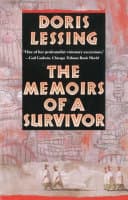
Doris Lessing (1988)
Genre
Fiction
Reading Time
240 min
Key Themes
See below
Sign in to track this book
In a collapsing society, a woman's reluctant care for a young girl leads to a harsh journey through the end of civilization and a search for what can save humanity.
The story begins with the unnamed, middle-aged narrator living in an old apartment building in a city falling apart. Society is crumbling, services are failing, and youth gangs roam the streets. One day, a stranger brings a young girl, Emily, to her apartment, simply stating she is now the narrator's responsibility. The narrator, though confused, accepts this. Emily, about twelve, is quiet, watchful, and seems sad and independent. The narrator tries to include Emily in her life, observing the girl's reserved nature and her unique way of dealing with the increasingly desolate world outside.
Soon after Emily arrives, the narrator starts to see a wall in her apartment as more than just a physical barrier. It becomes semi-transparent, showing scenes from another reality. This 'other' world is not fantasy but a symbolic, vivid place with figures representing human experience: a wise, old woman, a child, and abstract shapes. The narrator watches these scenes, sometimes interacting with them mentally, and finds herself drawn to this inner world. The wall becomes central to her life, offering both comfort and a strange understanding amid the external decay. Emily also seems aware of the wall, though she never speaks of it.
Outside the narrator's apartment, the city continues its rapid descent into anarchy. Organized society has largely disappeared. Youth gangs, led by charismatic but often brutal figures, control the streets, scavenging and committing random acts of violence. Food and utilities become scarce, forcing the narrator and Emily, along with other residents, to adapt to constant uncertainty and fear. The narrator observes the children and young adults becoming wilder, losing their innocence, and struggling to survive. Emily, despite her youth, shows remarkable resilience and self-sufficiency, often disappearing to scavenge or interact with other children, which quietly concerns the narrator.
One day, Emily brings a large, shaggy dog named Hugo into the apartment. Hugo is initially cautious but quickly forms a strong bond with Emily, becoming her constant companion. The narrator observes the deep connection between the girl and the dog, seeing it as a vital source of comfort and a symbol of lasting love and loyalty in a world without such niceties. Hugo's presence also shows Emily's nurturing side, as she cares for the animal despite food shortages. The dog's loyalty contrasts sharply with the betrayal and indifference common in human interactions outside their home, further highlighting their isolated existence.
As the city's structure further dissolves, Emily becomes more independent, often leaving for long periods. She eventually connects with Gerald, a charismatic and influential leader of one of the larger youth gangs. Gerald, though young, has a commanding presence and a practical, almost ruthless, approach to survival. He sometimes visits the narrator's apartment, bringing a sense of both protection and danger. The narrator views Gerald with a mix of apprehension and respect, acknowledging his ability to organize and lead in chaos, even if his methods are often brutal. Emily's involvement with Gerald complicates the narrator's role as guardian, as she must navigate the shifting loyalties and dangers of the outside world through Emily's experiences.
As conditions worsen, the narrator's large apartment building attracts other survivors. Various individuals and small groups, displaced by increasing violence and lack of resources, seek shelter within its walls. These include a family with young children, a group of teenagers, and other adults, all trying to create some normalcy. The narrator observes this makeshift community forming, noting the struggles and small successes of collective living. This influx of people brings new challenges, such as resource allocation and conflict resolution, and a renewed sense of shared humanity, as they all depend on each other for survival and companionship amid widespread desolation.
The narrator's connection to the wall and the 'other' world behind it deepens. The scenes she witnesses become more meaningful and symbolic, showing not only archetypal figures but also glimpses into humanity's collective past and potential future. She sees a child being cared for, an old woman giving wisdom, and moments of creation and destruction. These visions offer a contrast to the grim reality outside, providing a spiritual and psychological refuge. The wall is a metaphor for the human mind's inner landscape, a place where meaning and order can still be found even when the external world collapses into chaos. The narrator spends more and more time observing and thinking about these internal experiences.
Despite temporary stability, the collective household in the apartment building is not sustainable. Resources remain scarce, and the constant threat from outside gangs and the city's general decay eventually force residents to make a hard choice. Led by Gerald and other pragmatic figures, the community decides to leave the building and move to a more rural, potentially safer, location. The departure is orderly but tinged with sadness and uncertainty, as they leave behind the last parts of their urban life. The narrator observes this exodus, understanding its necessity but feeling the loss of the fragile community that had formed.
When it is time for the group to leave the building, Emily, now older and more confident, decides to go with Gerald and the migrating group. Her bond with Gerald has grown strong, and she sees her future with him and the other youth. The narrator, though sad about Emily's departure, recognizes her need for independence and her place in this new, evolving society. Emily leaves with Hugo by her side, a symbol of her journey and her lasting connection with the natural world. This separation is a significant turning point, as the narrator is left alone to face the city's remains and her own inner world.
After Emily and the others leave, the narrator is alone in the vast, empty apartment building. The outside world continues to decline, but her focus shifts almost entirely inward. The wall becomes her main companion and source of experience. She spends her days and nights observing the intricate, symbolic landscapes and figures within it, finding deep meaning and connection there. The 'other' world is no longer just a vision but an immersive reality, a place of order and spiritual nourishment that contrasts sharply with the desolation outside. This period marks her complete surrender to the internal journey, finding a new way of existing beyond society's traditional bounds.
In her solitude, the narrator undergoes a deep spiritual and psychological change. Her connection to the 'other' world of the wall becomes absolute, blurring the lines between inner and outer reality. She moves past the anxieties and physical limits of her former life, finding a state of deep understanding and peace. The wall is no longer just a vision but a gateway to universal consciousness, a realm where past, present, and future meet. She becomes an observer of fundamental human patterns, an embodiment of memory and potential. This final phase of her existence suggests a transcendence of individual identity into something more collective and eternal, a merging with life's essential forces.
The Protagonist
She transforms from a passive observer of societal collapse into an active participant in an internal, spiritual journey, ultimately transcending physical reality.
The Supporting
She matures from a bewildered child into a self-reliant young woman, finding her place within a new, emerging social structure.
The Supporting
Remains a constant, loyal companion to Emily, symbolizing enduring affection amidst decay.
The Supporting
Develops from a gang leader into a pragmatic leader of a migrating community.
The Mentioned
Serves as a plot catalyst, his role is complete upon Emily's delivery.
The Supporting
Remain consistent archetypal representations, deepening in meaning for the narrator.
The Supporting
Form a temporary community and then collectively migrate in search of a new home.
The novel shows society's breakdown—government, infrastructure, and social norms—leading to anarchy where youth gangs rule and basic survival is key. It also explores the human need to form new structures and seek order, even if those orders are harsh. Gerald's leadership and the formation of the migrating group illustrate this drive to create new communities from the old. The narrator observes the shift from old ways of living to new, often brutal, necessities, reflecting on humanity's resilience and adaptability in the face of destruction. This theme is central to understanding the external conflict and the characters' motivations.
“What they were doing, these children, was living a life that was natural to them: this was their time, their stage, their world.”
A main theme is the contrast between the external, decaying physical world and the rich, symbolic inner world seen through the wall. As the outer world collapses, the narrator finds comfort, meaning, and transcendence in her internal visions. The wall is a metaphor for the human mind, suggesting that even when external reality is shattered, an internal landscape of order, memory, and spiritual truth can persist and even grow. This contrast highlights the idea that true survival might be psychological and spiritual, not just physical, emphasizing consciousness's power to create its own reality. The narrator's journey is primarily internal.
“The wall was not a wall, it was a space, it was a whole country, and I was seeing through it.”
The narrator is suddenly given the role of guardian to Emily, a responsibility she accepts without question despite the terrible circumstances. This explores the human drive to care for the young and vulnerable, even without societal support. The evolving relationship between the narrator and Emily, marked by quiet observation and mutual adaptation, examines the complexities of guardianship in extreme conditions. The narrator's responsibility goes beyond physical protection; she also provides a stable presence and a link to a fading past for Emily, even as Emily makes her own way in the new world. This theme questions what it means to nurture and guide when all traditional frameworks are gone.
“She was my responsibility. That was what he had said, and I had accepted.”
The novel constantly deals with the weight of memory and history in a world that seems to have forgotten its past. The narrator, representing the 'old world,' carries memories of a functioning society, which she contrasts with the present decay. The 'other' world behind the wall also offers glimpses into archetypal human history and collective memory, suggesting that certain patterns and truths endure despite societal collapse. Emily and the youth, however, represent a future unburdened by the past, adapting to new circumstances without nostalgia. The novel explores how history informs (or fails to inform) the present and shapes a post-apocalyptic future, highlighting the cyclical nature of human experience.
“What I saw was not a past, but a present. And what I saw was not a future, but a present.”
The novel subtly emphasizes the resilience and adaptability of its female characters, especially the narrator and Emily. The narrator, despite her initial passivity, shows remarkable inner strength and intellectual fortitude, finding a unique path to survival through her engagement with the 'other' world. Emily also shows incredible resourcefulness and independence, navigating the dangerous external world with quiet determination. Even the 'ancient woman' figure behind the wall can be seen as embodying lasting feminine wisdom. The story suggests that in a world where traditional male power structures have crumbled, a different kind of strength, often overlooked, comes forward. This theme highlights the diverse ways individuals, particularly women, cope with and adapt to extreme conditions.
“It was the women, I thought, who remembered what it was to be human, who kept the small flame of civilization alive.”
A permeable barrier revealing an 'other' world.
The wall is the central symbolic and structural device in the novel. Physically, it's a wall in the narrator's apartment. Metaphorically, it represents the boundary between external reality and internal consciousness, the conscious and unconscious mind, or even different dimensions of existence. It allows the narrator to access a vibrant, symbolic 'other' world that contrasts sharply with the decaying external reality. This device facilitates the narrator's spiritual journey and provides a unique lens through which to explore themes of memory, archetype, and the search for meaning. It functions as both a refuge and a source of profound insight.
The story is told exclusively from the narrator's subjective viewpoint.
The entire novel is presented as the unnamed narrator's journal or memoirs, offering a highly subjective and introspective account of events. This device limits the reader's perspective to what the narrator observes, perceives, and feels, making her internal world as significant as the external plot. It emphasizes themes of personal experience, perception, and the individual's struggle to make sense of chaos. The reader experiences the societal collapse and the 'other' world through her unique filter, allowing for a deep exploration of her psychological and spiritual journey without external validation.
A future society devastated by an unspecified collapse.
The novel is set in a future or alternate reality where society has largely collapsed, characterized by a breakdown of government, services, and social order. This setting creates a backdrop of extreme adversity, forcing characters into survival mode and highlighting the fragility of civilization. The unspecified nature of the catastrophe allows the focus to remain on the human response rather than the cause. This device serves to strip away the superficial layers of modern life, exposing fundamental human instincts and the essential search for meaning and order in a desolate landscape.
Characters and locations that embody universal human experiences.
While specific characters like Emily and Gerald are distinct, many elements in the novel lean towards the archetypal. The 'ancient woman' and 'child' behind the wall are clear examples, representing wisdom and innocence. The decaying city itself becomes an archetype of a fallen civilization, and the narrator's apartment, a sanctuary, an archetype of home. This device allows the novel to explore universal themes of human experience, survival, and the collective unconscious, transcending the specific details of the plot to resonate on a deeper, more symbolic level. It gives the story a timeless and mythical quality.
“The wall was not there because I was not there. The wall was there because I was there.”
— Reflecting on the nature of reality and perception within the crumbling apartment.
“It was as if an immense and ancient weariness had settled upon the city, and everyone in it.”
— Describing the pervasive sense of decay and resignation in the unnamed city.
“There was no longer any need to pretend that things were not as they were.”
— Observations on the abandonment of social conventions as society collapses.
“I understood then that what I had seen was not a memory, but a possibility.”
— Realizing the nature of the visions she experiences, blurring past, present, and future.
“The children were the most frightening part, because they were the future.”
— Witnessing the increasingly feral and unmoored behavior of the younger generation.
“We were all survivors, but what we were surviving for, I did not know.”
— Contemplating the purpose of continued existence amidst the widespread desolation.
“The cat was the only creature who seemed entirely at home in the chaos.”
— Observing the cat's adaptability and indifference to the human world's collapse.
“The inner room was always there, waiting, a place of peace and clarity.”
— Referring to the protagonist's recurring psychic space or alternative reality.
“It was not a question of good or evil, but of what worked.”
— Reflecting on the pragmatic and amoral decisions made in a desperate world.
“The past was a dream, the present a nightmare, the future an abyss.”
— A concise summary of the protagonist's bleak perception of time and existence.
“We were learning to live without a future, which meant living without hope.”
— Describing the psychological impact of a world without prospects or progress.
“The world was shrinking, not expanding. It was closing in.”
— Physical and metaphorical description of the confinement and diminishing possibilities.
“The only thing that remained was the connection, the invisible threads that bound us.”
— Despite societal breakdown, emphasizing the enduring human need for connection.
“To survive was to change, and to change was to become something new, something indefinable.”
— Exploring the transformative nature of enduring extreme circumstances.
Ready to see how well you understood this book? Take our interactive quiz with 10 questions.

Doris May Lessing was a British-Zimbabwean novelist. She was born to British parents in Iran, where she lived until 1925. Her family then moved to Southern Rhodesia, where she remained until moving in 1949 to London, England. Her novels include The Grass Is Singing (1950), the sequence of five novels collectively called Children of Violence (1952–1969), The Golden Notebook (1962), The Good Terrorist (1985), and five novels collectively known as Canopus in Argos: Archives (1979–1983).

Ashley Antoinette
4.6

Mark McDonald
4.4

Luo Guanzhong
4.4

Mia McKenzie
4.3

Dorothy Parker
4.3

Joaquim Maria Machado de Assis
4.3

James Thurber
4.2

Terry Kay
4.2