“The life of a man is a long road, and the road of Go is also a long road.”
— A general reflection on the nature of life and the game of Go.

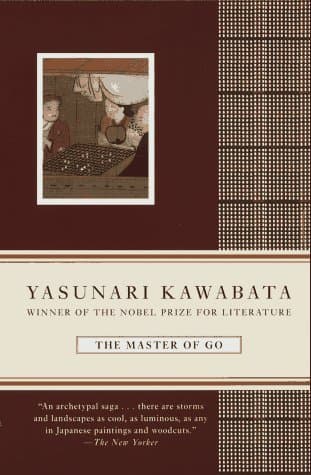
Yasunari Kawabata (1996)
Genre
Fiction
Reading Time
180 min
Key Themes
See below
Sign in to track this book
In his final Go match, an aging Master, representing traditional Japan, faces a younger, modern challenger, symbolizing the unavoidable conflict with the twentieth century.
The story introduces Honinbo Shusai, the Master of Go and the last of his line. At 63 and in poor health, he announces his final professional game. This retirement match is a symbolic passing of the torch. His opponent is Otake, a younger, ambitious player known for his modern, aggressive style. The match is highly anticipated, not just for its sporting importance, but as a cultural event showing the clash between traditional and modern Go. The rules are set carefully, including a long playing time and the traditional 'nigiri' method to decide who plays first.
The first moves are played with ceremony, highlighting the event's historical weight. The Master, playing white, opens cautiously, while Otake, with black, plays more assertively. The game soon faces problems. Due to the Master's frail health and the demanding schedule, the match is played in many sessions, often separated by days or weeks. These frequent delays, needed for the Master to rest, frustrate Otake, who believes they disrupt his strategy. The reporter-narrator, Umino, records these events, showing the contrast between the Master's traditional view of time and Otake's desire for efficiency.
As the game continues, the Master's health becomes a major factor. He has severe stomach pains, requiring him to stop playing for long periods. These interruptions, some lasting weeks, are noted by the press. Otake grows more frustrated by the delays, seeing them as unfair advantages for the Master, who gets more time to think. He voices his irritation to organizers and the press, creating tension around the game. The narrator observes how these outside factors begin to overshadow the pure strategic play, making the match a test of endurance and will as much as skill.
During one session, an important incident occurs. The Master makes a move, but Otake claims the Master had placed a stone elsewhere and then moved it. This accusation, though unproven, causes a big disruption. The Master, already frail, is deeply offended by the implied cheating. The incident highlights the clash between the Master's reliance on honor and tradition and Otake's more practical, competitive mindset. Organizers intervene, and the game continues, but trust between the players is broken, adding personal animosity to the professional rivalry.
After the controversy and his health problems, the Master's play changes. He becomes more conservative, often choosing defensive moves instead of his usual aggressive attacks. Both Otake and the narrator notice this change, interpreting it as a sign of the Master's lessening energy and perhaps a loss of his fighting spirit. His moves, once bold, now show weariness, a desire to preserve rather than conquer. This period of play shows the physical toll the match takes on the aging Master and how it affects his strategic choices.
In contrast to the Master's fading energy, Otake remains aggressive. He continues to push his advantage, playing with modern, calculated efficiency to exploit any weakness. He shows little sympathy for the Master's condition, seeing the match as a professional contest. His goal is victory, and he uses every strategic tool to achieve it. This determination from Otake further emphasizes the generational and stylistic gap between the two players, as he represents a new era of Go where emotion gives way to pure competition.
The game enters its final stages. Both players are tired, but Otake's youth and stamina prove key. The Master, under pressure and battling his health, makes a crucial error. This mistake, subtle to an untrained eye, is a significant turning point, giving Otake a clear advantage. The narrator describes the atmosphere of the final sessions, the silence broken only by the click of stones, and the tension as the outcome becomes clear. The Master's declining physical state is clearly linked to his strategic misstep.
After 14 sessions and 273 moves, Otake wins. The Master, playing white, resigns. The victory is hard-won, showing Otake's skill and endurance. While Otake wins, the victory feels bittersweet, overshadowed by the Master's illness and the match's controversial aspects. The narrator reflects on the outcome's meaning, not just as a sporting result, but as a symbolic end of an era. The traditional, almost spiritual approach to Go, represented by the Master, gives way to Otake's modern, competitive style.
The Master's health, already fragile during the match, quickly worsens after his defeat. Less than a year later, Honinbo Shusai dies. His death, following his retirement game, marks the symbolic end of an era. The narrator reflects on the Master's life and legacy, acknowledging his contribution to Go and the impact of his death. His death is not just the loss of a great player, but the end of a Go style and philosophy that had defined the game for generations, making the retirement match his true final act.
After the Master's death, the narrator, Umino, thinks deeply about the experience. He considers the differences between the Master's traditional, almost spiritual Go approach and Otake's modern, results-oriented style. The match, for Umino, becomes a small example of Japan's move from its feudal past to its industrialized present. He mourns the loss of the Master's era, marked by grace, honor, and respect for the game itself, acknowledging that while progress is unavoidable, something valuable was lost.
The Protagonist
The Master begins as an invincible symbol of tradition but is ultimately defeated, both by his opponent and his own mortality, symbolizing the end of his era.
The Antagonist
Otake starts as an ambitious challenger and achieves his goal of defeating the Master, solidifying his position as a leading figure of the new Go era.
The Supporting
Umino begins as a reporter, but through his observations, he deepens his understanding and appreciation of the Master's era, becoming a chronicler of a vanishing world.
The Supporting
Kensaku consistently upholds tradition and loyalty to the Master, serving as a steadfast representative of the old ways until the very end.
The Supporting
They struggle to manage the match's complexities, ultimately witnessing the transition of power and the challenges of adapting tradition.
This is the main theme, shown in the conflict between Honinbo Shusai and Otake. The Master embodies centuries of Go tradition, with its spiritual depth, beauty, and emphasis on honor and ceremony. His slow, thoughtful play and his presence evoke a vanishing era of imperial Japan. Otake, on the other hand, represents the modern, practical, and competitive spirit of the 20th century. His aggressive, efficient play, his frustration with delays, and his focus on winning reflect a shift towards Western values of efficiency and direct competition. The match itself becomes a symbolic battle for the essence of Go and, by extension, for Japan's cultural identity.
“In the Master's Go, there was the scent of the past. In Otake's, the scent of the present.”
The novel explores the details and philosophy of Go. Kawabata uses the match to show Go not just as a game, but as an art form, a spiritual discipline, and a reflection of life. The narrator describes the strategic nuances, the subtle power of each move, and the mental and emotional toll it takes on players. The 'immortal game' is presented as a testament to human intellect and intuition, where one mistake can ruin a masterpiece. The game's complexity and the dedication needed to master it are highlighted through the Master's lifelong devotion and Otake's constant study.
“Go is a microcosm of human life, where a single stone can change the fate of a nation.”
The Master's declining health and eventual death are central to the story, tied to the theme of tradition's decline. His physical weakness, stomach pains, and frequent need for rest are not just plot points but show the fragility of life and the inevitability of aging. His struggle during the match reflects a broader struggle against time and change. The Master's defeat and death are presented as a natural, if sad, end to a life dedicated to an art form, symbolizing that even the greatest masters must yield to mortality, just as old traditions give way to new ones. This theme adds melancholy to the story.
“The Master, who had conquered all of Japan, was now fighting a losing battle against his own body.”
The novel emphasizes the importance of honor, respect, and traditional etiquette in the world of Go, especially as upheld by the Master. The ceremonial aspects of the match, the respect for the Master's status, and the expectation of dignified conduct are constantly highlighted. Otake's challenge about the Master's move, whether true or not, is a serious breach of this honor code, deeply offending the Master and showing a generational shift in values. The narrator often contrasts the Master's stoic adherence to tradition with Otake's more practical and less respectful approach, mourning the erosion of these cultural norms in the face of modern competitive pressures.
“In the old days, there was a certain decorum, even in battle. Now, it was simply about winning.”
A newspaper reporter who provides an objective yet reflective account of the match.
Umino, the unnamed newspaper reporter, serves as the primary lens through which the reader experiences the story. He provides a detailed, almost journalistic account of the match, including specific moves, dates, and player reactions. However, his role extends beyond mere reporting; he offers profound philosophical reflections on the game, the players, and the broader cultural shifts represented by the match. His subtle bias towards the Master and the traditional ways imbues the narrative with a sense of elegy and cultural commentary, making him an unreliable but deeply insightful observer.
The prolonged, interrupted nature of the game due to the Master's health.
The match's protracted duration, spanning several months and numerous interruptions, is a crucial plot device. It directly highlights the Master's declining health, underscoring his mortality and the physical toll the game takes. These delays also serve to exacerbate Otake's frustration, creating tension and emphasizing the clash between traditional Go's unhurried pace and modern demands for efficiency. The fragmented schedule allows for deeper reflection and external events to influence the narrative, transforming the game from a mere contest into a prolonged, symbolic struggle.
The match itself, a real-life historical event, is fictionalized as a symbolic battle.
The entire Go match serves as an extended metaphor for the clash between tradition and modernity in Japan. Kawabata fictionalizes a real-life game (played in 1938) to imbue it with profound symbolic weight. Every move, every delay, and every interaction between the players becomes a representation of larger cultural forces at play. The outcome of the game, Otake's victory, is not just a sporting result but a symbolic declaration of the old era's passing and the new era's ascendancy, making the match itself the central 'device' through which the novel's themes are explored.
The black and white Go stones representing opposing forces and philosophies.
The black and white stones of Go are potent symbols throughout the narrative. Beyond their function in the game, they represent the dualities at play: tradition (often associated with the Master's white stones, which traditionally move second and require a more defensive posture) versus modernity (Otake's black stones, which move first and are often more aggressive), life versus death, the past versus the future. The placement of each stone is imbued with meaning, reflecting not only strategic intent but also the philosophical approaches of the players, making the physical components of the game extensions of their personalities and eras.
“The life of a man is a long road, and the road of Go is also a long road.”
— A general reflection on the nature of life and the game of Go.
“The game of Go is a microcosm of life itself. It teaches patience, foresight, and the acceptance of loss.”
— Describing the deeper meaning and lessons learned from playing Go.
“The Master's playing showed a nobility that transcended victory or defeat.”
— Observing the Master's demeanor and style during a match.
“Beneath the surface of civility, a fierce battle was being waged.”
— Referring to the intense, unspoken competition between players.
“He seemed to be playing not against his opponent, but against fate itself.”
— Describing the Master's profound and almost spiritual engagement with the game.
“The true artist plays not with stones, but with the spirit.”
— A reflection on the essence of mastery in Go, beyond mere technique.
“Modern Go has no room for the beautiful, the artistic. It is a game of cold calculation.”
— A lament about the changing nature of Go, moving away from traditional aesthetics.
“The Master's last game was his greatest work of art.”
— Reflecting on the final, poignant match of the aging Master.
“Time, like a Go board, has its empty spaces and its filled ones.”
— A metaphorical comparison between time and the Go board.
“The old ways were dying, and with them, a certain kind of beauty.”
— Mourning the decline of traditional practices and values.
“There is a loneliness in the pursuit of perfection.”
— Observing the isolation that often accompanies extreme dedication to a craft.
“Every move on the Go board is a decision in life.”
— Drawing a direct parallel between the strategic choices in Go and life's decisions.
“The silence of the Go room was heavy with unspoken thoughts and strategies.”
— Describing the intense atmosphere during a Go match.
“To win without understanding is to lose in a deeper sense.”
— A philosophical take on the value of comprehension over mere victory.
Ready to see how well you understood this book? Take our interactive quiz with 10 questions.
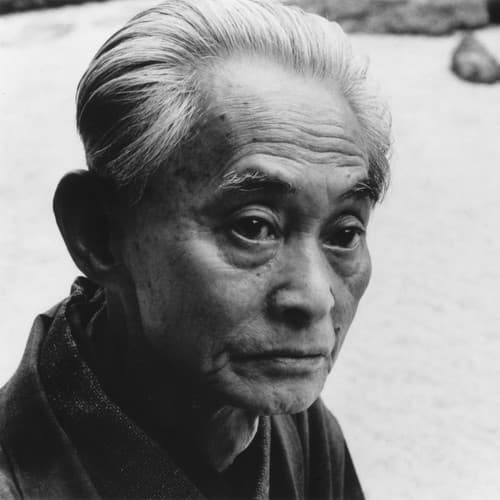
Yasunari Kawabata was a Japanese novelist and short story writer whose spare, lyrical, subtly shaded prose works won him the Nobel Prize in Literature in 1968, the first Japanese author to receive the award. His works have enjoyed broad international appeal and are still widely read.

Ashley Antoinette
4.6

Mark McDonald
4.4
Luo Guanzhong
4.4

Mia McKenzie
4.3
Dorothy Parker
4.3

Joaquim Maria Machado de Assis
4.3
James Thurber
4.2
Terry Kay
4.2