“Youth—youth! Ah, youth! Where are you? When did you go?”
— Halvard Solness, reflecting on his past and lost vitality.

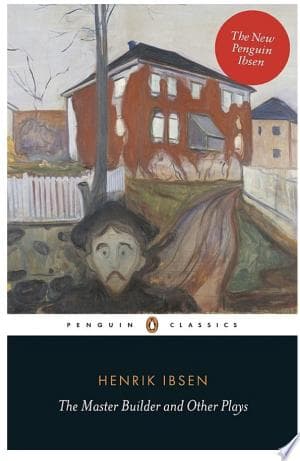
Henrik Ibsen (2020)
Genre
Fiction
Reading Time
215 min
Key Themes
See below
Sign in to track this book
An aging architect, haunted by past failures and the threat of younger talent, struggles with his sanity as a young woman from his past returns to challenge his crumbling legacy.
The play starts in Halvard Solness's architectural office, where he dictates letters to his assistant, Kaja Fosli. Solness is a successful but troubled architect, worried that his best work is behind him and that younger generations will surpass him. He is also involved in a complicated emotional situation with Kaja, who is engaged to Ragnar Brovik, a talented young architect working for Solness. Solness intentionally holds back Ragnar's career, fearing his potential. Mrs. Aline Solness, Halvard's wife, enters, looking tired and sad, reflecting a long-held grief. The mood is heavy with unspoken tensions and Solness's constant dread and guilt, which come from past events related to his family and career.
While Solness is agitated, a lively young woman, Hilda Wangel, arrives without warning. She immediately recognizes Solness, saying they met ten years earlier when she was a child. She reminds him of a promise he made then: that he would return to make her a princess and build her a castle, with a kingdom. Solness, at first dismissive and confused, slowly starts to remember the meeting. Hilda's presence is both unsettling and energizing for Solness; she represents a forgotten hope and a direct challenge to his carefully built life. Her arrival immediately disrupts the dynamics in the Solness home and office, suggesting a deep psychological change.
Hilda questions Solness about his past, including the fire that destroyed his wife Aline's family home ten years ago. This fire, though it allowed Solness to build his fortune by constructing new houses, also led to the death of their two young sons and left Aline emotionally broken. Solness admits he believes he willed the fire to happen, an idea that both torments and empowers him. Hilda, however, seems more interested in the 'castles in the air' he promised her. Their talk shows Solness's deep guilt and his struggle between ambition and morality, while Hilda pushes him to confront these hidden parts of himself and his relationship with Aline.
Aline Solness, overwhelmed by Hilda's presence and the return of painful memories, confronts Halvard. She expresses her deep sorrow over the loss of her home and children, and her resentment toward Solness for not understanding her grief. She feels he has put his career and building new houses before her emotional well-being. Aline shows the tragic results of Solness's ambition and his inability to truly connect with his wife's suffering. This scene highlights the emotional distance between them and Aline's quiet, lasting despair, which has been a constant part of their marriage since the fire.
Hilda, seeing Solness's control over Ragnar Brovik's career, insists that Solness allow Ragnar to show his own architectural designs. She sees Ragnar's talent and believes Solness is unfairly holding him back out of fear. Solness, influenced by Hilda's strong belief and perhaps a flicker of his own conscience, eventually agrees to let Ragnar pursue his independent career. This decision marks a key moment, as it shows a potential change in Solness's oppressive professional dynamics and suggests Hilda's strong influence on his actions. It also hints at Solness's inner conflict between his fear of being replaced and a deeper, perhaps hidden, sense of fairness.
Inspired by Hilda's youthful energy and her belief in his abilities, Solness decides to build a new, grand house for himself and Aline, with a tall spire. This project is not just a building but a symbolic act: Solness plans to climb to the very top of the spire, something he has not done for years, to place the wreath himself. This act represents his desire to regain his former glory and his artistic courage, fueled by Hilda's vision and encouragement. Hilda sees this as the fulfillment of his promise to build her a 'castle,' even if it is symbolic, and urges him toward this dangerous, symbolic feat.
Aline Solness feels dread about the new house and her husband's plan to climb the spire. She sees it as a dangerous and arrogant act, deeply unsettling her. She worries about his safety and the symbolic meaning of his actions, which seem to ignore her feelings and their shared history of loss. Aline's worries contrast with Hilda's enthusiastic encouragement, showing the basic differences in their views and their relationships with Solness. Her fears hint at a tragic outcome, emphasizing the tension between Solness's high ambitions and the realities of his life.
As the new house nears completion, Solness tells Hilda his deep fear of punishment. He believes that a higher power, or perhaps his inner 'trolls,' will punish him for his ambition and past actions, especially for having built churches and then only homes for people. He feels his success has come at the expense of others, especially Aline. He also admits his fear of youth, of being replaced and forgotten. Hilda, however, dismisses his fears, urging him to embrace his power and fulfill her vision of him as a triumphant architect, further pushing him toward the symbolic act of climbing the spire.
The new house is finished, and a crowd gathers for the ceremony. To everyone's surprise and Aline's horror, Solness, despite his fear of heights and age, begins to climb the high spire to place the wreath. Hilda watches with excitement, cheering him on, convinced he is fulfilling his destiny as 'the master builder.' As he reaches the very top and places the wreath, he waves his hat. Moments later, he falls to his death. The crowd is shocked, but Hilda, with a strange mix of triumph and despair, proclaims, 'My — my Master Builder!'
Solness's tragic fall leaves Aline devastated and the other characters in shock. Ragnar Brovik, now free from Solness's influence, can finally pursue his own career, but the cost is immense. Hilda Wangel, though she pushed for the climb and saw his death, remains focused on the idea of Solness as the triumphant 'master builder' who dared to reach the heights. His death is not just an accident but the culmination of his life's struggles: his ambition, his guilt, his fear of youth, and his desperate need for validation. The play ends with the unresolved tension of his legacy, leaving the audience to think about the true meaning of his 'mastery' and the price of his ambition.
The Protagonist
Solness begins as a man clinging to his power and fearing his decline. Hilda's arrival forces him to confront his past and ultimately inspires him to a final, tragic act of defiance and self-assertion.
The Catalyst/Supporting
Hilda arrives seeking the fulfillment of a childhood fantasy and leaves having witnessed the tragic realization of her 'master builder's' ultimate feat.
The Supporting
Aline's arc is one of enduring, unalleviated grief, culminating in witnessing her husband's tragic death, which compounds her sorrow.
The Supporting
Ragnar begins as a suppressed talent and ends with the opportunity to finally pursue his independent career, albeit overshadowed by Solness's death.
The Supporting
Kaja's arc is one of unrequited emotional entanglement with Solness, culminating in her release from his influence after his death.
The Mentioned
Doctor Herdal's arc is largely static; he remains an external, rational observer throughout the play.
The Mentioned
Old Mr. Brovik's arc concludes with his death, freeing Ragnar from direct obligation to his father's dying wish, which Solness had exploited.
The play explores the destructive nature of unchecked ambition and the lasting burden of guilt. Halvard Solness's professional success is tied to personal tragedy: the fire that destroyed his wife's home and killed his children, which he secretly believes he caused. This guilt, along with his ruthless ambition to stay in power, leads him to manipulate others like Ragnar and Kaja. His constant fear of punishment ('the trolls') and his tragic fall are direct results of his drive for power and the moral compromises he made. Aline's constant grief is a visible reminder of this immense cost, showing how Solness's 'mastery' is built on personal devastation.
““I have built all these houses with a gnawing conscience.””
A main theme is the conflict between the older, established generation and the rising, ambitious youth. Solness fears that the younger generation, shown by Ragnar Brovik, will inevitably surpass and replace him. This fear drives his manipulative behavior, as he intentionally stifles Ragnar's talent. Hilda Wangel, lively and demanding, represents a different side of youth: a force that both invigorates Solness and pushes him toward his downfall. Her youthful ideas and belief in him are both inspiring and a dangerous goad, making him face his worries about aging and artistic decline. Solness's struggle shows the dread of losing one's relevance and power.
““The younger generation will come knocking at the door.””
Ibsen shows how characters subtly control each other. Solness is a master manipulator, holding Ragnar Brovik's career hostage through Kaja Fosli's emotional dependence. He skillfully uses Kaja's feelings to keep Ragnar in his employ, showing ruthless self-interest. Conversely, Hilda Wangel, through her mix of admiration, challenge, and almost hypnotic suggestion, manipulates Solness. She taps into his deepest desires and insecurities, pushing him toward the symbolic act of climbing the spire. The play shows how these complex power dynamics, often fueled by unspoken desires and fears, shape the characters' actions and determine their fates.
““And then the conscience began to gnaw again, just as before. And I was punished, by the loss of my two little boys.””
The play highlights the tragic incompatibility between Solness's consuming artistic ambition and his ability for genuine domestic love and happiness. His pursuit of greatness as an architect has severely harmed his personal life, especially his relationship with Aline. While Solness builds magnificent houses, his own home lacks warmth, filled with Aline's silent grief. He prioritizes his 'calling' over her emotional needs and their shared family life. Hilda's arrival, with her demand for 'castles in the air,' further emphasizes this conflict, as she appeals directly to his artistic ego, drawing him away from any chance of reconciliation with his marriage's domestic realities. His final, self-destructive act is a triumph of his artistic will over his personal survival.
““But to build homes for human beings, where they can be happy — that I have never been able to do.””
Ibsen blurs the lines between objective reality and subjective perception, especially through Solness's inner world. Solness often speaks of 'trolls' and 'helpers' that influence his destiny, suggesting a mystical or psychological force. Hilda Wangel's arrival, with her ten-year-old 'promise' of a kingdom and a castle, further challenges the characters' and audience's understanding of what is real. Is Hilda a part of Solness's subconscious, a real visitor, or a symbolic representation of his repressed desires? The play explores how deeply personal beliefs and fantastical notions can shape one's actions and ultimately determine one's fate, making Solness's world a mix of concrete architectural structures and ethereal 'castles in the air'.
““But then it’s true, after all, that there are such things as trolls in the world?””
A pivotal past event that fuels Solness's ambition and guilt.
The fire that destroyed Aline Solness's ancestral home ten years prior is a crucial plot device. It serves as the catalyst for Solness's rise as a master builder, as he profited immensely from building new houses in its wake. However, it also led to the death of his two young sons and Aline's enduring grief, becoming the primary source of Solness's profound guilt and his belief in a higher power punishing him. The fire is a constant, haunting presence, shaping the psychological landscape of the play and driving Solness's internal conflict between ambition and morality. It is the defining tragedy that underpins all subsequent relationships and actions.
A powerful symbol of ambition, aspiration, and ultimate downfall.
The spire of the new house Solness builds is a potent symbol. For Solness, it represents his artistic peak, a defiance of his vertigo and a challenge to the 'powers' he believes are holding him back. For Hilda, it is the fulfillment of his promise to build her a 'castle' and a symbol of his triumphant mastery. Its great height signifies soaring ambition and the desire to reach unattainable goals. Solness's ascent and subsequent fall from the spire provide the play's dramatic climax, transforming the physical structure into a metaphor for his entire life's trajectory: a reach for glory that ultimately leads to destruction, a tragic culmination of his ambition and his self-destructive tendencies.
A childhood fantasy that becomes a driving force in Solness's present.
Hilda Wangel's recounting of Solness's ten-year-old 'promise' to make her a princess and build her a kingdom serves as a powerful psychological trigger. This seemingly innocent, forgotten fantasy from the past becomes a tangible, demanding force in Solness's present. It represents his repressed desires for recognition, romance, and a sense of heroic purpose that his mundane architectural work can no longer provide. The promise motivates Hilda's actions and her manipulation of Solness, compelling him to confront his past and push towards a dangerous, symbolic fulfillment of her vision, blurring the lines between memory, fantasy, and reality for both characters.
“Youth—youth! Ah, youth! Where are you? When did you go?”
— Halvard Solness, reflecting on his past and lost vitality.
“But the great thing is to build up happy homes for human beings, Mr. Solness.”
— Knut Brovik, expressing a more traditional and altruistic view of architecture.
“Oh, what a joy it is to be young, Solness!”
— Hilda Wangel, full of youthful exuberance and admiration for Solness.
“I can build no more homes for human beings. Only churches.”
— Halvard Solness, revealing his professional and spiritual crisis.
“There are spirits of the past, Solness. They cling to us.”
— Aline Solness, haunted by past tragedies and the loss of her children.
“You are like a bird of prey, Solness. You swoop down and seize what you want.”
— Hilda Wangel, both admiring and critical of Solness's ruthless ambition.
“I feel as if I had come into a strange house. A house full of dead children.”
— Hilda Wangel, sensing the oppressive atmosphere and past tragedies in the Solness home.
“Is it not a terrible thing for a man to have to sacrifice his whole life for a dream?”
— Ragnar Brovik, lamenting his father's unfulfilled potential and Solness's dominance.
“There is a troll in me, Solness. It whispers to me, and tells me to do what I want.”
— Hilda Wangel, acknowledging her own impulsive and demanding nature.
“I have built a home for myself, at last. A home high up, where no one can reach me.”
— Halvard Solness, referring to the new house he has built with a tall tower.
“What is the good of building when one has no one to build for?”
— Aline Solness, expressing her deep sense of loss and the futility of her husband's work.
“Yes, I will climb to the top. I will do what I have promised you, Hilda.”
— Halvard Solness, accepting Hilda's challenge to climb the tower he built.
“My master builder! My master builder!”
— Hilda Wangel, exclaiming with a mix of triumph and despair as Solness falls.
“But there are other things in life, Solness, than just building houses.”
— Dr. Herdal, offering a more grounded perspective to Solness's obsession.
Ready to see how well you understood this book? Take our interactive quiz with 10 questions.
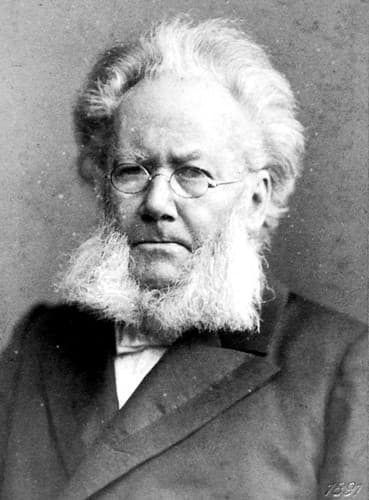
Henrik Johan Ibsen was a Norwegian playwright and theatre director. As one of the founders of modernism in theatre, Ibsen is often referred to as "the father of realism" and one of the most influential playwrights of his time. His major works include Brand, Peer Gynt, An Enemy of the People, Emperor and Galilean, A Doll's House, Hedda Gabler, Ghosts, The Wild Duck, When We Dead Awaken, Rosmersholm, and The Master Builder. Ibsen is the most frequently performed dramatist in the world after Shakespeare, and A Doll's House was the world's most performed play in 2006.

Ashley Antoinette
4.6

Mark McDonald
4.4
Luo Guanzhong
4.4

Mia McKenzie
4.3

Dorothy Parker
4.3

Joaquim Maria Machado de Assis
4.3

James Thurber
4.2

Terry Kay
4.2