“It was as though the world had opened up and shown him its secret, and the secret was that there was no secret, only himself standing there, wondering.”
— David's reflection on his life's ease and the lack of a grand, hidden meaning.

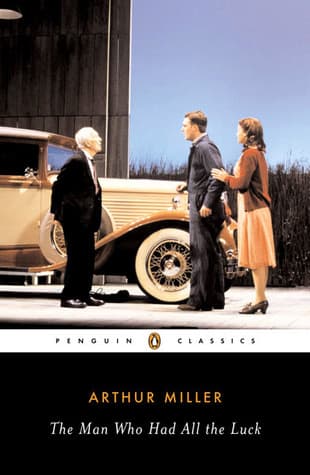
Arthur Miller (2004)
Genre
Fiction
Reading Time
90 min
Key Themes
See below
Sign in to track this book
David Beeves, a man with endless good fortune, finds his 'luck' reflects the tragedies of others, pushing him to madness as he searches for meaning in a random world.
The story begins with David Beeves, a young man with an unusual knack for good fortune. His first big stroke of luck happens when he gets a seemingly worthless horse, which he cures of a mystery illness and turns into a top stud. This early success sets a pattern for David's life; while others struggle, he always comes out ahead. He marries Bessie, a woman from a more established family, despite his humble beginnings. His luck, however, is noticed by others, especially his father-in-law, Gus, who sees David's easy success with mixed feelings, hinting at tension in their relationship.
David decides to invest in a brewery. Against all odds and expert advice, it thrives under his management. His business skill, or perhaps just his luck, brings significant financial success. At the same time, Gus, David's father-in-law, faces a severe financial downturn. Gus had invested heavily in another business that failed completely, leaving him almost ruined. This sharp contrast in fortunes begins to weigh on David. He sees Gus's despair and the unfairness of their different paths, starting to question his own success and the suffering of those around him. This incident plants the first seeds of doubt and guilt in David's mind, making him feel more isolated by his good fortune.
After his financial ruin, Gus dies in a way that suggests suicide, though it is never clearly stated. This tragedy deeply affects David, who feels a strong sense of responsibility and guilt, believing his own overwhelming luck somehow added to Gus's despair. The incident further isolates David, as he struggles to connect his charmed life with the harsh realities others face. He begins to examine every part of his life, searching for a flaw, a reason for his constant good fortune, or a justification for the suffering he sees. His wife, Bessie, tries to comfort him, but David's inner struggle grows, becoming an obsession that starts to consume him and drive a wedge between them.
A fire breaks out at David's brewery, threatening to destroy his successful business. However, through a series of fortunate events and quick action, the damage is minimal, and the brewery is saved. What's more, the incident leads to an insurance payout that actually improves his finances, further solidifying his reputation as 'the man who had all the luck.' Instead of relief, this event increases David's torment. He cannot find any personal flaw or setback that would explain his good fortune, leading him to believe he is simply a passive receiver of an indifferent universe's favors. This realization pushes him closer to a breakdown as he desperately seeks a logical explanation for his charmed life.
David is in a serious car accident, a situation that would normally result in severe injury or death. Amazingly, he emerges completely unharmed, while others in the accident suffer greatly. This incident further highlights his unexplainable luck and pulls him deeper into his existential crisis. He cannot understand why he is always spared, why fate seems to protect him while others are vulnerable. The accident becomes more proof in his mind that he is not truly in control, but merely an object of some larger, random force. He feels increasingly cut off from humanity, unable to relate to others' struggles.
At his breaking point, David starts an intense internal search for a flaw in his character, a hidden sin, or a past mistake that could explain his unending good fortune. He believes that if he can find a reason for his luck, he can understand his place in the universe and perhaps break the cycle. He tells Bessie about his worries, but she struggles to grasp the depth of his despair, seeing only his success. David's search for imperfection becomes an obsession, making him question his own morality and worth. He feels undeserving of his blessings, convinced there must be an underlying, perhaps evil, reason for his unique existence.
David's journey brings him to the chilling idea that his luck might not be a blessing from a kind God, but rather a sign of a godless, random universe. He grapples with the terrifying thought that there is no inherent justice, no cosmic balance, and that his life is simply a random series of fortunate events. This conclusion threatens his sanity, as he longs for meaning and order. He talks about these deep philosophical questions with anyone who will listen, seeking agreement or disagreement, but finds only confusion from his peers. This deep dread becomes the main conflict of his later life.
David's obsession with his luck and the random nature of existence leads him to a deep mental and emotional breakdown. He becomes withdrawn, paranoid, and unstable, pushing away those around him, including Bessie. His once-charming personality is replaced by a haunted, tormented manner. Bessie, seeing his quick decline, finally confronts him, urging him to get help and find peace. She tries to make him see the good parts of his life and appreciate what he has, rather than despairing over what he sees as a curse. Her help marks a turning point, forcing David to face how his obsession affects his loved ones.
After Bessie's heartfelt plea and his own exhaustion from the constant inner struggle, David slowly begins to accept his unique situation. He realizes that fighting his luck or searching for a reason for it is destroying him and his relationships. While he may never fully understand the 'why' behind his good fortune, he starts to understand that he must live with it, not against it. This acceptance is not a happy discovery, but a tired, fragile peace, a recognition that some mysteries may remain unsolved. He begins to re-engage with life, though with a new seriousness.
In the story's end, David Beeves continues to live his life, still experiencing unusual luck in his efforts. However, his view has completely changed. He no longer sees his luck as purely a blessing or a curse, but as an unchanging part of his existence. He has learned to carry the weight of his good fortune with deep empathy for others and a quiet understanding of the universe's indifference. He is a man forever changed, marked by his journey to the edge of madness and back. He now lives with a deeper, more complex appreciation for life's intricacies, luck, and human suffering, having navigated his existential crisis to find a fragile, hard-won peace.
The Protagonist
David transforms from an innocently lucky man into a tormented soul grappling with existential dread, eventually finding a fragile acceptance of his inexplicable fate.
The Supporting
Bessie evolves from a supportive wife celebrating her husband's success to a concerned, then frustrated, and finally instrumental figure in David's journey to self-acceptance.
The Supporting
Gus's arc is one of decline, serving primarily to illuminate David's unique condition and accelerate his internal struggle.
The Supporting
Amos remains largely static, serving as a foil to David's internal turmoil and representing a more conventional understanding of life.
The Mentioned
Not applicable, as the character is only mentioned to establish David's early luck.
The main theme looks at how continuous, unearned good luck can become a psychological burden instead of a gift. David Beeves's endless success, instead of bringing happiness, sends him into an existential crisis. He feels undeserving and alone, believing his luck points to a random, perhaps cruel, universe. This shows when he mourns Gus's death, feeling his own good fortune added to his father-in-law's despair, or when surviving a car accident unharmed leaves him more troubled than relieved. The theme suggests that true happiness requires a sense of earned achievement and a balance between fortune and struggle.
“What have I done to deserve this? Why am I always spared?”
The novel explores the idea that life is not run by a fair or logical order, but by random chance. David's journey is a desperate search for meaning and fairness in a world where his own experience goes against any sense of justice. He cannot find a 'reason' for his luck, leading him to conclude that the universe might be godless and uncaring. This is clear in the contrast between his successful brewery and Gus's failed business, or David's miraculous survival in accidents while others suffer. The lack of a clear pattern or moral explanation for his fate pushes him to the edge of madness, forcing him to face the unsettling possibility of a meaningless existence.
“There must be a balance. There must be a reason.”
David's constant good luck creates deep guilt and isolation. He feels undeserving of his blessings, especially when he sees the suffering and bad luck of those around him, such as Gus's financial ruin and death. This guilt separates him from others, as he struggles to relate to their problems while he easily succeeds. His inability to find a flaw or a reason for his luck makes him feel fundamentally different, an anomaly. This isolation is especially clear in his relationship with Bessie, who loves him but cannot fully understand his deep inner torment, further highlighting his lonely burden.
“I feel as if I'm being watched, judged, but for what?”
At its core, the novel is David Beeves's painful quest to understand his place in the universe and to find a sense of justice or order. He desperately seeks a logical explanation for his unique fate, believing that if he can discover the 'why' behind his luck, he can ease his torment. This search appears in his constant self-reflection, his philosophical talks, and his desperate wish to find a flaw within himself. His journey shows the human need for meaning and the distress that comes when life's events seem to defy any logical explanation, pushing him to question the very nature of existence and morality.
“If there is no reason, then what is there?”
The juxtaposition of David's immense luck with the misfortune of others.
This device is central to the story, highlighting David's unique condition by placing him in direct contrast with characters like his father-in-law, Gus. While David's brewery prospers, Gus's business fails, leading to his ruin and death. This stark comparison not only emphasizes the extent of David's 'luck' but also acts as a primary catalyst for his existential torment. It forces David and the reader to question the fairness and logic of the universe, as the suffering of others is magnified by David's effortless success, fueling his guilt and search for meaning.
David's prolonged internal struggle and questioning of his existence.
A significant portion of the narrative is dedicated to David's internal thoughts, his agonizing self-reflection, and his philosophical debates with himself and, occasionally, with others. This device allows the reader direct access to David's escalating torment as he grapples with the arbitrariness of his luck and the perceived injustice of the world. It vividly portrays his descent into near-madness, emphasizing the psychological burden of his good fortune. This internal conflict is the engine of the plot, driving David's actions and his ultimate, fragile acceptance.
Events where David miraculously avoids harm while others are affected.
The story employs specific incidents, such as the brewery fire and the car accident, where David miraculously emerges unscathed or even benefits, while others experience loss or injury. These events are not merely plot points; they are symbolic representations of David's uncanny luck and serve to intensify his psychological crisis. Each escape reinforces his belief that he is an anomaly, a recipient of an indifferent universe's capricious favors, further isolating him and fueling his desperate search for a logical explanation or a flaw within himself. They are concrete manifestations of the abstract 'luck' that torments him.
“It was as though the world had opened up and shown him its secret, and the secret was that there was no secret, only himself standing there, wondering.”
— David's reflection on his life's ease and the lack of a grand, hidden meaning.
“A man doesn't want to live, he wants to prove he can live.”
— David's internal struggle with the nature of his own success and the need for validation.
“The trouble with luck is that it runs out. And when it runs out, you're the last to know.”
— Attributed to a general sentiment, reflecting the anxiety that underlies David's seemingly charmed life.
“He had always been surprised by the ease with which things came to him, as if the world were a friendly dog wagging its tail at his approach.”
— Describing David's consistent good fortune throughout his life.
“It wasn't that he was smarter, or stronger, or more deserving. It was simply that things happened for him.”
— David's realization about the arbitrary nature of his good fortune.
“A man who has all the luck is a man who has no luck at all, because he has nothing to fight for.”
— A philosophical observation on the potential downsides of constant good fortune.
“Every man has his own private hell, and sometimes, it's paved with good intentions and easy victories.”
— Reflecting on David's inner turmoil despite his outward success.
“He felt like a man in a dream, where everything was familiar but nothing was quite real.”
— David's feeling of detachment from his own experiences due to their effortless nature.
“The greatest burden a man can carry is the weight of an unearned triumph.”
— A summary of David's central internal conflict throughout the novel.
“It was impossible for him to fail, and that was his greatest failure.”
— A paradoxical statement highlighting the core theme of the novel.
“He wanted to earn his life, not just have it handed to him.”
— David's desire for genuine struggle and achievement.
“The world was a stage, and he was merely a player, but he hadn't memorized his lines.”
— David's feeling of being an imposter in his own successful life.
“Sometimes, the only way to find out what you're made of is to be broken.”
— A general philosophical reflection on the importance of hardship, contrasting with David's experience.
“His luck was a kind of blindness, preventing him from seeing the struggles of others, or even his own potential for struggle.”
— The isolating effect of David's continuous good fortune.
“He yearned for a challenge, a true obstacle that would test him, prove him worthy.”
— David's deep-seated desire to confront a genuine difficulty in his life.
Ready to see how well you understood this book? Take our interactive quiz with 10 questions.
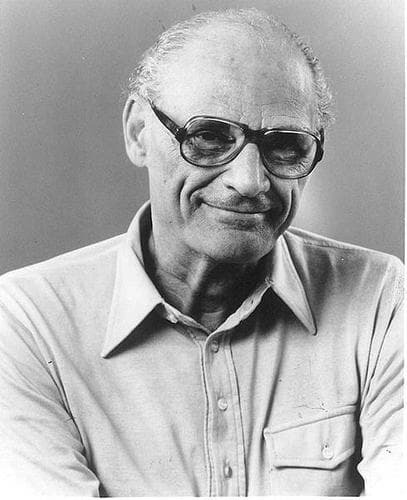
Arthur Asher Miller was an American playwright, essayist and screenwriter in the 20th-century American theater. Among his most popular plays are All My Sons (1947), Death of a Salesman (1949), The Crucible (1953), and A View from the Bridge (1955). He wrote several screenplays and was most noted for his work on The Misfits (1961). The drama Death of a Salesman is considered one of the best American plays of the 20th century.

Ashley Antoinette
4.6

Mark McDonald
4.4
Luo Guanzhong
4.4

Mia McKenzie
4.3

Dorothy Parker
4.3

Joaquim Maria Machado de Assis
4.3
James Thurber
4.2

Terry Kay
4.2