“Property, of course, is both the test and the playground of human nature.”
— A general reflection on the role of property in society and individual lives.

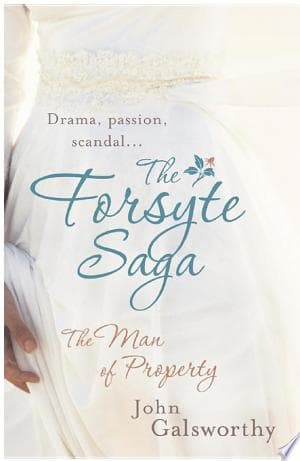
John Galsworthy (2016)
Genre
Fiction
Reading Time
10-12 hours
Key Themes
See below
Sign in to track this book
In Victorian England, the possessive Soames Forsyte traps his wife, Irene, in a suffocating marriage, leading her to a scandalous affair that shatters his world.
The novel begins with a large gathering of the Forsyte family at old Jolyon Forsyte's house. They are celebrating the engagement of his granddaughter, June Forsyte, to an architect named Philip Bosinney. The Forsytes are a wealthy, propertied Victorian family, proud of their social standing and possessions. The dinner introduces various family members, showing their connections and quirks. Soames Forsyte, a solicitor, is there with his beautiful but distant wife, Irene. Their conversations show their focus on wealth, status, and the security of their 'property,' including their women and possessions. June's choice of the poorer Bosinney is met with some disapproval, reflecting the family's materialistic views.
Soames Forsyte is deeply possessive of his wife, Irene, seeing her as his most valuable possession. Despite her beauty, Irene is unhappy in her marriage, feeling stifled by Soames's cold, materialistic nature. Soames does not see her emotional distress, believing that material comforts should be enough. He tries to control her, limiting her social interactions and dictating her choices. His desire for a new country house, supposedly to please Irene, is also driven by his need to show his control over her and to display his wealth, further trapping her in his ownership.
Soames decides to build a new country house in Robin Hill. Despite the family's initial concerns about his finances, he hires June's fiancé, Philip Bosinney, as the architect. This decision is driven by Soames's wish for a grander home, a symbol of his prosperity, and to involve Irene in the project. However, this arrangement brings Irene and Bosinney into frequent contact as they discuss plans and visit the site. Irene finds Bosinney's artistic nature and warmth a strong contrast to Soames's coldness. A mutual attraction begins between them, unknown to Soames, who is too focused on the house's details.
As construction on the Robin Hill house continues, Irene and Bosinney spend more time together, developing a deep emotional connection. Irene finds comfort and understanding in Bosinney, while he is captivated by her beauty and spirit. Their growing intimacy is noticed by other Forsyte family members, particularly the gossiping aunts and uncles. June Forsyte, Bosinney's fiancée, also senses a change in his affections and becomes increasingly jealous. Soames, initially unaware, begins to notice Irene's detachment and Bosinney's frequent presence, starting his suspicion and possessive anger.
Rumors of Irene and Bosinney's affair spread through the Forsyte family, causing scandal and distress, especially for June. Old Jolyon, despite his affection for June, feels for Irene, recognizing her unhappiness. Young Jolyon, old Jolyon's estranged son, also sympathizes with Irene. Soames, now fully aware, is consumed by jealousy and a feeling of betrayal, not of love, but of his property being threatened. He confronts Irene, demanding she end the affair, but she refuses, intensifying the conflict and strengthening her resolve to escape his control.
Driven by revenge and a desire to reassert ownership over Irene, Soames takes legal action. He considers suing Bosinney for alienation of affection, a move meant to publicly humiliate and financially ruin the architect. He also tries to control Irene by threatening to cut off her financial support and isolate her. Soames's actions are about preserving his reputation and his 'property,' not love. He also refuses to pay Bosinney for the Robin Hill house, claiming poor workmanship, a clear attempt to punish him and force him out of Irene's life. This increases tension and involves the wider family in the dispute.
After a heated argument where Irene expresses her disgust for him and her wish to leave, Soames, in a brutal act of possessiveness, forces himself upon her. He believes that by asserting his marital rights, he can re-establish his ownership and control over her body and will. This act is the horrific peak of his 'man of property' mentality, seeing Irene as an object to be used as he sees fit, regardless of her feelings. The rape leaves Irene broken and confirms her absolute resolve to escape Soames, marking a turning point in their marriage.
After the rape, Irene is shattered and flees Soames. Bosinney, distraught and financially ruined by Soames's refusal to pay for the house and the legal threats, wanders aimlessly. He is last seen heading into the London fog. Later, news arrives that Bosinney has been killed in a traffic accident, run over by a hansom cab. His death is a tragic result of the emotional and financial pressures placed upon him by the Forsytes. Irene is devastated, losing the only person who offered her genuine affection and a potential escape from her suffocating marriage. His death also leaves June heartbroken.
After Bosinney's death, Irene, with the support of young Jolyon and old Jolyon, finally leaves Soames for good. She refuses to live with him any longer, her spirit crushed by his possessiveness and the tragic events. Soames, though outwardly composed, is deeply affected by her departure, realizing too late the emptiness of possessing someone who offers no affection. Irene's decision to leave shows her assertion of self and her rejection of the Forsyte ideal of women as property, choosing personal freedom over societal expectations and material comfort.
The novel ends with the immediate aftermath of Irene's departure and Bosinney's death. June mourns her fiancé and comes to terms with the Forsyte family's rigid values. Old Jolyon reflects on the events, acknowledging the tragedy of Irene's situation and the destructive nature of Soames's possessiveness. Soames is left alone in his grand new house at Robin Hill, which feels empty without Irene. He has achieved his material ambitions, but at the cost of his wife's love and happiness, and ultimately, her presence. The ending leaves Soames contemplating his loss, hinting at the long-term consequences of his actions and the impact on the Forsyte family.
The Protagonist/Antagonist
Soames begins as a man confident in his 'rights' of ownership but ends with a profound, albeit unarticulated, understanding of the emptiness of possessing someone without their will.
The Protagonist
Irene transforms from a passive, suffering wife into a woman who, despite immense personal cost, asserts her autonomy and flees her oppressive marriage.
The Supporting
Bosinney's arc is one of passionate idealism leading to tragic destruction, as he challenges the Forsyte's property-driven world and loses.
The Supporting
June begins as an idealistic young woman in love but ends heartbroken and disillusioned by the betrayal and tragic loss.
The Supporting
Old Jolyon moves from a typical Forsyte patriarch to a more compassionate observer, capable of understanding and pitying those who suffer under the family's rigid values.
The Supporting
Young Jolyon, having already defied Forsyte conventions, acts as a moral compass and sympathetic figure, offering a different perspective on love and freedom.
The Supporting
James remains static, a consistent embodiment of the anxious, materialistic Forsyte, serving as a foil to more evolving characters.
The novel's central theme is the Forsyte family's obsession with property, including land, money, and people. Soames Forsyte views his wife, Irene, as his most valuable possession, believing he has an absolute right to control her, like his house or investments. This theme shows in Soames's cold, transactional view of marriage, his anger when Irene seeks independence, and his attempts to legally and financially ruin Bosinney for 'encroaching' on his 'property.' The novel criticizes the Victorian view that women were their husbands' property, highlighting the destructive consequences of such a mindset on individual freedom and happiness, as seen in Irene's suffering and eventual flight.
“A man of property! He was not a man of property for nothing. He would not allow his wife to treat him as if he were a man of straw.”
This theme explores the contrast between real affection and the desire for ownership. Soames believes he 'loves' Irene, but his love is really a desire to possess and control her. He cannot understand love as a mutual emotional connection based on respect and freedom. In contrast, Irene's relationship with Philip Bosinney, though scandalous, is based on mutual understanding, passion, and a shared appreciation for beauty and art. The tragic outcome of their affair and Irene's eventual freedom show the novel's argument that true love cannot exist within possessive ownership. The Forsyte family often struggles to prioritize human connection over material gain and social standing.
“He knew that he had lost her. But he knew, too, that she was his. He had bought her, and she was his.”
The struggle for personal freedom against societal and marital confinement is a theme shown through Irene. Her marriage to Soames is a gilded cage, where material comfort comes at the cost of her spirit and independence. Her attempts to find freedom through art, social connections, and her affair with Bosinney are met with resistance and punishment from Soames and the conservative Forsyte world. The novel explores the limited options available to women in Victorian society who tried to escape oppressive marriages. Irene's act of leaving Soames, despite the uncertainties, represents her ultimate triumph in claiming her freedom, even if it comes with great personal cost and leaves her vulnerable.
“She felt like a bird that has been caught and whose wings are clipped.”
The novel highlights the clash between artistic sensibilities and the pragmatic, materialistic values of the Forsyte family. Philip Bosinney, as an architect and artist, represents creativity, passion, and a disregard for mere money. His vision for the Robin Hill house prioritizes beauty and design over cost-efficiency, clashing with Soames's financial calculations. Irene, with her appreciation for beauty and music, is drawn to Bosinney's artistic spirit. The Forsytes, however, largely see art as a commodity or decoration, failing to understand its true value. This conflict shows the broader cultural tension between emerging artistic movements and the Victorian focus on wealth and property.
“He was an artist, and the Forsytes had a natural distrust of artists, who, in their opinion, were either immoral or impecunious, or both.”
The Forsyte family deeply cares about maintaining their social standing and reputation in Victorian society. The scandal of Irene's affair and Bosinney's death threatens to tarnish the family name, causing anxiety and gossip among relatives. Soames's actions, including his legal threats, are partly driven by a desire to preserve his public image and reassert control, rather than genuine emotional distress. The novel exposes the hypocrisy and rigid moral codes of the era, where appearances often mattered more than individual happiness or suffering. The pressure to conform to societal norms and uphold a respectable facade greatly influences the characters' choices and the unfolding drama.
“The Forsytes, as a family, were not in the habit of discussing emotion; they distrusted it, as they distrusted anything that threatened their peace of mind or their pockets.”
The new house represents Soames's possessiveness and the ill-fated love affair.
The house at Robin Hill, designed by Bosinney for Soames and Irene, serves as a powerful symbol. Initially, it represents Soames's desire for a grander 'property' and his attempt to control Irene by engaging her in its creation. However, it quickly becomes the physical manifestation of the growing illicit love between Irene and Bosinney, a space where their shared aesthetic sensibilities and mutual attraction flourish. Ultimately, after Bosinney's death and Irene's departure, the house becomes a hollow monument to Soames's possessiveness, standing empty and devoid of the life and love he sought to command, symbolizing the futility of owning without affection.
A recurring structural device used to introduce characters and reveal family dynamics.
The novel frequently employs large family dinners or gatherings as a structural device. The opening scene, a large Forsyte family dinner, efficiently introduces the sprawling cast of characters, establishes their interconnected relationships, and immediately highlights the family's core values, particularly their obsession with property and social standing. These gatherings serve as microcosms of Forsyte society, allowing Galsworthy to expose their collective opinions, prejudices, and anxieties through dialogue and observation. They also act as points of tension where societal expectations clash with individual desires, and where rumors and scandals are discreetly (or indiscreetly) discussed, driving the plot forward.
A character archetype embodying the materialistic and possessive values of the Forsyte family.
The 'Man of Property' is not just the title but an archetype embodied by Soames Forsyte and, to varying degrees, by many other male Forsytes. This device allows Galsworthy to critique a specific socio-economic mindset of Victorian England. This archetype prioritizes material acquisition, financial security, and the ownership of possessions—including wives—above emotional connection, artistic expression, or individual freedom. The character of Soames perfectly illustrates how this mentality can lead to emotional stuntedness, cruelty, and ultimately, profound unhappiness, despite outward success. The archetype serves as a lens through which the novel examines the moral and social costs of an overly materialistic society.
Subtle hints and comments that predict future conflicts and tragedies.
Galsworthy frequently uses subtle foreshadowing, particularly through dialogue and the observations of more perceptive characters like Old Jolyon or Young Jolyon. Early comments about Irene's unhappiness, Soames's possessive nature, or the unsuitability of Bosinney for a Forsyte marriage subtly hint at the impending conflicts. For instance, the initial tension surrounding June's engagement to the 'poor' Bosinney, or the family's collective scrutiny of Irene's demeanor, foreshadows the eventual scandal and tragedy. This device builds suspense and allows the reader to anticipate the unfolding drama, making the eventual outcomes feel inevitable consequences of the characters' natures and societal pressures.
“Property, of course, is both the test and the playground of human nature.”
— A general reflection on the role of property in society and individual lives.
“He who has property has a stake in the country.”
— Foresight's view on the importance of property for social stability and participation.
“To have what you want is riches, but to be able to do without it is power.”
— A philosophical observation on desire, wealth, and true strength.
“The only thing that really counts is what you do, not what you say.”
— A pragmatic view on actions versus words, often contrasted with the characters' rhetoric.
“That sense of property, which had made him what he was, was in fact the master of his soul.”
— Referring to Soames Forsyte's deep-seated possessiveness and its influence on his character.
“It was impossible for him to conceive of life without the tangible, without the visible, without the ownership.”
— Describing Soames Forsyte's fundamental inability to understand abstract or non-material values.
“A man never knows what he's got till he's lost it.”
— A common sentiment expressed regarding the value of things or people when they are no longer present.
“The Forsytes were not a family to whom anything really mattered, except property.”
— A critical observation on the core values and priorities of the Forsyte family.
“Beauty, like all other good things, had to be possessed to be enjoyed.”
— Soames Forsyte's perspective on beauty, reducing it to something that must be owned.
“The Forsytes lived in a world where everything was judged by its market value.”
— Highlighting the pervasive materialistic mindset within the Forsyte family and their social circle.
“Love was not a thing to be trifled with, not if one were a Forsyte.”
— Reflecting the Forsyte's often pragmatic and sometimes cynical view of love, especially in relation to marriage and property.
“There was in him a deep, unconscious worship of what was solid, what was established, what was old.”
— Describing the inherent conservatism and reverence for tradition in many Forsytes, particularly Soames.
“To be well-off was the cardinal point of all their lives.”
— Summarizing the primary motivation and life goal for the majority of the Forsyte family members.
“There are things which one does not do, if one is a gentleman.”
— A statement reflecting the strict social codes and expectations of the Victorian upper-middle class.
Ready to see how well you understood this book? Take our interactive quiz with 10 questions.
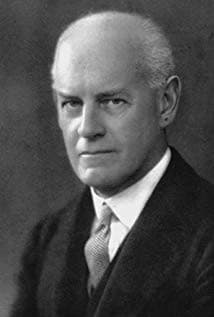
John Galsworthy was an English novelist and playwright. He is best known for his trilogy of novels collectively called The Forsyte Saga, and two later trilogies, A Modern Comedy and End of the Chapter. He won the Nobel Prize in Literature in 1932.

Ashley Antoinette
4.6

Mark McDonald
4.4
Luo Guanzhong
4.4
Mia McKenzie
4.3
Dorothy Parker
4.3
Joaquim Maria Machado de Assis
4.3
James Thurber
4.2
Terry Kay
4.2