“She was like a flower that had bloomed too early, and was already losing its petals.”
— Describing the protagonist's fading beauty and melancholic nature.

Sign in to track this book
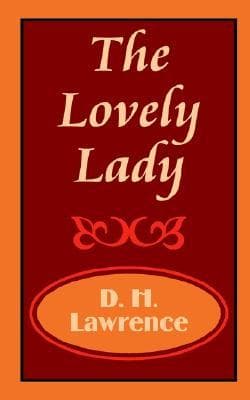
In his last collection, Lawrence examines the dark psychology of family life, from a boy's strange quest for luck to the conflict between mothers and daughters, while also criticizing modern society.
Lady Maria, an old aristocratic woman, lives in a large but crumbling family home, St. Mawr, with her devoted but somewhat suppressed companion, Miss Hammond. Maria is a woman deeply connected to the past, spending her days meticulously caring for her appearance and preserving her family's history. She has a unique, almost mystical link to the house, seeing herself as its living form. Her only living relative is her nephew, Robert, a young man who visits but does not truly understand her strong attachment to the estate. Maria's reclusiveness and her almost ritualistic self-care show her isolation and her desperate attempt to hold onto a fading grandeur, both personal and familial.
Robert, Lady Maria's nephew and heir, starts visiting St. Mawr more often. At first, his presence is a minor disturbance to Maria's organized life, but it slowly becomes a bigger intrusion. Robert, though not openly mean, is somewhat insensitive and materialistic. He lacks his aunt's deep, almost spiritual connection to the estate. He sees St. Mawr as property to be managed or sold, rather than a living place with generations of history. His visits highlight the generational clash between Maria's respect for tradition and Robert's more modern, practical view, creating an underlying tension in the household.
A key moment happens when Robert shows interest in an old portrait of a beautiful, young Lady Maria. This portrait, which seems to defy time, subtly matches Lady Maria's own preserved looks. During a late-night talk, Maria, prompted by Robert's comments, finally reveals her dark secret: she can absorb the life force of men who fall in love with her. This power, she explains, is what lets her keep her youthful beauty and energy, while her lovers slowly waste away and die. This confession adds a chilling, fantastical element to the story, explaining her reclusiveness and the lack of any lasting male companions.
Robert is at first horrified and disgusted by Lady Maria's confession. The revelation shatters his view of his elegant, reclusive aunt, turning her into something monstrous and unnatural. However, along with his disgust, a morbid fascination begins to take hold. He struggles to believe the beautiful, seemingly delicate woman before him is the vampiric being she claims to be. The weight of this secret, and what it means for his future as her heir, starts to trouble him. He feels psychological tension as he deals with the truth of his family's dark past and his aunt's terrifying power.
After the revelation, Robert's visits to St. Mawr become filled with unspoken dread. He starts to see his aunt's gaze as scrutinizing, almost predatory. He becomes very aware of her subtle attempts to draw him closer. He feels a growing sense of entrapment, as if the old house and Lady Maria herself are closing in on him. His attempts to distance himself are met with subtle manipulations and emotional appeals from Maria, who, despite her monstrous secret, keeps an air of vulnerability and need. Robert realizes the danger he is in, understanding that his aunt's 'love' could be a death sentence.
As time passes, Lady Maria's power seems to lessen slightly, or perhaps Robert's resistance grows stronger. She shows subtle signs of weakening; her beauty, though still remarkable, occasionally flickers. Robert, sensing a chance, becomes more determined to break free from her influence. He finds a reason to leave St. Mawr, perhaps faking an urgent appointment or an illness. This escape is not a dramatic confrontation but a quiet, desperate flight from his aunt's emotional and psychological hold. He understands that staying would risk his own life force being consumed.
Paul, a young boy from a rich but poor family, becomes very aware of his mother Hester's unspoken worry about money. The house itself seems to whisper, 'There must be more money!' Driven by a desperate wish to please his mother and ease the family's financial troubles, Paul finds a strange, almost mystical connection to horse racing. By riding his rocking horse with intense, feverish focus, he can 'know' the name of the winning horse in upcoming races. This secret ability, shared with the family gardener, Basset, and his Uncle Oscar, becomes his only focus, a desperate attempt to bring luck and wealth to his family.
Paul's predictions are surprisingly accurate, and he starts to win large amounts of money, which he secretly gives to his mother. However, instead of bringing happiness, the money only increases Hester's underlying worry and endless desire for more. The house's whispers grow louder, and Hester's spending increases, creating a cycle. Paul, driven by his mother's unspoken need, becomes more frantic in his rocking-horse sessions, pushing himself to the point of physical and mental exhaustion. The joy of winning is overshadowed by the increasing pressure and the realization that his efforts are never enough to truly satisfy his mother's materialistic cravings.
The peak of Paul's obsession comes with the Derby. Desperate for the biggest win yet, he rides his rocking horse with an almost insane frenzy, pushing his young body and mind beyond their limits. His mother, Hester, finds him in a frantic state and is horrified. Paul, having correctly predicted the winner, Malabar, collapses into a feverish delirium. Despite the massive winnings, which finally ease the family's financial burdens, Paul dies a few days later from brain fever. His death is a tragic result of his desperate attempt to fulfill his mother's materialistic desires, showing the destructive nature of unchecked greed and the emotional cost it takes on the innocent.
Rawdon, a man in his late thirties, lives alone in a small, isolated cottage. He chose a life away from the complexities of relationships, especially with women. He is intelligent and sensitive, but also deeply afraid of closeness and commitment. His dislike is not just shyness; it comes from a deep psychological block, an almost primal dread of women and the demands of a romantic relationship. He finds comfort in his independence and the quiet rhythm of his own life, carefully building barriers to keep any woman from getting too close and disrupting his solitude.
One stormy night, Rawdon's solitude is suddenly broken when Ethel, a young woman seeking shelter from the heavy rain, appears at his door. Ethel is a lively, somewhat unconventional character, direct and open. Her unexpected arrival forces Rawdon to face his deep fears. He is at first uncomfortable and awkward. His ingrained dislike of women clashes with the social duty to offer hospitality. Ethel's close presence in his small cottage creates an intense, almost suffocating atmosphere, challenging Rawdon's careful emotional distance and making him interact with a woman in a way he has long avoided.
As the storm rages, Rawdon and Ethel are forced to spend the night under the same roof. The situation is full of tension, mainly from Rawdon. Ethel, though aware of his discomfort, remains mostly calm. Her naturalness contrasts sharply with Rawdon's rigid self-consciousness. Rawdon struggles internally, fighting his fear of intimacy and his desire to keep women away. He tries to be polite but distant, but Ethel's presence, her laughter, and her simple requests for warmth and food slowly break down his defenses. The night becomes a test of Rawdon's emotional strength, forcing him to confront the very thing he has spent years avoiding.
During the night, a brief, fragile moment of connection seems to form between Rawdon and Ethel. Perhaps a shared laugh, a moment of comfortable silence, or a simple act of human kindness. This fleeting closeness is both appealing and terrifying for Rawdon. He feels a flicker of something he has long denied himself, a hint of the warmth and companionship he has actively avoided. However, his deep-seated fear ultimately wins. As morning breaks and the storm passes, Rawdon, despite the brief softening of his defenses, retreats back into his shell. He is relieved when Ethel eventually leaves, allowing him to resume his solitary life, though with the memory of her visit lingering.
The Protagonist/Antagonist
Lady Maria's arc is largely static in terms of her core nature, but her power is briefly challenged by Robert's resistance, leading to a subtle decline.
The Supporting/Victim
Robert transforms from an indifferent heir to a terrified survivor, realizing the true cost of his aunt's legacy.
The Protagonist
Paul's arc is a tragic descent from hopeful child to a feverish, exhausted victim of his family's greed.
The Antagonist/Supporting
Hester remains largely unchanged in her materialistic desires, only experiencing fleeting shock and regret at Paul's death.
The Protagonist
Rawdon experiences a brief, uncomfortable challenge to his solitude, but ultimately retreats, reinforcing his established patterns.
The Supporting
Ethel's role is largely catalytic; she briefly enters Rawdon's world and then departs, leaving him to his established ways.
The Supporting
Miss Hammond remains a static, loyal companion throughout the narrative.
The Supporting
Uncle Oscar's arc is limited; he is drawn into the betting scheme and profits from it, but doesn't experience significant personal change.
This theme is most powerfully seen in 'The Rocking-Horse Winner,' where the endless desire for 'more money' consumes Paul's family and leads to his tragic death. Hester's unspoken worry about not having enough money creates a constant feeling of need, which Paul desperately tries to fix. However, each influx of money only increases the desire, showing how greed is a bottomless pit that can destroy innocence and life. The story illustrates how pursuing material wealth, when not controlled, can corrupt love and family bonds, turning a child into a sacrifice for an abstract, never-ending need.
“There must be more money! There must be more money! The great house was whispering at him, whispering, like a secret in the dark.”
This theme is central to both 'The Lovely Lady' and 'The Rocking-Horse Winner.' In 'The Lovely Lady,' Lady Maria, the 'parental' figure, literally takes the life force of men, including the implied threat to her nephew Robert. This symbolizes a self-serving maternal power that stifles and drains the younger generation. In 'The Rocking-Horse Winner,' Hester's unconscious greed acts as a destructive force, driving Paul to his death. Her unspoken desires become a burden that Paul tries to carry, ultimately sacrificing himself for a mother who cannot be satisfied. Both stories show a parental influence that is far from nurturing, instead being a source of deep harm and even death.
“And yet he was sure there was a secret, hostile something in the atmosphere, that was always against him.”
'Rawdon's Roof' directly addresses this theme through Rawdon, a man who has deliberately isolated himself from women because of a deep fear of closeness and commitment. His carefully built solitude is broken by Ethel's unexpected arrival, forcing him to confront the connections he has avoided. Rawdon's discomfort and eventual retreat highlight the psychological barriers people build to protect themselves from vulnerability. The story explores the tension between the human need for connection and the paralyzing fear of its demands, showing how ingrained emotional defenses can prevent real human interaction.
“He lived in his house as a snail lives in its shell, alone, and not wanting to be touched.”
This theme is clear in 'The Lovely Lady,' where the decaying ancestral home, St. Mawr, reflects Lady Maria's attempts to preserve a fading past. Lady Maria herself is a relic of an earlier time, clinging to her beauty and lineage through unnatural means. The story contrasts her old-fashioned life with the more practical, modern view of her nephew, Robert. The narrative suggests that old traditions, when held onto too tightly or maintained through unnatural means, can become monstrous and suffocating. This leads to a sterile or destructive existence rather than a flourishing one. The grandeur is gone, leaving only a shell sustained by dark secrets.
“She was a lovely lady, but she was like a piece of exquisite porcelain that had been preserved for centuries, and that was now kept in a glass case, never to be touched.”
The ancestral home reflects the characters' inner states and family legacies.
In 'The Lovely Lady,' St. Mawr, the decaying ancestral home, acts as a powerful symbolic setting. Its grandeur and gradual decline mirror Lady Maria's own fading beauty and her desperate attempts to preserve a past that is no longer sustainable. The house is not just a dwelling but an extension of Maria's being, imbued with the weight of her family's history and her dark secrets. Similarly, in 'The Rocking-Horse Winner,' the 'great house' that whispers 'There must be more money!' symbolizes the pervasive, insidious nature of the family's financial anxiety and greed, influencing Paul's actions and ultimate fate.
Fantastical abilities or occurrences drive the central conflicts.
Both 'The Lovely Lady' and 'The Rocking-Horse Winner' employ supernatural elements to propel their narratives. Lady Maria's ability to absorb the life force of men is a chilling, fantastical power that explains her eternal youth and creates the central horror of her story. In 'The Rocking-Horse Winner,' Paul's uncanny ability to predict race winners by riding his rocking horse is a mystical gift, an almost magical connection to luck. These supernatural devices elevate the stories beyond mere psychological dramas, introducing an element of the uncanny and the inexplicable that profoundly impacts the characters' lives and fates.
The narrative often delves into characters' unspoken thoughts and perceptions.
While not strictly unreliable in the sense of deception, Lawrence frequently employs a narrative style that delves deeply into the internal monologues and subjective perceptions of his characters, particularly in 'The Rocking-Horse Winner' and 'Rawdon's Roof.' In 'Rocking-Horse Winner,' the 'whispers' of the house are perceived through Paul's anxious mind, making the financial pressure a tangible, almost auditory presence. In 'Rawdon's Roof,' the story is heavily filtered through Rawdon's internal struggles and fears regarding Ethel's presence. This device allows readers direct access to the characters' psychological states, biases, and anxieties, shaping the interpretation of events.
Subtle hints and ominous details prepare the reader for future events.
Foreshadowing is skillfully used, particularly in 'The Rocking-Horse Winner.' The constant, almost oppressive whispers of 'There must be more money!' in the house, perceived by Paul, subtly foreshadow the destructive impact of greed. Paul's feverish, almost violent rocking of his horse, and the increasing intensity of his efforts, hint at the physical and mental toll his gift is taking, ultimately foretelling his tragic collapse and death. In 'The Lovely Lady,' Lady Maria's unnaturally preserved beauty and the lingering sense of unease around her subtly prepare the reader for the revelation of her vampiric secret.
“She was like a flower that had bloomed too early, and was already losing its petals.”
— Describing the protagonist's fading beauty and melancholic nature.
“The past was a dead thing, but it still had a way of reaching out and touching the present.”
— Reflecting on the lingering influence of past events on the characters' lives.
“He felt a strange mixture of pity and resentment, as if she were both a victim and a tormentor.”
— A character's conflicting emotions towards the 'lovely lady'.
“The house itself seemed to breathe with a quiet, decaying life, full of shadows and forgotten things.”
— Describing the atmosphere of the old, ancestral home.
“There was a certain cruelty in her beauty, a cold, remote perfection that kept men at a distance.”
— Exploring the protagonist's allure and its isolating effect.
“He longed for something real, something tangible, to cut through the suffocating unreality of their lives.”
— A character's desire for authenticity amidst societal artifice.
“The silence in the room was not empty, but filled with unspoken words and unacknowledged desires.”
— Highlighting the tension and subtext in a quiet interaction.
“She had built a wall around herself, brick by brick, until she was entirely enclosed in her own sorrow.”
— Metaphor for the protagonist's self-imposed emotional isolation.
“The truth was a heavy burden, often best left buried.”
— A character contemplating the consequences of revealing difficult truths.
“He felt like a moth drawn to a flame, knowing it would burn, but unable to resist.”
— Describing a character's dangerous attraction to the protagonist.
“Life was a series of small deaths, each one taking a little piece of you away.”
— A philosophical reflection on loss and the passage of time.
“There was a fierce, almost desperate hunger in her eyes, for something she could not name.”
— Portraying the protagonist's deep, unfulfilled yearning.
“He saw in her not just a woman, but a whole world of vanished elegance and fading dreams.”
— A character's perception of the protagonist as an embodiment of a bygone era.
“The illusion of control was often more comforting than the reality of helplessness.”
— A character's internal thought about human coping mechanisms.
Ready to see how well you understood this book? Take our interactive quiz with 10 questions.

D.H. Lawrence was a prominent English novelist, poet, playwright, and essayist whose works explored themes of sexuality, industrialization, and the human condition. His most controversial and famous novel, "Lady Chatterley's Lover," challenged societal norms and censorship. Other notable works include "The Rainbow," "Women in Love," and "Sons and Lovers," solidifying his place as a significant figure in modernist literature.

Ashley Antoinette
4.6

Mark McDonald
4.4
Luo Guanzhong
4.4
Mia McKenzie
4.3
Dorothy Parker
4.3

Joaquim Maria Machado de Assis
4.3
James Thurber
4.2

Terry Kay
4.2