“The morning of June 27th was clear and sunny, with the fresh warmth of a full-summer day; the flowers were blossoming profusely and the grass was richly green.”
— Opening lines, setting a deceptively pleasant scene.

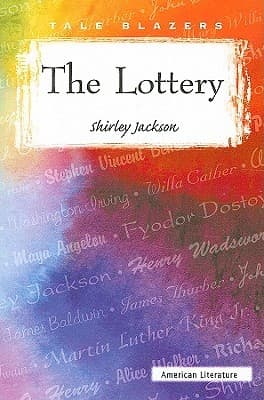
Shirley Jackson (1949)
Genre
Science Fiction
Reading Time
15 min
Key Themes
See below
Sign in to track this book
In a quiet village, an annual tradition unfolds, revealing the terrible cost of blind conformity and the dark side of human nature.
The story begins on a summer morning in a small, ordinary village. Children, out of school for the summer, gather first, collecting stones. Soon, adults arrive in the square, greeting each other and chatting, like any other community gathering. Mr. Summers, a cheerful, well-off man who runs most civic events, arrives with the black wooden box and a stool. Mr. Harry Graves, the postmaster, helps him. The villagers show a mix of anticipation and nervousness, discussing the lottery's history and traditions, creating a seemingly ordinary, yet subtly tense, scene.
Mr. Summers places the black box on the stool, and the villagers eye it warily. The box is old and splintered, showing the lottery's long history, though the original wooden chips have been replaced with paper slips due to population growth. Mr. Summers, helped by Mr. Graves, prepares the slips. There is a brief talk about other villages that have stopped the lottery, met with dismissive comments from older villagers, especially Old Man Warner, who strongly defends the tradition. The atmosphere, while still seemingly friendly, has an underlying tension as the community prepares for the drawing.
Mr. Summers calls out family names in alphabetical order. The head of each household, always the male, steps forward to draw a slip of paper from the black box. The villagers watch intently, holding their breath as each man makes his selection. Mr. Adams is first, followed by others. When it is Hutchinson's turn, Tessie Hutchinson arrives late, joking about nearly forgetting the day, drawing laughter and good-natured teasing from her neighbors. Her tardiness and cheerful mood contrast with the event's growing seriousness, though no one seems to notice the ominous undertones yet.
After all family heads draw their slips, Mr. Summers tells everyone to open them at once. A collective sigh goes through the crowd as most slips are blank. However, Bill Hutchinson's slip is not blank. He holds up the marked paper, and a ripple of apprehension goes through the crowd. Tessie Hutchinson immediately protests, exclaiming, "You didn't give him time enough to take any paper he wanted. I saw you. It wasn't fair!" Her sudden outburst reveals the lottery's true stakes and introduces the first clear sign of conflict and fear, shattering the illusion of a harmless communal event.
Tessie continues to protest loudly, insisting the lottery was unfair, while her husband, Bill, tries to silence her. The villagers, including her own children, seem embarrassed by her outburst but do not support her claims. Mr. Summers calmly explains the rules: since the Hutchinson family drew the marked slip, all members of that family—Bill, Tessie, and their three children, Bill Jr., Nancy, and little Davy—must now draw again. Five more slips of paper are placed into the black box. The tension in the square becomes strong as the Hutchinson family stands before the box, preparing for the final, dreadful selection.
One by one, the five members of the Hutchinson family step forward to draw a slip from the black box. Even little Davy, too young to understand, draws a slip with his father's help. Tessie continues her protests, though they become more desperate and less clear. As each family member opens their slip, the suspense is intense. When all slips are revealed, Tessie Hutchinson has drawn the slip with the black mark. A collective gasp, then a somber silence, falls over the crowd. Tessie's fate is sealed, and the lottery's true, horrifying purpose is fully revealed.
Immediately after Tessie is identified, the villagers, without hesitation, begin to gather the stones the children had collected earlier. Tessie screams, "It isn't fair, it isn't right!" but her cries are ignored. Her husband, Bill, forces a stone into her hand, and her children, including Nancy and Bill Jr., join in. Old Man Warner urges everyone on, reminding them of the tradition. The entire community, including those who had been friendly moments before, turns into a mob. Tessie is surrounded and brutally stoned to death, a ritual sacrifice performed with chilling efficiency and unquestioning loyalty to tradition, as the story abruptly ends.
The Protagonist/Victim
Tessie transforms from an oblivious participant to a desperate, screaming victim, her pleas ignored by the very community she belongs to.
The Supporting
Old Man Warner remains static in his unwavering belief in the lottery, serving as the voice of tradition.
The Supporting
Mr. Summers remains an efficient, detached facilitator of the lottery, never questioning its purpose.
The Supporting
Bill conforms to the community's brutal tradition, silencing his wife and participating in her death.
The Supporting
Mr. Graves maintains his role as an impartial facilitator of the lottery.
The Supporting
Nancy's initial youthful excitement gives way to participation in a brutal ritual, showing the ingrained nature of the tradition.
The Supporting
Davy remains innocent but is forced to participate in the brutal ritual, symbolizing the corruption of innocence by tradition.
A main theme of 'The Lottery' is the danger of following customs and traditions without questioning their purpose or morality. The villagers perform the lottery annually, despite its brutal outcome, simply because 'it's always been done that way.' Old Man Warner clearly shows this theme, dismissing any suggestion of stopping the lottery with statements like 'Fools. . . Used to be a saying about 'Lottery in June, corn be heavy soon.' The blind adherence to this old ritual, even as its original meaning is lost, directly leads to Tessie Hutchinson's horrific death, showing how tradition, when not examined, can cause senseless violence and cruelty.
“'Used to be a saying about 'Lottery in June, corn be heavy soon.' And that was the only reason the lottery was still held, some people said.”
Jackson shows how terrible acts can be committed by ordinary people in ordinary settings, under the guise of normalcy. The villagers are not shown as evil; they are neighbors, friends, and family who chat politely and follow daily routines before and during the lottery. Their cheerful greetings, small talk, and even Tessie's initial lightheartedness make the eventual stoning more shocking. The casual way they prepare for and carry out the murder of a community member highlights how easily cruelty can become normal and part of daily life when approved by tradition and collective conformity.
“The morning of June 27th was clear and sunny, with the fresh warmth of a full-summer day; the flowers were blossoming profusely and the grass was richly green.”
The story explores how individuals give in to groupthink and conform to the majority's will, even when it means committing violence. Tessie Hutchinson's initial protests are met with silence and even disapproval from the crowd, including her own family. Once she is chosen, the entire village, without hesitation, becomes a unified mob, eager to participate in her stoning. No one steps forward to defend her or question the act's morality. This quick change from an orderly community to a brutal mob shows the weakness of individual conscience when faced with group pressure and the terrifying ease with which people can participate in atrocities when supported by the group.
“A stone hit her on the side of the head. Old Man Warner was saying, 'Come on, come on, everyone.'”
The lottery acts as a ritualistic form of scapegoating, where one individual is sacrificed to calm the community's perceived needs or fears. Although the lottery's original reason is lost, Old Man Warner's comment about 'Lottery in June, corn be heavy soon' suggests an old belief in a sacrifice for a good harvest. Tessie Hutchinson becomes the chosen victim, absorbing the collective anxieties and perhaps even the hidden aggression of the village. Her death unifies the community, though through a shared act of violence, and ensures that the 'luck' or 'blessing' of the lottery continues for another year, at the cost of an innocent life.
“The people had done it so many times that they only half listened to the directions: most of them were quiet, wetting their lips, not looking around.”
Subtle hints early in the story suggest the dark nature of the lottery.
Jackson employs subtle foreshadowing throughout the story to build tension and hint at the brutal outcome. The children gathering stones at the beginning, forming 'a great pile of stones in one corner of the square,' is the most prominent example, initially appearing as innocent play but later revealed as preparation for the stoning. The villagers' nervousness, the worn black box, and Tessie's late arrival and joking about forgetting the day (implying she's not eager for it) all contribute to an underlying sense of unease that gradually builds to the horrifying climax, making the ending shocking yet, in retrospect, inevitable.
Objects and names carry deeper meanings related to tradition, death, and community.
Various symbols enrich the story's themes. The black box, 'splintered badly' and 'faded,' symbolizes the outdated, decaying, yet stubbornly persistent nature of tradition. The slips of paper, replacing the original wood chips, suggest a slight modernization that doesn't alter the ritual's core brutality. Mr. Summers' name evokes the season of warmth and growth, starkly contrasting with the death he presides over. Mr. Graves, the postmaster, directly links to death and the finality of the lottery. These symbols deepen the narrative's exploration of tradition, death, and the hidden darkness within seemingly normal communities.
Contradictions between appearance and reality create a shocking impact.
Irony is a pervasive device, particularly situational irony. The story opens on a 'clear and sunny' summer morning, a setting typically associated with happiness and renewal, which sharply contrasts with the grim ritual that unfolds. The very word 'lottery' usually implies winning a prize, making the 'prize' of death deeply ironic. Tessie Hutchinson's initial lightheartedness and jovial banter further highlight this, as she becomes the tragic victim. This constant subversion of expectations, where pleasant appearances mask a brutal reality, is central to the story's shocking and unsettling effect, underscoring the banality of evil.
A generic, idyllic village setting heightens the shock of the violent ritual.
The story's setting is a deliberately generic, unnamed small village in rural America. The description of 'the fresh warmth of a full-summer day,' blossoming flowers, and 'richly green' grass creates an idyllic, peaceful backdrop. This ordinary, wholesome setting is crucial for the story's impact, as it makes the shocking violence of the lottery all the more disturbing. By placing such a barbaric ritual in a familiar, seemingly innocent environment, Jackson suggests that evil can lurk anywhere, even in the most seemingly normal and pleasant communities, challenging readers' assumptions about safety and civility.
“The morning of June 27th was clear and sunny, with the fresh warmth of a full-summer day; the flowers were blossoming profusely and the grass was richly green.”
— Opening lines, setting a deceptively pleasant scene.
“The children assembled first, of course. School was recently over for the summer, and the feeling of liberty sat uneasily on most of them; they tended to gather together quietly for a while before they broke into boisterous play.”
— Describes the initial gathering of the children.
“He was a tall man, and a little bent, with a thin, rather peevish face, and he carried a black wooden box, which was apparently very heavy.”
— Introduction of Mr. Summers and the black box.
“The original paraphernalia for the lottery had been lost long ago, and the black box now resting on the stool had been made many years ago by Mr. Summers's father and son. There had been a great deal of talk in the village of replacing the box, but every year the subject was allowed to fade off, and the old box was used again.”
— Description of the black box and resistance to change.
“Mr. Summers spoke precisely and clearly. He told them, 'Guess we better get started, get this over with, so we can all go back to work.'”
— Mr. Summers initiating the lottery, showing the routine nature of the event.
“'Clean forgot it was the seventh man to get the paper this year,' he said. 'And he's not even here.'”
— Old Man Warner commenting on a detail of the lottery, showing its long history.
“A man standing next to him said, 'Don't be a fool, Harry.' 'All right, then. But if you're not careful, it'll all be gone, like the square dances, and the other things.'”
— Old Man Warner's fear of losing tradition.
“'Seventy-seventh year I been in the lottery,' Old Man Warner said as he went past. 'Seventy-seventh time.'”
— Old Man Warner emphasizing his long participation.
“'It isn't fair, it isn't right,' Mrs. Hutchinson screamed, and then they were upon her.”
— Tessie Hutchinson's final protest as the villagers turn on her.
“The children had stones already, and the villagers had to look about them for stones.”
— The immediate preparation for the stoning after Tessie is chosen.
“They still remembered to use stones, though, and they were, after all, not barbarians.”
— A darkly ironic reflection on the villagers' adherence to tradition.
“The villagers kept their distance, leaving a space between themselves and the stool, and when Mr. Summers said, 'All right, fellows,' he sounded like a school teacher calling up a class for roll call.”
— The villagers' hesitant approach to the black box, showing a mix of fear and routine.
“A sudden hush fell on the crowd as Mr. Summers cleared his throat and looked at the assembled villagers. 'Well now,' Mr. Summers said, 'guess we better get started.'”
— The moment of tension before the drawing begins.
“She held her breath while her husband went forward. 'Bill,' Mr. Summers said, and Bill Hutchinson reached into the box and took out a folded paper.”
— Tessie Hutchinson's anxiety as her husband draws his slip.
“Although the villagers had forgotten the ritual and lost the original black box, they still remembered to use stones.”
— A poignant observation on what aspects of tradition persist.
Ready to see how well you understood this book? Take our interactive quiz with 10 questions.

Shirley Hardie Jackson was an American writer known primarily for her works of horror and mystery. Over the duration of her writing career, which spanned over two decades, she composed six novels, two memoirs, and more than 200 short stories.