“It isn't fair, it isn't right.”
— Tessie Hutchinson's final protest as she is about to be stoned.

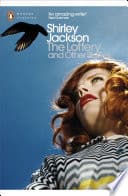
Shirley Jackson (2009)
Genre
Fiction
Reading Time
320 min
Key Themes
See below
Sign in to track this book
Shirley Jackson's unsettling collection shows how ordinary towns and homes hide chilling rituals and cruel acts, revealing the darkness beneath everyday life.
On a summer morning, villagers gather in the square for their annual lottery. Children collect stones, while adults chat. Mr. Summers, who runs the lottery, arrives with the black wooden box and a stool. Old Man Warner, the oldest resident, dislikes other villages giving up the tradition. Mrs. Tessie Hutchinson arrives late, joking about forgetting the date, and joins her family. The mood, though friendly at first, has an underlying tension as the community awaits the drawing.
Mr. Summers starts the lottery by calling out the names of the family heads, all male, who draw a folded slip of paper from the black box. Each man keeps his slip folded until everyone has drawn. The villagers watch closely, a quiet anticipation building. When Bill Hutchinson draws his slip, his wife Tessie immediately says he 'didn't get a fair shake,' suggesting he was rushed, but her protests are ignored by her husband and neighbors. This first drawing narrows the selection to one family for the next stage.
After the first drawing, the Hutchinson family — Bill, Tessie, and their three children, Davy, Bill Jr., and Nancy — has drawn the marked slip. The five family members must draw again, this time from five slips put back into the black box. Tessie continues to protest the fairness of the first drawing, but her pleas are ignored. Each family member draws a slip. The children open theirs first, showing blank papers. Bill Jr. and Nancy show theirs, also blank, leaving only Bill and Tessie to reveal their fate.
As the Hutchinson family opens their slips, Tessie's paper has the black mark. Her repeated cries of 'It isn't fair, it isn't right!' are met with indifference from the crowd, including her own family. Immediately, the villagers, who were just her neighbors and friends, start gathering the stones they collected earlier. Her husband, Bill, forces a stone into their youngest child Davy's hand. Tessie is surrounded, and the stoning begins, a brutal and quick communal murder. The story ends with Tessie's final screams, showing how normal the ritual is for the villagers.
On her wedding day, a woman wakes to find her fiancé, Jamie, gone from their apartment. She begins a desperate search through the streets of New York City, visiting his usual spots and asking strangers for help. As the day goes on, her anxiety grows, and the city seems like a maze of uncaring faces and closed doors. She meets various people who offer no real help, and her memory of Jamie starts to fade, blurring reality and her growing paranoia. The day ends with her still alone, Jamie's existence almost mythical.
During her frantic search, the woman finds no solid proof of Jamie's existence. Landlords, shopkeepers, and even his supposed friends give vague or conflicting information, or claim not to know him. The more she searches, the more her certainty about Jamie disappears. The reader is left to wonder if Jamie ever existed or if he was just her imagination, a symbol of a deeper longing or mental instability. Her quest becomes a metaphor for searching for identity or belonging in an alienating city.
Mr. and Mrs. Halloran host a party that quickly falls into chaos. What starts as a polite gathering turns into their home filling with people they don't know, brought by other guests. Conversation becomes nonsense, furniture is moved, and the atmosphere grows unsettling. The Hallorans lose control of their own home, becoming passive watchers of the strange events. The story explores the anxieties of social invasion and the loss of personal space and identity within a crowd.
As the party continues, the Hallorans are essentially pushed out of their own house. They find themselves unable to assert authority or even understand what is happening. The guests make themselves at home, raiding the refrigerator and even suggesting the Hallorans leave. The story ends with the Hallorans forced to sleep in their car, strangers having completely taken over their property. This narrative is a darkly humorous, yet disturbing, comment on social rules, hospitality, and how easily personal boundaries can break down.
A man named John finds a woman in his house one evening who claims to be his wife, Margaret. However, John is sure she is a stranger. She knows private details about their lives, home, and children, yet John cannot shake the feeling that she is not Margaret. The children also seem to accept her without question, further isolating John in his unsettling belief. This immediately draws the reader into a psychological mystery, questioning identity and perception.
Despite the woman's perfect imitation and the children's acceptance, John's doubt grows. He searches for a clear sign, a familiar gesture or look, that would confirm her identity as Margaret, but finds none. The woman is too perfect, too calm, making his unease grow. His internal struggle highlights memory, marital disappointment, and the terrifying chance of a loved one becoming a stranger. The story leaves the reader questioning John's sanity or the woman's true nature.
Mrs. Walpole lives in a secluded house, an outcast from the main village. The villagers see her as strange and different, viewing her with suspicion and dislike. Her interactions with the few people she meets are tense and show the community's deep-seated prejudices. The story explores isolation, conformity, and the fear of 'the other' in a small, closed society. Mrs. Walpole's story is a quiet tragedy of a woman ostracized for not fitting in.
Despite her physical isolation, Mrs. Walpole is deeply affected by the unspoken judgment and expectations of the village. She struggles with her desire for independence versus the subtle pressures to conform. The story subtly builds a sense of dread as Mrs. Walpole deals with her place in the world, eventually giving in to the overwhelming, invisible forces of societal pressure and loneliness. Her narrative explores the psychological cost of being an outsider.
The Protagonist/Victim
Tessie transforms from a seemingly complacent participant to a desperate, protesting victim, her initial adherence to social norms breaking down in the face of personal doom.
The Supporting/Antagonist
Mr. Summers remains static, a steadfast enforcer of tradition, embodying the unyielding nature of the community's ritual.
The Supporting/Antagonist
Old Man Warner's character is static, serving as a vocal champion for tradition and a stark contrast to any nascent desire for change.
The Supporting/Antagonist
Bill remains a compliant, if somewhat conflicted, member of the community, prioritizing tradition over familial loyalty.
The Protagonist
She descends from hopeful anticipation to profound confusion and despair, her grip on reality weakening.
The Protagonists
They transition from gracious hosts to bewildered outcasts in their own home, losing all control.
The Protagonist
John's initial shock deepens into an isolated struggle with his own sanity and perception of reality.
The Protagonist
Mrs. Walpole's arc is one of sustained internal struggle against societal pressure, eventually succumbing to its pervasive influence.
This theme is most clear in 'The Lottery,' where villagers blindly follow a brutal annual ritual simply because 'it's always been done.' Old Man Warner's strong defense of the lottery, despite its horrific outcome, shows the danger of tradition overriding morality. The casual way the community, including children, stones Tessie Hutchinson highlights how ingrained customs can lead to great cruelty. The story suggests that without careful thought, tradition can justify violence and inhumanity.
“'Lottery in June, corn be heavy soon.'”
Several stories, especially 'The Daemon Lover' and 'The Beautiful Stranger,' look at how unstable personal identity and reality can be. In 'The Daemon Lover,' the protagonist's desperate search for her fiancé makes her question if he even exists, blurring memory, desire, and delusion. Similarly, in 'The Beautiful Stranger,' John's inability to recognize his own wife, despite her knowing everything about their life, puts his sanity and the nature of identity into terrifying doubt. These stories suggest that who we are, and who others are to us, can change easily and be shattered.
“'But it was not Margaret.'”
This collection often examines the strong pressure to conform in communities. In 'The Lottery,' the entire village participates in the stoning, and even Tessie's own family turns on her, showing the immense pressure to follow group norms, no matter how terrible. Bill Hutchinson silencing his wife and forcing a stone into his son's hand are clear examples of this. 'The Renegade' also explores this, as Mrs. Walpole's isolation comes directly from her being seen as different from the villagers. Jackson shows how wanting to belong can make individuals ignore their conscience and take part in collective cruelty or exclusion.
“'All right, folks,' Mr. Summers said. 'Let's finish this quickly.'”
Shirley Jackson shows evil not as a grand, monstrous force, but as something ordinary and everyday. In 'The Lottery,' the horrific stoning is done with almost bureaucratic efficiency by Mr. Summers and discussed like a normal civic event. The villagers are not shown as sadistic monsters, but as ordinary people doing a horrible act with casual indifference. This theme suggests that the greatest evil often comes from a lack of critical thought, a willingness to follow orders, and the acceptance of cruelty within a community, making it more chilling and relatable.
“'Clean forgot what day it was,' she said to Mrs. Delacroix, who stood next to her.”
Many of Jackson's characters feel deeply alone. In 'The Daemon Lover,' the protagonist is completely alone in her desperate search, surrounded by an uncaring city. John in 'The Beautiful Stranger' is isolated by his unique perception, unable to convince his family that his wife is an impostor. Mrs. Walpole in 'The Renegade' lives a life of physical and emotional isolation, a direct result of being different from her community. These stories explore the psychological cost of being an outsider, whether by choice or circumstance, and the deep loneliness that can come with breaking from societal norms or personal reality.
“'No one would ever believe her.'”
Hints of future events or the true nature of a situation.
Jackson frequently employs subtle foreshadowing to build suspense and dread. In 'The Lottery,' the children gathering stones at the beginning, the villagers' nervous glances, and Tessie's initial unease about the process all hint at the violent climax. In 'The Daemon Lover,' the protagonist's blurring memory of Jamie and the vague responses she receives suggest his possible non-existence. This device creates a pervasive sense of unease and allows the horror to unfold gradually, often making the eventual reveal more shocking.
A contrast between expectation and reality, often with a dark or tragic outcome.
This is a cornerstone of Jackson's style, particularly in 'The Lottery.' The story opens on a beautiful, sunny summer day, in a seemingly idyllic village, which sharply contrasts with the brutal ritual that takes place. Tessie Hutchinson's initial joking about being late for the lottery and her protests about fairness become tragically ironic when she becomes the victim. This device highlights the absurdity and horror of the situations, often making the reader confront uncomfortable truths about human nature and societal norms.
A narrator whose credibility is compromised, or a story with intentionally unclear elements.
Jackson often leaves crucial elements of her stories ambiguous, forcing the reader to question what is real. In 'The Daemon Lover,' the reader is never definitively told if Jamie exists or if the protagonist is deluding herself. Similarly, in 'The Beautiful Stranger,' John's perception that his wife is an impostor is left unresolved, leaving the reader to wonder about his sanity or the woman's true nature. This ambiguity creates a deep sense of psychological unease and paranoia, drawing the reader into the characters' fractured realities.
The use of objects or ideas to represent deeper meanings.
Jackson uses potent symbols to convey her themes. In 'The Lottery,' the black box represents tradition, authority, and the unquestioning acceptance of outdated customs. The stones symbolize communal violence and the primitive, barbaric nature lurking beneath a civilized facade. The sunny summer day itself becomes a symbol of ironic contrast, making the horror of the ritual more jarring. These symbols add layers of meaning to the narratives, allowing for deeper interpretation of the stories' social and psychological commentaries.
“It isn't fair, it isn't right.”
— Tessie Hutchinson's final protest as she is about to be stoned.
“The morning of June 27th was clear and sunny, with the fresh warmth of a full-summer day; the flowers were blossoming profusely and the grass was richly green.”
— Opening line of 'The Lottery', setting a deceptively idyllic scene.
“The whole world was a series of traps, and one had to be very careful.”
— From 'The Daemon Lover', a woman's pervasive sense of unease and paranoia.
“No one had ever told her that the world was a place where things simply happened, with no rhyme or reason, and that people simply did things, for no reason at all.”
— From 'The Daemon Lover', reflecting on the protagonist's disillusionment.
“Although the villagers had forgotten the ritual and lost the original black box, they still remembered to use stones.”
— From 'The Lottery', highlighting the persistence of violence despite lost meaning.
“She had only to turn her head and look behind her, and the street was gone. Nothing but shadows.”
— From 'The Daemon Lover', as the protagonist feels her reality dissolving.
“The children had stones already, and the older boys had a great pile of stones in one corner of the schoolyard, and even the very small children had some pebbles.”
— From 'The Lottery', detailing the children's eager participation in the ritual.
“She was sure, absolutely sure, that the world was full of people who were all exactly like herself, and that they were all going to live happily ever after.”
— From 'The Daemon Lover', a poignant contrast to the protagonist's current situation.
“Used to be a saying about 'Lottery in June, corn be heavy soon.'”
— Old Man Warner's comment in 'The Lottery', linking the ritual to an outdated superstition.
“The world was full of men who looked like him, and they were all dangerous.”
— From 'The Daemon Lover', the woman's growing paranoia about men.
“All the same, I wish they'd get a new box.”
— Mr. Summers' comment in 'The Lottery', indicating a superficial desire for change.
“She felt a little as though she had been left behind, on the wrong side of a door.”
— From 'The Daemon Lover', a feeling of exclusion and being out of place.
“He was a good-humored man and his jokes were usually received with a good deal of laughter.”
— Description of Mr. Summers in 'The Lottery', contrasting his pleasant demeanor with his role.
“She thought about how a door, once closed, could be so irrevocably closed, and what could be on the other side.”
— From 'The Daemon Lover', reflecting on missed opportunities and unknown futures.
Ready to see how well you understood this book? Take our interactive quiz with 10 questions.

Shirley Hardie Jackson was an American writer known primarily for her works of horror and mystery. Over the duration of her writing career, which spanned over two decades, she composed six novels, two memoirs, and more than 200 short stories.

Ashley Antoinette
4.6

Mark McDonald
4.4
Luo Guanzhong
4.4
Mia McKenzie
4.3

Dorothy Parker
4.3

Joaquim Maria Machado de Assis
4.3
James Thurber
4.2

Terry Kay
4.2