BookBrief
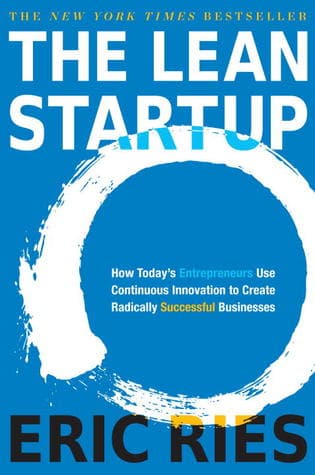
The Lean Startup: How Today's Entrepreneurs Use Continuous Innovation to Create Radically Successful Businesses cover
Archivist's Choice

The Lean Startup: How Today's Entrepreneurs Use Continuous Innovation to Create Radically Successful Businesses

Eric Ries (2011)

Genre

Business / Productivity / Leadership / Economics / Technology

Reading Time

240 min

Key Themes

See below

Track Your Reading

Sign in to track this book

Learn how to manage startups through rapid experimentation, validated learning, and constant adjustment, building sustainable businesses instead of untested plans.

Core Idea

The Lean Startup provides a scientific way to create and manage startups, focusing on rapid experimentation and validated learning. Ries suggests using the Build-Measure-Learn feedback loop instead of long business plans. Entrepreneurs quickly build a Minimum Viable Product (MVP), measure its effect on customers, and learn if they should change their strategy or continue. This method reduces waste, speeds up innovation, and helps startups find a sustainable business model by testing assumptions against customer behavior. The book states that entrepreneurship is a type of management needing a new accounting system, called Innovation Accounting. This system tracks progress and helps make good decisions, unlike traditional metrics that can mislead new businesses. It offers tools like the Five Whys for finding root causes and identifies different Engines of Growth. It also tells entrepreneurs to focus on actionable metrics over superficial ones to move their business forward.
Reading time
240 min
Difficulty
Medium
✓ Read this if...
You are starting a new business, developing a new product, or working in an innovative team within an established company, and want a structured, scientific approach to validate ideas and reduce risk.
✗ Skip this if...
You are looking for a traditional business plan template, a book focused purely on marketing tactics, or a deep dive into specific industry case studies rather than a foundational methodology.

Core idea

The central argument and framework that powers the entire book.

The Lean Startup provides a scientific way to create and manage startups, focusing on rapid experimentation and validated learning. Ries suggests using the Build-Measure-Learn feedback loop instead of long business plans. Entrepreneurs quickly build a Minimum Viable Product (MVP), measure its effect on customers, and learn if they should change their strategy or continue. This method reduces waste, speeds up innovation, and helps startups find a sustainable business model by testing assumptions against customer behavior.

The book states that entrepreneurship is a type of management needing a new accounting system, called Innovation Accounting. This system tracks progress and helps make good decisions, unlike traditional metrics that can mislead new businesses. It offers tools like the Five Whys for finding root causes and identifies different Engines of Growth. It also tells entrepreneurs to focus on actionable metrics over superficial ones to move their business forward.

At a glance

Reading time

240 min

Difficulty

Medium

Read this if...

You are starting a new business, developing a new product, or working in an innovative team within an established company, and want a structured, scientific approach to validate ideas and reduce risk.

Skip this if...

You are looking for a traditional business plan template, a book focused purely on marketing tactics, or a deep dive into specific industry case studies rather than a foundational methodology.

Key Takeaways

1

Build-Measure-Learn Loop

The core feedback mechanism for continuous innovation.

Quote

The fundamental activity of a startup is to turn ideas into products, measure how customers respond, and then learn whether to pivot or persevere.

The Build-Measure-Learn (BML) loop drives the Lean Startup method. This constant feedback cycle speeds up learning. Instead of long development based on guesses, startups should quickly build a Minimum Viable Product (MVP) to test an idea. This product then goes to customers, and their actions are carefully measured using actionable metrics. The 'learn' phase involves looking at this data to see if the first idea was right or if a strategy change (a 'pivot') is needed. This repeating process reduces waste by keeping product developmen...

Supporting evidence

Ries emphasizes that this loop is inspired by the scientific method, where hypotheses are formed, experiments are conducted, and conclusions are drawn to inform the next steps. He illustrates how companies like Dropbox initially used an MVP (a simple video) to validate market demand before building the full product.

Apply this

For any new product or feature, define a clear hypothesis about customer behavior or need. Build the smallest possible artifact (MVP) to test this hypothesis. Deploy it, measure user interaction with specific, actionable metrics, and then hold a learning meeting to decide on the next iteration or strategic shift.

minimum-viable-productvalidated-learningpivot
2

Minimum Viable Product (MVP)

The smallest experiment to test a business hypothesis.

Quote

The MVP is that version of a new product which allows a team to collect the maximum amount of validated learning about customers with the least effort.

The MVP is not a product missing features. It is the version of a new product that lets a team learn the most about customers with the least effort. Its goal is to test a main idea about customer value or growth. The key is to release something quickly that solves a basic problem for early users, even if it is not perfect. This early release lets entrepreneurs get real data and feedback. This avoids the problem of spending months or years building a product based on untested ideas, only to find no market for it. The MVP helps you lear...

Supporting evidence

Ries recounts the story of Zappos' founder, Nick Swinmurn, who tested the hypothesis that people would buy shoes online by taking photos of shoes at local stores and posting them on a website. He only bought the shoes from the store after a customer placed an order, effectively an MVP for an e-commerce shoe business.

Apply this

When developing a new product or feature, identify the riskiest assumption. Design the simplest possible experiment (MVP) to test that assumption. This might be a landing page, a demo video, a concierge service, or a single core feature. Focus on getting it into the hands of early adopters quickly to gather feedback.

validated-learningbuild-measure-learnearly-adopters
3

Validated Learning

Proving or disproving assumptions through empirical data.

Quote

Validated learning is the process of demonstrating empirically that a team has discovered valuable truths about a startup's present and future business prospects.

Learning based on evidence is central to the Lean Startup. This is not about adding features or even users, but about regularly testing business ideas and learning what works and what does not. This learning is 'validated' because it comes from real customer data, not just guesses. It shifts focus from superficial numbers (like total users) to actionable metrics that show cause and effect. This scientific approach helps startups avoid making products nobody wants by constantly changing based on what they learn, making sure resources g...

Supporting evidence

Ries highlights the importance of A/B testing and split-run experiments as tools for validated learning, allowing companies to test different versions of a product or feature with different customer segments to see which performs better against specific metrics.

Apply this

Before launching any product or feature, clearly define the hypothesis you want to test and the specific, actionable metric that will validate or invalidate it. For example, instead of 'users will like this new feature,' state 'adding X feature will increase daily active users by 10% within a week.' Then, design an experiment to measure this directly.

build-measure-learnactionable-metricshypotheses
4

Innovation Accounting

Measuring progress for startups using actionable metrics.

Quote

Innovation accounting works in three steps: Use an MVP to establish real data on where the company is right now. Tune the engine from the baseline to the ideal. Pivot or persevere.

Standard accounting metrics do not work well for startups facing high uncertainty. Innovation Accounting helps measure progress in the context of learning. It sets a starting point using an MVP, then measures later changes against that point to see if the changes are moving key metrics in the right direction. This method focuses on actionable metrics that show cause and effect, instead of superficial ones that only give a surface idea of progress. By focusing on these specific, measurable indicators, startups can decide objectively wh...

Supporting evidence

Ries contrasts innovation accounting with vanity metrics like total registered users or press mentions, which can mask a lack of engagement or monetization. He uses the example of IMVU, where early on they focused on specific metrics like retention and monetization per user rather than just overall user count.

Apply this

Define a clear set of 'innovation accounting' metrics (e.g., customer acquisition cost, retention rate, conversion rate for a specific action). Establish a baseline for these metrics with your MVP. For each subsequent iteration, measure the impact on these metrics. This data will objectively inform your pivot or persevere decisions.

actionable-metricsvanity-metricspivotpersevere
5

Pivot or Persevere

The critical decision point guided by validated learning.

Quote

The Lean Startup method is not just about how to build a better product; it is about how to build a sustainable business around that product.

The 'pivot or persevere' decision is a key moment in the Lean Startup process. After running experiments and looking at what they learned, a startup must decide whether to continue its current strategy (persevere) or make a structured change (pivot). A pivot is not a failure; it is a strategic adjustment based on new information. It lets the startup adapt to what customers truly want or what the market needs. Ries lists different types of pivots (e.g., zoom-in, zoom-out, customer segment, platform). He states they are data-driven chan...

Supporting evidence

Ries cites the example of Groupon, which started as 'The Point,' a platform for collective action, and pivoted into a daily deal site after observing user behavior and learning what resonated with them most effectively.

Apply this

Regularly schedule 'pivot or persevere' meetings where you review your validated learning from recent experiments. Based on the actionable metrics, objectively discuss whether the current strategy is leading to desired outcomes. Be prepared to articulate different types of pivots (e.g., changing target customer, changing problem solved, changing technology) as potential solutions.

validated-learninginnovation-accountingbuild-measure-learn
6

Vanity vs. Actionable Metrics

Distinguishing true progress from misleading numbers.

Quote

The only metrics that matter are the ones that can demonstrate cause and effect between the actions we take and the results we observe.

A key difference in the Lean Startup is between superficial metrics and actionable metrics. Superficial metrics (e.g., total registered users, page views, downloads) look good and can boost morale, but they do not show customer behavior or help make decisions. They often hide real problems. Actionable metrics, on the other hand, are specific, measurable, and directly linked to experiments and customer interactions. They let a team understand cause and effect. These metrics allow for true learning and inform whether to pivot or perseve...

Supporting evidence

Ries illustrates this with the example of a startup proudly announcing 'millions of users' while failing to mention that only a tiny fraction are active, engaged, or paying customers. He contrasts this with metrics like conversion rates for specific funnels or customer lifetime value, which are directly actionable.

Apply this

When defining metrics for your product, always ask: 'Can this metric help us make a decision to change our product or strategy?' If not, it's likely a vanity metric. Prioritize metrics that show cause and effect and can be segmented by user behavior or cohort (e.g., retention rate for users acquired through a specific channel).

innovation-accountingvalidated-learningcohort-analysis
7

The Five Whys

Getting to the root cause of problems through systematic inquiry.

Quote

When a problem occurs, we ask 'why?' five times. By the time we get to the fifth why, the root cause should be clear.

From the Toyota Production System, the 'Five Whys' is a tool for finding the root cause of a problem. When a problem comes up, instead of just fixing the obvious symptom, a team repeatedly asks 'why?' until they find the main cause. This careful questioning stops superficial fixes and ensures that solutions address the real issues, leading to stronger, lasting improvements. In a startup, it helps teams understand why an experiment failed, why customers acted unexpectedly, or why a metric is not changing. It encourages deep learning an...

Supporting evidence

Ries describes how the Five Whys are used in manufacturing to identify the root cause of defects, like a machine breaking down due to inadequate maintenance rather than just a faulty part. He advocates applying this same rigor to entrepreneurial problems, such as why a marketing campaign failed to convert users.

Apply this

When an experiment yields unexpected results (positive or negative) or a critical metric doesn't move as hypothesized, gather your team and systematically ask 'why?' at least five times. Document each answer and use it to inform the next 'why.' This will guide you to the actual problem to solve, rather than just its symptoms.

root-cause-analysiscontinuous-improvementvalidated-learning
8

The Engine of Growth

Identifying and optimizing the sustainable growth loops.

Quote

Every startup's growth is powered by one of three primary engines: the sticky engine, the viral engine, or the paid engine.

Ries says that lasting growth in a startup comes from one of three 'Engines of Growth': the Sticky Engine, the Viral Engine, or the Paid Engine. Knowing which engine powers your business is important for making your product and marketing work best. The Sticky Engine focuses on keeping customers and getting them to use the product often (e.g., subscription services). The Viral Engine relies on customers bringing in other customers through word-of-mouth or product features (e.g., social networks). The Paid Engine uses advertising or sal...

Supporting evidence

Ries provides examples: Facebook's early growth was driven by its viral engine, encouraging users to invite friends. SaaS companies often rely on the sticky engine with high retention rates. Many e-commerce businesses use the paid engine, carefully managing ad spend against customer value.

Apply this

Analyze your business model to determine which growth engine is most dominant or should be. Once identified, focus your Build-Measure-Learn loops on improving the key metrics associated with that engine. For a sticky engine, focus on retention and engagement. For a viral engine, optimize virality loops. For a paid engine, improve LTV/CAC ratio.

customer-acquisition-costcustomer-lifetime-valueretentionvirality
9

Leap-of-Faith Assumptions

Identifying and testing the riskiest beliefs first.

Quote

The two most important assumptions are the value hypothesis and the growth hypothesis.

Startups are built on assumptions, but some are more important and risky than others – these are 'leap-of-faith assumptions.' These are the basic beliefs about what customers want (value hypothesis) and how they will find and use the product (growth hypothesis). If these assumptions are wrong, the whole business model fails. The Lean Startup suggests finding these important assumptions early and designing MVPs and experiments specifically to test them. By testing the riskiest assumptions first, startups can fail quickly and cheaply, c...

Supporting evidence

Ries explains that many startups fail because they build a product based on a value hypothesis (e.g., 'people will pay for this') or a growth hypothesis (e.g., 'people will tell their friends about this') that turns out to be false, without ever truly testing it.

Apply this

Before starting any significant development, list all your core assumptions. Prioritize them by risk: which assumptions, if proven false, would cause your entire business to fail? Design your first MVP to directly test the riskiest 'leap-of-faith' assumptions. For example, if you assume people will pay for a service, your MVP should test willingness to pay, not just usage.

value-hypothesisgrowth-hypothesisminimum-viable-productvalidated-learning
10

Innovation as a Management Discipline

Applying scientific rigor to entrepreneurial endeavors.

Quote

The Lean Startup is not just a collection of tactics; it is a new way of looking at the development of innovative new products that can improve the success rate of all new ventures.

Ries argues that entrepreneurship, often seen as an art or something unplanned, can and should be treated as a strict management method. By using ideas from lean manufacturing and scientific experiments, companies of all sizes can reduce uncertainty and increase their chances of success. This means creating a culture of constant learning, quick experiments, and decisions based on data. It is about building a company structure and processes that support the Build-Measure-Learn feedback loop, instead of relying on gut feelings or long, ...

Supporting evidence

Ries highlights that even large corporations like GE have adopted Lean Startup principles, training thousands of employees in 'FastWorks' to bring new products to market faster and with greater customer validation, demonstrating its applicability beyond garage startups.

Apply this

Implement regular 'learning cycles' or 'sprint reviews' where teams present their hypotheses, MVP results, and validated learning. Encourage a culture where failure of an experiment is seen as a learning opportunity, not a personal failure. Invest in tools and training that support rapid prototyping, data collection, and analysis to embed this discipline throughout the organization.

continuous-innovationorganizational-culturescientific-method

Critical analysis

Notable Quotes

The only way to win is to learn faster than anyone else.

Ries emphasizes the importance of rapid learning and adaptation in startups.

Build-Measure-Learn feedback loop is at the core of the Lean Startup model.

Describing the iterative process for developing products based on validated learning.

A startup is a human institution designed to create a new product or service under conditions of extreme uncertainty.

Defining what constitutes a startup in the book's introduction.

Innovation accounting is a way of evaluating progress when all the metrics typically used in an established company are effectively zero.

Explaining how to measure progress in early-stage startups without traditional metrics.

The goal of a startup is to figure out the right thing to build—the thing customers want and will pay for—as quickly as possible.

Highlighting the focus on customer validation and market fit.

Pivoting is a structured course correction designed to test a new fundamental hypothesis about the product, strategy, and engine of growth.

Defining the concept of pivoting when initial assumptions prove wrong.

Success is not delivering a feature; success is learning how to solve the customer's problem.

Stressing that learning about customer needs trumps mere feature delivery.

The most dangerous assumption entrepreneurs make is that they know what the customer wants.

Warning against overconfidence in untested assumptions about customer desires.

Validated learning is the process of demonstrating empirically that a team has discovered valuable truths about a startup's present and future business prospects.

Explaining the concept of validated learning as a core principle.

Startups exist not to make stuff, make money, or serve customers. They exist to learn how to build a sustainable business.

Reframing the purpose of startups beyond common misconceptions.

The minimum viable product is that version of a new product which allows a team to collect the maximum amount of validated learning about customers with the least effort.

Defining the MVP concept central to Lean Startup methodology.

In a startup, both the problem and the solution are unknown.

Describing the inherent uncertainty in early-stage ventures.

The ability to learn faster from customers is the essential competitive advantage that startups must possess.

Emphasizing speed of learning as a key differentiator for startups.

Failure is a prerequisite to learning.

Encouraging a mindset that views failure as an opportunity for growth.

Quiz

Test Your Knowledge

Ready to see how well you understood this book? Take our interactive quiz with 10 questions.

10
Questions
~5
Minutes
?
Best Score

Key Questions (FAQ)

The Lean Startup is a business methodology developed by Eric Ries that applies principles from lean manufacturing to entrepreneurship. It focuses on rapid experimentation, validated learning, and iterative product releases to reduce uncertainty and build sustainable businesses efficiently.

About the author