“The one thing that is certain in the story of every human life, is that it is a story which ends in the grave.”
— Reflecting on the finality of life and death.

Wilkie Collins (1875)
Genre
Mystery
Reading Time
700 min
Key Themes
See below
Sign in to track this book
Driven by intuition and love, Valeria searches across continents to prove her husband's innocence, three years after a 'Not Proven' murder verdict left him in legal and social limbo.
Valeria Brinton marries Eustace Macallan after a quick courtship. Their early marriage is happy until Valeria finds an old newspaper clipping about Eustace's past. The article says that three years earlier, Eustace was tried for poisoning his first wife, Agnes Macallan, in Scotland. The verdict was 'Not Proven,' meaning there was not enough evidence to convict or acquit him. This discovery shocks Valeria, as Eustace never mentioned this part of his life. She confronts Eustace, who, ashamed and afraid of her judgment, leaves for the continent, leaving Valeria heartbroken and determined to clear his name.
Despite Eustace's departure and the public scandal, Valeria believes he is innocent. She talks to her family lawyer, Mr. Ayrton, who advises her against pursuing the matter, warning of social isolation and legal problems. Undeterred, Valeria begins her own investigation, starting at the Macallan family estate in Scotland, the scene of the alleged crime. She interviews former servants and local residents, trying to understand Agnes's death. Her first inquiries yield little new information, mostly confirming the known trial facts and the local opinion that Eustace was guilty, despite the 'Not Proven' verdict.
Valeria's search leads her to Miserrimus Dexter, an eccentric invalid and a distant relative of the Macallan family. Dexter lives a reclusive life, confined to his bed by a mysterious illness, but has a sharp mind and a love for puzzles and crime. He is known for his unusual theories and knowledge of human nature. Valeria, hearing of his perspective, visits him, hoping he can offer a new view on Eustace's case. Dexter is interested by Valeria's belief in her husband's innocence and her courage. He agrees to help her, seeing the case as an intellectual challenge.
Miserrimus Dexter, with Valeria's help, carefully reviews all trial transcripts, witness testimonies, and medical reports about Agnes Macallan's death. His analytical mind quickly finds inconsistencies and overlooked details that the original investigators and legal teams missed. He points out the unusual circumstances of Agnes's symptoms, the strange behavior of certain witnesses, and the lack of a clear motive for Eustace. Dexter suggests that the 'Not Proven' verdict, while legally inconclusive, psychologically condemned Eustace, and that the real perpetrator likely used the legal system's complexities and social biases.
As Valeria looks into the Macallan family history, she learns more about Eustace's mother, Mrs. Macallan. Mrs. Macallan, a stern and controlling woman, had a tense relationship with her daughter-in-law, Agnes. She was protective of Eustace and disliked Agnes, whom she considered unsuitable. Valeria discovers that Mrs. Macallan was in the house when Agnes died and was a key prosecution witness, often making Eustace look bad. Dexter theorizes that Mrs. Macallan's personality and influence might have unintentionally (or even intentionally) swayed opinions during the initial investigation and trial.
Valeria then focuses on Miss Minerva, Mrs. Macallan's long-time companion. Miss Minerva is quiet and subservient, often overshadowed by her employer. However, Valeria and Dexter begin to suspect Miss Minerva might know more than she said during the trial. They investigate her background and her relationship with both Mrs. Macallan and Agnes. They find that Miss Minerva was loyal to Mrs. Macallan and had a complicated, perhaps resentful, relationship with Agnes. Dexter suggests that Miss Minerva's meek manner could be a facade, hiding a deeper involvement in the tragic events.
Miserrimus Dexter carefully re-examines the evidence about the poison used to kill Agnes — a rare and strong substance. He considers how it could have been given without immediate detection and the chances various people in the household had. He theorizes that the poison was likely given in small, repeated doses, mimicking a natural illness, making it hard to trace. This method would require careful planning and ongoing access to Agnes, narrowing the suspects. Dexter also considers the psychological profiles of those present, looking for someone with the cunning and motive to commit such a subtle crime.
Through questioning and psychological pressure from Miserrimus Dexter, Miss Minerva finally confesses to Agnes Macallan's murder. She reveals she poisoned Agnes out of loyalty to Mrs. Macallan, whom she believed Agnes was tormenting. Miss Minerva resented Agnes, seeing her as an outsider who threatened her secure position in the Macallan household. She planned the poisoning, giving small doses over time to make it look like a natural illness, thereby framing Eustace and keeping her place with Mrs. Macallan.
With Miss Minerva's confession and Dexter's detailed analysis, Valeria presents the new evidence to the authorities. The case is reopened, and the 'Not Proven' verdict against Eustace Macallan is overturned. The public, initially skeptical, accepts Miss Minerva's guilt. News of Eustace's exoneration reaches him on the continent, and he immediately returns to England. Overwhelmed with gratitude and love for Valeria, he is finally free from the suspicion that haunted him. Their reunion is emotional, marking the end of their separation and the restoration of their marriage.
With Eustace's name cleared, Valeria and Eustace begin to rebuild their lives. The ordeal has left its mark, but it has also created a strong bond between them. They have faced societal judgment, personal pain, and doubt, emerging stronger and more committed. While the past will always be remembered, they look forward to a future free from the shadow of the 'Not Proven' verdict. Miserrimus Dexter, having solved his most challenging case, returns to his reclusive life, satisfied with his intellectual victory and the justice he helped secure for Eustace and Valeria.
The Protagonist
Valeria transforms from a naive newlywed into a resilient and resourceful detective, proving her intuition and unwavering love.
The Protagonist
Eustace moves from a state of shame and despair to one of relief and gratitude, his faith in Valeria and justice restored.
The Supporting
Dexter remains a static character in terms of personal development, but his intellect is fully realized and validated through the successful resolution of the case.
The Antagonist
Miss Minerva's true villainous nature is gradually revealed, culminating in her confession, exposing her as the true murderer.
The Supporting
Mrs. Macallan remains largely static, her character defined by her rigid social views and domineering personality.
The Mentioned
Agnes's character is static, serving as the central mystery that needs to be solved.
The Supporting
Mr. Ayrton's initial skepticism gives way to professional support as Valeria's investigation progresses.
The novel examines the legal system's limits, especially through the 'Not Proven' verdict. This Scottish verdict leaves Eustace in legal limbo, neither condemned nor truly acquitted. It shows how legal technicalities can fail to deliver justice or peace of mind for the accused and society. The theme questions if legal truth always matches moral truth, and suggests that personal determination (like Valeria's) is sometimes needed to uncover the full story where the law falls short. Miserrimus Dexter's analytical approach shows a search for truth beyond legal precedent, aiming for a complete understanding of events.
“"The Law, in its majestic impartiality, had found my husband neither innocent nor guilty. It had simply said: 'Not Proven.' And in that one phrase, it had condemned him more cruelly than a verdict of guilty could have done."”
Valeria's love and loyalty to Eustace are the emotional core of the novel. Her intuition, more than concrete evidence, first convinces her of his innocence, even when he is ashamed and flees. This theme explores how marital devotion can overcome social judgment and legal uncertainty. Valeria's journey shows that love can drive truth-seeking, providing the strength to challenge established stories and overcome obstacles. Her belief in Eustace helps her persevere when others would give up.
“"I knew him. I loved him. And I knew, with a certainty that defied all evidence, that he was innocent."”
The novel shows the social pressure and stigma of being accused of murder, even without a conviction. Eustace's 'Not Proven' verdict ruins his reputation, forcing him into exile and casting a shadow over his new marriage. Valeria, by standing by him and investigating, faces social rejection and disapproval, even from her own lawyer. This theme highlights the destructive power of gossip, suspicion, and public opinion, and how easily a person's life can be shattered by an unresolved accusation, regardless of legal innocence. It questions the fairness of a society that judges based on rumors and incomplete information.
“"To be 'Not Proven' was to be eternally suspected, a pariah in the eyes of society, a name whispered with dread."”
A theme is that truth often hides in plain sight or in small details. Miserrimus Dexter, with his observation skills, excels at finding these hidden truths. The real murderer, Miss Minerva, is the least suspected character, operating in the shadows of her employer's home. The novel suggests that obvious explanations can mislead and that one must look past superficial appearances and conventional ideas to find the real answers. This is seen in the subtle poisoning method and the quiet nature of the culprit.
“"The truth, my dear madam, is rarely found in the glare of the obvious. It lurks in the shadows, in the overlooked corners, in the very places no one thinks to look."”
A unique Scottish legal verdict that leaves a lingering shadow of suspicion.
This is the central plot device, serving as the inciting incident and the primary obstacle for the protagonists. The 'Not Proven' verdict means the jury found insufficient evidence to either convict or acquit, leaving Eustace legally free but socially condemned. This ambiguity creates a compelling mystery and drives Valeria's quest for absolute truth. It heightens the stakes, as Eustace isn't seeking mere acquittal but complete exoneration to clear his name and conscience. It also allows for the exploration of themes like legal inadequacy and social judgment.
An incapacitated but brilliant character who solves the mystery through intellect.
Miserrimus Dexter functions as the classic armchair detective, a character who, due to physical limitations, cannot actively participate in the investigation but uses their superior intellect and deductive reasoning to guide others. His role is to analyze evidence, identify inconsistencies, and formulate theories from his confined state, relying on Valeria to gather information. This device allows for complex intellectual puzzles to be solved through pure reasoning, while also creating a dynamic partnership between the physically active and the intellectually dominant characters.
The story is told from Valeria's perspective, emphasizing her emotional journey and subjective experience.
Valeria's first-person narration places the reader directly into her emotional turmoil, her unwavering belief in Eustace, and her determined pursuit of justice. This perspective allows for a deep exploration of her psychological state, her love, and her frustrations. It also creates suspense, as the reader only knows what Valeria knows, and experiences the revelations and setbacks alongside her. Her subjective viewpoint underscores the themes of intuition and personal conviction against societal judgment, making her quest more personal and compelling.
The true antagonist is a seemingly harmless character, overlooked by initial investigations.
The revelation of Miss Minerva as the murderer employs the 'hidden villain' trope, where the least suspected character, often someone in a subservient or unassuming role, turns out to be the culprit. This device subverts reader expectations and highlights the idea that evil can reside in unexpected places. It also allows the author to explore the psychology of a character driven by complex motives (loyalty, resentment, desire for security) who has successfully maintained a facade for years, making the final confession all the more impactful.
“The one thing that is certain in the story of every human life, is that it is a story which ends in the grave.”
— Reflecting on the finality of life and death.
“It is not the business of law to provide us with motives, but to test the motives we have.”
— Discussing the role of the legal system in understanding human actions.
“There are some women who have no secrets. There are others who are secrets themselves.”
— Observations on the nature of women and their hidden depths.
“Nothing is so easy as to deceive oneself; for what a man wishes, he generally believes to be true.”
— A general reflection on self-deception and wishful thinking.
“Suspicion is a poison which, once absorbed into the system, corrupts the whole being.”
— Describing the destructive impact of suspicion on an individual.
“The longer a secret is kept, the more dangerous it becomes.”
— A commentary on the escalating risks of prolonged secrecy.
“The truth is a terrible weapon in the hands of those who know how to use it.”
— Considering the power and potential harm of truth.
“There are cases in which the greatest kindness you can show to a human being is to tell him the truth, however painful it may be.”
— Discussing the necessity of honesty, even when difficult.
“Ignorance is not innocence, but a crime against oneself.”
— A strong statement on the responsibility of seeking knowledge.
“The past is a phantom, but it can haunt the present with terrible reality.”
— Reflecting on how past events continue to influence the present.
“It is easier to believe in a lie that flatters us than in a truth that offends us.”
— Another observation on human susceptibility to comforting falsehoods.
“The law is a strange labyrinth, and few can find their way through it without a guide.”
— Metaphorically describing the complexity of the legal system.
“Madness, like genius, often takes a crooked path.”
— A reflection on the unconventional nature of both mental illness and exceptional intellect.
“Justice may be blind, but she is not deaf.”
— Suggesting that while justice is impartial, it still listens to evidence and arguments.
Ready to see how well you understood this book? Take our interactive quiz with 10 questions.
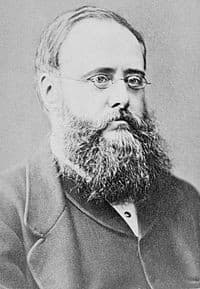
William Wilkie Collins was an English novelist and playwright known especially for The Woman in White (1859), a mystery novel and early "sensation novel", and for The Moonstone (1868), which established many of the ground rules of the modern detective novel and is also perhaps the earliest clear example of the police procedural genre.