“Life is a very sad piece of buffoonery, because we have in ourselves the need to deceive ourselves continuously.”
— A reflection on the human condition and self-deception.

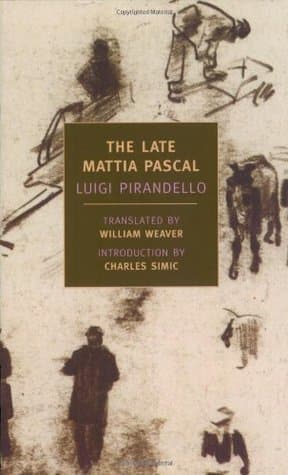
Luigi Pirandello (2011)
Genre
Fiction
Reading Time
272 min
Key Themes
See below
Sign in to track this book
After escaping a dreary life by faking his own death, Mattia Pascal discovers that shedding one identity only traps him in another, making him a ghost in both worlds.
Mattia Pascal, a librarian in his hometown of Miragno, begins to tell his unusual story. He describes his childhood with his loving mother and a dishonest administrator, Berto Papiano, who wasted their inheritance. After some bad luck, including losing his family's remaining property, Mattia quickly seduces Romilda Pescatore, his landlady Marianna Dondi's niece. This leads to a forced marriage, which quickly becomes a life of domestic unhappiness, controlled by his difficult wife and demanding mother-in-law. Mattia feels trapped and completely stifled by his life in Miragno, wanting to get away.
Overwhelmed by his suffocating home life and his infant daughter's recent death, Mattia reaches a breaking point. One night, after a particularly bad argument, he walks out of his house and leaves Miragno without telling anyone. He travels to Nice, then Monte Carlo, where he has amazing luck at the casino, winning a lot of money. On his way back to Miragno, planning to confront his family and take back his life with his new money, he reads a newspaper article about a drowned man found in the mill stream near his hometown, identified by his family as Mattia Pascal.
When he reads the news of his own death, Mattia is first shocked but then quickly sees the huge chance it offers. He views it as freedom from his old, unhappy life. He decides to fully accept this new reality, leaving his past identity behind. He travels to Rome, changes his appearance by shaving his beard and cutting his hair, and carefully creates a new person: Adriano Meis. He invents a background, a job, and a past for Adriano, believing he can now live a truly free life, making different choices than Mattia Pascal.
As Adriano Meis, Mattia travels widely, enjoying the first thrill of being unknown and free. He finds he can watch life from a distance, without social duties or expectations. However, this freedom soon becomes a problem. He discovers that without a legal identity, he cannot truly participate in society. He cannot own property, marry, vote, or even report a crime without revealing his deception. He is a ghost, an observer, always on the outside, realizing that true freedom needs a recognized identity and the responsibilities that come with it. His new life, while free from the old burdens, is just as unbearable in its own way.
Adriano Meis eventually settles in Rome, renting a room in the house of Anselmo Paleari, an unusual philosopher interested in 'the squint of the spirit' and the illusion of reality. He finds a quiet sense there, watching the lives of those around him. He grows very fond of Paleari's gentle and sad daughter, Adriana. He falls in love with her, and she loves him back, offering him a hint of real happiness and connection. However, his made-up identity stops him from having a relationship or marriage with her, as he cannot legally exist or commit to anything.
One evening, Adriano's money is stolen by Papiano, the brother of Adriana's suitor, who also lives in the house. This event clearly shows Adriano's difficult situation. He cannot report the theft to the police because, as Adriano Meis, he does not legally exist. He has no identification, no proof of who he is, and no legal standing to press charges. This event highlights the deep limits of his chosen freedom and the complete impossibility of seeking justice or protection without a recognized identity. He feels utterly powerless and unseen.
The theft and his inability to act on it, along with his love for Adriana that cannot be, push Adriano Meis to a new crisis. He understands that his life as Adriano is empty, without real involvement or a future. He cannot marry Adriana, cannot own property, cannot even defend himself. He realizes he has simply traded one prison for another. He plans to 'kill off' Adriano Meis, leaving his glasses, hat, and a suicide note by a bridge, making it seem like Adriano has drowned.
After 'killing' Adriano Meis, Mattia Pascal returns to Miragno, hoping to get back his old identity and life. He expects to find his wife, Romilda, and his mother, perhaps even his old job. However, upon his arrival, he finds much has changed. His mother has died, and his wife, Romilda, has remarried his friend Pomino and has a child with him. His old job at the library has been filled. He is a ghost in his own former life, an unwelcome visitor in a world that has moved on without him, having mourned him and then forgotten him.
Mattia confronts his former wife and friend, but his attempts to reclaim his identity are met with confusion, disbelief, and anger. Legally, he is still dead. His wife and Pomino are now a family, and his return threatens their happiness and legitimacy. Mattia realizes he cannot force the world to recognize him. He is a man without an identity, unable to be Mattia Pascal, and unable to be Adriano Meis. He is forced to live as a 'late' Mattia Pascal, a mere shadow, a ghost watching his own former life from the side, forever outside the flow of existence.
Mattia settles into a new routine, living as a permanent outsider in Miragno. He occasionally visits the graves of his mother and the man mistakenly buried as him. He continues to visit the library, where he watches his former life from a distance. He accepts that he can no longer truly take part in society. He is a man who has died twice, a living ghost, always thinking about identity, freedom, and the social rules that define human life. His story shows that truly escaping oneself or the need for social recognition is impossible.
The Protagonist
From a passive victim of circumstances, Mattia attempts to become a free individual, only to find himself trapped by the very freedom he sought, ultimately accepting his fate as a detached observer.
The Supporting
Remains largely static, representing the conventional, domestic life Mattia despises and later finds he cannot reclaim.
The Supporting
Remains static, a symbol of the oppressive forces in Mattia's initial life.
The Supporting
Remains a philosophical voice, embodying the intellectual exploration of the novel's themes.
The Supporting
Remains a symbol of potential happiness and normalcy that Mattia cannot attain.
The Antagonist/Supporting
Remains a static antagonist, representing societal corruption and the dangers of anonymity.
The Mentioned
His actions set the stage for Mattia's early misfortunes, but he doesn't actively participate in the main plot.
The Supporting
Becomes an unwitting replacement for Mattia, signifying the world moving on without him.
The novel looks closely at the nature of identity, asking if it is something we are born with or something society creates. Mattia Pascal's attempt to shed his old self and become Adriano Meis shows how limited such a change can be. He finds that simply changing a name and appearance does not bring true freedom, as identity is tied to social recognition, legal status, and the relationships we form. Adriano's lack of a past makes him a ghost, unable to truly exist or participate in the world, showing that identity is not just what one chooses to be, but what society acknowledges.
““The law of the world is that you must have an identity; you must be someone. If you are no one, you are nothing.””
Pirandello explores the conflicting nature of freedom. Mattia first sees his 'death' as the ultimate release from his unhappy life in Miragno. However, his new life as Adriano Meis, free from social duties and a past, quickly becomes a different kind of prison. He finds himself unable to interact with society, form lasting relationships, or even seek justice. This shows that absolute freedom, without social ties and legal recognition, leads to loneliness and helplessness. It proves that true freedom often needs a balance with certain social rules and responsibilities.
““What freedom did I have? The freedom of the dead, of those who are nothing.””
Through Anselmo Paleari's philosophical thoughts and Mattia's own experiences, the novel explores the idea that reality is not objective but a personal creation. Paleari's idea of 'the squint of the spirit' suggests that human perception is naturally flawed, affecting how we see ourselves and the world. Mattia's two 'deaths' and his life as a 'late' Mattia Pascal challenge the fixed nature of reality, showing how personal and social stories can create or erase a person's existence. The novel suggests that our understanding of truth and identity is often an illusion, shaped by viewpoint and social agreement.
““We are puppets, and the strings are pulled by an invisible hand. But we believe we are free.””
A constant theme is the deep sense of alienation and loneliness Mattia Pascal feels. In Miragno, he feels separate from his own life and family. As Adriano Meis, his lack of a legal identity and past forces him into a state of constant detachment, an observer unable to fully take part in human connection or social structures. When he returns to Miragno, he is separate from his former life, which has moved on without him. He becomes a 'living ghost,' an outsider always watching, showing the extreme loneliness of a man who has lost his place in the world.
““I was a man who had died twice, and who, therefore, could no longer live.””
A drowned corpse is misidentified as Mattia Pascal, triggering his new life.
The discovery of a drowned man, mistakenly identified as Mattia Pascal, serves as the pivotal plot device. This error provides Mattia with the unique opportunity to escape his old life and create a new identity. It is the catalyst for the entire narrative, allowing him to explore the existential questions of self and freedom. Without this mistaken identity, Mattia would never have embarked on his journey as Adriano Meis, and the novel's central conflict regarding the nature of identity would not arise.
Mattia Pascal 'dies' twice, once literally (by mistake) and once symbolically.
Mattia's two 'deaths' are crucial to the narrative. The first, the mistaken identification of a corpse, liberates him from his past. The second, the staged suicide of Adriano Meis, is a symbolic act by Mattia to rid himself of the burdens of his false identity. This double death underscores the theme of identity's fluidity and its dependence on social recognition. It highlights that one cannot simply shed an identity without consequence, and that even a chosen identity can become a prison, necessitating its own 'death'.
The story is told by Mattia Pascal looking back on his experiences.
The novel is narrated in the first person by Mattia Pascal, who recounts his story from his current state as a 'living ghost.' This retrospective narration allows for philosophical reflection and irony, as Mattia can comment on his past actions with the wisdom gained from his experiences. It also emphasizes his detachment from his own life, as he is literally narrating the events of a man who no longer exists in the eyes of the law, reinforcing his role as an observer and commentator on his own peculiar fate.
Mattia's unexpected fortune at the casino provides the means for his reinvention.
Mattia's astonishing win at the Monte Carlo casino is a crucial plot device. It provides him with the financial means to escape his old life and establish himself as Adriano Meis. Without this sudden influx of wealth, his decision to embrace his 'death' and create a new identity would have been far more difficult, if not impossible. The win represents a stroke of arbitrary fate that empowers him to pursue his quest for freedom, setting the stage for his subsequent existential dilemmas.
“Life is a very sad piece of buffoonery, because we have in ourselves the need to deceive ourselves continuously.”
— A reflection on the human condition and self-deception.
“The greatest punishment for a man who has no name is that he cannot even be angry.”
— Mattia Pascal, as Adriano Meis, contemplates the limitations of his new identity.
“But what kind of freedom is it to be free from everything, if one is also free from oneself?”
— Adriano Meis questions the nature of his freedom after abandoning his past.
“One does not die only once, but many times, and always for something, for someone, for a dream.”
— Mattia reflects on the various 'deaths' or transformations one experiences in life.
“To construct a new life on the ruins of the old, that is perhaps the greatest audacity.”
— Considering the challenge of starting anew after a perceived death.
“Every truth is born of a lie, and every lie dies of a truth.”
— A philosophical musing on the relationship between truth and falsehood.
“Happiness is not a thing, it is an idea, and as such, it can be approached, but never possessed.”
— Mattia's contemplation on the elusive nature of happiness.
“What is the good of having a name if it means nothing to anyone?”
— Adriano Meis struggles with the anonymity and meaninglessness of his assumed identity.
“The mirror is not merely an object; it is a question mark that one places before oneself.”
— A deeper look at the act of self-reflection and perception.
“We think we are free, but we are always prisoners of ourselves, of our past, of our name.”
— A realization about the inescapable ties to one's former life and identity.
“The past does not pass. It remains, like a shadow, clinging to our steps.”
— Mattia's understanding of how his past continues to influence him despite his efforts to escape it.
“One day, when I am truly dead, someone will perhaps remember that I was alive.”
— A poignant reflection on the desire for remembrance and the fleeting nature of existence.
“And the greatest irony is that, having abandoned one life, I found myself with no life at all.”
— Adriano Meis expresses the ultimate disillusionment with his attempt to forge a new existence.
“Our life is a perpetual comedy, and we are forced to play the part.”
— A recurring theme in Pirandello's work, reflecting on life as a theatrical performance.
Ready to see how well you understood this book? Take our interactive quiz with 10 questions.
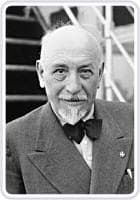
Luigi Pirandello was an Italian dramatist, novelist, poet, and short story writer whose greatest contributions were his plays. He was awarded the 1934 Nobel Prize in Literature for "his almost magical power to turn psychological analysis into good theatre." Pirandello's works include novels, hundreds of short stories, and about 40 plays, some of which are written in Sicilian. Pirandello's tragic farces are often seen as forerunners of the Theatre of the Absurd.

Ashley Antoinette
4.6

Mark McDonald
4.4
Luo Guanzhong
4.4

Mia McKenzie
4.3
Dorothy Parker
4.3
Joaquim Maria Machado de Assis
4.3

James Thurber
4.2

Terry Kay
4.2