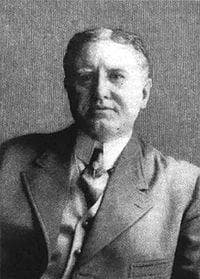
Biography coming soon.

Sign in to track this book
A dying artist's will to live is tied to a single ivy leaf, a fragile symbol of hope against winter and despair.
The story begins in a small artist colony in Greenwich Village, New York, during a harsh winter. Sue and Johnsy, two young artists, share a studio apartment. Johnsy, a delicate girl from California, becomes gravely ill with pneumonia. The doctor tells Sue that Johnsy's chances of recovery are slim, not because of the disease's severity, but because she has given up her will to live. He estimates her chances at one in ten, saying medicine alone cannot fight a patient's self-resignation. Sue worries deeply, seeing Johnsy's growing apathy and melancholic gaze fixed outside their window.
As Sue tries to cheer Johnsy up and coax her to eat, she notices Johnsy counting something outside the window. Johnsy reveals she is counting the leaves on an old ivy vine climbing the brick wall opposite their window. She believes she will die when the last leaf falls. Despite Sue's attempts to change her mind, Johnsy's conviction is firm. She says that with each gust of wind, the leaves are falling faster, signaling her end. This revelation disturbs Sue, who understands how serious Johnsy's psychological state is.
Distraught by Johnsy's fatalistic outlook, Sue goes to the studio of Mr. Behrman, an old, unsuccessful painter who lives on the ground floor. Behrman is a sixty-year-old man with a long, white beard and a difficult manner. He has always dreamed of painting a masterpiece but has never started it. He often poses for the younger artists, including Sue and Johnsy, for a small fee. Sue tells him about Johnsy's condition and her belief about the last leaf, expressing her fear. Behrman, at first skeptical of such 'foolishness,' eventually agrees to pose for Sue, grumbling about Johnsy's 'idiotic' idea.
The night turns exceptionally harsh, with fierce wind and rain against the windows. Sue stays by Johnsy's bedside, consumed with worry. She knows such a storm would strip the last leaves from the frail ivy vine. Johnsy, weak but determined, insists that Sue not close the window shade, wanting to see the final leaf fall. Sue reluctantly complies, her heart heavy with dread, expecting a bare vine in the morning and her friend's spirit to fail. The sound of the storm fills their small apartment, increasing the tension and despair.
The next morning, after the storm has passed, Johnsy, with a weak voice, asks Sue to raise the shade. Sue hesitates, fearing the worst, but eventually pulls it up. To their astonishment, against the brick wall, one solitary ivy leaf still clings to its stem. It is a dark green leaf, with yellow edges from decay, but it remains attached despite the wind and rain. Johnsy stares at it, surprised, and comments on its persistence. This unexpected sight sparks a flicker of hope in Sue, though Johnsy still believes it will fall that day.
Throughout the day, the single leaf remains. Johnsy watches it, and as evening falls and the leaf still holds, a change begins within her. She realizes her desire to die was foolish and wrong. The leaf's tenacity shames her, making her feel ungrateful. She confesses to Sue that it was wrong to want to die, recognizing the leaf's message of perseverance. This new will to live marks a turning point in her illness. She begins to ask for food and expresses a desire to paint again, showing a return to health and hope.
The next day, the doctor visits Johnsy again. After examining her, he tells Sue that Johnsy's chances of recovery have greatly improved. He credits this change entirely to Johnsy's renewed will to live, stating that medicine can now be effective. He is encouraged by her desire for food and her positive outlook. He then mentions that he needs to visit another patient, an old man named Behrman, who is also suffering from pneumonia, indicating the severity of the winter's illness. Sue is overjoyed by the news of Johnsy's recovery and begins to help her get better.
Two days later, the doctor informs Sue that Behrman has died in the hospital. He had been found in his studio, suffering from pneumonia, his clothes and shoes wet and cold. Beside him were a ladder, a lantern, and a palette with green and yellow paints still mixed. Sue then goes to Johnsy and reveals the truth: the last leaf Johnsy had seen on the wall was not real. It was Behrman's masterpiece, painted by him on the wall during that terrible, stormy night. He had braved the cold and rain to paint it, sacrificing his own life to save Johnsy's.
Sue explains to Johnsy that Behrman, the cynical old man who had always dreamed of painting a masterpiece but never achieved it, found his purpose in this selfless act. He had climbed the ladder in the freezing rain and wind to paint that single, enduring leaf, knowing it was the only way to restore Johnsy's hope and will to live. His sacrifice was complete; he gave his life to create the illusion that saved another. The painting, though temporary and exposed to the elements, was indeed his masterpiece, born of compassion and artistic dedication. Johnsy, now fully recovered, understands the depth of his love and sacrifice.
The Protagonist
Johnsy transforms from a despairing, fatalistic invalid to a hopeful, grateful survivor, recognizing the value of life through Behrman's selflessness.
The Supporting
Sue remains a steadfast and supportive friend, enduring emotional turmoil but ultimately finding strength in caring for Johnsy and honoring Behrman's memory.
The Supporting
Behrman transforms from a cynical, unfulfilled artist to a selfless hero, achieving his 'masterpiece' through an act of profound compassion that costs him his life.
The Supporting
The doctor's role is primarily functional, serving as a medical authority whose assessments frame Johnsy's decline and recovery.
The story explores the balance between hope and despair, especially in illness. Johnsy's initial surrender to death, tied to the falling leaves, shows how despair can make medical treatment useless. The 'last leaf' then reignites her hope, proving that a will to live is necessary for recovery. The story shows that hope, even if based on an illusion, can help survival, while despair can be as deadly as any disease. Behrman's act is an example of how hope can be given to others.
“The doctor took Sue aside and told her that Johnsy had one chance in ten, and that chance was for her to want to live.”
'The Last Leaf' is about sacrifice and selflessness. Behrman, an old, cynical artist, gives his own life to save Johnsy's. His 'masterpiece' is not a painting for fame but an act of compassion, created in the bitter cold and rain, which leads to his death. His sacrifice highlights that true heroism often lies in quiet, selfless acts done for others, without expecting recognition. This theme changes Behrman's character from a gruff old man to a true hero, whose act of love goes beyond his artistic failures.
“It was Behrman's masterpiece—he painted it there the night that the last leaf fell.”
Art plays two roles in the story: it is a profession and a life-saving force. For Sue and Johnsy, art is their livelihood and passion. More important, Behrman's painted leaf becomes the ultimate example of art's power. It is not a grand, celebrated work, but a simple, life-like depiction that convinces Johnsy to live. This shows that art's true value can be in its ability to inspire, heal, and offer comfort, rather than purely in its looks or commercial worth. The 'masterpiece' saves a life, demonstrating art's impact beyond just looking good.
“It was Behrman's masterpiece—he painted it there the night that the last leaf fell.”
The story emphasizes the link between a person's mental state and their physical health. The doctor states that Johnsy's chances of recovery depend more on her will to live than on medicine. Her belief that she will die with the last leaf directly affects her physical decline. When her hope is rekindled by the 'enduring' leaf, her physical health improves quickly. This theme highlights the psychological aspect of illness and recovery, suggesting that a positive mindset and a strong will to live are important in overcoming physical ailments, even severe ones like pneumonia.
“When a patient begins to count the carriages in her funeral procession, the doctor said, 'I subtract 50 per cent from the curative power of medicines.'”
The ivy leaf as a symbol of life and hope.
The ivy leaf serves as the central symbol in the story, representing Johnsy's fading life and, paradoxically, her renewed hope. Initially, each falling leaf symbolizes her diminishing will to live and the approach of death. The single, stubbornly clinging leaf, whether real or painted, becomes a powerful symbol of resilience, perseverance, and the tenacious grip on life. It embodies the message that even in the bleakest circumstances, a flicker of life or hope can endure, capable of inspiring a will to survive. The leaf's symbolism is further deepened by its artistic creation, blending nature with human compassion.
The cynical artist's selfless masterpiece.
The story is rich in situational and dramatic irony, particularly concerning Behrman. He is portrayed as a gruff, cynical, and unsuccessful painter who constantly dreams of a masterpiece but never produces one. The irony lies in the fact that his true masterpiece is not a celebrated painting on canvas, but a simple, life-saving deception painted on a wall during a storm, an act that costs him his life. He achieves his artistic dream not through ambition, but through selfless love. This ironic twist underscores the themes of hidden heroism and the unexpected nature of genuine artistic and human achievement.
Behrman's artistic ambition and the severity of the winter.
While subtle, there are elements of foreshadowing. Behrman's constant talk of painting his 'masterpiece' and his gruff but ultimately caring nature hint at his potential for a significant, perhaps even heroic, act. The doctor's mention of the severe winter and the prevalence of pneumonia, particularly when he says he has to visit another patient with the same illness, subtly prepares the reader for Behrman's eventual fate. This foreshadowing, though not explicit, adds a layer of tragic inevitability to Behrman's sacrifice, making his death less of a complete surprise and more of a poignant culmination of events.
The painted leaf as a life-saving illusion.
The core of the plot relies on a benevolent deception: Behrman paints a leaf on the wall to trick Johnsy into believing a real one has survived. This deception is crucial because it directly manipulates Johnsy's perception and, consequently, her will to live. It highlights the idea that sometimes an illusion, when created out of love and selflessness, can have a more profound and positive impact than harsh reality. The painted leaf is a lie, but it's a lie that saves a life, demonstrating that intent and outcome can transform a deceptive act into one of ultimate goodness and heroism.
Ready to see how well you understood this book? Take our interactive quiz with 10 questions.
Biography coming soon.

Ashley Antoinette
4.6

Mark McDonald
4.4
Luo Guanzhong
4.4

Mia McKenzie
4.3

Dorothy Parker
4.3

Joaquim Maria Machado de Assis
4.3
James Thurber
4.2

Terry Kay
4.2