“The knife that killed me wasn't a big knife, not a Rambo knife, not a commando knife. It was just a kitchen knife. A cheap one, with a plastic handle.”
— Paul's opening narration, setting the scene for his own death.

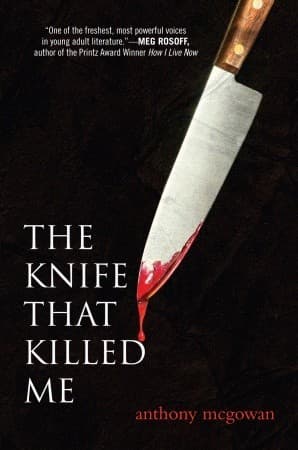
Anthony McGowan (2008)
Genre
Mystery / Young Adult
Reading Time
224 min
Key Themes
See below
Sign in to track this book
Caught in the terrifying orbit of a charismatic bully, a high schooler's desperate attempts to escape a brewing gang war only pull him closer to the moment he holds the knife that will end a life.
Paul Vanderman, a new student, quickly becomes aware of the dominant bully, Roth. Roth establishes control early, not through direct physical confrontation with Paul, but through his reputation and the fear he causes in other students. Paul observes Roth's casual cruelty and his manipulation of those around him, including his loyal but less intelligent henchman, Worm. This initial period sets the stage for the power dynamics that will define Paul's time at the school, as he tries to navigate his new environment without drawing Roth's attention.
Roth, through manipulation, compels Paul to deliver a message to a student named 'The Chief' at a neighboring school. This act is a deliberate provocation, designed to escalate tensions between the two schools and their groups. Paul, feeling trapped and unable to refuse Roth's demand, reluctantly carries out the task, knowing his involvement will draw him deeper into Roth's dangerous orbit. The delivery of the message marks a turning point, making Paul an unwilling participant in Roth's schemes and setting off a chain of events that will have serious repercussions.
After Paul delivers the message, the animosity between Roth's group and The Chief's gang escalates quickly. There are minor skirmishes, territorial disputes, and constant tension permeates both schools. Paul, despite wanting to remain neutral, finds himself increasingly involved. Roth uses Paul's initial involvement as leverage, constantly reminding him of his role and drawing him into further provocations. Paul observes the growing aggression, feeling a mix of fear and a strange fascination with the unfolding drama.
In a key moment, Roth hands Paul a knife. This is a symbol of power, a test of loyalty, and a tool of intimidation. Paul is terrified by the responsibility and the implications of possessing such an object, yet he also experiences a rush of adrenaline and a feeling of control. The knife represents Paul's unwilling initiation into Roth's world of violence. This act further binds Paul to Roth, making him complicit and blurring the lines between victim and participant in the escalating conflict.
Paul is tormented by the knife. He understands the danger it represents, both to himself and to others, and he is deeply afraid of the consequences of carrying it. However, he also finds himself drawn to the sense of power and respect (or fear) it commands from others. This internal struggle highlights Paul's moral dilemma: whether to give in to the dark allure of violence and conformity or to resist Roth's influence, even if it means facing further trouble. His conscience battles with his desire for acceptance and safety.
The tensions finally boil over, leading to a planned confrontation between Roth's group and The Chief's gang. The location is set, and anticipation builds, creating an atmosphere of dread. Paul is again drawn into the heart of the conflict, expected to be present and possibly participate. He is terrified but feels unable to back out, caught in the momentum of the impending clash. The stage is set for a violent resolution, with Paul a reluctant player in a drama he never wanted.
The two gangs meet, and the confrontation quickly becomes a chaotic fight. Paul is caught in the violence, witnessing the ferocity and desperation of the participants. The scene is a blur of punches, shoves, and threats, with the stakes higher than ever. Paul's fear is palpable as he tries to navigate the melee, his every instinct screaming for him to escape. The uncontrolled aggression of the fight shows the dangerous path he has been forced down by Roth.
In the chaos of the fight, the knife that Roth had given Paul is used. Paul recounts the moment of the stabbing, detailing the blur of events, the shock, and the immediate, horrifying realization of what has happened. The victim falls, and the fight momentarily pauses, replaced by a stunned silence. Paul is overwhelmed by guilt, terror, and disbelief, his world irrevocably shattered by the act. The narrative focuses on his internal state, the crushing weight of responsibility, and the dawning horror of the consequences.
Following the stabbing, panic ensues. The gangs scatter, leaving the victim and Paul behind. There's a desperate attempt by some to minimize their involvement and to cover up what happened. Paul is in a state of shock, his mind reeling from the event. He is left with the immediate memory of the stabbing and the crushing weight of his actions. The scene captures the raw fear and the immediate, desperate efforts to escape accountability, leaving Paul isolated in his guilt and horror.
Haunted by the events of the fight and the death, Paul struggles with overwhelming guilt and fear. He knows he cannot escape what has happened. The narrative shifts to Paul's internal torment as he considers the consequences of his actions and the necessity of telling the truth. He understands that his life has been irrevocably altered, and he must face the repercussions. This section highlights his moral awakening and the difficult decision to confront the truth, regardless of the personal cost.
In a revelation, Paul fully recounts the events leading up to the stabbing, detailing Roth's manipulation, the coercion, and his own unwilling participation. He exposes Roth's true nature and the extent of his control over him. This confession is an admission of guilt and an unburdening of the psychological weight he has been carrying. Paul's narrative shows the corrosive power of bullying and its devastating impact on individuals caught in its web, finally shedding light on the full tragedy.
The Protagonist
Paul transforms from a passive observer to an active, albeit coerced, participant, ultimately finding his voice to confess and expose the truth.
The Antagonist
Roth remains a consistently malicious and manipulative force, his actions leading directly to his downfall.
The Supporting
Worm remains largely static, a loyal follower whose actions are dictated by Roth, leading to his own involvement in the tragedy.
The Supporting
The Chief's role is largely functional, serving as the opposing force in the gang rivalry that drives the plot.
The Mentioned
Static, a background character representing adult authority.
The novel explores how unchecked power, especially in a school, can corrupt individuals and create fear. Roth's character embodies this theme, as his manipulation and intimidation tactics drive the plot. Paul's internal struggle with the knife further illustrates how the perceived power of a weapon, even when unwanted, can be alluring and destructive. The story shows how bullying is not just physical; it is psychological, eroding the victim's agency and moral compass, as seen when Paul is coerced into delivering messages and carrying the knife.
“And even though Paul is scared, he has never felt so powerful.”
A central theme is Paul's unwilling involvement in Roth's schemes and the crushing guilt he experiences. From delivering the initial message to carrying the knife, Paul is forced into situations that compromise his morality. He is not inherently violent, but his fear of Roth and desire to avoid further trouble lead him down a path where he becomes entangled in a fatal act. The novel details his internal torment, highlighting the psychological burden of being part of something terrible, even when coerced. His ultimate confession is an attempt to unburden this guilt.
“I didn't want to do it. I just wanted to get away from him, from all of it.”
The story subtly critiques the absence or ineffectiveness of adult authority figures in preventing and addressing severe bullying and violence among students. Teachers and parents are largely absent or peripheral, leaving students to navigate a dangerous social hierarchy on their own. This lack of intervention allows figures like Roth to flourish and escalate conflicts without consequence, until it is too late. The school environment, despite having teachers, fails to provide a safe space, underlining the theme that sometimes, institutions meant to protect children fall short.
“No one saw anything. No one ever did.”
The novel depicts how violence creates more violence, creating a destructive cycle. Roth's initial provocations lead to a retaliatory response from The Chief's gang, which in turn fuels Roth's aggression. Paul, despite his peaceful nature, is drawn into this escalating cycle, becoming part of the very violence he fears. The story illustrates how once a conflict begins, it can quickly spiral out of control, consuming everyone involved and leading to tragic, irreversible consequences. The knife itself is a symbol of this escalating cycle, a tool of violence that ultimately claims a life.
“It was like a fire, and every time someone threw a punch, it just got bigger.”
The story is told entirely from Paul Vanderman's perspective.
This device allows the reader to experience Paul's fear, anxiety, and moral dilemmas firsthand. It creates an intimate connection with his internal struggle, making his terror and guilt palpable. The subjective nature of the narration also emphasizes his isolation and the psychological impact of Roth's bullying, as we only see events through his lens. This perspective heightens the suspense and allows for a deep exploration of Paul's character arc and his eventual confession.
The physical knife represents power, fear, and ultimate destruction.
The knife is not merely a weapon; it's a potent symbol throughout the narrative. Initially, it represents Roth's power and control over Paul. For Paul, it symbolizes both his terrifying complicity and a fleeting, dangerous sense of authority. Its presence creates immense tension and foreshadows the tragic climax. The knife embodies the corrupting influence of violence and the irreversible consequences that come with wielding such destructive power, ultimately becoming the instrument of fate that shatters Paul's world.
Subtle hints and escalating tensions suggest a tragic outcome.
The novel uses foreshadowing effectively by consistently building an atmosphere of dread. From Paul's initial observations of Roth's cruelty to the escalating rivalry between the gangs and the introduction of the knife, there are constant hints that the situation will end tragically. This device creates suspense and a sense of inevitability, drawing the reader deeper into Paul's growing anxiety. The recurring emphasis on Paul's fear and the dangerous nature of Roth's schemes all point towards the violent climax.
Paul's fear and trauma may subtly color his recounting of events.
While Paul is ultimately truthful in his confession, his narration is subtly influenced by his fear and trauma, particularly in the lead-up to the climax. His descriptions of Roth are often colored by terror, and his memory of the fight itself is depicted as chaotic and fragmented. This device emphasizes the psychological impact of the events on Paul, suggesting that while the core facts are true, the emotional and sensory details are filtered through his traumatic experience, making the narrative more visceral and impactful.
“The knife that killed me wasn't a big knife, not a Rambo knife, not a commando knife. It was just a kitchen knife. A cheap one, with a plastic handle.”
— Paul's opening narration, setting the scene for his own death.
“Funny how you remember things, when you know you're not going to remember anything much longer.”
— Paul reflecting on his life as he lies dying.
“We were invincible. That's what you think when you're fifteen. Invincible. And then you're not.”
— Paul's thoughts on the fleeting nature of youth and perceived immortality.
“He didn't mean to do it. I know he didn't. He was just... lost.”
— Paul's compassionate perspective on his killer, despite his own suffering.
“The world keeps on turning, even when you're not in it anymore. That's the cruelest part.”
— Paul observing the world continuing around him as he dies.
“You think you know your mates. You think you know everything. But you don't. Not really.”
— Paul realizing the hidden complexities and secrets within his friendships.
“It was just a stupid argument. That's all it was. A stupid, pointless argument that ended everything.”
— Paul lamenting the trivial cause of his fatal injury.
“The pain was there, but it was distant. Like someone else's pain, happening to someone else.”
— Paul's detached description of his physical sensation while dying.
“I never got to say goodbye. Not properly. To anyone.”
— Paul's regret over the suddenness of his death and lack of closure.
“You don't think about dying when you're alive. Not really. It's just something that happens to other people.”
— Paul reflecting on the common human denial of mortality.
“The sky was still blue. The birds were still singing. It seemed wrong, somehow.”
— Paul's observation of the serene natural world contrasting with his violent end.
“He was my best mate. And he killed me.”
— Paul's concise and devastating summary of the betrayal.
“Maybe that's all life is. A series of choices, some good, some bad, and then it's over.”
— Paul's philosophical musing on the nature of life as it ends.
“I just wanted to go home. That's all I wanted. To go home.”
— Paul's final, simple desire as his life ebbs away.
Ready to see how well you understood this book? Take our interactive quiz with 10 questions.

Anthony McGowan is a British author known for his gritty and realistic young adult fiction. His debut novel, "The Knife That Killed Me," published in 2005, explored themes of violence and adolescence with unflinching honesty. McGowan's work often delves into the lives of working-class teenagers, earning critical acclaim for its authenticity and powerful storytelling.