“The memory, I've noticed, resembles a house. It has many rooms, some brightly lit, others dark and dusty, and some you never visit at all.”
— The narrator reflecting on the nature of memory while trying to recall Lena's story.

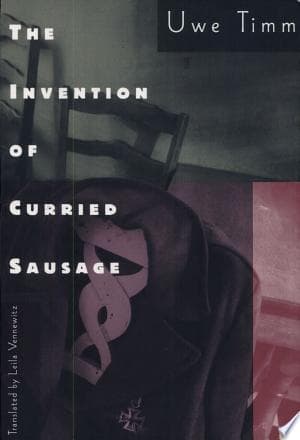
Uwe Timm (1997)
Genre
Fiction
Reading Time
240 min
Key Themes
See below
Sign in to track this book
In the chaos of WWII's end, a woman's chance meeting with a deserter leads to an unlikely love and the creation of Germany's beloved curried sausage, linking wartime need with post-war invention.
The story begins with an unnamed narrator, a writer, remembering his lifelong interest in curried sausage, especially the one from his youth in Hamburg. He describes the unique taste of the original dish, which he believes is now lost. Driven by nostalgia and a wish to find the true origin of this German street food, he starts an investigation. His search takes him to many snack bars, but none have the flavor he remembers. He eventually hears of a woman named Lena Brücker, rumored to be the true inventor, and sets out to find her.
The narrator's search ends at a Hamburg nursing home, where he finds an elderly Lena Brücker. She is at first unwilling to talk about her past, especially her role in inventing curried sausage. The narrator, however, keeps trying, gently encouraging her with his genuine interest and shared appreciation for the dish. Over several visits, Lena slowly begins to share parts of her life story, focusing on the time right after World War II. Her memories are clear but sometimes broken, and the narrator must carefully put her story together, often asking for more details.
Lena Brücker takes the narrator back to Hamburg in April 1945. The city is in ruins from Allied bombing, and the war is ending. Despite the destruction, life continues in a strange way. Food is scarce, and people struggle to survive. Lena, a resourceful woman in her late twenties, works at a canteen for soldiers. She sees the breakdown of order, the fear, and the desperate actions of both soldiers and civilians. This time of extreme scarcity later becomes the setting for her cooking invention.
In the chaos of the war's final days, Lena meets Hermann Bremer, a young, lost German soldier. He is a deserter, trying to avoid the collapsing front lines. Lena finds him hiding, hungry and tired, near the canteen where she works. Despite the great risks of hiding a deserter, Lena feels a connection to him, a mix of pity and attraction. Their meeting is important, setting the stage for their unusual relationship and the invention of curried sausage. Hermann's weakness appeals to Lena's independent nature.
Driven by an impulse she doesn't fully understand, Lena takes Hermann to her small apartment. She hides him, giving him food and shelter, making him her secret captive and lover. Their relationship comes from the desperate war situation: Hermann needs safety, and Lena wants companionship and control in a world where she has little. They live in a strange domesticity, cut off from the outside world. Lena creates a private world for them, an intimate bubble among the destruction, and Hermann becomes completely dependent on her.
As the war officially ends, Lena decides to keep Hermann in the dark. She continues to tell him the war is still going on, extending his captivity and their unique relationship. Her reasons are complex: a wish to keep their intimacy, a fear of losing him once he knows the truth, and perhaps a need to feel in control in a world that has gone out of control. Hermann, isolated and trusting, believes her, and their strange, long secret life continues, supported by Lena's detailed lies and her carefully chosen news reports.
During Hermann's long captivity, Lena's resourcefulness is tested. Food is still very scarce, and she has to be creative with the rations she gets. She experiments with ingredients, trying to make meals more appealing for Hermann and herself. This time of cooking improvisation is important. She starts combining different spices and sauces, driven by necessity and a growing creative spirit. These early experiments, born from wartime limits, set the stage for her later success with curried sausage.
Eventually, the truth about the war's end becomes clear, even to Hermann. Through a chance event or an overheard conversation, he realizes Lena's deception. The discovery shatters their private world and the trust between them. Hermann is angry and deeply hurt by Lena's long lie. He confronts her, and despite Lena's attempts to explain, he decides to leave. His departure ends their intense, isolated relationship and leaves Lena alone, though now free from her secret. This event pushes her to move forward into a new, post-war world.
After Hermann leaves, Lena puts her energy into her cooking experiments. She has extra ingredients, especially spices and sauces she had collected. Driven by her creativity and the desire to make something new and comforting, she perfects her sauce recipe. She combines available ingredients – ketchup, curry powder, and other spices – to create a unique and flavorful condiment. She then puts this sauce on a simple grilled sausage, creating the iconic curried sausage. With a new purpose, she opens a small snack bar, selling her innovative dish.
Lena's curried sausage quickly becomes popular among Hamburg's war-weary population. Its unique taste, low cost, and comforting familiarity appeal to people wanting a taste of normalcy and something new. Her snack bar does well, and the curried sausage becomes a local hit, eventually spreading across Germany. Lena, however, never seeks widespread fame or a large business. She remains a humble seller of her beloved dish. The narrator ends his story, having found not just the origin of a food, but a poignant tale of survival, love, deception, and the quiet strength of a woman who made a lasting mark on German food culture.
The Protagonist
Lena transforms from a resourceful survivor in wartime Hamburg to a woman who creates a culinary legacy out of her unique experiences, eventually finding peace in her old age.
The Protagonist/Frame Narrator
The narrator's journey begins as a culinary quest and evolves into a profound discovery of human resilience and a unique love story, fulfilling his personal and literary curiosity.
The Supporting
Hermann goes from a desperate deserter seeking survival to an unwitting captive, and finally to a man betrayed, leaving Lena to forge his own path in the post-war world.
The Mentioned
Her arc is static, serving primarily as a backdrop for Lena's story.
The novel explores the subjective and often broken nature of memory, especially when telling historical events and personal experiences. The narrator's effort to rebuild Lena Brücker's story shows how individual accounts can differ, be exaggerated, or be forgotten. Lena's own telling is not straightforward, full of pauses, corrections, and emotional shifts. This theme is central to the book, as the narrator's act of listening and piecing together Lena's tale shows how history itself is built and understood. For example, Lena struggles to remember exact dates but clearly recalls feelings and sensory details.
““Memory is a tricky thing. Sometimes it tells you what you want to hear, not what actually happened.””
The difficulties of post-war Germany require characters like Lena Brücker to show great resilience and inventiveness. Lena's ability to not only survive but also create something new and lasting – curried sausage – from scarcity and destruction shows the human spirit. Her resourcefulness is clear in how she feeds herself and Hermann, maintains her apartment, and creatively combines limited ingredients to invent a new dish. This theme is evident in the descriptions of ruined Hamburg and the constant struggle for basic needs.
““Necessity is the mother of invention, they say. And in those days, necessity was a very demanding mother.””
The unusual relationship between Lena and Hermann is based on love, but also on significant deception and Lena's wish for control. Lena's choice to hide the end of the war from Hermann, extending his captivity, shows the complex mix of her affection, her fear of being left, and her need to feel in charge in a world where she had little control. This theme examines the moral questions of such a relationship, asking if her actions, though partly from love, were selfish or a desperate attempt to keep a fragile intimacy. The dramatic reveal of the war's end highlights the damaging power of deception.
““I wanted to hold onto him. Just a little longer. Was that so wrong?””
Food in the novel is more than just nourishment; it symbolizes comfort, memory, and cultural identity. The narrator's deep emotional connection to curried sausage drives his entire search, suggesting that certain foods hold deep personal and shared meaning. For Lena, inventing curried sausage is not just a business; it is an act of creation that provides warmth and familiarity in a world stripped bare. The simple act of sharing food, even in scarcity, creates connection and brings a brief sense of normalcy and joy amid chaos, as seen in Lena's efforts to prepare meals for Hermann.
““A good sausage, with a good sauce, can make you forget a lot of things.””
The story of Lena Brücker is told within the context of the narrator's investigative journey.
The novel employs a frame narrative, where the primary story of Lena Brücker's life and the invention of curried sausage is embedded within the narrator's ongoing quest to discover its origins. The narrator's present-day interviews with Lena serve as the framing device, allowing him to recount her past experiences. This structure emphasizes the act of storytelling and the subjective nature of memory, as the narrator often interjects with his own observations and interpretations, drawing the reader into his process of discovery.
Lena Brücker's recollections are subjective and sometimes fragmented, requiring interpretation.
While the unnamed narrator is persistent in his quest for truth, Lena Brücker's memory of events is presented as inherently subjective and occasionally unreliable due to age, emotional bias, and the passage of time. She struggles with exact dates but vividly recalls sensory details and feelings. This device highlights the reconstructive nature of memory and history, forcing both the narrator and the reader to actively engage in piecing together the 'truth' from her personal, emotionally charged narrative. It adds depth and realism to her character, making her story more human and less a dry historical account.
The dish symbolizes resilience, creativity, and the blending of cultures.
Curried sausage itself serves as a powerful symbol throughout the novel. Initially, it represents comfort and nostalgia for the narrator. As Lena's story unfolds, it becomes a symbol of survival and human ingenuity, born from the scarcity and chaos of post-war Germany. The blending of a traditional German sausage with exotic curry spices also symbolizes the unexpected cultural fusions that can arise from difficult circumstances, and the ability to create something new and beloved out of disparate elements. It embodies Lena's unique spirit and her lasting legacy.
The reader knows the war has ended while Hermann Bremer remains unaware.
Dramatic irony is a key device in the central plotline involving Lena and Hermann. The reader is aware that World War II has officially ended, while Hermann Bremer, isolated and trusting Lena, believes the war is still ongoing. This creates tension and suspense, as the reader anticipates the inevitable moment when Hermann will discover Lena's deception. It also deepens the reader's understanding of Lena's complex motivations and the emotional weight of her secret, highlighting the moral dilemma inherent in her actions and making Hermann's eventual heartbreak more poignant.
“The memory, I've noticed, resembles a house. It has many rooms, some brightly lit, others dark and dusty, and some you never visit at all.”
— The narrator reflecting on the nature of memory while trying to recall Lena's story.
“When you invent something, you become a creator. You're no longer just a consumer. You're changing the world, even if it's just a little bit.”
— Lena Brücker expressing her philosophy behind her invention, the curried sausage.
“War makes strange things happen to people. It changes them, sometimes in ways they don't even understand themselves.”
— The narrator pondering the psychological effects of World War II on individuals like Lena.
“Taste is not just about the tongue; it's about memory, about association, about the whole story behind the food.”
— Lena explaining the deeper meaning of food and flavor, especially in the context of her curried sausage.
“You can't just invent something out of thin air. It always comes from somewhere, from something you've seen, heard, or experienced.”
— Lena discussing the origins of ideas and how inspiration works.
“The past isn't dead. It's not even past. It's just waiting for someone to dig it up again.”
— The narrator's realization about the enduring presence of historical events and personal histories.
“Sometimes the greatest inventions are born out of the greatest scarcity.”
— Lena reflecting on the post-war conditions that led to the creation of the curried sausage.
“A good story isn't just about what happened, but about how it's told, and who's telling it.”
— The narrator's metacognitive thoughts on the process of gathering and retelling Lena's story.
“The smell of food, that's what truly brings back the past. More than pictures, more than words.”
— Lena emphasizing the powerful evocative nature of scent, particularly in relation to food.
“Every invention, no matter how small, changes the world in its own way. It creates new possibilities, new desires.”
— Lena's view on the ripple effect of even seemingly minor innovations.
“You don't just eat food; you eat the history, the culture, the circumstances that created it.”
— Lena's deeper philosophical take on the act of eating and the significance of food.
“To forget is sometimes a necessary act of survival. But to remember is an act of justice.”
— The narrator contemplating the balance between forgetting trauma and preserving history.
“The most ordinary things can become extraordinary if you just look at them from a different angle.”
— Lena's perspective on finding inspiration and value in everyday life, particularly for her invention.
“Sometimes you have to break the rules to create something new, something truly your own.”
— Lena's approach to culinary innovation, departing from traditional recipes.
Ready to see how well you understood this book? Take our interactive quiz with 10 questions.
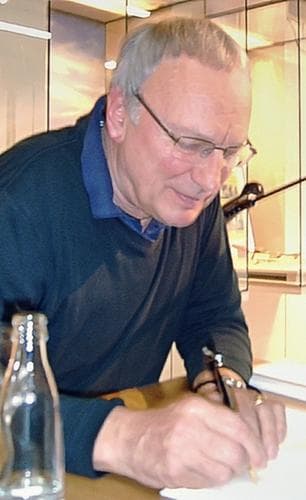
Uwe Timm is a German writer.

Ashley Antoinette
4.6

Mark McDonald
4.4
Luo Guanzhong
4.4

Mia McKenzie
4.3

Dorothy Parker
4.3

Joaquim Maria Machado de Assis
4.3

James Thurber
4.2

Terry Kay
4.2