“The lie of a pipe dream is what gives life to the whole misbegotten mad lot of us, drunk or sober.”
— Larry to Rocky, explaining the human need for illusion.


Eugene O'Neill (2006)
Genre
Fiction
Reading Time
240 min
Key Themes
See below
Sign in to track this book
In a desolate bar, a group of alcoholics confront their illusions when a traveling salesman arrives, intent on shattering their last vestiges of hope.
The play opens in Harry Hope's dilapidated saloon, a refuge for former radicals, failed professionals, and general derelicts. Larry Slade, a self-proclaimed 'old foolosopher,' observes the sleeping figures of the regulars, including Rocky Pioggi, the night bartender and part-time pimp, and the streetwalkers Pearl and Margie. Joe Mott, a former owner of a gambling house, struggles with his deteriorating health. The men are all waiting for Hickey, a jovial traveling salesman who annually treats everyone to drinks and a good time. They cling to their 'pipe dreams' – illusions of future success or redemption – which give their otherwise meaningless lives a semblance of hope. Today is Harry Hope's birthday, and the atmosphere is charged with anticipation for Hickey's arrival and the promised celebration.
Hickey finally arrives, but he is different. Gone is his boisterous, fun-loving demeanor. Instead, he is sober, calm, and unnervingly cheerful. He announces that he has found 'peace' and is now dedicated to helping his friends at the saloon find the same. His method is to strip them of their 'pipe dreams' – the comforting illusions they live by. He insists that once they confront the truth of their failures and give up their false hopes, they will achieve true peace and contentment. The regulars are initially bewildered, then resistant, as Hickey systematically tries to dismantle each man's cherished fantasy, urging them to act on their long-deferred plans.
Hickey focuses on each character individually, pushing them to abandon their excuses and act on their pipe dreams. He challenges Harry Hope to leave the saloon and walk around the block, a feat Harry hasn't accomplished in twenty years due to his supposed grief for his dead wife, Bessie. He tells Willie Oban, the Harvard Law alumnus, to go back to his profession. He urges Parritt, the young anarchist, to confess his betrayal. The men react with increasing agitation and anger, finding Hickey's relentless pursuit of 'truth' unsettling. Their initial amusement and tolerance turn to resentment as Hickey's sober demeanor and insistent logic chip away at their carefully constructed realities.
Under Hickey's persistent urging, Harry Hope finally agrees to attempt his long-promised walk around the block. The entire saloon watches, a mixture of hope and skepticism in the air. Harry, supported by Rocky, makes it out the door. However, his brief foray into the outside world is a disaster. He is overwhelmed by the sunlight, the noise, and the unfamiliarity of the streets. He quickly returns, shaken and more convinced than ever that he cannot face the world outside his alcoholic haven. His failure only solidifies his pipe dream of being a tragic widower confined by his grief, rather than a man simply afraid of reality, much to Hickey's frustration.
Don Parritt, a young anarchist on the run, seeks refuge in the saloon. He is tormented by guilt for betraying his former comrades, including his mother and Larry Slade, who was once a prominent figure in the anarchist movement. Parritt desperately seeks absolution from Larry, but Larry, consumed by his own nihilism, refuses to provide it, pushing Parritt to confess his true motives. This interaction forces Larry to confront his own past as a revolutionary, revealing his deep disillusionment with the cause and his own 'pipe dream' of being a detached observer, when in reality, he is as trapped as the others. Parritt's desperate pleas for understanding only highlight Larry's emotional paralysis.
Driven to the brink by Hickey's insistence on truth and Larry's refusal to comfort him, Don Parritt finally confesses his deepest secret: he betrayed his anarchist comrades, including his mother, for money. The confession is agonizing, revealing his profound self-loathing and a twisted desire for punishment. Larry, despite his attempts at detachment, is deeply affected by Parritt's confession. Unable to bear the weight of his actions or the 'peace' Hickey offers, Parritt quietly slips out of the saloon and jumps to his death from the fire escape, a sound heard by the others, confirming his desperate act. His death is an example of the destructive power of confronting truth without reconciliation.
Following Hickey's forceful persuasion, many of the regulars finally leave the saloon, determined to act on their long-held pipe dreams. Joe Mott goes to find a new gambling house, Willie Oban attempts to resurrect his legal career, and others try to reclaim their former lives. However, one by one, they return, defeated and demoralized. They are unable to cope with the outside world, their past failures, or the effort required to change. Their brief encounters with reality only confirm their inability to escape their current state, proving Hickey's theory that their pipe dreams are indeed illusions, but also demonstrating that stripping them away without a viable alternative leaves them with nothing.
As the men return, one by one, shattered by their failed attempts to live out their pipe dreams, the atmosphere in the saloon grows dark and resentful. They realize that Hickey's 'peace' has not brought them contentment but rather a profound, paralyzing despair. Their illusions, however false, had provided them with a reason to endure. Now, stripped bare, they feel only the crushing weight of their failures and the emptiness of their lives. They turn on Hickey, accusing him of cruelty and demanding that he restore their illusions. The jovial salesman is no longer seen as a savior but as a destroyer, and their fragile community threatens to unravel.
Under intense pressure from the disillusioned men, Hickey finally cracks. He confesses the true source of his 'peace': he murdered his beloved wife, Evelyn. He explains that Evelyn was so good and pure that her unwavering faith and forgiveness became an unbearable burden. Her constant, loving expectations highlighted his own failures and made his drinking and womanizing feel like an unforgivable betrayal. He killed her to free himself from her innocent, judging love, believing he was granting her peace as well. This shocking confession reveals the depth of his own self-loathing and the twisted logic that led him to believe he was doing good by stripping others of their dreams.
Stunned by Hickey's confession, the men are initially horrified. Larry Slade, ever the cynic, suggests that Hickey must be insane. This idea immediately takes root among the others. If Hickey is mad, then his entire gospel of truth and peace can be dismissed as the ramblings of a lunatic. This collective agreement allows them to invalidate everything Hickey said and did, thereby justifying their return to their cherished pipe dreams. They eagerly embrace their illusions once more, drinking heavily and resuming their old arguments and fantasies, desperately trying to forget the brief, painful glimpse of reality Hickey had forced upon them.
Shortly after his confession, two detectives arrive at the saloon to arrest Hickey for Evelyn's murder. Hickey, now calm and resigned, accepts his fate. He reiterates his belief that he killed Evelyn out of love, to free her and himself from the pain of his own unworthiness. As he is led away, he genuinely wishes the men well, hoping they can find their own peace, even if it is through their illusions. His departure leaves the saloon residents to their own devices, having experienced a profound, albeit temporary, disruption to their carefully constructed world. His final words about Evelyn underscore the tragic irony of his actions.
With Hickey gone and safely dismissed as a madman, the men eagerly return to their old routines. They drink with renewed vigor, the tension broken, and the fear temporarily suppressed. They loudly proclaim their pipe dreams, their voices filled with a forced, almost desperate cheerfulness. The celebration of Harry Hope's birthday, which had been overshadowed by Hickey's presence, resumes. Yet, despite their attempts to erase the experience, a subtle shift has occurred. The brief, painful encounter with truth has left an indelible mark, and their laughter and boasts have a hollow ring, hinting at the lingering, unspoken awareness of their self-deception.
The Protagonist/Catalyst
Hickey's arc begins with him believing he has found peace and can share it, but ends with him confessing his dark crime and accepting his fate, revealing his 'peace' was a delusion itself.
The Supporting/Observer
Larry attempts to maintain his detached cynicism throughout, but Hickey's presence and Parritt's confession force him to confront his own complicity and the limits of his 'philosophy.'
The Supporting/Protagonist of a Pipe Dream
Harry is forced by Hickey to confront his pipe dream of walking around the block, resulting in a brief, terrifying encounter with reality before he retreats back into his delusion.
The Supporting/Catalyst for Larry
Parritt arrives seeking absolution, is driven to confess his betrayal by Hickey and Larry, and ultimately commits suicide, unable to bear the truth without a path to redemption.
The Supporting/Enabler
Rocky resists Hickey's attempts to expose his true profession but ultimately returns to his old ways after Hickey's departure, his pipe dream intact.
The Supporting/Victim of Racism
Joe is briefly emboldened by Hickey to pursue his dream but returns defeated, confronting the racial barriers and his own failing health, before retreating to his original delusion.
The Supporting/Failed Professional
Willie attempts to sober up and return to law at Hickey's urging but quickly relapses, demonstrating the powerful hold of his addiction.
The Supporting/War Veterans
They are briefly forced to reconcile by Hickey, losing their sense of identity, but eagerly return to their feigned animosity once he is discredited.
A central theme of the play is that humans cannot live without illusions, or 'pipe dreams.' The residents of Harry Hope's saloon cling to their fantasies of future success, redemption, or past glory as a means of coping with their otherwise meaningless and desolate lives. Hickey's attempt to strip them of these illusions, to force them to confront 'truth,' leads to despair, paralysis, and suicidal thoughts. The play suggests that while these dreams may be false, they are essential for psychological survival, providing hope and a reason to continue living. For example, Harry Hope's belief that he will walk around the block, though never acted upon, gives him a semblance of purpose.
“To hell with the truth! As the guy said, 'God made man in His own image, and man, being a gentleman, returned the compliment.'”
Underlying the characters' reliance on pipe dreams is a sense of nihilism and despair. Life, for many of them, is without inherent meaning or purpose. Larry Slade articulates this most explicitly, viewing life as a cruel joke and death as the only true peace. Hickey's 'peace' is a twisted form of this nihilism, believing that by facing the 'truth' of their failures, they can achieve a kind of resigned contentment. However, the play demonstrates that this 'truth' without a path to redemption or a new illusion leads directly to a deeper, more agonizing despair, as seen in Parritt's suicide and the collective breakdown of the bar regulars.
“The lie of a pipe dream is what gives life to the whole misbegotten mad lot of us, drunk or sober.”
The play questions the nature and utility of truth. Hickey arrives believing that 'truth' is a liberating force, that by confronting their failures, the men will find peace. However, the 'truth' he offers is harsh, unforgiving, and ultimately destructive. For the characters, their 'pipe dreams' are their personal truths, however deluded they may seem to an outsider. The play implies that absolute, unvarnished truth can be too brutal for human beings to bear, especially when it exposes their deepest failures and offers no alternative. Hickey's own 'truth'—that he murdered his wife—is a horrifying revelation of how truth can be twisted by self-deception and guilt.
“There's a limit to the truth a man can use.”
Alcoholism is both a symptom and a coping mechanism for the characters' despair and their inability to face reality. The saloon itself is a sanctuary, a 'last harbor' where they can drown their sorrows and fuel their pipe dreams. The constant drinking allows them to maintain their illusions and avoid introspection. When Hickey attempts to make them sober up and confront their lives, the withdrawal is not just physical but psychological, leading to immense pain and agitation. The inability to escape the cycle of addiction is intertwined with their inability to escape their pipe dreams, demonstrating how both provide a temporary, albeit ultimately destructive, refuge from reality.
“It's the only game in town, ain't it? The game of life.”
An illusion or false hope that characters cling to for psychological survival.
The 'pipe dream' is the central plot device of the play. Each character in Harry Hope's saloon possesses one – a cherished fantasy about their past or future that allows them to avoid confronting the painful reality of their present lives. Hickey's arrival and his mission to strip them of these pipe dreams drive the entire narrative. The device highlights humanity's need for illusion and questions the value of a 'truth' that offers no hope or solace. The characters' reactions to having their pipe dreams challenged, and their eventual reversion to them, illustrate the play's core themes about psychological survival.
A character whose arrival disrupts the established order and forces others to confront their realities.
Hickey functions as the primary catalyst in the play. His annual arrival usually brings revelry, but this time, his sober demeanor and new philosophy of 'peace through truth' fundamentally disrupt the comfortable stasis of the saloon. He actively pushes each character to abandon their pipe dreams, forcing them out of their passive existence. His presence and relentless questioning serve to expose the underlying despair and self-deception that the characters have carefully maintained. Without Hickey, the characters would continue indefinitely in their stagnant, illusory lives, making him crucial to the dramatic action.
Harry Hope's saloon functions as a small, isolated world reflecting broader human conditions.
Harry Hope's saloon serves as a microcosm for society, or at least for a segment of humanity. It is an isolated, self-contained world where a diverse group of individuals, representing various pasts and failures, find common refuge. The rules of this world are different from the outside; it's a place where illusions are tolerated and even celebrated. By confining the action almost entirely within this single setting, O'Neill intensifies the focus on the characters' internal struggles and their relationships, allowing the saloon to become a symbolic representation of the human condition in its search for meaning and escape.
Characters' self-perceptions and accounts of events are often contradictory or self-deceptive.
The play heavily relies on unreliable character perspectives. Each character, driven by their pipe dreams, presents a skewed version of their own reality and past. Rocky insists he's a bartender, not a pimp; Harry Hope believes his grief keeps him indoors; Hickey himself believes he murdered his wife out of love. The audience is constantly forced to question the 'truth' of what characters say, understanding that their narratives are shaped by their psychological needs. This device underscores the theme of illusion and highlights how deeply embedded self-deception can be, even in the face of stark evidence.
“The lie of a pipe dream is what gives life to the whole misbegotten mad lot of us, drunk or sober.”
— Larry to Rocky, explaining the human need for illusion.
“To hell with the truth! As the Holy Scripture says, 'What is man that thou art mindful of him?'”
— Hickey, dismissing the value of reality and quoting scripture.
“It's the only way out for a fool — to die.”
— Don Parritt, contemplating suicide as his only escape.
“There's a limit to the amount of life you can get in life, if you understand what I mean.”
— Larry, reflecting on the weariness of existence.
“We're all brothers in the end. We're all in the same boat. And when she sinks, we all go down together.”
— Harry Hope, expressing a sense of shared fate among the bar patrons.
“The great thing is to be able to laugh at yourself.”
— Willie Oban, trying to maintain his dignity despite his alcoholism.
“I'm going to find peace for myself, if I have to kill myself to get it.”
— Don Parritt, expressing his desperate need for peace.
“When you're dead, you're dead. That's all there is to it.”
— Harry Hope, a pragmatic view on death.
“He's lost his bravado. He's lost his pipe dream.”
— Larry, observing Hickey's transformation after confronting his own truth.
“You can't get away from yourself by moving from one place to another.”
— Larry, a cynical observation about human nature and self-deception.
“We're all in the gutter, but some of us are looking at the stars.”
— Larry, a variation of a famous quote, reflecting on hope amidst despair.
“There's no hope for anyone. Not a bit.”
— Larry, expressing his deep-seated pessimism.
“It's a great game, life. You just have to know how to play it.”
— Joe Mott, trying to maintain a positive outlook despite his circumstances.
“The only way to be happy is to live in the past.”
— Harry Hope, clinging to nostalgic memories of his past.
Ready to see how well you understood this book? Take our interactive quiz with 10 questions.
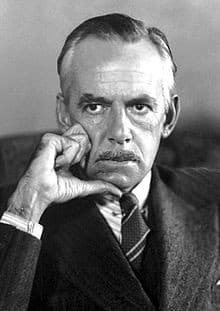
Eugene Gladstone O'Neill was an American playwright awarded the 1936 Nobel Prize in Literature. His poetically titled plays were among the first to introduce into the U.S. the drama techniques of realism, earlier associated with Russian playwright Anton Chekhov, Norwegian playwright Henrik Ibsen, and Swedish playwright August Strindberg. The tragedy Long Day's Journey into Night is often included on lists of the finest U.S. plays in the 20th century, alongside Tennessee Williams's A Streetcar Named Desire and Arthur Miller's Death of a Salesman.

Ashley Antoinette
4.6

Mark McDonald
4.4
Luo Guanzhong
4.4

Mia McKenzie
4.3
Dorothy Parker
4.3

Joaquim Maria Machado de Assis
4.3
James Thurber
4.2

Terry Kay
4.2