“Mathematics has its own language, and it is spoken through numbers.”
— The Professor explaining the nature of mathematics to the Housekeeper.

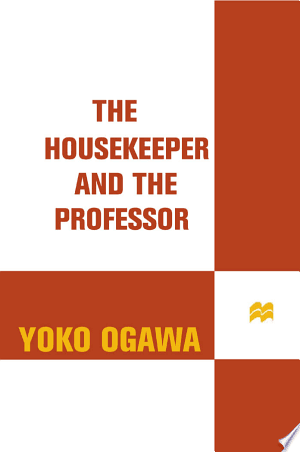
Yoko Ogawa (2009)
Genre
Fiction
Reading Time
180 min
Key Themes
See below
Sign in to track this book
A math professor, whose memory resets every eighty minutes, forms an unexpected family with his perceptive housekeeper and her son, finding connection in numbers.
A young, unnamed Housekeeper is hired to care for an elderly, unusual Professor, a former math genius who suffered a head injury 19 years prior. This injury left him with a condition: his memory resets every eighty minutes, so he cannot form new long-term memories. Each morning, the Housekeeper must reintroduce herself, and the Professor relies on notes pinned to his suit to navigate his daily life. Their first interactions are marked by the Professor's immediate questions about her shoe size, which he uses to find mathematical meaning, showing his unique way of connecting with the world through numbers.
The Housekeeper quickly learns that the Professor's world is almost entirely made of numbers. He does not remember her name, but he remembers mathematical concepts and facts with perfect clarity. He uses numbers to explain everything, from the number of stitches in his baseball cap to the prime factorization of a given number. The Housekeeper, at first intimidated by his intelligence, begins to see the beauty and order in his mathematical world. He finds deep meaning in ordinary numbers, revealing their hidden properties and connections to the world, often through baseball, his other great passion.
The Housekeeper's ten-year-old son, whom the Professor calls 'Root' because his head is flat on top like the square root symbol, begins to visit the Professor's home after school. Root, at first shy, quickly forms a strong bond with the Professor. The Professor, who has no children of his own, enjoys teaching Root about numbers, baseball statistics, and the wonders of mathematics. Root's presence brings a new element to the Professor's structured life, and the Professor's memory loss does not stop their connection, as their interactions are often in the present moment and about shared interests.
The Professor shares his math knowledge with Root and the Housekeeper, turning everyday events into learning opportunities. He explains concepts like prime numbers, amicable numbers, twin primes, and perfect numbers, often linking them to baseball statistics. For example, he uses Root's birth date or a baseball player's jersey number to show mathematical principles. These lessons are not just academic; they are moments of deep connection, as the Housekeeper and Root begin to appreciate the elegance and beauty of the mathematical world through the Professor's eyes, finding comfort and order in its unchanging rules.
The Housekeeper develops a deep understanding and empathy for the Professor's condition. She learns to manage his daily routine, anticipate his memory resets, and find ways to communicate effectively despite his eighty-minute memory cycle. She writes notes, prepares meals he likes, and patiently reintroduces herself each morning. She also understands that while his memory for faces and events fades, his passion for numbers and his kind nature remain constant. Her role becomes one of a caregiver who deeply respects the Professor's intellectual world.
Baseball is important in deepening the bond between the Professor and Root. The Professor, a lifelong fan, shares his knowledge of players, statistics, and historical games with Root. They listen to baseball games on the radio together, and the Professor teaches Root how to calculate batting averages and other statistics. These shared experiences provide a consistent point of connection, unaffected by the Professor's memory loss, as the love for the game and its numerical details goes beyond the limits of his memory. Root even attends a baseball game with the Professor and the Housekeeper, a rare outing for the Professor.
The Professor's sister-in-law, who is also his guardian and the owner of the house, visits occasionally. Her interactions with the Housekeeper are often tense. She expresses concern about the Housekeeper's influence on the Professor and reveals details about the Professor's past, including the accident that caused his memory loss and that he was once a respected mathematician. Her presence highlights the delicate balance of the Professor's care and the limits placed on his life due to his condition, often reminding the Housekeeper of her position as an employee rather than a family member.
Over time, the Housekeeper, Root, and the Professor form an unconventional but deeply loving family. The Professor's memory loss, while difficult, allows them to live in a constant present, appreciating each moment. The Housekeeper provides stability and care, Root offers youthful energy and affection, and the Professor provides intellectual stimulation and a unique view of life. They find comfort and joy in their daily routines, shared meals, and mathematical explorations, showing that family bonds can form and grow beyond traditional definitions and even memory itself.
Despite the strong bond formed, the Professor's sister-in-law eventually dismisses the Housekeeper and Root. She says the Professor's physical health is declining and he needs more specialized care in a facility. This separation is painful for all three, especially for Root, who has come to see the Professor as a father figure. The dismissal shows how fragile their unconventional family is and the sister-in-law's ultimate control over the Professor's life, regardless of the emotional connections made.
Years later, the Housekeeper, now working for another family, thinks about her time with the Professor. She recognizes the deep and lasting impact he had on her and Root. Root, now an adult and a math teacher, continues to carry the Professor's lessons and love for numbers. The Housekeeper understands that while the Professor may not remember them, their time together was not erased. The beauty of the numbers, the gentle lessons, and the unique bond they shared continue to shape their lives, proving that true connection goes beyond the limits of memory and time.
The Protagonist
She evolves from an intimidated employee to a deeply understanding caregiver who finds intellectual and emotional fulfillment through her bond with the Professor and his world of numbers.
The Protagonist
His character remains largely consistent due to his memory condition, but he experiences renewed joy and connection through his relationships with the Housekeeper and Root, finding a unique form of family.
The Supporting
Root grows from a curious child into a young man who carries the Professor's legacy and love for mathematics, ultimately becoming a math teacher himself.
The Supporting
Her character remains static, serving as a foil to the Housekeeper's emotional connection to the Professor.
The Mentioned
Not applicable, as this character is only mentioned.
The novel explores how memory shapes identity and how one can form meaningful connections even without it. The Professor's eighty-minute memory challenges common ideas of self, yet his core identity—his love for numbers, his kindness, his passion for baseball—remains constant. The Housekeeper and Root learn to navigate this, understanding that presence and consistent affection can build a deep relationship that does not need continuous recall. This is clear in how the Professor's bond with Root grows deeper despite restarting their relationship every day, focusing on shared present moments rather than accumulated history.
“A number is a number. It doesn't have a memory. It's not going to change its mind. It's going to be the same an hour from now as it is now.”
Mathematics is shown not just as a school subject but as a language that offers order, beauty, and comfort in a chaotic world. For the Professor, numbers are his constant, unchanging companions and his main way of communicating. He shows the poetic nature of prime numbers, perfect numbers, and amicable numbers to the Housekeeper and Root, changing their view of math from a difficult subject to an elegant art form. This theme is central to understanding the Professor's character and how he connects with others, providing a stable base for his identity despite his memory loss.
“Numbers have a way of taking a man by the hand and leading him down the path of reason.”
The story shows how a family can form outside of traditional blood ties or societal expectations. The Housekeeper, Root, and the Professor create a unique, loving unit built on mutual respect, care, and shared moments. Despite the Professor's memory condition, the consistent presence and affection of the Housekeeper and Root create a deep, unspoken bond. Their daily routines and shared appreciation for math and baseball solidify their connection, showing that love and belonging can grow in unexpected circumstances, making the Housekeeper and Root true anchors in the Professor's fragmented world.
“A true equation is something that is beautiful and simple and contains all the truth of the universe.”
The Housekeeper's ability to understand the Professor's unique condition and live fully in the present is a main part of the story. Instead of being frustrated by his memory loss, she adapts, learns, and continually finds ways to connect with him anew. Her patience, kindness, and willingness to understand his world allow for a deep relationship to form. This theme highlights the importance of being present and attentive to others, especially those with challenges, and how such an approach can lead to deep and lasting connections that go beyond common understanding.
“I understood then that the Professor's memory was like a tape that begins to erase itself every eighty minutes. But the tape still held the precious things from before the accident.”
The Professor's unique short-term memory condition.
This central device is the catalyst for the entire narrative. The Professor's memory resetting every eighty minutes dictates the structure of daily interactions and forces the characters, particularly the Housekeeper, to constantly adapt. It creates both the challenges and the unique beauty of their relationships, emphasizing the importance of living in the present. It also allows for repeated introductions and discoveries, making each interaction fresh and underscoring the enduring nature of the Professor's core personality and mathematical brilliance despite his fragmented recall.
The Professor's use of numbers to explain the world and connect with others.
The Professor frequently uses mathematical concepts (prime numbers, amicable numbers, Euler's formula) and baseball statistics to communicate, teach, and express affection. This device serves multiple purposes: it reveals the Professor's intellectual depth, provides a consistent and understandable language for him despite his memory loss, and educates the Housekeeper and Root, drawing them into his world. It transforms abstract concepts into relatable and often poetic insights, serving as a stable foundation for their evolving relationships.
Physical reminders the Professor uses to navigate his daily life.
The Professor's habit of pinning notes to his suit, detailing important information like the Housekeeper's name and his own condition, is a poignant visual representation of his memory impairment. This device highlights his practical coping mechanisms and his continuous effort to orient himself. It also serves as a constant reminder to others of his condition, prompting empathy and understanding. The notes are a tangible manifestation of his fragmented memory and his reliance on external aids to maintain a semblance of normalcy.
The story is told from the Housekeeper's perspective.
The entire novel is narrated by the Housekeeper, offering an intimate and empathetic lens through which to experience the Professor's world. This perspective allows the reader to witness the Professor's condition through the eyes of someone who learns to understand and cherish him, making his challenges and unique brilliance more accessible. Her reflections and emotional journey are central to the story, shaping the reader's understanding of memory, family, and the profound impact of human connection.
“Mathematics has its own language, and it is spoken through numbers.”
— The Professor explaining the nature of mathematics to the Housekeeper.
“Numbers have a way of taking a man by the hand and leading him down the path of reason.”
— The Professor's perspective on the guiding power of mathematics.
“A true equation is like a poem: it reveals the most profound truths in the simplest way.”
— The Professor's poetic description of mathematical equations.
“The greatest joy in mathematics is to understand a problem that has never been understood before.”
— The Professor conveying the excitement of mathematical discovery.
“Even if you forget everything else, you will remember this: the sum of the angles in a triangle is always 180 degrees.”
— The Professor imparting a fundamental geometric truth.
“My memory lasts for exactly eighty minutes.”
— The Professor explaining the extent of his memory impairment.
“I could only live in the present, a present that was constantly being erased and rewritten.”
— The Housekeeper reflecting on the Professor's condition.
“He was a man who lived in a world of numbers, where everything was precise and eternal.”
— The Housekeeper describing the Professor's mathematical world.
“The numbers were a bridge between us, a language we both understood.”
— The Housekeeper realizing the unifying power of mathematics in their relationship.
“He might not remember my name, but he would always remember the prime numbers.”
— The Housekeeper observing the selective nature of the Professor's memory.
“The most beautiful numbers are those that defy simple categorization.”
— The Professor discussing the appeal of complex or unique numbers.
“There are some things that cannot be forgotten, no matter how much time passes or how many memories are lost.”
— The Housekeeper's belief in the enduring nature of certain connections.
“Each number has its own personality, its own story.”
— The Professor's anthropomorphic view of numbers.
“It was as if his mind had become a vast, intricate clock, ticking away the eighty minutes of his memory.”
— The Housekeeper's metaphor for the Professor's memory cycle.
Ready to see how well you understood this book? Take our interactive quiz with 10 questions.

Biography coming soon.

Ashley Antoinette
4.6

Mark McDonald
4.4
Luo Guanzhong
4.4

Mia McKenzie
4.3

Dorothy Parker
4.3

Joaquim Maria Machado de Assis
4.3

James Thurber
4.2

Terry Kay
4.2