“All children have secrets. And the older they get, the bigger the secrets become.”
— Early in the narrative, hinting at the hidden past of the Lamb family.

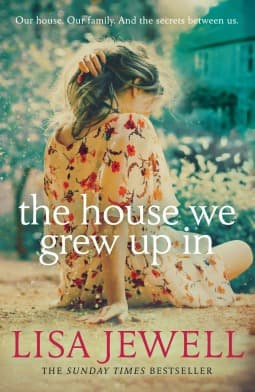
Lisa Jewell (2001)
Genre
Mystery
Reading Time
540 min
Key Themes
See below
Sign in to track this book
An Easter weekend tragedy breaks the Bird family, scattering them for decades until an unseen force brings them back to their childhood home to find the truth.
The story introduces the Bird family: mother Lorelei, father Colin, and their four children, Meg, Rory, Beth, and the youngest, Fern. They live in a picturesque cottage in a charming village, where Lorelei leads a free-spirited, bohemian life, often choosing artistic expression over conventional parenting in a somewhat chaotic, yet loving, home. The children are close, spending their days exploring the garden and woods, largely unsupervised. Lorelei's hoarding tendencies begin with her collection of childhood items.
One Easter weekend, the family gathers for celebrations, including Colin's brother, Michael, and his family. The festive mood breaks when a fire starts in the garden shed, where Rory and Michael's son, Ryan, were playing with fireworks. Ryan dies in the blaze, and Rory is severely burned. This event changes the Bird family. The aftermath is filled with grief, guilt, and the slow breakdown of their previously stable, if eccentric, life. Lorelei's developing hoarding worsens significantly after this trauma.
After the fire and Ryan's death, Lorelei's grief and trauma lead to a severe hoarding disorder. What began as sentimental collections becomes an overwhelming accumulation of objects, junk, and even rubbish, making parts of the house unusable. The children, especially Meg and Rory, struggle with their mother's erratic behavior and the deteriorating living conditions. Colin, overwhelmed and unable to address Lorelei's mental state, withdraws. The once warm home becomes a claustrophobic, unsanitary, and emotionally stifling environment, alienating the children.
As the children grow, the impact of their childhood trauma and Lorelei's hoarding is clear in their separate lives. Meg, the eldest, becomes a successful, organized professional, desperate to control her own life. Rory, scarred physically and emotionally, struggles with addiction and a transient life. Beth disappears, cutting off all family contact. Fern, the youngest, tries to stay connected, but even she struggles with the past. The siblings drift apart, creating new lives, largely avoiding their mother and the house she has filled.
Many years later, Fern learns that Lorelei has fallen and is hospitalized. This forces Fern to return to the family home, which she finds in a horrific state, almost entirely filled by Lorelei's hoards. The house is a maze of forgotten items, rubbish, and unsanitary conditions. As Fern begins the difficult task of clearing the house, she finds physical objects, memories, old photographs, and clues that start to reveal the true story of her family's past and the Easter fire she was too young to understand.
While sifting through Lorelei's hoard, Fern discovers old diaries, letters, and photographs that reveal family secrets. She learns about her father Colin's infidelity and his plans to leave Lorelei, which he had told Rory. More unsettling, she finds evidence that suggests the Easter fire was not an accident but possibly deliberate, and that the circumstances surrounding Ryan's death were more complex than she had imagined. These discoveries force Fern to rethink her understanding of her family and the tragedy that defined their lives.
Fern confronts Rory, who, after years of guilt and silence, finally confesses what happened that Easter weekend. He reveals that he and Ryan were not just playing with fireworks, but that Rory, aware of his father's affair and his mother's distress, had intentionally started the fire in the shed to get attention and prevent his parents' separation. Ryan's death was a tragic and unintended result of Rory's desperate act, a secret that had tormented him for decades and shaped his life.
Through Fern's discoveries and Rory's confession, Lorelei's hoarding is seen not just as a mental illness but as a sign of her inability to process trauma and loss. Her collections, especially those related to her children's early lives, were an attempt to hold onto a past she saw as perfect before it was shattered. Fern begins to understand her mother's pain and the ways she tried, though poorly, to cope. This understanding leads to a fragile sense of forgiveness and a desire to help her mother heal.
With the truth, Fern reaches out to Meg and Beth, trying to bridge the emotional distance between them. The revelations about Rory's actions and Lorelei's suffering force the siblings to confront their own pasts and the roles they played (or didn't play) in the family's breakdown. While healing is a long and difficult process, the shared understanding of the truth provides a basis for tentative reconciliation. They begin to communicate and support each other, acknowledging the impact their shared history has had on them all.
With her children's help, Lorelei receives professional help for her hoarding disorder and the underlying trauma. The difficult process of cleaning out the house continues, no longer just a task for Fern, but a symbolic act of collective healing for the family. While the house will never be exactly as it was, it begins to change from a monument to past pain into a space where new memories can be made. The Bird family, broken and scattered for decades, starts to rebuild their relationships and face their future, together, with new understanding and acceptance.
The Protagonist/Mother
Lorelei descends into severe hoarding and isolation, but through her daughter Fern's efforts and the revelation of family secrets, she begins a path toward healing and accepting help.
The Protagonist/Youngest Daughter
Fern evolves from a somewhat detached observer to the active investigator and healer of her family's past, leading the way to truth and reconciliation.
The Supporting/Son
Rory lives a life of guilt and addiction, eventually confessing his secret and beginning a path toward redemption and healing.
The Supporting/Eldest Daughter
Meg, initially estranged and rigid, slowly opens up to her family's truth, beginning to heal and reconnect.
The Supporting/Daughter
Beth, having completely isolated herself, is slowly drawn back into the family's orbit as truths are revealed.
The Supporting/Father
Colin, initially a loving but flawed father, becomes overwhelmed and leaves, but his past actions are crucial to understanding the family's trauma.
The Mentioned/Cousin
His death acts as the inciting incident, forever altering the lives of the Bird family.
The novel shows how unprocessed trauma and grief can destroy a family. The Easter fire and Ryan's death are the central trauma, leading Lorelei to develop severe hoarding as a coping mechanism. Rory's guilt over his role in the fire leads to addiction and self-destruction. The other siblings, Meg and Beth, cope by seeking extreme order or complete escape. The family's inability to openly discuss and heal from the tragedy creates an emotional void that tears them apart, showing the long-term effects of suppressed pain. The house itself becomes a physical sign of this unhealed grief.
““Grief is a house that has been cleared out. Its furniture removed, its pictures taken down. It is a place where everything is missing.””
The novel explores how secrets, both big and small, can damage family bonds and prevent healing. Rory's secret about intentionally starting the fire, Colin's secret affair, and Lorelei's unspoken grief all contribute to the family's division. These hidden truths create mistrust and misunderstanding, leading to estrangement and unresolved pain. Fern's journey of uncovering these secrets is important, showing that only by confronting the truth, no matter how painful, can real healing and reconciliation begin. The secrets are literally buried under layers of Lorelei's hoard.
““The truth, when it finally came, felt like a breath held for decades, finally released.””
The idea of 'home' is central to the story, changing from an ideal sanctuary to a suffocating prison, and finally, a place of potential renewal. The Bird family's cottage, initially a symbol of warmth and freedom, becomes a physical sign of Lorelei's mental illness and the family's breakdown due to her hoarding. The children's different relationships with the house reflect their coping mechanisms. For Fern, reclaiming the house is like reclaiming her family's history and identity. The journey to clear the house is not just about physical space but about redefining what 'home' means after trauma, and whether it can truly be a place of belonging again.
““The house was not just a house; it was a museum of their lives, a monument to their pain.””
The novel portrays hoarding disorder and its devastating impact on a family. Lorelei's hoarding is shown not as mere eccentricity but as a serious mental illness stemming from trauma and grief. The story highlights the helplessness and frustration experienced by family members (like Meg and Colin) who cannot help or understand, and the emotional and physical toll it takes on the children who grow up in such an environment. It also shows the long, difficult road to recovery, emphasizing the need for professional help and family support, as seen in Fern's efforts.
““Her things were not just things. They were the physical manifestation of her fear, her grief, her inability to let go.””
Alternating timelines to gradually reveal the past.
The story unfolds using a non-linear narrative structure, alternating between the past (the idyllic childhood and the immediate aftermath of the fire) and the present (Fern's return to the hoarded house). This device is crucial for building suspense and gradually revealing the complex layers of family secrets. It allows the reader to witness the seemingly innocent beginnings of the Bird family, then jump to the devastating consequences, before slowly piecing together the events that connected these two periods. This structure mirrors Fern's own process of uncovering the truth.
The physical state of the house mirrors the family's emotional state.
Lorelei's hoarded house serves as a powerful central metaphor for the family's unprocessed trauma, secrets, and emotional clutter. The physical layers of junk, forgotten items, and unsanitary conditions directly reflect the layers of denial, unspoken grief, and buried truths that have accumulated within the Bird family. As Fern physically clears out the house, she simultaneously unearths emotional and historical truths, suggesting that external order is a prerequisite for internal healing. The house's transformation mirrors the family's potential for recovery.
Shifting perspectives to offer varied insights into the family's history.
While Fern is the primary narrator in the present timeline, the past sections often shift perspectives, primarily through the eyes of Lorelei (via diary entries or the narrator's insights into her thoughts) and to a lesser extent, the other children. This multi-perspectival approach allows the author to present a more nuanced and complex understanding of the family's dynamics and the motivations behind each character's actions. It highlights how different individuals experienced and interpreted the same traumatic events, enriching the emotional depth and revealing the subjective nature of memory and truth within a family.
“All children have secrets. And the older they get, the bigger the secrets become.”
— Early in the narrative, hinting at the hidden past of the Lamb family.
“Sometimes you don't realize you're in a bad situation until you're out of it.”
— Pertains to one of the children reflecting on their upbringing.
“Memory is a funny thing. It can play tricks on you, fill in the blanks with things that never happened, or erase what did.”
— A character grappling with fragmented memories of their past.
“The past is never really gone. It's just waiting for you to find it.”
— As the mystery of the Lamb family begins to unravel.
“You can love someone with all your heart, but that doesn't mean they're good for you.”
— A character reflecting on a complicated relationship.
“Grief is a strange thing. It doesn't get smaller, you just get bigger around it.”
— One of the family members dealing with loss.
“Everyone has a version of the truth, and sometimes those versions don't align.”
— Highlighting the different perspectives within the family.
“The things we don't say are often the loudest.”
— Referring to unspoken tensions and secrets within the family home.
“It’s amazing how quickly you can get used to something, even if it’s completely abnormal.”
— A character describing their childhood experiences in the unusual Lamb household.
“Sometimes the biggest lies are the ones we tell ourselves.”
— A character facing a difficult personal truth.
“Children are resilient, but they're not indestructible.”
— Discussing the long-term impact of childhood trauma.
“The hardest part of moving on is not forgetting, but accepting what happened.”
— A character's journey towards healing and acceptance.
“You can try to bury the past, but it always finds a way to dig itself up.”
— As the buried secrets of the Lamb family resurface.
“Family is complicated. It's the people who know you best and can hurt you the most.”
— A general reflection on the nature of familial relationships.
“It’s funny how a single moment can change the entire trajectory of your life.”
— Pondering a pivotal event in the characters' lives.
Ready to see how well you understood this book? Take our interactive quiz with 10 questions.

Biography coming soon.