“She was a blonde. A blonde to make a bishop kick a hole in a stained-glass window.”
— Philip Marlowe's initial description of Mrs. Murdock, highlighting her striking appearance.

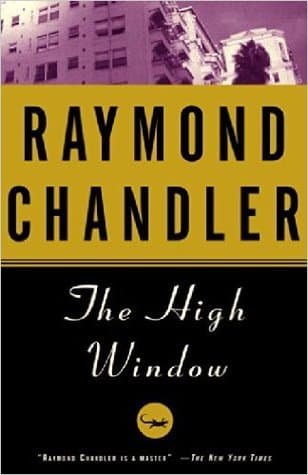
Raymond Chandler (1965)
Genre
Mystery
Reading Time
265 min
Key Themes
See below
Sign in to track this book
In sun-drenched, noir-tinged Pasadena, Philip Marlowe unravels a web of greed, exploitation, and murder beneath a wealthy widow's veneer, all sparked by a missing daughter-in-law and a coveted gold coin.
Philip Marlowe is summoned to the opulent Pasadena home of Mrs. Elizabeth Murdock, a formidable and overbearing woman who lives with her two adult children, Leslie Murdock and Merle Davis. Mrs. Murdock hires Marlowe to locate a rare gold coin, a Brasher Doubloon, which she claims was stolen from her collection. She also wants him to discreetly find her daughter-in-law, Velma, who abruptly left a few months prior. Mrs. Murdock paints Velma as a gold-digger and a trouble-maker, implying she might have taken the coin. Marlowe immediately senses the strained family dynamics and Mrs. Murdock's domineering personality, which seems to cow her children into submission. He agrees to take the case, intrigued by the underlying tension.
Marlowe's investigation begins with a visit to Elisha Morningstar, a coin dealer recommended by Mrs. Murdock. Morningstar provides little useful information about the stolen coin, appearing evasive. Marlowe then turns his attention to Velma. His inquiries lead him to a rundown photography studio run by a man named Vannier, who seems to have had a past connection with Velma. Vannier is uncooperative and hostile, but Marlowe's persistence uncovers hints of Velma's involvement in a blackmail scheme related to compromising photographs. Marlowe also learns that Velma had a different name in her past, setting off alarms about her true identity and intentions.
Marlowe returns to Vannier's studio and finds the photographer dead, shot in the head. Before the police arrive, Marlowe notices a detail that suggests the murder scene has been tampered with. He is then ambushed and knocked unconscious, waking to find the police, led by Lieutenant Breeze, treating him as a prime suspect. Marlowe, using his wits, manages to escape police custody. Convinced Leslie Murdock is involved, Marlowe confronts him. Leslie, a weak-willed and alcoholic man, admits to having been at Vannier's studio but denies the murder, claiming he was there to retrieve compromising photos of himself and his wife, which Velma had used to blackmail him.
Marlowe continues to dig, connecting Velma's past and the current events. He eventually finds the body of a man named George Anson, who was also involved in the blackmail ring with Vannier and Velma. Anson's death further complicates the case. Under intense pressure from Marlowe, Leslie Murdock finally confesses to killing Vannier. He explains that Vannier had been blackmailing him with photos and that Velma, his wife, was the mastermind behind the scheme. Leslie reveals his desperation to protect his wife's reputation, even though he knew she was extorting him. This confession sheds light on the true nature of Velma's disappearance and the coin's theft.
Throughout the investigation, Marlowe observes Merle Davis, Mrs. Murdock's quiet and withdrawn companion (revealed to be her actual daughter, not just a companion). Merle exhibits signs of deep psychological distress and fear of her mother. Marlowe's inquiries reveal that Merle suffered a traumatic incident in her youth—she was raped by a man named Fred Lacey, a gardener employed by the Murdocks. Mrs. Murdock, to protect the family's image, paid Lacey off and covered up the incident, effectively silencing Merle and contributing to her fragile mental state. This revelation exposes the depths of Mrs. Murdock's manipulative and controlling nature.
Marlowe eventually discovers the Brasher Doubloon hidden within the Murdock residence. It becomes clear that Mrs. Murdock herself had taken the coin and fabricated the story of its theft. Her motive was to lure Velma back, or at least to create a pretext for Marlowe to investigate Velma's activities. This revelation shows Mrs. Murdock's capacity for deception and her desire to control every aspect of her family's life, even at the cost of involving the police in a false claim. The coin, once a central mystery, now symbolizes Mrs. Murdock's lies.
Velma, who had been hiding under the assumed name of Dolores Gonzales, reappears. She is no longer the timid woman Leslie married but a hardened, cunning individual. She confronts Mrs. Murdock, revealing her true identity and her long-standing animosity towards the family. Velma had been systematically blackmailing Leslie and others, fueled by a desire for revenge and financial gain. Her return brings the various threads of the plot together, as she becomes a focal point for the resolution of the murders and the unraveling of the Murdock family's secrets. Her presence creates a dramatic showdown.
In a climactic confrontation, Marlowe pieces together the final puzzle. He confronts Mrs. Murdock with the truth about Fred Lacey and Merle's rape. Cornered, Mrs. Murdock breaks down and confesses that she, not Leslie, murdered Fred Lacey years ago. She admits to pushing him out of the high window in a fit of rage after he raped Merle and then attempted to blackmail her. She covered up the crime, making it look like an accident, to protect Merle and the family's reputation. This confession reveals the deep, dark secret at the heart of the Murdock household and explains Mrs. Murdock's obsessive control over Merle.
With Mrs. Murdock's confession, the truth about both the original murder of Fred Lacey and the subsequent events involving Vannier and Velma comes to light. Leslie Murdock is cleared of Vannier's murder, as it's revealed Velma (as Dolores Gonzales) killed Vannier to silence him and prevent him from exposing her blackmail operations. Mrs. Murdock faces the consequences of her actions, although the exact legal outcome is left somewhat ambiguous. Merle Davis, finally free from her mother's suffocating control and the burden of her secret, begins to show signs of healing. The Murdock family is irrevocably broken, their opulent facade shattered by the revelations.
Having untangled the complex web of deceit, murder, and exploitation, Philip Marlowe departs from the Murdock residence. He leaves behind a family in ruins, their secrets exposed and their lives irrevocably altered. Marlowe reflects on the moral decay he witnessed, the lengths to which people will go to protect their image, and the devastating impact of buried truths. The case, while solved, leaves him with a sense of the pervasive corruption and tragedy lurking beneath the surface of society, even in the most affluent neighborhoods. He collects his fee, but the human cost of the investigation weighs heavily.
The Protagonist
Marlowe remains largely unchanged, his core integrity reinforced by the depravity he uncovers.
The Antagonist
Her carefully constructed world collapses as her secrets are exposed, leading to a breakdown and confession.
The Supporting
Initially a suspect and a victim of blackmail, he is eventually cleared of murder and freed from Velma's influence, though his future remains uncertain.
The Supporting
Initially withdrawn and traumatized, she begins to heal and find a semblance of freedom once her mother's secrets are exposed.
The Antagonist
Her true identity and criminal activities are uncovered, leading to her exposure as a murderer and blackmailer.
The Supporting
His murder propels Marlowe's investigation into the deeper secrets of the Murdock family.
The Supporting
Maintains his professional role, facilitating the official resolution of the case.
The Mentioned
His past actions and murder are eventually revealed, uncovering the root of the family's trauma and Mrs. Murdock's crimes.
The novel shows how extreme wealth and social standing can enable and conceal moral decay. Mrs. Murdock uses her money to manipulate her children, cover up a rape, and commit murder, all to maintain her family's 'good name.' The opulent setting of her Pasadena mansion contrasts with the sordid crimes and emotional abuse occurring within its walls. The police are initially hesitant to scrutinize such a prominent family, illustrating how power can shield individuals from justice, at least temporarily.
“A rich man's house is his castle, but a poor man's house is his trap.”
At the story's heart is a web of secrets—Merle's rape, Mrs. Murdock's murder of Lacey, Velma's blackmail schemes, and Leslie's false confession. These hidden truths fester, poisoning the lives of the Murdock family members and leading to further violence and manipulation. The burden of these secrets creates psychological distress, particularly for Merle, and ultimately shatters the family's facade. Marlowe's role is to dismantle this web, revealing how lies, no matter how well-guarded, eventually lead to catastrophe.
“Secrets have a way of coming out, especially when there's a body involved.”
Chandler explores the disparity between outward appearances and inner reality. The Murdock family, with their grand Pasadena home and social standing, appear respectable, but are in fact riddled with crime, abuse, and dysfunction. Velma, initially a missing daughter-in-law, is revealed to be a ruthless blackmailer and murderer. Even the Brasher Doubloon, a rare and valuable object, is merely a prop in Mrs. Murdock's manipulative game. Marlowe's investigation constantly peels back these layers of deception, exposing the ugly truths beneath the surface.
“Pasadena is a nice town. It has a lot of nice houses and a lot of nice people. Some of them even keep their clothes on.”
The novel highlights how vulnerable individuals, particularly women, can be exploited and traumatized by those in power. Merle Davis is the most poignant example, a victim of rape whose trauma is compounded by her mother's cover-up and emotional control. Her fragile mental state is a direct result of her mother's actions and the family's desire to maintain appearances. Marlowe, despite his tough exterior, shows genuine compassion for Merle, recognizing her as an innocent caught in a brutal web of family secrets.
“She was like a child that had been hurt too often and too much.”
An object that drives the plot but is ultimately of secondary importance.
The Brasher Doubloon initially serves as the primary object of Marlowe's investigation, providing the initial impetus for his involvement with the Murdock family. Mrs. Murdock's claim of its theft sets the stage for the mystery. However, as the plot unfolds, the coin's actual importance diminishes. It is eventually revealed that Mrs. Murdock herself hid it, using its 'disappearance' as a pretext to hire Marlowe and investigate Velma. The coin is a classic MacGuffin, a plot device that gets the story moving but is less significant than the human drama and dark secrets it uncovers.
A seductive and dangerous woman who lures the protagonist into danger.
Velma, under her alias Dolores Gonzales, embodies the femme fatale archetype. She is initially presented as a missing person, but her true nature as a cunning, manipulative, and murderous blackmailer gradually emerges. She uses her past connections and knowledge to extort money, and she is ruthless in eliminating anyone who threatens her schemes, as evidenced by Vannier's murder. Her elusive nature and the danger she represents draw Marlowe deeper into the perilous web of the Murdock family's secrets, complicating the investigation and raising the stakes.
A literal and symbolic element representing a hidden crime and a fall from grace.
The 'high window' is a recurring motif that is both literal and symbolic. Literally, it is the window from which Fred Lacey was pushed to his death by Mrs. Murdock, making it the site of the original, concealed murder that underpins the family's trauma. Symbolically, it represents the fall from grace, the hidden darkness behind the polished facade of wealth and respectability. It signifies the Murdocks' elevated social position and the ultimate plunge into moral corruption. The window serves as a constant, silent reminder of the family's deepest secret and Mrs. Murdock's capacity for violence.
A misleading clue or statement designed to divert attention from the real culprit.
Leslie Murdock's confession to killing Vannier serves as a significant red herring. Marlowe initially believes Leslie, and this confession leads him down a particular investigative path. However, Marlowe's persistent skepticism and further discoveries reveal that Leslie's confession, while partially true about his presence at the scene, was a desperate attempt to protect Velma and avoid deeper scrutiny. The true killer of Vannier is later revealed to be Velma herself. This device effectively misdirects both Marlowe and the reader, building suspense and delaying the discovery of the actual truth.
“She was a blonde. A blonde to make a bishop kick a hole in a stained-glass window.”
— Philip Marlowe's initial description of Mrs. Murdock, highlighting her striking appearance.
“Trouble is my business.”
— A classic Marlowe line, encapsulating his profession and the nature of his work.
“Dead men are heavier than broken hearts.”
— Marlowe's cynical observation on the tangible weight of death versus emotional pain.
“There was a smell of old money and new trouble.”
— Marlowe's sensory perception of the Murdock mansion, hinting at its hidden complexities.
“It was a blonde. A cool, tall blonde in a mink coat. She gave me a look that was more like a push.”
— Marlowe's encounter with Merle Davis, emphasizing her allure and assertive presence.
“You can't make a life without a little trouble.”
— Marlowe's philosophical acceptance of adversity as an inherent part of existence.
“She had a face that could stop a clock and start a war.”
— A vivid description of a formidable female character, highlighting her powerful presence.
“The air was thick with the scent of money and decay.”
— Marlowe's observation of the environment, suggesting the moral corruption beneath surface wealth.
“You don't expect to find a man with a conscience in this business, do you?”
— Marlowe's sardonic question to a client, reflecting on the moral landscape of his profession.
“There are times when a man's got to forget his manners.”
— Marlowe's justification for aggressive behavior when pursuing truth or justice.
“She was wearing a dress that was very simple and very expensive, and her eyes were like the last two roses of summer, a little faded but still lovely.”
— Marlowe's detailed and somewhat melancholic description of a woman, revealing her past beauty.
“A private eye is a man who knows a lot of things he shouldn't know.”
— Marlowe's concise definition of his role, emphasizing the often illicit nature of his knowledge.
“It was a nice, polite room, but it had a faint smell of money and trouble.”
— Marlowe's recurring motif of sensing underlying issues in seemingly respectable environments.
“The city was a place where people went to lose themselves and sometimes found more than they bargained for.”
— Marlowe's broader reflection on the nature of Los Angeles and the unexpected turns of fate.
Ready to see how well you understood this book? Take our interactive quiz with 10 questions.

Raymond Thornton Chandler was an American-British novelist and screenwriter. In 1932, at the age of forty-four, Chandler became a detective fiction writer after losing his job as an oil company executive during the Great Depression. His first short story, "Blackmailers Don't Shoot", was published in 1933 in Black Mask, a popular pulp magazine. His first novel, The Big Sleep, was published in 1939. In addition to his short stories, Chandler published seven novels during his lifetime. All but Playback have been made into motion pictures, some more than once. In the year before his death, he was elected president of the Mystery Writers of America.