“The bigger they come, the harder they fall.”
— A recurring phrase, embodying the central theme of the novel.

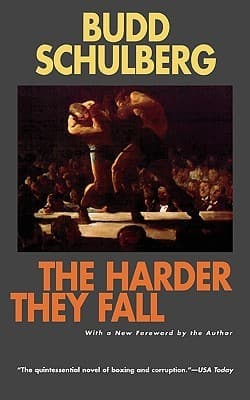
Budd Schulberg (1947)
Genre
Fiction
Reading Time
7-8 hours
Key Themes
See below
Sign in to track this book
A naive Argentine giant is built into a boxing sensation only to be ruthlessly exploited and discarded by a corrupt fight racket, exposing the brutal underbelly of the sport.
Eddie Willis, a sportswriter who has seen better days, is hired by the crooked boxing promoter Nick Benko. Benko's new 'discovery' is Toro Moreno, a giant but gentle Argentine peasant with no boxing skill, whose only real asset is his size. Benko plans to use Toro's imposing build to make him a heavyweight contender through fixed fights, earning a fortune before Toro is inevitably exposed. Eddie, cynical but needing money, takes the job as press agent, tasked with creating a story and selling Toro to the American public, despite knowing the whole thing is a sham. He struggles with his conscience, but the steady paycheck and Benko's pressure keep him in line.
With Benko's careful planning, Toro begins a series of fights across the country. Each opponent is chosen and bribed to lose, making Toro seem like a devastating puncher. Eddie Willis, using his writing skills, creates exaggerated headlines and articles, calling Toro a 'Gaucho Superman' and a 'Titan of the Pampas,' overcoming impossible odds. The public, wanting a new boxing sensation, believes the fabricated image. Eddie sees firsthand the brutal workings of the fight game, including the threats used to make sure opponents cooperate. He feels a growing discomfort about his role in deceiving the public and exploiting Toro, who knows nothing of the deceit.
As Toro's 'victories' add up, his fame grows rapidly. He is in newspapers, on the radio, and becomes a well-known name. Despite his new celebrity, Toro remains a simple, kind man, dedicated to his family in Argentina. He genuinely believes he is a skilled fighter and that his 'wins' are real, often thanking his opponents for 'giving him a good fight.' This innocence further troubles Eddie, who sees Toro as a victim, not a willing participant in the fraud. Toro's limited English and trusting nature make him an easy pawn for Benko and his associates, who actively hide the truth about his fixed matches.
Behind the scenes, Nick Benko and his corrupt network take a huge percentage of Toro's earnings. Through inflated training costs, management fees, and other questionable charges, Toro's legitimate income is systematically siphoned away. Eddie Willis, aware of the financial schemes, sees how little of the vast sums generated actually reach Toro. Benko justifies these actions by claiming the costs of promoting a fighter are huge, but it's clear he is building a personal fortune at Toro's expense. Toro, trusting Benko completely, signs whatever documents are put in front of him, believing his manager acts in his best interests.
The time comes for Benko's biggest payoff: a real fight against the heavyweight champion, Buddy Brannen. Brannen is a skilled, powerful boxer, unlike Toro's previous 'opponents.' This fight is not fixed; Benko plans to profit from the large ticket sales and betting. Eddie realizes the true danger Toro faces, understanding that Brannen will expose Toro's lack of skill and likely cause serious injury. The stakes are incredibly high, financially for Benko and physically for Toro. Eddie's internal conflict grows as he struggles with the morality of sending an innocent man into such a brutal, unequal contest.
The championship fight against Buddy Brannen is a gruesome event. From the start, Brannen dominates Toro, showing his complete lack of boxing technique and defense. Toro, despite his strength and resilience, is outmatched. He endures a brutal beating, his face a bloody mess. The crowd, initially interested, watches in horror as Brannen relentlessly pummels the defenseless giant. Eddie Willis, watching from ringside, feels guilt and pity. He knows this is the inevitable result of Benko's plan, and he is a complicit observer to Toro's public humiliation and physical destruction.
Toro is rushed to the hospital, severely injured and concussed after the devastating fight. Eddie visits him, seeing the extent of his physical and emotional damage. In the hospital, the full extent of Benko's financial exploitation is revealed. Toro, despite generating millions, is left with almost nothing. His supposed earnings have been systematically stolen, leaving him financially ruined and facing a grim future. Eddie feels a deep sense of responsibility and shame, realizing the true cost of his complicity. Toro's dream of building a better life for his family is shattered, leaving him broken and penniless.
Faced with Toro's complete devastation, Eddie Willis can no longer stay silent. He confronts Nick Benko, expressing his disgust and demanding that Toro receive at least some of the money he is owed. Benko, however, is unrepentant, dismissive of Toro's situation, and even threatens Eddie. This confrontation strengthens Eddie's resolve. He decides to expose Benko and the entire corrupt boxing racket to the authorities. This decision marks a turning point for Eddie, as he chooses integrity over complicity, despite the personal risks of going against a powerful figure like Benko.
Despite Eddie's efforts to expose Benko, the corrupt system is too powerful. Benko, with his connections and influence, avoids serious legal trouble. Toro, deemed an illegal alien after his boxing career ends, is deported back to Argentina, penniless and physically scarred. His dream is utterly shattered, and he returns to the poverty he tried so hard to escape. Eddie, having done what he could, is left with the bitter taste of a system that protects the powerful and crushes the innocent. The ending highlights the pervasive nature of corruption and the difficulty of finding true justice in such a rigged world.
After Toro's tragic departure, Eddie Willis finds some redemption by writing the true story of Toro Moreno and the corrupt boxing world that exploited him. He puts his guilt, his observations, and his new moral clarity into his writing, exposing the lies, the fixed fights, and the financial exploitation. This act of truth-telling, while not bringing justice for Toro, allows Eddie to reclaim his integrity as a writer and as a man. He accepts the personal and professional consequences of his actions, understanding that speaking truth to power is essential, even if it comes too late for those like Toro.
The Protagonist
Eddie moves from cynical complicity to moral outrage, ultimately choosing to expose the corruption he was a part of, finding personal redemption through truth-telling.
The Victim/Protagonist
Toro begins as a hopeful, naive peasant and ends as a physically and financially broken man, a victim of systemic exploitation.
The Antagonist
Benko remains consistently corrupt, successfully evading justice despite his blatant exploitation, highlighting the entrenched nature of the system.
The Supporting
Danny remains a conflicted figure, unable to fully break free from the corrupt system he's a part of.
The Supporting
Julie's role is largely static, serving as a consistent moral touchstone for Eddie.
The Supporting
Brannen's character remains consistent; he is the champion, a force of nature in the ring.
The Supporting
Edwards remains a consistently amoral figure, a cog in Benko's corrupt machine.
The Mentioned
George's role is static, representing the anonymous enablers of the corrupt system.
The novel shows the widespread corruption in professional boxing, from fixed fights and bribed officials to the systematic financial exploitation of fighters. Nick Benko embodies this theme, orchestrating Toro's entire career as a cynical money-making scheme, with no regard for Toro's well-being. The theme is clearly shown through how opponents are paid off, how expenses are inflated to take funds, and how the media is manipulated by Eddie Willis to create a false story. Toro Moreno is the ultimate victim, a symbol of the innocent crushed by a ruthless, profit-driven system. This theme critiques not just boxing, but the larger societal structures that allow such exploitation.
“It wasn't a sport anymore, it was a racket. And Toro was just another piece of meat for the grinder.”
Toro Moreno's story is a tragic tale of lost innocence. He comes to America as a hopeful, naive peasant, genuinely believing in the sport's integrity and his manager's good intentions. His trust is systematically betrayed by Benko, Eddie, and everyone around him, who conspire to deceive him for personal gain. The moment Toro realizes his financial ruin and the truth about his 'career' is a deep loss of his innocence. This theme is mirrored in Eddie Willis's own struggle, as he betrays his journalistic ethics and contributes to Toro's downfall, only to later seek redemption. The novel highlights how systemic corruption can corrupt individuals and destroy the dreams of the innocent.
“He was just a big kid, a simple peasant, and we were all feeding him to the wolves.”
The novel powerfully shows how the media can create and control public perception, regardless of the truth. Eddie Willis, as the press agent, is the main tool of this deception, creating sensational headlines and articles that portray Toro Moreno as a boxing sensation. He fabricates a heroic story, turning a clumsy giant into a 'Gaucho Superman' through pure propaganda. This theme critiques the sensationalism and lack of critical review in media, showing how easily the public can be swayed by a compelling, though false, story. The media becomes a complicit partner in the fraud, amplifying the lies for profit and entertainment.
“My job was to lie, to invent, to sell this big, dumb ox to a public that loved a good story, even if it was a complete fabrication.”
While Toro's story ends tragically, Eddie Willis's journey explores the possibility of redemption through moral responsibility. Initially involved in the exploitation, Eddie's conscience is increasingly troubled by Toro's suffering. His decision to expose Benko and the corrupt system, despite the personal risks, marks his path toward reclaiming his integrity. This theme suggests that even in deeply corrupt environments, individuals can choose to act morally and try to correct wrongs. Eddie's act of writing the true story serves as his penance and his way of finding meaning in the tragedy, highlighting the power of truth-telling as a path to personal redemption, even when systemic justice is hard to find.
“I had to write it all down, every sordid detail. Maybe then I could finally sleep.”
Toro Moreno's character serves as a symbolic representation of innocence and brute strength exploited by a corrupt system.
Toro Moreno is presented as a 'naive giant' – a man of immense physical stature and strength, but with the mind of a simple, trusting child. This device is central to the novel's critique of exploitation. Toro's innocence makes him the perfect victim, unable to comprehend the deceit surrounding him. His physical power, which should be an asset, becomes his greatest vulnerability, as it is precisely this strength that the promoters seek to exploit. His character evokes sympathy and highlights the moral bankruptcy of those who prey on the vulnerable, making the betrayal all the more poignant.
The story is told through the eyes of Eddie Willis, providing an insider's perspective on the corruption and a personal moral struggle.
Using Eddie Willis as the first-person narrator allows the reader direct access to the inner workings of the boxing racket and the moral compromises involved. Eddie is an educated, cynical observer who is initially complicit, making his eventual moral awakening more impactful. His internal conflict between his need for money and his conscience drives much of the story's emotional tension. This narrative choice provides a critical, self-aware lens through which the corruption is viewed, giving the expose a personal and human dimension, rather than a purely objective one.
The repetitive pattern of fixed fights serves to build tension and underscore the systematic nature of the deception.
The novel employs a recurring sequence where Toro fights a series of pre-arranged opponents who are paid to take a dive. This device is crucial for several reasons: it incrementally builds Toro's false reputation, highlights the pervasive nature of the corruption, and builds a sense of dread for the inevitable, legitimate fight. Each fixed fight further entrenches the lie and deepens Eddie's complicity, making the eventual confrontation with reality (the Brannen fight) even more shocking and devastating. The repetition emphasizes the relentless, calculated nature of the exploitation.
The boxing ring serves as a microcosm of society, where power, deception, and brutality play out.
The boxing ring in 'The Harder They Fall' is more than just a sports venue; it's a powerful symbol. It represents a confined space where the rawest forms of exploitation and betrayal unfold under the guise of sport. The 'fight' extends beyond the physical contest to the moral battle within Eddie and the systemic battle against corruption. It symbolizes the arena where innocence is lost, where truth is manipulated, and where individuals are sacrificed for profit, mirroring the broader societal struggles of the powerless against the powerful. The ring is where the illusion is built and ultimately shattered.
“The bigger they come, the harder they fall.”
— A recurring phrase, embodying the central theme of the novel.
“It was a world where men were bought and sold like cattle, where loyalty was a luxury no one could afford.”
— Describing the ruthless nature of the boxing industry.
“Money talks, and in this racket, it screamed.”
— Reflecting on the overwhelming influence of money in professional boxing.
“You learn pretty quick in this game that there are no friends, only associates with varying degrees of larceny in their hearts.”
— Eddie Willis's cynical view of the relationships in the boxing world.
“He was a manufactured champion, a product of hype and carefully selected opponents.”
— Referring to Toro Moreno's artificial rise to fame.
“The crowd roared, a beast with a thousand heads, hungry for blood.”
— Depicting the primal energy and bloodlust of the boxing audience.
“Every punch was a lie, every round a deception.”
— Eddie's internal monologue about the rigged nature of the fights.
“He had sold his soul for a ringside seat to his own destruction.”
— Reflecting on Toro's unwitting participation in his own downfall.
“The truth was a luxury, and in this business, it was always too expensive.”
— Eddie's understanding of the suppressed truths within the boxing world.
“His fists were his only language, and they spoke of pain and desperation.”
— Describing Toro's raw power and limited understanding of his situation.
“They built him up just to tear him down, and they made a fortune doing it.”
— Summing up the exploitative nature of Toro's career.
“The lights were blinding, the roar deafening, and in the center of it all, a man being sacrificed.”
— A vivid description of a boxing match as a ritualistic sacrifice.
“He was a puppet, and the strings were pulled by invisible hands with very visible bank accounts.”
— Illustrating Toro's lack of control over his own career and life.
“Sometimes you have to choose between a clear conscience and a full wallet.”
— Eddie Willis grappling with his moral compromises.
Ready to see how well you understood this book? Take our interactive quiz with 10 questions.
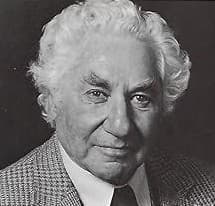
Budd Schulberg was an American screenwriter and novelist, best known for his novel "The Harder They Fall," which explored the dark side of professional boxing. His other notable works include the screenplay for "On the Waterfront," for which he won an Academy Award, and the novel "What Makes Sammy Run?" Schulberg's writing often focused on corruption and the struggles of individuals against powerful systems.

Ashley Antoinette
4.6

Mark McDonald
4.4
Luo Guanzhong
4.4

Mia McKenzie
4.3

Dorothy Parker
4.3

Joaquim Maria Machado de Assis
4.3
James Thurber
4.2

Terry Kay
4.2