“Thus they went on for a while, Svejk always looking for a good place to hide, and the lieutenant, in his drunkenness, making all sorts of plans.”
— Svejk and Lieutenant Lukáš are on the run after a series of mishaps.

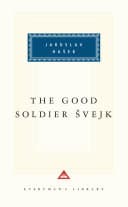
Jaroslav Hasek (1993)
Genre
Fiction
Reading Time
1447 min
Key Themes
See below
Sign in to track this book
In a world at war, the seemingly simple-minded Švejk skillfully navigates the absurdities of the Austro-Hungarian army, turning bureaucratic chaos into a comedic dance of survival.
Josef Švejk, a former dog-dealer from Prague, is introduced in his apartment, suffering from rheumatism. When he hears about Archduke Franz Ferdinand's assassination and the coming war, he immediately declares his loyalty to the Austro-Hungarian Empire. This seemingly innocent patriotism, along with his past as a dog-dealer and his eccentric manner, draws the attention of the secret police. Police Agent Bretschneider arrests him for high treason, misinterpreting Švejk's naive statements and literal interpretations as rebellious acts. Švejk is then taken to police headquarters, beginning his long journey through the military-judicial system.
After his arrest, Švejk undergoes medical exams to determine his fitness for military service. His exaggerated ailments, rambling stories, and apparent foolishness lead the military medical commission to declare him a 'professional idiot' and a malingerer. Despite their suspicions, they cannot prove he is faking. He is sent to a lunatic asylum, where he continues his bizarre behavior, amusing and frustrating both patients and staff. His time in the asylum further establishes his reputation as a harmless but unmanageable person, yet he is eventually discharged, still deemed unfit for active service.
After his release from the asylum, Švejk is unexpectedly drafted into the army as an orderly. He is assigned to Field Chaplain Otto Katz, a former Benedictine monk who is now an alcoholic gambler. Švejk's duties involve managing the chaplain's chaotic life, including getting alcohol, handling debts, and preparing for sermons Katz rarely delivers. Švejk approaches these tasks with his usual mix of literal obedience and unintentional subversion, often making things worse while believing he is doing his best. Their relationship is a comedic study in contrasts, with Švejk's unwavering, if misguided, loyalty clashing with Katz's moral decline. Katz eventually gambles Švejk away in a card game.
After Chaplain Katz loses him in a card game, Švejk becomes the orderly to Lieutenant Lukáš, a cultured but often exasperated officer. Lukáš initially finds Švejk's constant talking and strange logic irritating, but he also sees Švejk's ability to navigate military bureaucracy and often accidentally solve problems. Švejk's duties under Lukáš are varied and often involve misinterpreting orders, leading to comical mishaps. For instance, Švejk's attempt to get a dog for Lukáš results in him stealing a purebred fox terrier belonging to a colonel. This incident, among many others, constantly gets both Švejk and Lukáš into trouble, yet Švejk remains devoted and seemingly necessary.
Lieutenant Lukáš receives orders to move his company to Budějovice. Švejk is tasked with getting them and their luggage on the correct train. True to form, Švejk misses the train, believing he is on the right track while actually heading in the opposite direction. This starts a long and absurd journey across the countryside. Švejk meets various people, including a Hungarian gendarme, a Polish soldier, and many peasants, all of whom are confused by his optimism and peculiar logic. His attempts to rejoin his unit are repeatedly stopped by his own misunderstandings, bureaucratic inefficiency, and the general chaos of wartime travel, leading him further from his destination.
During his long travels, Švejk, dressed in a stolen Russian uniform (which he believes is just another military uniform he's 'borrowed' or found), is caught by a Hungarian patrol. His inability to explain himself clearly, along with his cheerful manner and the foreign uniform, leads the suspicious soldiers to believe he is a dangerous Russian spy. He is interrogated and treated harshly, yet he remains calm, continuing his rambling stories, which only further confuse his captors. This incident shows the absurdity of wartime paranoia and how easily an innocent, if odd, person can be caught in a web of suspicion.
Švejk is brought before a military court-martial on charges of espionage and desertion. Despite the serious accusations, his defense consists mainly of his usual rambling stories and a firm claim of loyalty to the Emperor. The court, overwhelmed by his apparent idiocy and lack of malicious intent, struggles to understand his case. His unusual honesty and the unlikelihood of him being a competent spy eventually lead to his acquittal. Through a series of bureaucratic twists, he is finally able to rejoin his regiment, much to the exasperation and resigned amusement of Lieutenant Lukáš, who had given him up for lost.
Back with Lieutenant Lukáš and the marching company, Švejk resumes his duties as an orderly, though with the constant threat of being sent to the front lines. His interactions with other soldiers and officers continue to create comedic situations. He is often tasked with mundane but important chores, which he does with a unique mix of literal interpretation and unforeseen results. Whether getting supplies, dealing with other soldiers, or simply existing within the rigid military structure, Švejk consistently creates minor chaos while believing in his own competence and loyalty. The company's slow journey towards the Russian front is marked by Švejk's endless stories and his ability to survive every problem.
As the Austro-Hungarian forces move closer to the Russian front, the realities of war become clearer, yet Švejk's spirit remains strong. He continues to serve Lieutenant Lukáš, often in the most unlikely situations. Whether finding food, dealing with a difficult superior officer, or simply trying to navigate the constant danger, Švejk's 'idiotic' wisdom and endless stories are a constant source of comic relief. The novel ends with Švejk still alive, still cheerfully moving through the war, and still not truly engaging in combat. He embodies the resilience of the common man against the absurdity of conflict.
The Protagonist
Švejk remains largely unchanged throughout the novel, consistently applying his unique brand of 'idiocy' to navigate every situation, proving that his character is less about development and more about a fixed, resilient approach to an absurd world.
The Supporting
Lukáš experiences a gradual resignation and a grudging acceptance of Švejk's presence, moving from intense frustration to a weary understanding of his orderly's peculiar effectiveness.
The Supporting
Katz's arc shows a decline into deeper alcoholism and irresponsibility, culminating in him gambling away Švejk, signifying his complete moral and professional decay.
The Antagonist (initial)
Bretschneider's role is primarily to initiate Švejk's journey; he disappears from the narrative after Švejk's initial arrest, having fulfilled his function as the catalyst for Švejk's military career.
The Supporting
Baloun's character remains static, consistently driven by his hunger, serving as a foil to Švejk and a source of minor inconvenience for Lukáš.
The Mentioned
Blahník has no arc as he is a fictional character within Švejk's stories, serving only as an illustrative device.
The Mentioned
General Fink does not have a personal arc; he serves as a static symbol of military high command's failings.
Hašek shows the irrationality of military life and its bureaucratic systems. The war is not a noble struggle, but a chaotic, senseless enterprise. Švejk's journey through medical commissions, police interrogations, and military postings constantly highlights the illogical rules, arbitrary decisions, and self-serving nature of the Austro-Hungarian army. For example, Švejk's declaration as a 'professional idiot' by a military medical board is a direct jab at the system's inability to tell real illness from cunning, and its preference for labels over understanding. The endless paperwork, miscommunications, and focus on trivialities over strategic concerns further emphasize this theme, making the military machine a self-defeating entity.
“And so it goes, the more you think about it, the more you see that everything is quite different from what it seems.”
Švejk's main approach is a unique form of passive resistance, achieved through exaggerated obedience and apparent foolishness. By taking every order literally and following it to its most absurd conclusion, he accidentally (or perhaps intentionally) sabotages the system without ever seeming disloyal. His cheerfulness and endless stories act as a shield, deflecting real responsibility and allowing him to survive the war without reaching the front lines. His ability to be declared a 'professional idiot' and later to avoid conviction for espionage, simply by being himself, shows a deep, almost instinctive, method of self-preservation against an overwhelming and oppressive force. This theme celebrates the resilience of the individual spirit against the dehumanizing aspects of war.
“I'm an old soldier, I know what's what. Orders are orders, and I'm going to carry them out.”
The novel explores the dynamic between the ordinary person and powerful, often tyrannical, authority. Švejk, as the 'little man,' is constantly at the mercy of officers, police agents, and military courts. However, instead of directly rebelling, he uses his perceived simplicity and constant talking to confuse and outmaneuver those in power. His interactions with Police Agent Bretschneider, Chaplain Katz, and Lieutenant Lukáš all show this struggle. The authorities, despite their power, are often less competent, more corrupt, or more easily flustered than the unassuming Švejk. This theme champions the spirit of the common person who, through cunning or sheer force of personality, keeps their humanity and individuality in the face of oppressive systems.
“Every soldier is like a cog in a machine, but the machine is broken, and no one knows how to fix it.”
While presented comically, the novel subtly addresses how war strips individuals of their humanity and autonomy. Soldiers are treated as expendable units, and bureaucracy reduces people to paperwork and statistics. The constant threat of court-martial, arbitrary punishment, and general lack of concern for individual well-being all point to this dehumanization. Characters like Chaplain Katz, who has fallen into alcoholism and moral decay, show how wartime can erode personal integrity. Even Švejk's 'idiocy' can be seen as a coping mechanism, a way to maintain some sense of self in a world that tries to turn him into a mindless tool. The novel shows how individuals must find unique ways to resist becoming mere cogs in the war machine.
“In the army, you are nothing but a number. They don't care about your soul.”
A series of episodic adventures featuring a roguish protagonist.
The novel follows a picaresque structure, with Švejk embarking on a series of loosely connected, episodic adventures as he navigates the military. Each chapter or section presents a new predicament or encounter, allowing Švejk to interact with a diverse cast of characters and experience various facets of wartime life. This structure emphasizes Švejk's journey rather than a single overarching plot, highlighting the randomness and chaos of war. It allows for a broad satirical scope, as different aspects of society and the military can be lampooned in each new setting or situation.
The use of humor, exaggeration, and ridicule to expose and criticize folly.
Hašek employs biting satire and pervasive irony to critique the Austro-Hungarian Empire, the military, and the absurdity of war. Švejk's apparent unwavering loyalty and patriotism are deeply ironic, as his actions consistently undermine the very system he claims to serve. The novel uses exaggeration, such as the elaborate medical diagnoses of Švejk's 'idiocy,' to highlight the ridiculousness of bureaucracy. The gap between what characters say and what they do, or between official pronouncements and reality, is a constant source of humor and critical commentary, making the entire narrative a prolonged exercise in sardonic wit.
A character who appears foolish but possesses profound, often subversive, wisdom.
Švejk embodies the 'wise fool' archetype. On the surface, he is a simpleton, prone to rambling and literal interpretations. However, his apparent idiocy allows him to expose the greater foolishness of those in authority and the inherent illogic of the military system. His 'wisdom' is not intellectual but instinctual – a profound understanding of how to survive and navigate a chaotic world by appearing harmless. He uses his 'foolishness' as a shield and a weapon, making him unpunishable and ultimately effective in his own unique way, subtly challenging power structures without direct confrontation.
The frequent use of digressive, often lengthy, personal stories within the narrative.
A defining feature of the novel is Švejk's incessant and often lengthy anecdotal storytelling. He constantly interjects with personal stories, usually involving someone he knew or a situation he witnessed, to illustrate a point or respond to a question. These anecdotes, though seemingly irrelevant and digressive, serve multiple functions: they reveal the absurdities of everyday life under imperial rule, provide comic relief, and often inadvertently expose the flaws in the official narrative or the incompetence of his superiors. They also serve as a form of verbal resistance, effectively derailing conversations and frustrating those who try to control him.
“Thus they went on for a while, Svejk always looking for a good place to hide, and the lieutenant, in his drunkenness, making all sorts of plans.”
— Svejk and Lieutenant Lukáš are on the run after a series of mishaps.
“It’s a good thing to be good, but it’s still better to be good for something.”
— A general observation on usefulness versus inherent goodness.
“Every soldier has to be a hero, but not every hero has to be a soldier.”
— A reflection on the nature of heroism and military service.
“If a man does not know what he wants, he will never get it.”
— Svejk's simple logic applied to human desires and goals.
“Patriotism, gentlemen, is a great thing, but it's even greater to have a good appetite.”
— Svejk's pragmatic view on human needs versus abstract ideals.
“The human race is a strange thing. First it creates a lot of trouble, and then it tries to get out of it.”
— A general observation on human behavior and problem-solving.
“Nothing is so bad that it couldn't be worse.”
— Svejk's optimistic-pessimistic outlook on difficult situations.
“Order must be, even if it brings about a catastrophe.”
— A satirical comment on the rigid adherence to rules and bureaucracy.
“War is a terrible thing, but it has its good points too. For example, it gets rid of a lot of unemployed people.”
— Svejk's darkly humorous and cynical view on the 'benefits' of war.
“The main thing is not to lose your head, and to keep smiling.”
— Svejk's personal philosophy for navigating chaos and adversity.
“You can never tell what will come out of a good intention.”
— An observation on the unpredictable consequences of actions, even well-meant ones.
“When a man wants to do something, he usually does it badly.”
— A cynical take on human effort and the frequent failure to achieve desired outcomes.
“He who laughs last thinks slowest.”
— A humorous reversal of the common proverb, reflecting Svejk's unique logic.
“The world is full of madmen, and it's a good thing it is, otherwise it would be too boring.”
— Svejk's perspective on the chaotic and often absurd nature of existence.
Ready to see how well you understood this book? Take our interactive quiz with 10 questions.
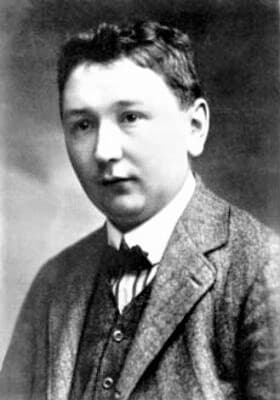
Jaroslav Hašek was a Czech writer, humorist, satirist, journalist, bohemian and anarchist. He is best known for his novel The Fate of the Good Soldier Švejk during the World War, an unfinished collection of farcical incidents about a soldier in World War I and a satire on the ineptitude of authority figures. The novel has been translated into about 60 languages, making it the most translated novel in Czech literature.

Ashley Antoinette
4.6

Mark McDonald
4.4
Luo Guanzhong
4.4

Mia McKenzie
4.3

Dorothy Parker
4.3

Joaquim Maria Machado de Assis
4.3
James Thurber
4.2

Terry Kay
4.2