“Yes, I have secrets! I'll break them all into a million little pieces and then I'll scatter them to the four winds!”
— Laura's outburst to Amanda about her glass collection.

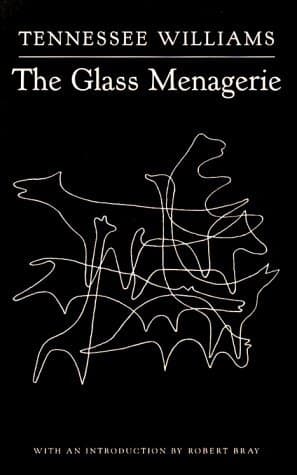
Tennessee Williams (1945)
Genre
Fiction
Reading Time
90 min
Key Themes
See below
Sign in to track this book
In a St. Louis apartment, a faded Southern belle, her restless son, and his painfully shy sister with her collection of glass animals, grapple with shattered dreams and the suffocating grip of memory.
Tom Wingfield, acting as narrator and a character in the play, speaks directly to the audience. He explains that 'The Glass Menagerie' is a memory play, subjective and not strictly realistic. He introduces the setting: a cramped apartment in St. Louis during the Great Depression. He then introduces his family: his mother, Amanda Wingfield, a faded Southern belle obsessed with her past, and his sister, Laura Wingfield, a shy and delicate young woman with a limp. Tom works at a shoe warehouse, a job he dislikes, and often goes to the movies, which Amanda disapproves of.
The first scene inside the apartment shows the family's strained dynamics. Amanda, dressed in a faded but once elegant dress, often talks about her youth as a popular Southern belle in Blue Mountain, Mississippi, where she received seventeen gentleman callers in one afternoon. She often interrupts Tom's dinner, criticizing his eating habits and his lack of ambition. Her main concern, however, is Laura's future. Amanda wants Laura to find a husband, believing marriage is the only secure path for her daughter, who lacks practical skills and has extreme social anxiety.
Amanda enrolls Laura in Rubicam's Business College, hoping it will prepare her for a career or boost her confidence. However, a few weeks later, Amanda discovers that Laura has not been attending classes. Instead, Laura has been spending her days wandering in the park, visiting the zoo, or hiding in the art museum, overcome by anxiety and nausea whenever she tries to enter the classroom. When confronted, Laura tearfully admits her fear and inability to participate in the classes, showing her deep social phobia. This news upsets Amanda, who realizes Laura's prospects are even worse than she imagined.
After failing at business college, Laura withdraws further into her private world. Her only comfort is her collection of delicate glass animals, her 'glass menagerie.' She spends hours arranging them, polishing them, and talking to them as if they are living creatures. This collection symbolizes her fragility, uniqueness, and her escape from the harsh realities of the world. Her favorite piece is a unicorn, representing her distinctness and isolation. The glass menagerie becomes a main symbol for Laura's delicate and vulnerable nature.
With Laura's career prospects gone, Amanda increases her efforts to find a husband for her daughter. She begins selling magazine subscriptions over the phone to earn extra money for Laura's dowry, despite often annoying her customers. She constantly nags Tom about his future and his responsibilities to the family, especially regarding Laura. Amanda's desperation and her relentless search for a gentleman caller for Laura create great pressure in the small apartment, fueling Tom's desire to escape and further isolating Laura.
Tom, feeling stifled by his job at the shoe warehouse and Amanda's constant nagging, yearns for a life of adventure and poetry. He often goes to the movies, seeking escape in their romanticized worlds, and spends his nights out, often drinking. His arguments with Amanda grow, ending in an outburst where he accidentally breaks some of Laura's glass animals. He confesses his desire to leave St. Louis and find his own path, but he is torn by his sense of duty towards Laura and Amanda, who depend on his small income.
Pressured by Amanda, Tom reluctantly agrees to bring home a 'gentleman caller' for Laura from his workplace. He chooses Jim O'Connor, a shipping clerk he knows from the warehouse. Tom remembers Jim as a popular, athletic, and charismatic figure from their high school days, someone who once called Laura 'Blue Roses' due to a mishearing of her pleurosis. Amanda is overjoyed and immediately begins elaborate preparations for Jim's visit, spending money they can ill afford on new clothes and fancy food, believing this is Laura's last chance at happiness.
On the evening of Jim's visit, the apartment is transformed. Amanda, wearing a girlish dress from her youth, is overly enthusiastic. Laura, however, is paralyzed with fear and refuses to come to the dinner table, claiming she is sick. She remembers Jim from high school, and his presence stirs up both embarrassment and a glimmer of excitement. Tom tries to coax her out, but she retreats to her room. Amanda, despite her disappointment, tries to maintain a cheerful facade, charming Jim with her Southern hospitality and stories of her past.
After dinner, with the lights flickering due to a power outage, Jim finds Laura alone in the living room. He gently talks to her, recognizing her shyness and trying to draw her out. He recalls calling her 'Blue Roses' in high school and encourages her to believe in herself. He compliments her delicate glass collection and even dances with her briefly. In a tender moment, he accidentally breaks the horn off Laura's beloved glass unicorn. He then kisses her, a moment of intimacy for Laura, before confessing he is engaged to be married.
Jim's revelation of his engagement crushes Laura. She gives him the broken unicorn as a souvenir, symbolizing her broken dreams and the loss of her unique, idealized self. Amanda, hearing the news, is furious and upset. She confronts Tom, accusing him of playing a cruel trick on them and bringing a committed man to their home. The evening, which had held so much promise, ends in bitter disappointment and blame, leaving the Wingfield family in deeper despair than before.
Following Jim O'Connor's disastrous visit, the tension in the apartment becomes unbearable. Tom and Amanda have a final, explosive argument. Tom, unable to bear his family's expectations and the stifling atmosphere, acts on his long-held desire to escape. He leaves Amanda and Laura, departing St. Louis and beginning a life of wandering. However, even years later, as he narrates the play, Tom reveals that he can never truly escape Laura's memory. Her image, fragile and delicate like her glass figures, follows him wherever he goes.
The Protagonist/Narrator
Tom transforms from a resentful, trapped son into a guilt-ridden wanderer, unable to fully escape the memory of his sister.
The Supporting/Antagonistic
Amanda remains largely static, driven by her past and her desperate, ultimately futile, attempts to control her children's lives.
The Protagonist
Laura remains largely static, her fragility and isolation deepening after the failed gentleman caller incident.
The Supporting
Jim serves as a catalyst for the play's climax but does not undergo a significant personal arc.
The Mentioned
He is absent and therefore has no arc, but his past actions profoundly shape the lives of the Wingfield family.
The entire play is a 'memory play,' narrated by Tom. This emphasizes how subjective and often unreliable memory is. Tom admits the play is 'sentimental' and 'not realistic,' suggesting his recollections are colored by emotion, guilt, and time. Details might be exaggerated or softened, reflecting how people reconstruct their past to cope or understand. The flickering lights, gauzy curtains, and non-realistic stage directions all contribute to this dream-like quality, showing how memory distorts and idealizes the past, especially for characters like Amanda, who actively lives in her own idealized memories.
“Yes, I have tricks in my pocket, I have things up my sleeve. But I am the opposite of a stage magician. He gives you illusion that has the appearance of truth. I give you truth in the pleasant disguise of illusion.”
Tom is heavily burdened by his financial and emotional responsibilities to Amanda and Laura. He works a job he hates to support them, and his mother's constant nagging and expectations further stifle his desires for adventure and self-expression. His arguments with Amanda often focus on his perceived duty versus his desperate need for personal freedom. Laura's extreme fragility and dependence add another layer to this burden, making Tom feel trapped. His eventual departure, while an act of liberation for him, is also an act of abandonment, highlighting the conflict between individual aspiration and family obligation.
“I'm tired of the movies and I'm tired of all the cheap thrills and I'm tired of all the lies and I'm tired of all the pretense! I'm tired of it! I'm tired of it!”
Hope and dreams are central to the play, but they are consistently shown as fragile and easily shattered. Laura's 'glass menagerie' is the most direct symbol of this theme; her delicate glass animals represent her vulnerability and the precariousness of her inner world. Amanda's dreams of a gentleman caller for Laura, and her own idealized past, are equally fragile, based on illusion and quickly broken by reality (Jim's engagement). Tom's dreams of escape and adventure are also tinged with a tragic understanding that he can never truly escape the memory of his sister, implying that even realized dreams can carry a heavy cost. The play suggests that in a harsh world, delicate hopes are rarely sustained.
“The unicorn... she would be just like all the other horses, wouldn't she?”
Each character in the play seeks escape from their bleak reality, though in different ways. Amanda escapes into her idealized past, constantly reliving her youth and ignoring the present. Laura retreats into her world of glass animals and old records, unable to face the outside world's demands. Tom seeks escape through movies, alcohol, and eventually, physical departure, following in his father's footsteps. The fire escape, a prominent stage element, symbolizes both a literal and metaphorical path out of the suffocating apartment. However, the play ultimately suggests that true escape is impossible, as memories and the consequences of actions continue to haunt those who leave, as seen in Tom's enduring guilt.
“I didn't go to the moon, I went much further—for time is the longest distance between two places.”
Tom directly addresses the audience, framing the play as a subjective memory.
Tom serves as both a character in the play and its narrator, breaking the fourth wall. This device allows him to provide exposition, offer insights into the characters' inner lives, and comment on the action from a retrospective viewpoint. By explicitly stating that it's a 'memory play,' he establishes a non-realistic tone and warns the audience that what they see is filtered through his emotions and biases, highlighting the subjective nature of truth and memory.
Laura's collection of glass animals symbolizes her fragility and unique inner world.
Laura's collection of delicate glass figures is the central symbol of the play. It represents her own extreme fragility, her vulnerability, and her retreat from the harsh realities of the world. Each animal, particularly the unicorn, symbolizes her uniqueness and her inability to conform. When the unicorn's horn breaks during her encounter with Jim, it symbolizes the shattering of her illusions and the loss of her distinct, idealized self, leaving her 'like all the other horses' – ordinary and broken.
A physical and symbolic exit from the Wingfield apartment, representing escape.
The fire escape functions as a literal exit from the apartment and a powerful symbol of escape. Tom frequently steps out onto it to smoke, signifying his longing to break free from his suffocating home life. It's also the path Jim O'Connor takes to enter and exit the apartment, bringing a brief moment of outside reality and hope. Ultimately, it is the path Tom takes for his final departure, representing his ultimate, albeit guilt-ridden, escape from his family's demands.
Non-realistic stage elements that enhance the memory play's atmosphere.
Williams frequently calls for non-realistic lighting, such as a 'dim, poetic haze,' and specific music (the 'Glass Menagerie' theme). The dim lighting often suggests memory, dreams, or heightened emotion rather than literal reality. The music underscores Laura's delicate nature and the play's melancholic tone. These elements create a dreamlike, almost ethereal atmosphere, reinforcing Tom's narration that this is a subjective memory rather than a straightforward depiction of events.
“Yes, I have secrets! I'll break them all into a million little pieces and then I'll scatter them to the four winds!”
— Laura's outburst to Amanda about her glass collection.
“I didn't go to business college. I went to the movies.”
— Laura's confession to Amanda about her truancy from Rubicam's Business College.
“The world is full of crazy people.”
— Amanda's common refrain about the world outside their apartment.
“I give you truth in the pleasant guise of illusion.”
— Tom's opening monologue as narrator, introducing the play's themes.
“Man is by instinct a lover, a hunter, a fighter, and none of those instincts are given much play at the warehouse!”
— Tom's passionate complaint to Amanda about his job at the shoe warehouse.
“He was a telephone man who fell in love with long distance.”
— Tom's description of his absent father.
“I am not an old maid! I'm a spinster!”
— Amanda's indignant correction during a conversation about Laura's future.
“People go to the movies instead of moving!”
— Tom's cynical observation about society's escapist tendencies.
“You are the only living original in the family!”
— Amanda's backhanded compliment to Tom, often laced with criticism.
“I'm like my father. The bastard son of a bastard!”
— Tom's self-deprecating and angry remark about his own nature.
“Why, you're not crippled, Laura.”
— Jim's kind but oblivious remark to Laura, highlighting her self-perception.
“You live in a dream; you manufacture illusions!”
— Tom's accusation directed at Amanda during an argument.
“Candle-light is my favorite light.”
— Laura's preference, symbolizing her delicate and old-fashioned nature.
“The play is memory. Being a memory play, it is dimly lighted, it is sentimental, it is not realistic.”
— Tom's opening monologue, setting the tone and style of the play.
“I descended the steps of this fire escape for a last time and descended and descended until I got to the alley. I turned around and looked back and I saw the apartment again and I saw Laura.”
— Tom's closing monologue, describing his final departure.
Ready to see how well you understood this book? Take our interactive quiz with 10 questions.
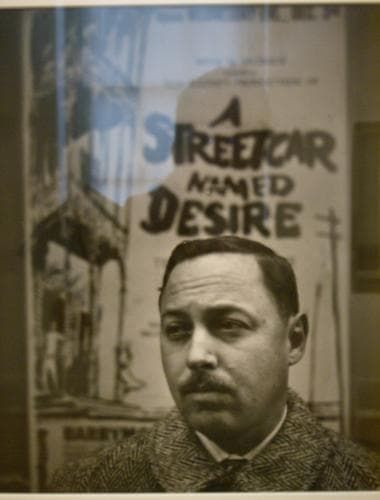
Thomas Lanier Williams III, known by his pen name Tennessee Williams, was an American playwright and screenwriter. Along with contemporaries Eugene O'Neill and Arthur Miller, he is considered among the three foremost playwrights of 20th-century American drama.

Ashley Antoinette
4.6

Mark McDonald
4.4
Luo Guanzhong
4.4

Mia McKenzie
4.3
Dorothy Parker
4.3

Joaquim Maria Machado de Assis
4.3
James Thurber
4.2

Terry Kay
4.2