“The past was not a country, it was a room with a door that only opened one way.”
— Rivers reflecting on the irreversibility of past events and decisions.

Sign in to track this book
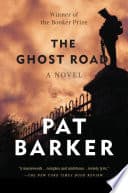
As World War I ends, a guilt-ridden psychologist treats shell-shocked soldiers, including the sardonic Billy Prior, while grappling with violence's ancient appeal by comparing the French trenches to a 'culture of death' he once studied in the South Pacific.
Dr. William Rivers returns to Craiglockhart War Hospital after leave, thinking about the war's psychological toll on patients and himself. Some former patients, including Siegfried Sassoon, have been discharged and sent back to the front. Rivers struggles with the ethical problem of healing men only for them to face war's horrors again. He worries especially about Billy Prior, who, despite improving, remains cynical and volatile. Rivers' own health is poor, hinting at the coming influenza epidemic, and he often thinks back to his anthropological work in the South Pacific, looking for similarities between tribal rituals and modern warfare.
Billy Prior, now seemingly recovered from severe shell-shock, is cleared for active duty. Despite his earlier anti-war feelings and breakdown, he feels a pull back to the front lines. He reunites with fellow officer and poet, Wilfred Owen, and they share a grim understanding of their likely fate. Prior's inner conflict is clear; he hates the war and its pointlessness, yet he cannot escape the camaraderie and the sense of purpose, however twisted, it gives him. He visits Sarah Lumb, the munitions worker with whom he has a complicated relationship, one last time before deploying.
As Dr. Rivers gets very sick with influenza, his memories become vivid and confusing, taking him back to his time studying the headhunting tribes of the Solomon Islands. He remembers the intense heat, the lush but dangerous jungle, and the native peoples' cultural practices, especially their rituals around death, warfare, and the 'ghost road'—the path taken by the spirits of the dead. He reflects on the tribe's acceptance of death and violence as a part of life, comparing it with the West's clean view of war, yet also seeing disturbing similarities in the human mind's capacity for destruction.
Billy Prior and Wilfred Owen are back on the Western Front, facing constant bombardment, mud, cold, and the threat of death. Prior's cynicism grows sharper because of the terrible conditions, but he also shows great courage and leadership. He sees death's random nature and the deep psychological harm done to the men around him. Owen continues to write his strong poetry, trying to describe the unspeakable horrors they face. Their bond strengthens as they navigate the daily struggle for survival, knowing their time is probably limited.
In his fever, Rivers continues to compare the tribal societies he studied to the war-torn Western world. He remembers the 'ghost road' as a real path to the afterlife in the Solomon Islands, a cultural view of death that, while violent, gave meaning. He contrasts this with World War I's senseless, industrialized killing, where death seems to offer no such meaning or honor. Rivers struggles with the idea of sacrifice, questioning whether the deaths of so many young men in Europe can ever be truly justified or understood within any meaningful cultural context, old or new.
Billy Prior, increasingly distant but still protective of his men, volunteers for a dangerous patrol into No Man's Land. The mission is risky, meant to gather information on enemy positions. During the patrol, Prior feels a heightened awareness, a mix of terror and a morbid interest in the death-filled landscape. He faces the raw reality of combat, the fear, the adrenaline, and the close presence of enemy soldiers. The patrol reflects his war experience, a desperate struggle for survival against overwhelming odds, ending with deep exhaustion and despair.
Just days before the Armistice, Wilfred Owen dies during a river crossing at the Sambre-Oise Canal. His death is sudden and brutal, a clear reminder of the war's disregard for individual lives, even those of poets and visionaries. Billy Prior is devastated by the loss of his friend, a man who shared his intellectual and emotional understanding of the war's futility. Owen's death highlights the tragic irony of fighting and dying for a cause already ending, increasing Prior's rage and despair at the senseless waste of life.
Dr. Rivers slowly recovers from influenza, his mind clearing from the fever-induced visions of the Solomon Islands. He receives news from the front, including the reports of Owen's death and the general destruction of the war's final days. Rivers reflects on his psychiatric work's limits, admitting that while he could mend shattered minds, he could not save his patients from war's physical destruction. He feels a deep exhaustion and grief, recognizing the immense cost of the conflict on an entire generation, including his own patients who had returned to the 'ghost road'.
Billy Prior continues to fight in the war's final days, a hardened veteran who has seen too much. With Owen gone, his last connection to a shared understanding of the war's absurdity is broken. He is wounded during a final push, a fatal injury that ends his journey. Prior's death is shown with stark, unsentimental realism, emphasizing the abruptness and anonymity of death on the battlefield. His final thoughts, though broken, show a mix of acceptance and a lingering defiance against the forces that destroyed him.
The Armistice is declared, ending the brutal fighting. For those who survived, the end of hostilities brings a complex mix of relief, grief, and deep disorientation. Dr. Rivers, though physically recovered, carries the psychological scars of his work and the losses he has seen. The war's 'ghost road,' with its millions of dead, continues to haunt the living. The novel ends with a sense of the war's immense, lasting cost, suggesting that while the fighting has stopped, the ghosts of the fallen and the trauma of the survivors will continue to shape the world for generations.
The Protagonist
Rivers' arc involves a deepening understanding of the universal human capacity for violence and the profound, perhaps irreconcilable, trauma of war, culminating in his own physical and mental exhaustion.
The Protagonist
Prior's arc is a tragic descent back into the war's embrace, culminating in his death, symbolizing the futility of individual resistance against the overwhelming force of conflict.
The Supporting
Owen's arc is tragically cut short by his death in battle, cementing his status as a symbol of the war's immense human cost and the power of art to bear witness.
The Supporting
Sassoon's arc, though largely occurring before this novel, is one of public protest and a reluctant return to duty, driven by loyalty to his men despite his moral objections.
The Supporting
Sarah's arc is one of resilience and survival on the home front, waiting for a lover who may never return, representing the enduring strength of ordinary people.
The Mentioned
N/A (Represents a fixed viewpoint rather than undergoing development).
The Mentioned
N/A (A background figure representing the medical context).
The Mentioned
N/A (A minor character who contributes to the setting and atmosphere).
The novel shows the physical and psychological horrors of World War I, emphasizing its pointlessness and destructive power. Through Billy Prior's trench experiences, the reader sees the mud, gas attacks, constant bombardment, and death's random nature. Owen's poetry further describes the 'pity of war,' while Rivers' ethical struggles highlight the futility of healing men only to send them back to be broken again. The sheer amount of death and suffering, especially in the war's final days, shows the ultimate waste of human life and potential.
“All ghosts in the making.”
This theme explores how different cultures understand and ritualize death and sacrifice. Rivers' memories of the Solomon Islanders, who have a structured 'ghost road' for the dead and incorporate violence into their society, are contrasted with the industrialized, meaningless killing on the Western Front. The novel questions whether the millions of deaths in WWI are a 'sacrifice' in any real sense, or simply a catastrophic waste. Owen and Prior's deaths, near the Armistice, particularly highlight the tragic pointlessness of dying for a cause already decided.
“What was the ghost road? The path taken by the spirits of the dead. But where did it lead?”
The novel looks deeply into war's psychological impact, especially through Dr. Rivers' work with shell-shocked officers. It examines the ethical problems of treating trauma in a system that keeps creating it. Rivers' compassionate approach contrasts with the era's more punitive methods, showing the early understanding of mental health. The characters, especially Prior, show various psychological responses to trauma, from breakdown to cynical detachment. The novel suggests that while physical wounds might heal, war's psychological scars are far more lasting and complex.
“It was impossible to be a man of honour and a man of war.”
The novel explores British society's rigid class structures, even amid war's leveling force. Billy Prior's journey from a working-class background to an officer's commission shows the tensions and ambiguities of social mobility. He feels separated from both his origins and the upper-class officers, struggling with his identity in a system that constantly defines him by his social standing. The interactions between officers and ordinary soldiers, and the contrast between the home front (Sarah Lumb) and the battlefield, further show class's pervasive influence on individual experience and perception of the war.
“He was a working-class man, an officer, a homosexual. He was a man of contradictions.”
Memory, both individual and collective, is a central theme. Rivers' feverish recollections of the Solomon Islands mix with the present, showing how past experiences shape understanding. The novel itself acts as a historical memory, preserving the experiences of those who fought and suffered. The 'ghost road' metaphor extends to the lingering presence of the dead and the trauma of the past on the present. The narrative constantly shifts between present battlefield horrors and past anthropological studies, suggesting that history and memory are cyclical and deeply influential.
“The past was never dead. It wasn't even past.”
A central metaphor linking primitive beliefs about death to the modern battlefield.
The 'ghost road' serves as the overarching metaphor of the novel. Initially, it refers to the literal path taken by the spirits of the dead in the Solomon Islands, a concept Dr. Rivers learned during his anthropological studies. This primitive understanding of death and the afterlife is juxtaposed with the industrialized slaughter of WWI, where millions are sent down a metaphorical 'ghost road' of death and oblivion. The metaphor encapsulates the novel's exploration of death, sacrifice, and the lingering presence of the deceased, suggesting that all soldiers are 'ghosts in the making' and that the war itself is a vast, unceasing journey towards death.
Alternating perspectives between Rivers in England and Prior in France.
The novel employs an interweaving narrative structure, alternating between the perspectives and experiences of Dr. Rivers in England and Billy Prior on the Western Front. This allows for a comprehensive exploration of the war's impact on both the mind and body, the home front and the battlefield. Rivers' internal, reflective journey, often delving into his anthropological past, provides a philosophical and ethical framework. Prior's visceral, immediate experiences in the trenches offer a stark, realistic portrayal of combat. The juxtaposition highlights the different facets of trauma and the interconnectedness of individual fates.
Rivers' fever-induced recollections of his anthropological work.
Dr. Rivers' extensive flashbacks and fever-induced memories of his time in the Solomon Islands serve as a crucial plot device. These recollections are not merely nostalgic but provide a comparative framework for understanding the nature of war, violence, and cultural responses to death. By contrasting the rituals and beliefs of the headhunting tribes with the societal norms and psychological traumas of WWI Europe, Rivers gains insights into the universal human capacity for aggression and the different ways societies cope with mortality. These memories deepen the thematic exploration of sacrifice, meaning, and the 'ghost road'.
Inclusion of real-life historical documents to ground the fiction.
The novel integrates actual historical documents, particularly the poetry of Wilfred Owen and the letters of Siegfried Sassoon, into its narrative fabric. This device blurs the lines between fiction and historical reality, lending authenticity and emotional weight to the story. Owen's poems, often quoted or alluded to, articulate the raw horror and pity of war with an eloquence that prose alone cannot always capture. Sassoon's letters reflect the moral outrage of the literary figures against the war. These inclusions serve to deepen characterization, provide historical context, and amplify the novel's anti-war message.
“The past was not a country, it was a room with a door that only opened one way.”
— Rivers reflecting on the irreversibility of past events and decisions.
“All wars are fought twice, the first time on the battlefield, the second time in memory.”
— Sarah reflecting on the enduring psychological impact of war.
“It was not the dead who were to be pitied, but the living who had to carry the dead inside them.”
— Rivers contemplating the burden of grief carried by those who survive.
“Courage was not the absence of fear, but the triumph over it.”
— Billy Prior musing on his own experiences of fear and bravery in battle.
“The greatest cruelty was not to die, but to be forgotten.”
— Rivers considering the fate of soldiers whose lives were lost and unremembered.
“He knew, with a certainty that chilled him to the bone, that he would never be free of the war.”
— Billy Prior's realization of the lasting psychological scars of his wartime experiences.
“The silence was not empty; it was full of ghosts.”
— A description of the oppressive quiet in the aftermath of battle or loss.
“To forget was a form of betrayal.”
— Rivers grappling with the moral imperative to remember the suffering of others.
“War stripped you naked. It took away everything you thought you were.”
— Prior reflecting on the dehumanizing effects of combat.
“He was a survivor, but survival had its own price.”
— Rivers observing the toll that surviving the war had taken on his patients.
“The dead, if they could have spoken, would have laughed at the living for their pretences.”
— Rivers' cynical view of societal hypocrisy from the perspective of the fallen.
“Sometimes the only way to heal was to acknowledge the wound.”
— Rivers' therapeutic approach to treating shell-shocked soldiers.
“The war was not over, not for them, not ever.”
— A recurring theme about the perpetual war within the minds of the veterans.
“He understood then that courage was not always about fighting. Sometimes it was about endurance.”
— Prior's evolving understanding of bravery beyond the battlefield.
Ready to see how well you understood this book? Take our interactive quiz with 10 questions.

Patricia Mary W. Barker, is a British writer and novelist. She has won many awards for her fiction, which centres on themes of memory, trauma, survival and recovery. Her work is described as direct, blunt and plainspoken. In 2012, The Observer named the Regeneration Trilogy as one of "The 10 best historical novels".

Ashley Antoinette
4.6

Mark McDonald
4.4
Luo Guanzhong
4.4

Mia McKenzie
4.3
Dorothy Parker
4.3

Joaquim Maria Machado de Assis
4.3

James Thurber
4.2

Terry Kay
4.2