“My life will open in a hundred little buds of delight and send them forth in a shower of beauty when you come, my love.”
— The speaker expresses anticipation for a lover's arrival.

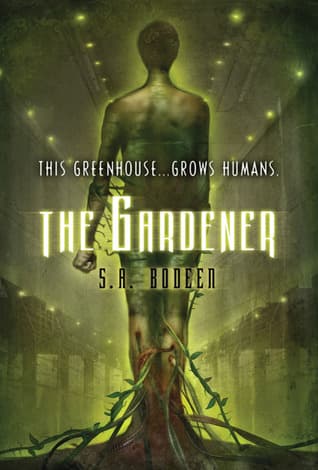
Rabindranath Tagore, S.A. Bodeen (1913)
Genre
Fiction
Reading Time
233 min
Key Themes
See below
Sign in to track this book
A son's quest to find his unknown father uncovers a sinister plot, forcing him to protect a genetically engineered girl from a 'Gardener' who creates human-plant hybrids.
Mason, a teenager living with his mother, Mrs. Miller, who works at the Serenity Hills nursing home, longs for his absent father. His only link to his father is a worn DVD showing a man, whose face is never seen, reading a children's book. One day, at his mother's work, Mason plays this DVD for comatose teenage patients in a special ward. A beautiful, seemingly unresponsive girl named Lily stirs, showing a faint reaction to the video. This response sparks Mason's interest and a connection to Lily, starting a series of events beyond his understanding.
After Lily's first reaction, Mason continues to visit her, playing the DVD and watching her gradual awakening. As Lily slowly regains consciousness and some ability to communicate, she reveals parts of a frightening truth. She explains that she and the other comatose teens are not just sick; they are subjects of a grotesque scientific experiment. They have been genetically engineered into 'autotrophs' – a state where their bodies photosynthesize and sustain themselves without food or water, turning them into human-plant hybrids. This shocking news deeply disturbs Mason, who realizes Lily is in great danger.
The more Lily tells Mason about the 'autotroph' project, the clearer it becomes that Serenity Hills is not a place of healing but a prison for these experimental subjects. Lily's returning awareness makes her a risk to the project's unseen leader. Fearing for her life and wanting to protect her, Mason decides they must escape. He plans their breakout carefully, navigating the nursing home's security, which now seems more sinister. Their escape is tense with narrow misses, but Mason's quick thinking and Lily's desperate will to survive allow them to slip away into the night, becoming fugitives.
Outside Serenity Hills, Mason and Lily find themselves in a dangerous world where they are hunted. They quickly learn their escape has been noticed. Mysterious figures, later identified as operatives working for 'the Gardener,' begin a relentless pursuit. Mason and Lily constantly move, seeking refuge in abandoned buildings, forests, and crowded cities. The stress of being fugitives, along with Lily's unique needs and lingering trauma, creates a difficult existence, forcing Mason to grow up fast and make hard choices to survive.
As Mason and Lily avoid their pursuers, they start to figure out who 'the Gardener' is. Lily's fragmented memories of the experiments, combined with Mason's repeated viewing of the mysterious DVD, begin to show unsettling connections. The voice on the DVD, once comforting, now sounds sinister. Lily remembers parts of conversations and faces that match subtle details Mason sees in the video. A chilling realization slowly dawns on Mason: the man on the DVD, the father he has wanted, might be linked to, or even be, the monster who created Lily – the Gardener.
The evidence becomes clear. Through Lily's recovered memories and a deeper look at the DVD, Mason uncovers the painful truth: his own father is 'the Gardener.' The man who read children's stories on the DVD, the voice he associated with warmth and longing, is the brilliant, yet immoral, scientist behind the autotroph experiments. This revelation shatters Mason's world, turning his lifelong longing for a father into deep betrayal and horror. He deals with the emotional impact of this discovery, understanding that the man he sought is a villain responsible for great suffering.
Mason eventually confronts, or learns through intercepted messages, the Gardener's twisted reasons. His father, a scientific genius, believes humanity is headed for self-destruction due to resource depletion and environmental damage. He sees the autotroph project not as an atrocity, but as humanity's next evolutionary step – a way to create a self-sustaining human species able to survive any ecological disaster. He sees himself as a visionary, a savior, not a monster, completely ignoring the ethical problems and suffering he causes. This warped idealism makes him even more dangerous, as he thinks his cause justifies any method.
As their flight continues, Lily's condition worsens. The autotroph process, while meant for self-sustenance, is unstable and incomplete. She begins to show signs of severe stress, her skin becoming unnaturally pale, and her energy fading. She struggles to keep her human form, sometimes showing more plant-like traits. Mason realizes that the experiment, far from making her immortal, is slowly killing her. He faces a terrible moral problem: if the autotroph process is irreversible and ultimately fatal, what is the most humane thing to do? The very thing that makes Lily unique is also her curse, and Mason worries over her fading life.
The pursuit ends in a direct confrontation between Mason and his father, the Gardener. This meeting is filled with bitter emotion, as Mason deals with the man who is both his father and Lily's tormentor. The Gardener remains unrepentant, arguing for his work's necessity. Mason, seeing Lily's rapid decline, understands she cannot survive in her current state. He must make the final, heartbreaking choice: allow Lily to keep suffering as a failed experiment or act to end her pain, even if it means destroying the person he has grown to care for deeply. This choice means destroying his father's work and, in a way, the last bit of his own connection to his father.
In a climactic, emotional moment, Mason makes his choice. The specific action he takes to destroy the 'autotroph' aspect within Lily, or to end her suffering, is a definitive act of love and mercy. This act also dismantles his father's horrific project, either by destroying key research, revealing it to authorities, or ensuring its termination. The Gardener's work is undone, and his control over the experimental subjects ends. Mason emerges from this ordeal forever changed, scarred by his father's betrayal and the loss he endured, but also stronger from his courage and unwavering commitment to protecting Lily, even if it meant letting her go.
The Protagonist
Mason transforms from a longing boy into a brave, decisive protector, ultimately destroying the very thing he sought in his father.
The Supporting/Love Interest
Lily awakens from a vegetative state, endures the physical and psychological toll of her transformation, and finds solace and protection in Mason before her ultimate fate.
The Antagonist
The Gardener remains steadfast in his twisted vision, never truly repenting, forcing Mason to destroy his life's work.
The Supporting
Mrs. Miller remains a grounding, if sometimes unwitting, maternal figure for Mason, demonstrating unconditional love amidst chaos.
The Mentioned/Supporting
They serve as a persistent, physical threat throughout the pursuit, embodying the Gardener's unwavering determination.
This theme explores the moral dangers when scientific pursuit ignores human compassion and ethics. The Gardener's project, aiming to create 'autotrophs' to 'save' humanity, shows this. His disregard for his test subjects' well-being, turning teenagers into experimental hybrids, illustrates how a grand goal can become monstrous when separated from human principles. The story shows the disastrous results of playing God, where 'progress' leads to suffering and dehumanization, as seen in Lily's tragic state.
“He saw not children, but the future. Not suffering, but necessary evolution.”
Mason's main motivation early in the story is his longing for his unknown father, a search for identity and belonging. The mysterious DVD is his only link, representing a potential connection to his past. However, this search turns dark when his father is the antagonist, forcing Mason to define his identity by his actions and moral choices, not his biological parent. Lily, as an autotroph, also struggles with her identity, being neither fully human nor plant, struggling to belong.
“For years, that voice was a bridge to a man I didn't know. Now, it's a chasm.”
The story is rich with these intertwined themes. Mason's growing love for Lily drives his courageous actions and ultimate sacrifice. He betrays the memory of his idealized father to protect Lily, showing a higher form of love. The betrayal comes from the Gardener, who abandoned Mason and harms others, including Lily, for his twisted vision. Mason's decision to potentially destroy the 'autotroph' aspect within Lily, or end her suffering, is the ultimate act of sacrificial love, prioritizing her peace over his own desires or her continued tormented existence.
“Sometimes, the greatest love is letting go, even when it tears you apart.”
This theme explores the blurred lines between humanity and nature through the 'autotrophs.' The Gardener wants to merge human biology with plant-like self-sustenance, creating an 'unnatural' evolution. The story questions what it means to be human when basic biological needs are changed. Lily's struggle to stay human while her body transforms highlights the conflict. The narrative suggests that altering core human existence, even with 'good' intentions, can lead to monstrous outcomes that diminish, rather than enhance, humanity.
“To become self-sustaining is not to ascend, but to lose the very essence of what makes us live.”
A seemingly innocent artifact that holds the key to the protagonist's past and the antagonist's identity.
The DVD serves as a central MacGuffin and a crucial plot device. Initially, it represents Mason's only tangible connection to his absent father, symbolizing his longing and driving his initial actions. Its seemingly innocuous content—a man reading a children's book—masks a sinister truth. As the story progresses, the DVD becomes a source of clues, its voice and subtle visual details revealing the Gardener's identity. It acts as a powerful symbol of both hope and ultimate betrayal, transforming from a cherished memento into a terrifying piece of evidence.
A unique genetic modification central to the antagonist's plan and the victim's suffering.
The concept of 'autotrophs' is the core speculative element and a primary plot device. It provides the unique horror and scientific premise of the story. This genetic engineering, designed to create self-sustaining human-plant hybrids, is the driving force behind the Gardener's villainy and Lily's tragic condition. It establishes the high stakes, the moral dilemma, and the extraordinary nature of the conflict. The unstable nature of the autotroph process also introduces the ticking clock element as Lily's health deteriorates, forcing Mason's hand.
An ironic and symbolic alias for the antagonist, highlighting his controlling nature.
The antagonist's alias, 'the Gardener,' is a significant plot device, rich with irony and symbolism. A gardener typically nurtures life, but this 'Gardener' manipulates and twists it for his own ends. The name evokes a sense of control over nature and growth, perfectly reflecting his ambition to 'cultivate' a new human species. It also initially obscures his true identity, adding to the mystery, while later highlighting the chilling contrast between the gentle imagery and his ruthless actions. The moniker emphasizes his view of humans as specimens to be managed.
“My life will open in a hundred little buds of delight and send them forth in a shower of beauty when you come, my love.”
— The speaker expresses anticipation for a lover's arrival.
“The world has kissed my soul with its pain, asking for its return in songs.”
— A reflection on the inspiration for poetry and art born from suffering.
“I came to your door in the evening. You were weaving a garland of flowers. I stood by and watched. I did not speak.”
— A quiet observation of a loved one, highlighting unspoken affection.
“You smiled and talked to me of nothing and I felt that for this I had been waiting long.”
— The simple act of communication bringing profound satisfaction.
“My heart, the bird of the wilderness, has found its sky in your eyes.”
— A metaphor for finding belonging and freedom in another's gaze.
“Leave your great lore and your wisdom, and take my hand, for my heart is full.”
— A plea to prioritize emotional connection over intellectual pursuits.
“I have loved her for a thousand years and shall love her for a thousand more.”
— An expression of eternal and timeless love.
“We are the birds of a feather, we are the two shores of the same river.”
— Describing the profound connection and shared destiny of two individuals.
“Love's gift cannot be given, it waits to be accepted.”
— A philosophical insight into the nature of love as a voluntary exchange.
“The night is black, the forest is deep, the road is long.”
— Setting a mood of mystery and journey, often implying a challenge.
“My love, you are the cloud that floats in my life's sky, the one cloud that I cannot leave.”
— A powerful metaphor for an inescapable and pervasive love.
“I have my songs and dreams and my world is in them.”
— A statement about finding solace and reality within one's creative and imaginative life.
“Let your love be like the misty rain, coming softly, but flooding the river.”
— An analogy for a gentle yet powerful and all-encompassing love.
“The flower that has opened knows that it will fade, but it has had its moment.”
— A reflection on the transient beauty of life and the acceptance of impermanence.
Ready to see how well you understood this book? Take our interactive quiz with 10 questions.
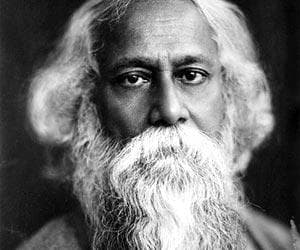
Rabindranath Tagore was a Bengali poet, writer, playwright, composer, philosopher, social reformer and painter. He reshaped Bengali literature and music as well as Indian art with Contextual Modernism in the late 19th and early 20th centuries. Author of the "profoundly sensitive, fresh and beautiful" poetry of Gitanjali, he became in 1913 the first non-European and the first lyricist to win the Nobel Prize in Literature. Tagore's poetic songs were viewed as spiritual and mercurial; however, his "elegant prose and magical poetry" remain largely unknown outside Bengal. He was a fellow of the Royal Asiatic Society. Referred to as "the Bard of Bengal", Tagore was known by sobriquets: Gurudeb, Kobiguru, Biswokobi.

Biography coming soon.

Ashley Antoinette
4.6

Mark McDonald
4.4
Luo Guanzhong
4.4

Mia McKenzie
4.3

Dorothy Parker
4.3

Joaquim Maria Machado de Assis
4.3
James Thurber
4.2
Terry Kay
4.2