“The world needs a new plague, one that will make people remember their humanity.”
— Early in the story, as the implications of the 'immunity' drug become clear.

Genre
Science Fiction
Reading Time
240 min
Key Themes
See below
Sign in to track this book
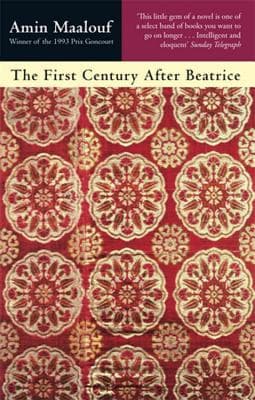
Mysterious beans that skew human birth rates flood Eastern markets. A French entomologist uncovers a plot to disrupt global gender balance, threatening a social crisis.
The unnamed narrator, a French entomologist, first finds the 'Beatrice Bean' (or 'Speranza Bean') in Middle Eastern markets during a research trip. At first, he dismisses it as a local myth, rumored to ensure male births. Intrigued, the narrator gets some samples. Back in France, he begins to study them. His scientific interest soon turns to alarm as he sees the bean's strong and consistent effect on gender in different species. He realizes that if this bean spreads globally, it could greatly change human demographics, leading to a world with a severe imbalance of sexes and major societal problems. This discovery starts his lifelong effort to understand and fight its impact.
Despite the narrator's early warnings to scientists and governments, the Beatrice Bean quickly spreads worldwide, mainly through black markets and word-of-mouth. It is so effective that within a few years, birth statistics in many areas show a strong leaning toward male births. Societies, especially those that prefer sons, readily adopt the bean. This early phase involves quiet desperation among women and a growing, though often unspoken, worry about the future. The narrator watches these changes with increasing dread, feeling helpless as his predictions come true globally.
Decades after the bean's arrival, the demographic shift becomes critical. Women, now a shrinking minority, are called 'Daughters of Beatrice.' Their scarcity makes them almost sacred. They are protected, cared for, and often kept in private, luxurious places, becoming objects of intense desire and social control. The narrator carefully records the social engineering used to manage this new reality. He notes the change from women being objects of male desire to being symbols of a rare, endangered resource. This era begins the 'Great Contraction' of human society, as traditional family structures and social norms break down under the weight of the gender imbalance.
With women becoming rare, most men face a future without female partners or the chance to start families. This causes widespread social unrest, psychological distress, and a rise in male-on-male violence. The narrator describes a world where competition for the few available women grows. Also, a deep sense of loneliness and aimlessness fills male society. Traditional social structures collapse, and new, often oppressive, systems emerge to keep order. The absence of women fundamentally changes daily life, leading to a more sterile, aggressive, and ultimately less lively human existence, as the narrator observes during his extensive travels and research.
Amid the global population crisis, the narrator, despite his scientific understanding of the bean's effects, becomes a father to a daughter, Beatrice. Her birth is a miracle and a source of both joy and great worry for him. He records her unique childhood in a world where girls are incredibly rare and precious. Beatrice grows up aware of her unique status and the responsibilities it brings. Her life becomes a small example of the larger societal changes. The narrator's observations of her experiences offer a deeply personal view of the unfolding disaster. His relationship with Beatrice grounds his otherwise detached scientific observations, adding emotional depth to his story.
As the crisis deepens, a global scientific effort begins to find an antidote or counter-measure to the Beatrice Bean. However, these efforts are mostly unsuccessful. Meanwhile, human society begins to 'contract.' Cities are abandoned, and people move into smaller, more secure, and highly controlled communities, often centered around the remaining 'Daughters of Beatrice.' These communities become self-sufficient, highly regulated places where every part of life, especially reproduction, is carefully managed. The narrator details the social and architectural changes. He highlights the loss of freedom and spontaneity in exchange for perceived security and species preservation.
To protect the remaining women and ensure the species continues, 'Beatrice Reserves' are set up. These are highly secure, often luxurious, compounds where 'Daughters of Beatrice' live under constant watch and protection. Their reproductive cycles are carefully tracked, and mating is arranged scientifically to maximize the chances of female births, though the bean's effects are often permanent. The narrator describes these reserves as both safe places and prisons, where women are revered but also lose their independence. These reserves become humanity's last hope, but also clear symbols of its decline and the extreme measures taken to survive.
The constant focus on survival, along with social and psychological stresses, causes a significant decline in scientific research, artistic expression, and general knowledge outside of immediate needs. The narrator laments the loss of culture and intellectual curiosity as humanity becomes more practical and isolated. Libraries are ignored, universities close, and technological innovation stops. This period is a regression, a 'new Dark Age' where knowledge is less important than the grim task of species preservation. The narrator, a scientist himself, feels this loss deeply, recording the slow erosion of human achievement.
As the narrator ages, he continues to record the history of the 'First Century After Beatrice.' His story becomes more thoughtful, filled with deep sadness and acceptance. He looks back at the initial discovery, the missed chances, and the irreversible changes that have swept the world. He considers humanity's ultimate fate, questioning if the species can truly survive and thrive in such an altered state. His reflections show the deep and lasting impact of a single, seemingly harmless, discovery and humanity's inability to foresee and prevent its disastrous outcomes.
The book ends without a clear solution. Humanity continues to exist, but in a greatly reduced and changed state. The 'Daughters of Beatrice' are still cherished and protected, but their numbers remain very low. The male population, largely without traditional family life, struggles with its identity and purpose. The narrator leaves the reader with deep uncertainty about the future. Will humanity adapt to this new reality, or is it doomed to a slow, painful extinction? The legacy of the Beatrice Bean is not just the gender imbalance, but the fundamental reshaping of human civilization and the haunting question of what it means to be human in such a changed world.
The Protagonist
From a curious scientist, he transforms into a melancholic historian, burdened by the foresight of humanity's self-inflicted wound and the responsibility of bearing witness.
The Supporting
Born into a world where her gender is a burden and a blessing, she navigates her identity as one of the last 'Daughters of Beatrice', symbolizing humanity's precarious future.
The Supporting
She endures the societal shift with quiet strength, dedicating herself to raising her rare daughter amidst a world that increasingly devalues her own gender.
The Mentioned
N/A
The Supporting
From ordinary citizens, they become a precious, endangered species, their individual identities subsumed by their collective role as the bearers of humanity's future.
The Supporting
They witness the erosion of traditional society and must adapt to a life largely devoid of female companionship, often leading to psychological distress and social fragmentation.
A main theme is how a small discovery or cultural practice can cause huge, permanent global changes. The Beatrice Bean, initially a local myth, quickly leads to the collapse of human civilization as we know it. The narrator's early warnings are ignored, showing humanity's lack of foresight and inability to understand long-term consequences. This theme appears in the bean's rapid spread, the slow but deep demographic shift, and the eventual societal decay. All this results from not foreseeing and controlling a powerful biological agent. The world shows what happens when a strong force is unleashed without understanding its full impact.
“What had started as a whisper in a distant market had become a roar that deafened the world.”
The novel explores how gender imbalance profoundly changes society, values, and human relationships. As women become rare, their status shifts from individuals to precious resources, leading to both protection and subjugation. The male-dominated world struggles with loneliness, increased aggression, and a loss of cultural vibrancy. The book questions the roles of men and women in society and how their balance is vital for human well-being. It shows how the absence of one gender can break down traditional family structures, create new forms of control, and redefine what it means to be human. The 'Daughters of Beatrice' symbolize a lost balance.
“In a world without women, men became both kings and prisoners, ruling over a kingdom that offered no solace.”
As humanity deals with the population crisis, individual freedoms are given up for the perceived survival of the species. The 'Daughters of Beatrice' are isolated in reserves. Their lives and reproductive choices are carefully managed. Even men lose agency, their lives dictated by the scarcity of women and the need for social control. The novel shows a world where the need to survive creates a highly regulated, almost totalitarian, existence. This theme is clear in the 'Great Contraction' of society, the abandonment of cities, and the strict rules for reproduction. All these reflect a desperate attempt to impose order on a world losing control, at the cost of personal liberty.
“Security became the only freedom, and even that was a cage.”
Maalouf illustrates how quickly a seemingly stable civilization can fall apart when faced with a basic biological disruption. The novel depicts the rapid decline of culture, art, science (beyond survival research), and general social unity. Cities are abandoned, knowledge is lost, and humanity retreats into smaller, more primitive groups. This theme highlights that civilization is not permanent. It is a delicate structure, depending on many factors, including basic population stability. "The First Century After Beatrice" warns how easily human achievements can be eroded and how quickly societies can regress under extreme pressure. It reveals the thin layer of order over chaos.
“The libraries crumbled, not from war, but from disinterest, for what use were old stories in a world fighting for its very next generation?”
The story is told through the eyes of the entomologist who discovers the bean, providing a personal yet scientific perspective.
The unnamed entomologist serves as the primary narrator and chronicler of the 'First Century After Beatrice.' This first-person perspective allows for both scientific detachment in observing global trends and deeply personal insights into the crisis, especially through his relationship with his daughter, Beatrice. His role as a scientist lends credibility to the initial discovery and the subsequent analysis of demographic data, while his personal journey adds an emotional weight to the unfolding tragedy. He is not just telling a story; he is documenting a century-long, world-altering event, giving the narrative an almost historical, journalistic quality.
A mysterious bean that guarantees male births, acting as the central catalyst for all plot developments.
The Beatrice Bean itself is the ultimate plot device. It functions as a catalyst, sparking the entire chain of events without its exact scientific mechanism needing to be fully explained. While it has a clear, specific effect (ensuring male births), its true purpose is to drive the narrative and explore the resulting societal implications. It is a 'soft' MacGuffin in that it is central to the plot, but its mystery is less important than its consequences. Its existence is the sole reason for the world's transformation, making it the most critical element in the novel's speculative premise.
The novel projects a grim future based on a single, altered biological variable.
The entire narrative is built upon the speculative premise of a single biological alteration—the Beatrice Bean's effect on gender ratios. This allows the author to explore a dystopian future that serves as a cautionary tale. The device of speculative fiction enables the examination of profound social, ethical, and biological questions without being constrained by contemporary reality. The future depicted is bleak, characterized by a loss of freedom, cultural decay, and a fundamental reshaping of human relationships, all stemming from this one altered variable, forcing readers to consider the fragility of their own world.
A metaphorical and literal shrinkage of human society and settlement.
The 'Great Contraction' is both a literal and metaphorical plot device. Literally, it refers to the abandonment of vast territories and the consolidation of human populations into smaller, more manageable enclaves, often around 'Beatrice Reserves.' Metaphorically, it signifies the shrinkage of human experience, culture, freedom, and ambition. This device illustrates the profound impact of the demographic crisis on human civilization, showing how a world once expansive and diverse becomes insular and limited. It emphasizes the regression of society and the narrowing of human potential in the face of an existential threat.
“The world needs a new plague, one that will make people remember their humanity.”
— Early in the story, as the implications of the 'immunity' drug become clear.
“Every generation believes it is the last, and yet life always finds a way to continue.”
— Reflecting on the cyclical nature of human existence despite looming crises.
“We were so busy trying to conquer death that we forgot how to live.”
— A central theme regarding the consequences of the immunity drug.
“The greatest freedom is not to be immortal, but to choose one's own end.”
— Discussing the philosophical implications of indefinite lifespan.
“Ignorance is not bliss when it leads to the destruction of all that is known.”
— Observing the societal decline due to unchecked scientific advancement.
“A world without children is a world without a future, no matter how long its inhabitants live.”
— Highlighting the demographic crisis caused by the immunity drug.
“Hope, like a virus, can be dormant for a long time, but it never truly dies.”
— As characters cling to the possibility of a solution or change.
“The true measure of a civilization is not how long its people live, but how well they live.”
— A critique of the society that prioritized longevity over quality of life.
“Sometimes, the greatest discoveries are those that reveal our own limitations.”
— Reflecting on the hubris of scientific ambition.
“The past is not dead; it is merely waiting for us to remember it.”
— As characters delve into history for answers or understanding.
“Fear can make us do things that hope never could, both good and terrible.”
— Examining the motivations behind people's actions in a crisis.
“Love, in its purest form, is the ultimate act of defiance against the void.”
— Discussing the enduring power of human connection amidst despair.
“The illusion of control is often more dangerous than true chaos.”
— Commenting on the false sense of security provided by the immunity drug.
“A lie repeated often enough becomes the truth, especially when people desperately want to believe it.”
— Referring to the widespread acceptance of the immunity drug's benefits without questioning its costs.
Ready to see how well you understood this book? Take our interactive quiz with 10 questions.

Amin Maalouf is a Lebanese-French author known for his historical novels that explore cultural identity and the intersection of civilizations. His notable works include 'The Gardens of Light,' 'Leo Africanus,' and 'The Crusades Through Arab Eyes,' which offer profound insights into historical events and diverse perspectives. Maalouf's writing is celebrated for its lyrical prose and deep engagement with complex themes.