“The Fat Woman Next Door Is Pregnant.”
— The title of the book, often repeated by characters or in their thoughts, representing the central mystery and focus of the neighbourhood.

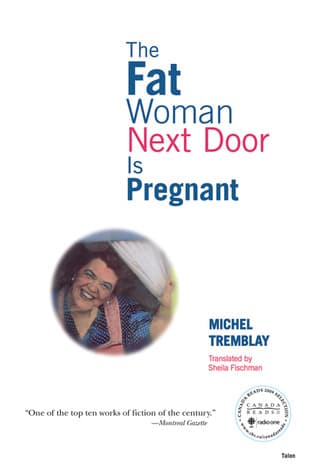
Michel Tremblay (1992)
Genre
Fiction
Reading Time
250 min
Key Themes
See below
Sign in to track this book
In 1942 Montreal, as spring awakens, seven pregnant women in a working-class neighborhood navigate love, loss, and history, while unseen Fates knit the future of a nation from an empty house next door.
The story begins on May 2, 1942, in Montreal's Plateau Mont-Royal neighborhood. Spring is arriving, and the atmosphere is hopeful. The narrator introduces the main idea: seven women on Rue Fabre are pregnant. Among them is "the fat woman," Albertine, who is carrying a child conceived in love. The story also introduces the mysterious house next door, where the "fates"—Rose, Mauve, Violet, and their mother Florence—live. They are seen only by those in distress and are always knitting booties, symbolizing the creation of new lives and a new nation. This sets the scene for a day full of the intertwined lives, worries, and small joys of the working-class Francophone community.
Albertine, the main character, starts her day feeling content, despite the physical discomforts of her advanced pregnancy. She loves her husband, Édouard, and their unborn child is a great source of joy and excitement for her. Her morning routine includes small household tasks and moments of thinking about her life, her family, and her unique position as the only one among the seven pregnant women whose child is truly wanted and loved by both parents. She watches her neighbors and family come and go, offering a look into the busy life of the household and the street.
The story then introduces Victoire, Albertine's sister, who is also pregnant but resents her husband, Gabriel, and her situation. Her pregnancy is unwanted, a source of bitterness and a sign of her trapped life. At the same time, Thérèse, another neighbor, deals with her own difficult pregnancy and the harsh realities of her life. Her husband is away at war, leaving her feeling alone and burdened. These different experiences immediately show the range of emotions around pregnancy in the community, with Albertine's joy standing out among the widespread despair and resignation.
As the day goes on, one character, overwhelmed by personal struggles, briefly sees the mysterious women next door. This encounter, described as ethereal, highlights the supernatural element woven into daily life. The 'fates'—Rose, Mauve, Violet, and Florence—are seen knitting, their actions symbolizing the predetermined, yet also actively created, destinies of the community's future generation. This moment reminds the reader of the larger, almost mythical forces at play in the lives of these ordinary people.
The story also explores the perspectives of the men in the community. Édouard, Albertine's husband, is shown to be loving and supportive, looking forward to their child's birth. In contrast, Gabriel, Victoire's husband, is shown as uncaring, adding to his wife's unhappiness. Other men, away at war or dealing with their own problems, are also briefly mentioned, showing the varied male reactions to fatherhood and their wives' pregnancies. Their worries about supporting their families and the pressures of wartime life add another layer of complexity to the community's shared experience.
Throughout the day, various family members gather at Albertine's house, which is a central place for the extended family. These gatherings are full of lively talks, gossip, and the sharing of troubles and small joys. The women discuss their pregnancies, their husbands, and the difficulties of their lives in wartime Montreal. These interactions show the deep social dynamics, the Church's influence, and the widespread feeling of being a 'colonized people'—abandoned by France, conquered by England, and exploited by their own institutions. The house becomes a small example of their shared history and struggles.
World War II affects the characters' lives. Husbands are away fighting, resources are scarce, and an underlying anxiety fills the community. The war is not just a distant event but a personal reality that shapes their daily choices, their fears for the future, and their sense of national identity. The characters often express resentment about being forced into a war that supports powers they feel have historically oppressed them, showing the complex political and social situation of Quebec during this time.
As the day ends, various characters feel a deep acceptance of their fates, especially those whose pregnancies are unwanted or whose lives feel restricted. However, mixed with this despair are small, touching moments of hope. Albertine's steady joy for her unborn child is a bright spot, and even in hardship, there are instances of human connection, resilience, and lasting love. The women, despite their suffering, find strength in their shared experiences and community bonds.
As evening falls on Rue Fabre, the mysterious women in the house next door—Rose, Mauve, Violet, and Florence—are still seen, though briefly, continuing their endless knitting. Their persistent, silent work highlights the novel's allegorical layer, suggesting that the destinies of these new children, and by extension, Quebec's future, are being carefully made. Their presence is a constant, subtle reminder of the larger forces at play, watching and shaping the lives of the ordinary people in the neighborhood, even as those lives unfold with all their human drama.
May 2 concludes, and the characters go back to their homes, each thinking about their individual situations and the collective future. Albertine, still happy with the thought of motherhood, finds peace in her love for Édouard and their child. The other women, though burdened, continue on, their pregnancies symbolizing both their personal struggles and life's ongoing cycle. The day, filled with ordinary events and deep emotions, sets the stage for the births of a new generation, hinting at the long-term impact these children will have on the community and the nation.
The Protagonist
Albertine remains largely consistent, serving as a stable point of love and hope, representing an ideal of fulfilled motherhood.
The Supporting
Édouard's character remains steadfast in his love and support for Albertine, embodying a stable and positive masculine presence.
The Supporting
Victoire's arc is marked by her ongoing struggle with resentment and a lack of fulfillment, highlighting the difficulties faced by women in her era.
The Supporting
Gabriel remains a static character, symbolizing male indifference and contributing to Victoire's stagnant unhappiness.
The Supporting
Thérèse's arc is one of enduring hardship and quiet resilience in the face of wartime separation and personal burden.
The Allegorical/Mentioned
They remain enigmatic and timeless, serving as allegorical figures rather than developing characters.
The Supporting
Cécile remains a consistent source of social commentary and communal interaction, a pillar of the neighborhood's social fabric.
The Mentioned
Functions as a symbolic anchor to the past, his 'arc' is historical rather than personal.
The novel explores the many sides of motherhood in a specific historical context. It contrasts Albertine's joyful anticipation with the resentment of other pregnant women like Victoire and Thérèse. This theme shows how societal expectations, economic hardship, and personal relationships shape a woman's experience of pregnancy and raising children. The unwanted pregnancies highlight the lack of control many women felt, while Albertine's experience offers a glimpse of an idealized, though rare, joy, seen in her quiet contentment during her morning routine.
“Only Albertine, the fat woman, is bearing a child of true love and affection.”
A widespread theme is the feeling of being a 'colonized people' among the Francophone Quebecois. The story directly mentions being 'abandoned and mocked by France; conquered and exploited by England; abused and terrorized by the Church; and forced into a war by Canada.' This historical background shapes the characters' views, their resentments, and their sense of identity. The war itself becomes a symbol of this forced control, as characters express anger at fighting for powers they feel have historically oppressed them, as discussed during family gatherings.
“More than a symbol of a colonized people: abandoned and mocked by France; conquered and exploited by England; abused and terrorized by the Church.”
The mysterious 'fates'—Rose, Mauve, Violet, and Florence—who are always knitting booties, add an allegorical element about destiny. Their unseen, yet felt, presence suggests that the future of the children, and indeed the 'new nation,' is being woven by forces beyond individual control. However, the vivid human dramas of the characters, their choices, loves, and resentments, also highlight the struggle for personal control within these predetermined paths, creating a tension between what is fated and what is freely chosen, especially when a character sees the Fates.
“The fates... are knitting the booties of what will become the children of a whole new nation.”
The novel clearly shows a close-knit, working-class Montreal community on Rue Fabre, where families are extended and neighbors are deeply involved in each other's lives. This communal aspect provides support, gossip, and shared experience, as seen in the family gatherings. However, within this setting, characters also feel deep isolation, especially women like Victoire and Thérèse, who feel alone in their struggles. This duality shows how even in a crowded environment, individual emotional burdens can create deep personal solitude.
“Next door to the home that is by times refuge, asylum, circus-arena, confessional and battleground to her extended family...”
Mysterious women who symbolize the weaving of destiny.
The characters of Rose, Mauve, Violet, and Florence, the 'fates' living in the house next door, function as powerful allegorical figures. They are rarely seen and only by those in emotional distress, and their constant knitting of booties symbolizes the weaving of individual destinies and the future of the Quebecois nation. This device introduces a mythical layer to the otherwise realistic narrative, suggesting that the characters' lives are part of a larger, almost predetermined, tapestry, connecting personal struggles to national fate.
The juxtaposing of wanted and unwanted pregnancies to highlight diverse experiences.
The central premise of seven pregnant women, with only Albertine's being a 'child of true love and affection,' serves as a key plot device. This direct contrast immediately establishes the spectrum of experiences surrounding motherhood—from profound joy to deep resentment and burden. By juxtaposing Albertine's contentment with Victoire's bitterness and Thérèse's quiet struggle, the novel effectively explores the multifaceted social, emotional, and economic factors that shape women's lives and their relationship to their children, making each pregnancy a distinct narrative thread.
A fixed point in time that grounds the narrative in historical context.
Setting the entire narrative on a single, specific day—the second of May, 1942—is a crucial plot device. This precise historical anchoring allows the author to imbue the daily lives of the characters with the palpable atmosphere of wartime Montreal, including rationing, absent husbands, and the pervasive sense of a 'colonized people.' It creates a snapshot of a particular moment in history, making the personal dramas resonate with larger social and political forces. The limited timeframe also intensifies the focus on the immediate experiences and emotions of the characters.
A symbolic space representing destiny and the unseen forces at play.
The 'immaculately kept but seemingly empty house' next door, inhabited by the Fates, functions as a symbolic space within the narrative. It is a place of mystery and allegory, a constant, subtle reminder of the larger, unseen forces that influence the characters' lives. Its proximity to Albertine's bustling family home creates a powerful juxtaposition between the mundane, lived reality of the community and the ethereal, mythical forces shaping their collective destiny. It serves as a visual and conceptual anchor for the theme of fate.
“The Fat Woman Next Door Is Pregnant.”
— The title of the book, often repeated by characters or in their thoughts, representing the central mystery and focus of the neighbourhood.
“It was stifling, and the smell of boiled cabbage hung heavy in the air.”
— Describing the oppressive summer heat and common household smells in the Montreal neighbourhood.
“Everyone knew everything about everyone else, and nothing was ever truly private.”
— Reflecting on the lack of privacy and constant gossip in the close-knit, working-class community.
“The heat made people do strange things, think strange thoughts.”
— A recurring observation about how the oppressive summer weather affects the characters' behavior and mental state.
“She spent her days watching, just watching, from behind her curtains.”
— Describing one of the many neighbours who are constantly observing the activities of others.
“Life was a series of small, repetitive acts, punctuated by the occasional scandal.”
— A cynical view of daily life in the neighbourhood, highlighting its monotony and the excitement brought by gossip.
“Children were everywhere, like flies, buzzing with their secrets and games.”
— Describing the omnipresence of children in the crowded streets and their own world of play and secrets.
“The silence was almost louder than the noise, when it finally came.”
— Referring to moments of quiet introspection or anticipation amidst the usual clamour of the neighbourhood.
“She longed for something to happen, anything, to break the endless sameness.”
— Expressing a character's deep desire for change or excitement in their monotonous life.
“The weight of the unsaid words hung heavy in the air between them.”
— Highlighting the unspoken tensions and secrets that often exist between characters.
“Everyone had a story, even if they didn't know how to tell it.”
— A reflection on the rich inner lives and untold narratives of seemingly ordinary people.
“The sun beat down, turning the asphalt into a shimmering mirage.”
— Evoking the intense summer heat and its effect on the urban landscape.
“A good secret was like a good meal: to be savored, shared sparingly.”
— A character's cynical view on the value and handling of gossip and secrets.
“They lived on memories and expectations, more than on the present moment.”
— Describing how characters often dwell on the past or future, rather than fully engaging with their current reality.
Ready to see how well you understood this book? Take our interactive quiz with 10 questions.

Biography coming soon.

Ashley Antoinette
4.6

Mark McDonald
4.4
Luo Guanzhong
4.4
Mia McKenzie
4.3
Dorothy Parker
4.3

Joaquim Maria Machado de Assis
4.3

James Thurber
4.2

Terry Kay
4.2