“It was in that way that I had come to the house, and to the cottage, and to this room, and to this table, and to the window, and to the knowledge of the world outside.”
— The narrator reflecting on his journey and settling into the cottage.

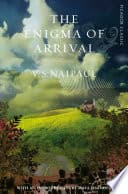
V. S. Naipaul (2020)
Genre
Fiction
Reading Time
840 min
Key Themes
See below
Sign in to track this book
A Caribbean Indian writer moves to post-imperial England, exploring identity and belonging as he observes the gradual changes around him and finds his voice.
The narrator, an unnamed Trinidadian writer of Indian descent, moves to rural Wiltshire, England, looking for a quiet place to write. He rents a cottage on a large, somewhat rundown estate owned by a reclusive man named Mr. Bray. His first impressions are of the English landscape—its old trees, subtle seasonal changes, and the remnants of a past grandeur that is slowly fading. He watches the daily routines of the few remaining estate workers, like the gardener, Jackson, and begins to feel the weight of history and the cycles of life and decay. This period marks his conscious effort to separate from his past and immerse himself in a new environment, hoping it will help his creative growth.
Over time, the narrator becomes a keen observer of the estate's slow decline. The grand house, once a symbol of wealth, remains mostly empty, its gardens overgrown. He notices the aging of Mr. Bray, the owner, and the shrinking number of staff. The estate, once a self-contained world, is slowly being affected by modernity and changing economics. This observation of decay is not just physical; it also reflects the erosion of a particular English class structure and way of life. The narrator finds a strange parallel between this decline and his own journey of shedding old identities to create a new one.
Jackson, an elderly local man, is the estate's main gardener, maintaining a small, orderly patch amidst the growing wildness. The narrator often watches Jackson work, noting his dedication, quiet strength, and deep connection to the land. Through Jackson, the narrator learns about rural English life, the challenges of working the land, and the simple dignity of manual labor. Jackson's life, rooted in tradition and the cycle of seasons, contrasts with the narrator's more transient existence. Their interactions, though brief, establish a sense of continuity and the ongoing human effort to cultivate and maintain order.
A neighboring cottage, previously empty, is eventually occupied by a young couple, Mr. and Mrs. Phillips, who bring a new, more modern energy to the quiet estate. They are city people, somewhat out of place in the old rural setting, and their presence introduces a different view of life and ambition. The narrator observes their struggles and hopes, their attempts to renovate their cottage, and their eventual departure. Their story, though short, highlights the temporary nature of modern life and the constant movement of people in and out of traditional spaces, further emphasizing the theme of change and impermanence.
The elusive Mr. Bray, the estate owner, is a figure of quiet solitude. The narrator gradually learns about his life—his military past, his family history, and his retreat from the world after a personal tragedy involving his sister. Bray embodies the fading aristocratic class, holding onto a legacy that is slowly crumbling. His eventual decision to sell the estate and move away is a significant moment. This departure signifies the final end of traditional estate life and the close of an era, leaving the narrator to face an even more radically changed landscape and future.
Throughout his time on the estate, the narrator is constantly engaged in his writing. He thinks deeply about his process, his struggle to find his voice, and his relationship with the English language, which is both his tool and a symbol of his colonial past. He grapples with writing about his Caribbean origins from an English perspective, and the difficulty of turning his experiences into universal themes. His journey as a writer is linked to his physical journey and psychological change, as he tries to reconcile his different identities and find a coherent story for himself and his work.
After Mr. Bray sells the estate, the narrator must move from his original cottage. He finds another, slightly larger cottage nearby, which represents a new chapter in his life and work. This move is not just a change of physical location but also a psychological shift, a breaking away from the immediate shadow of the decaying estate. The new cottage offers a different viewpoint, allowing him to observe new neighbors and a different part of rural life, further expanding his understanding of England and its people. It signals a renewed sense of purpose and a fresh perspective on his ongoing literary endeavors.
As the narrator settles into his new cottage, his observations extend beyond the estate. He interacts more with the local villagers, shopkeepers, and other residents, gaining a richer understanding of contemporary English society. He notes the influx of new people, the changing social dynamics, and the subtle shifts in national identity. These encounters give him a more nuanced view of England, moving beyond his initial, more romanticized or melancholic perceptions, and allow him to integrate more fully into the country, while still maintaining his distinct observer's perspective.
The book's title, inspired by Giorgio de Chirico's painting, 'The Enigma of Arrival,' becomes a central metaphor. The narrator revisits his interpretation of the painting—a solitary figure arriving in a classical, yet unsettling, landscape. He realizes that his own 'arrival' in England was not a single event but a long process of understanding, adaptation, and self-discovery. This understanding culminates in a deep personal insight about his identity as a writer and as an individual. He recognizes that true arrival is not just physical presence but a deep internal assimilation and the creation of a new self in a new place, acknowledging the continuous nature of change.
Towards the end of the story, the narrator reflects on themes of death, loss, and the inevitable cycle of life and death. He observes the passing of some of the people he knew on the estate, including Jackson, and considers the temporary nature of human existence and the lasting power of the land. These reflections are not morbid but rather a deep acceptance of the natural order. He realizes that while individuals pass, the landscape endures, though transformed. This contemplation brings a sense of peace and a deeper appreciation for life's beauty and fragility, solidifying his 'arrival' into a mature understanding of the world.
The Protagonist
From an uncertain immigrant seeking a place to write, he evolves into a mature writer who has found his voice and a deep, if complex, sense of belonging and understanding in England.
The Supporting
He begins as a reclusive guardian of a decaying legacy and ends by relinquishing his hold on the estate, signifying the end of an era.
The Supporting
He remains a constant, unchanging figure, representing the enduring cycle of life and labor, until his peaceful death.
The Supporting
They arrive with ambition and leave, illustrating the impermanence of modern life and aspirations.
The Mentioned
Her role is to remain a constant link to the narrator's past, providing a stable point of reference.
The Supporting
He steps into the role of gardener, symbolizing the continuation of life and labor despite the passing of the old generation.
The Supporting
They provide a new set of observations for the narrator in his second phase of residence.
The main theme explores the many sides of 'arrival'—not just as a physical move, but as a continuous process of understanding, adapting, and self-discovery. The narrator, an outsider in England, deals with his identity as a West Indian writer in a post-colonial setting. His journey involves letting go of old selves and building a new one, shaped by his observations and writing goals. The 'enigma' lies in the elusive nature of truly belonging and the realization that arrival is never a fixed state but an ongoing internal and external negotiation. This is clear in his constant self-reflection and analysis of his feelings of being both present and detached.
““The journey was over; the arrival was the beginning of the enigma.””
The novel is deeply influenced by the theme of decay and renewal, especially as seen through the Wiltshire estate. The narrator carefully documents the physical deterioration of the grand house, the aging of Mr. Bray and Jackson, and the slow erosion of traditional English rural life. This decay is not presented as purely sad but as part of a natural cycle, leading to new forms of life and social structures. The seasonal changes, plant growth, and the eventual re-inhabitation of the land by new people all signify renewal. This theme highlights the impermanence of human creations against the enduring, yet ever-changing, natural world.
““The greater the decay, the greater the beauty; and the more complete the ruin, the more beautiful it was.””
Observation is both how the narrator primarily exists and the essential tool for his writing. He is a careful observer, detailing the small parts of the landscape, his neighbors' habits, and the subtle shifts in social dynamics. This intense observation is not passive; it is an active process of understanding and interpretation, which then directly feeds into his writing. Writing itself becomes a way to make sense of his experiences, order the world's chaos, and build his own identity. His literary journey is closely linked to his ability to see and describe what he sees.
““To be a writer, it was not enough to write. One had to see, to learn, to understand.””
Although set in England, the novel consistently addresses the legacy of colonialism and its impact on the narrator's identity. As a West Indian of Indian descent, he carries the history of empire within him, influencing his perception of England and his relationship with the English language. He reflects on the psychological effects of being educated in a colonial system and the challenge of finding an authentic voice that goes beyond his colonial past. His 'arrival' in England is also an arrival into the heart of the former empire, forcing him to reconcile his inherited history with his present reality. This theme is often subtly explored through his internal thoughts and his nuanced observations of English society.
““I had come from a place where the past was a blur, to a place where the past was a presence.””
Nature, particularly the English landscape and its seasonal changes, plays a key role in the novel, serving as a constant background and a source of deep reflection for the narrator. The old trees, changing light, and cycles of growth and decay in the garden—all are carefully described and give the story a sense of timelessness and continuity. The narrator finds comfort and inspiration in nature, seeing in it metaphors for human life, change, and resilience. The human characters, like Jackson the gardener, are often deeply connected to the land, their lives reflecting its rhythms and challenges, highlighting the lasting connection between humanity and the natural world.
““The seasons were the story, a story that was always repeating itself, yet always new.””
The story is told by the narrator looking back on his experiences, allowing for deep introspection.
The novel employs a first-person retrospective narration, where the unnamed protagonist recounts his experiences and observations in rural England over many years. This device allows for a highly introspective and analytical tone, as the narrator processes events and feelings long after they have occurred. It enables the exploration of themes like memory, the passage of time, and the subjective nature of understanding. The narrator's mature voice provides layers of reflection and philosophical insight, shaping the reader's perception of his 'arrival' as a complex, ongoing process rather than a singular event.
The decaying Wiltshire estate symbolizes the decline of the old English order and the nature of change.
The Wiltshire estate, with its grand but decaying manor house, overgrown gardens, and dwindling staff, serves as a powerful symbol throughout the novel. It represents the fading glory of the old English aristocratic class, the decline of traditional ways of life, and the inexorable march of time. Its physical deterioration mirrors broader societal changes, providing a microcosm through which the narrator observes themes of decay, loss, and the cyclical nature of human endeavors. The estate's eventual sale and transformation further emphasize the impermanence of structures and the constant flux of history.
Giorgio de Chirico's 'The Enigma of Arrival' provides a central metaphor for the narrator's journey.
Giorgio de Chirico's painting, 'The Enigma of Arrival,' is not just the novel's title but a profound metaphorical device. The narrator frequently returns to his interpretation of the painting – a solitary figure arriving in a classical, yet unsettling, landscape. This image encapsulates his own experience of arriving in England: a sense of both familiarity and alienation, of an ongoing, unresolved process rather than a definitive endpoint. The painting's enigmatic quality mirrors the narrator's own search for meaning and understanding in his new environment, highlighting the elusive nature of 'arrival' and the continuous process of self-discovery.
Meticulous sensory details and observations immerse the reader in the narrator's experience.
Naipaul's use of detailed observation and rich sensory description is a key plot device. The narrator meticulously describes the changing seasons, the specific flora and fauna of the English countryside, the physical appearance of people, and the sounds and smells of his surroundings. This level of detail not only grounds the narrative in a tangible reality but also reflects the narrator's intense engagement with his environment. It allows the reader to experience the world through his highly perceptive eyes, emphasizing the theme of observation as a means of understanding and a foundation for his literary craft. This precision makes the abstract themes more concrete and relatable.
“It was in that way that I had come to the house, and to the cottage, and to this room, and to this table, and to the window, and to the knowledge of the world outside.”
— The narrator reflecting on his journey and settling into the cottage.
“The past was to be a great weight, a great burden, but it was also to be a great resource, a great comfort.”
— The narrator contemplating the influence of his personal and cultural past.
“But the past was not to be repeated. The past was to be understood, and then put away.”
— A reflection on how to deal with the past without being trapped by it.
“The world was always the same, but I was always changing.”
— Observing the unchanging landscape while acknowledging personal evolution.
“The people I had known were gone. The places I had known were changed. And I myself was changed.”
— Musing on the passage of time and its effect on people and places.
“I had come to a place where I was at peace, a place where I could be myself.”
— The narrator finding solace and authenticity in his new rural environment.
“The novel was the sum of all my experience, all my observation, all my knowledge.”
— Reflecting on the nature of his writing and the book itself.
“My life had been a series of arrivals, and each arrival had been a kind of death.”
— A poignant reflection on the cyclical nature of new beginnings and endings.
“The enigma was not of the arrival, but of the arrival's continuing, the process of living.”
— Clarifying the central theme of the book, focusing on the ongoing experience of life.
“To be able to possess the land, not just to look at it, but to possess it, to feel it as one's own, was a new kind of satisfaction.”
— Experiencing a deep connection and sense of ownership over the English landscape.
“The past had been abolished. There was only the present, and the future.”
— A moment of feeling liberated from the past's grip, focusing on the immediate and what's to come.
“The world had become strange, because I had become strange to it.”
— Reflecting on how personal change can alter one's perception of the familiar world.
“I had come to see that the world was not what I had imagined it to be. It was something else, something more complex, something more mysterious.”
— A realization about the complexity of life and reality as opposed to preconceived notions.
“My own past was now something that could be looked at, examined, understood, but not relived.”
— A mature perspective on one's personal history, seeing it as an object of study rather than an ongoing experience.
Ready to see how well you understood this book? Take our interactive quiz with 10 questions.
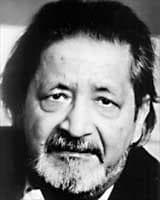
Sir Vidiadhar Surajprasad Naipaul was a Trinidadian-born British writer of works of fiction and nonfiction in English. He is known for his comic early novels set in Trinidad, his bleaker novels of alienation in the wider world, and his vigilant chronicles of life and travels. He wrote in prose that was widely admired, but his views sometimes aroused controversy. He published more than thirty books over fifty years.

Ashley Antoinette
4.6

Mark McDonald
4.4
Luo Guanzhong
4.4

Mia McKenzie
4.3
Dorothy Parker
4.3

Joaquim Maria Machado de Assis
4.3

James Thurber
4.2

Terry Kay
4.2