“If a man has no talent, he had better not be born into this world; but if he has talent, he should not be born into the world either.”
— A reflection on the bittersweet nature of talent and life.

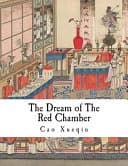
Cao Xueqin (2010)
Genre
Fiction
Reading Time
20-30 hours (for 992 pages, depending on reading speed)
Key Themes
See below
Sign in to track this book
An 18th-century Chinese aristocratic family faces love, duty, and decline in a poignant story set in their grand, yet secluded, world.
The story begins with a sentient Stone, left behind by the goddess Nüwa after she repaired the heavens, expressing its sadness. A Buddhist monk and a Taoist priest, Vanitas and Credulity, appear and offer to take the Stone to the mortal world to experience human life. They turn it into a piece of jade, which will be born into an important family. This celestial opening sets up the supernatural origins of the main character, Jia Baoyu, and hints at the temporary and illusory nature of human life that will follow. The Stone's wish for worldly experience sets the stage for the human drama within the Jia family, connecting their fate to a divine plan.
Jia Baoyu, the main character, is born into the wealthy Jia household, specifically the Rongguo Mansion, with a luminous piece of jade in his mouth, fulfilling the Stone's prophecy. He is spoiled and raised among many female relatives and maids, becoming sensitive and unconventional. Soon after, his frail, intelligent, and sad cousin, Lin Daiyu, whose mother (Baoyu's aunt) has died, comes to live with the Jia family. Her arrival marks a key moment, as she and Baoyu form a deep, complex, and fated connection. This connection is marked by mutual understanding, artistic feeling, and unspoken longing, setting the stage for their tragic romance.
To welcome Imperial Consort Yuan, Baoyu's older sister, during her rare visit home, the Jia family begins the large and expensive project of building the Grand View Garden (Daguan Yuan). This magnificent garden, with its beautiful landscapes, pavilions, and literary references, becomes the main home for Baoyu, Lin Daiyu, Xue Baochai, and their other female cousins and maids. It is a safe place and a small world of their refined, protected lives, where they write poetry, have intellectual discussions, and experience the joys and sorrows of youth. The garden represents the family's highest point of wealth and the perfect, yet fragile, life of its young residents.
A complex love triangle forms among Jia Baoyu, Lin Daiyu, and Xue Baochai. Baoyu and Daiyu share a deep spiritual and intellectual bond, seeing each other as soulmates, but their relationship often has misunderstandings, jealousy, and Daiyu's deep insecurities. Xue Baochai, Daiyu's cousin, is outwardly more calm, practical, and socially skilled. She is the ideal Confucian woman. While Baoyu admires her qualities, his heart truly belongs to Daiyu. The family, especially Baoyu's grandmother and mother, prefer Baochai as a wife because she is more suitable, creating an underlying tension that drives much of the story and hints at future heartbreak.
Underneath the luxury and grandeur, the Jia family's wealth begins a slow but steady decline. Lavish spending, corruption among servants, and poor management of estates lead to growing financial problems. Internal conflicts and moral decay also become clearer. Jia Lian, Baoyu's cousin, is involved in illegal affairs and financial schemes, while his wife, Wang Xifeng, though capable and clever, is also ruthless and contributes to the family's moral decline through her manipulative actions. These growing problems hint at the inevitable fall of the once-powerful household, reflecting how worldly wealth and power are temporary.
Lin Daiyu's already delicate health gets much worse, made worse by her deep emotional distress over her uncertain future with Baoyu and her feeling of isolation. Her poetic sensitivity becomes even sadder, often shown through her laments and the famous 'Burying Flowers' scene, where she mourns fallen blossoms, seeing them as a metaphor for her own fading beauty and life. Her coughing fits become more frequent, and her general weakness increases, signaling her coming death and adding a sad urgency to her unspoken love for Baoyu, as the family quietly prepares an arranged marriage for him.
In a cruel turn of events, the Jia family, especially Baoyu's grandmother and mother, decide to arrange his marriage to Xue Baochai. They believe she is a better match for the family's future and hope to cure Baoyu's sadness. They plan a 'swapping of the brides' scheme, where Baoyu is led to believe he is marrying Daiyu, only to find on his wedding night that his bride is Baochai. Overwhelmed by betrayal and heartbreak, and with her illness at its worst, Lin Daiyu dies tragically, burning her poems and letters. This symbolizes the destruction of her love and hopes, while Baoyu is left in shock and despair.
The long-expected downfall of the Jia family fully happens when the Imperial Household Department raids both the Rongguo and Ningguo Mansions. Accusations of corruption, abuse of power, and other illegal activities, some true and some exaggerated, are made against the family. The raid results in the confiscation of assets, the arrest of several family members, and the public shame of the once-famous household. This event marks the irreversible decline of the Jia clan's power and reputation, confirming how worldly success is temporary and the karmic punishment for their past excesses and moral failures, leaving the family in ruins.
After Daiyu's death and his family's complete ruin, Jia Baoyu becomes deeply unhappy with how temporary human attachments and worldly pursuits are. Despite having a son with Baochai, he feels an overwhelming sense of emptiness and the uselessness of life. After a final, mysterious meeting with the Buddhist monk and Taoist priest who first brought him to the mortal world, Baoyu sheds his worldly identity, leaves his family, and becomes a monk. He disappears into the wilderness, finding spiritual enlightenment but leaving behind a heartbroken family and an unfulfilled worldly life, returning to his original form as the Stone.
The story ends with the Stone, having finished its earthly journey as Jia Baoyu, returning to its original form and place at the foot of the Greensickness Peak. The Buddhist monk and Taoist priest reappear, discussing the 'dream' the Stone experienced and the story it now holds. The Stone carves its story onto its surface, which is then found by a scholar, Vanitas, who writes it down for future generations. This cyclical ending emphasizes the novel's main theme of life as an illusion or a dream, reinforcing the Buddhist and Taoist philosophical ideas and offering a detached, cosmic view of the rise and fall of families and the temporary nature of human existence.
The Protagonist
Baoyu transforms from a carefree, indulged youth into a disillusioned man who ultimately renounces the mortal world to seek spiritual enlightenment.
The Protagonist/Love Interest
Daiyu's journey is one of increasing isolation and despair, culminating in her tragic death from a broken heart, unable to overcome her circumstances.
The Love Interest/Supporting
Baochai maintains her composure and practicality, fulfilling her societal role as Baoyu's wife, but ultimately faces the solitude of a marriage devoid of true love.
The Supporting/Antagonist
Xifeng's power and influence grow through cunning and ruthlessness, only to diminish dramatically as the family's fortunes decline, leading to her own tragic end.
The Supporting
Granny Jia presides over the family's peak prosperity and witnesses its gradual decline, her power waning as fate takes its course.
The Supporting
Jia Zheng struggles to maintain his family's honor and traditions amidst its internal decay and external pressures, ultimately facing its ruin with stoicism.
The Supporting
Lady Wang navigates the complexities of her family, striving for stability and prosperity, only to witness its eventual collapse and the spiritual departure of her son.
The Supporting
Qingwen rises in status as Baoyu's favored maid, only to be unjustly accused and expelled from the mansion, leading to her premature death, a victim of household politics.
The Supporting
Xiangyun maintains her cheerful disposition despite her orphan status, finding joy in camaraderie, but ultimately faces a difficult marriage and widowhood.
The Supporting
Miaoyu attempts to live a life of spiritual purity and detachment, but her human desires and the corrupting influence of the outside world ultimately lead to her tragic downfall.
This is the main philosophical theme, rooted in Buddhist and Taoist thought. The whole story is framed as a 'dream' experienced by a sentient stone, showing that all human efforts, wealth, love, and suffering are temporary and illusory. The rise and fall of the Jia family, the tragic love of Baoyu and Daiyu, and Baoyu's eventual renunciation all show this point. The Grand View Garden, a symbol of beauty and luxury, is eventually abandoned and falls apart, reflecting how temporary all things are. The novel constantly reminds the reader that 'all is vanity,' and true peace is found beyond worldly attachments.
“When the dream comes to an end, the stone has returned to its original state, and the world is still the same world.”
The novel carefully records the slow but certain downfall of the once-famous Jia family. This decline comes from a mix of internal corruption, poor management of wealth, moral decay, lavish spending, and outside political pressures. The family's early wealth, shown by the Grand View Garden's construction and Imperial Consort Yuan's status, slowly disappears, leading to financial ruin, official investigations, and public shame. This theme is a social comment on the instability of aristocratic power and the cyclical nature of fortunes in feudal China, reflecting the author's own family experiences.
“A hundred years of glory is nothing but a dream, and who can tell what tomorrow brings?”
The complex relationships, especially the love triangle between Jia Baoyu, Lin Daiyu, and Xue Baochai, explore different sides of love. Baoyu and Daiyu share a spiritual, fated connection, marked by deep understanding, artistic closeness, but also jealousy and sadness. Their love is presented as ethereal and ultimately tragic, unable to survive the world's harsh realities. Baochai represents a more practical, socially acceptable love, based on duty and stability. The novel suggests that while deep love can exist, it is often subject to fate, social expectations, and the karmic ties of past lives, leading to inevitable heartbreak and separation.
“It is said that a thousand miles of marriage is tied by a thread; how can it be changed by human will?”
The novel has many female characters whose lives, despite their different social statuses, are largely limited by patriarchal society. Women like Lin Daiyu and Qingwen suffer and die because of their emotional sensitivity or inability to fit into social norms, while even powerful figures like Wang Xifeng eventually fall victim to the system's cruelty. Their destinies are often decided by men, family elders, or the strict social structures, limiting their freedom and leading to sad outcomes. This highlights the injustices and suffering faced by women, even in privileged households.
“Girls are made of water, and boys are made of mud. When I see girls, I feel fresh and clean; when I see boys, I feel dirty and rough.”
The story is presented as a dream recorded by a sentient stone, providing a detached, philosophical perspective.
The entire novel is framed by the story of a sentient Stone, abandoned by the goddess Nüwa, who is granted a wish to experience the mortal world. This Stone, transformed into a piece of jade, is born as Jia Baoyu. At the end, the Stone returns to its original form, reflecting on the 'dream' it witnessed and recording the tale. This frame narrative allows for a philosophical detachment, emphasizing the illusory nature of human life and suffering, and providing an omniscient, cosmic perspective on the rise and fall of the Jia family and Baoyu's spiritual journey. It also serves as a meta-narrative, with the author, through the Stone, commenting on the act of storytelling itself.
An opulent garden representing the peak of family prosperity and a microcosm of the young characters' idyllic but fragile world.
The Grand View Garden (Daguan Yuan) is a central symbolic setting. Initially built as a lavish tribute to Imperial Consort Yuan, it becomes the residence for Baoyu and his female cousins, providing a secluded, idyllic space for their intellectual and romantic pursuits. It symbolizes the Jia family's peak prosperity, refinement, and youthful innocence. However, its eventual abandonment and decay parallel the family's decline, representing the transience of wealth, beauty, and happiness. It also acts as a 'red chamber' itself, a protected feminine space, which is ultimately unable to shield its inhabitants from the harsh realities of the outside world.
Recurring dreams and visions that foreshadow events, reveal character psychology, and reinforce the theme of illusion.
Dream sequences are frequently employed throughout the novel, blurring the lines between reality and illusion. Baoyu's significant dream in the Land of Illusion (Disenchantment) where he receives a prophecy about the fates of the twelve beauties, serves as a major foreshadowing device for the tragic destinies of the female characters. Other dreams and visions reveal characters' subconscious desires, anxieties, and premonitions, providing psychological depth. These dreams consistently reinforce the overarching theme that worldly life itself is a 'red chamber dream,' transient and ultimately unreal, prompting characters and readers to question the nature of existence.
Poetry, riddles, and allegories are used to hint at future events and character fates.
The characters, particularly Baoyu, Daiyu, and Baochai, frequently engage in poetry composition and riddle-solving. These literary activities are not merely decorative but serve as powerful tools for foreshadowing. The poems often contain subtle allusions to classical texts or direct references to the characters' impending fates, such as Daiyu's melancholic flower-burying verses or the riddles exchanged during festivals. This device allows the author to weave the tragic outcomes into the fabric of the narrative, creating a sense of inevitability and enhancing the poignant beauty of the characters' struggles against their predetermined destinies, deepening the novel's literary complexity.
“If a man has no talent, he had better not be born into this world; but if he has talent, he should not be born into the world either.”
— A reflection on the bittersweet nature of talent and life.
“The past is like a dream, the future is like a dream. Why should one trouble oneself about it?”
— A philosophical musing on the transient nature of time and human concerns.
“All things are predetermined, and human effort is of no avail.”
— A statement reflecting a fatalistic worldview.
“The flowers will fade and the water will flow, and time will pass. The sorrow of parting is the most difficult to bear.”
— Lin Daiyu's lament about the ephemeral nature of beauty and the pain of separation.
“In this world, all things are vain and empty. Only love is real.”
— A character's realization about the ultimate value of love amidst worldly illusions.
“The true meaning of life is to live in the present moment, for the past is gone and the future is uncertain.”
— A reflection on mindfulness and living in the now.
“Even the most beautiful things eventually decay. This is the way of the world.”
— A stark observation on the inevitability of decay and the cycle of nature.
“A man's life is but a dream, and when he wakes, he finds nothing.”
— A pessimistic view on the ultimate emptiness of human existence.
“The heart of man is like a mirror, reflecting all that it sees.”
— A metaphor for human perception and the influence of surroundings.
“Who can understand the heart of a young girl?”
— A rhetorical question highlighting the complexities and mysteries of youthful emotions.
“When a man meets a woman, it is as if a flower meets a butterfly.”
— A romantic metaphor for the delicate and beautiful encounter between lovers.
“The more you try to hold on to something, the more it slips away.”
— An observation on the futility of clinging and the nature of letting go.
“All things must return to their original state.”
— A statement reflecting a cyclical view of existence and the ultimate return to origin.
“Beauty is a burden, and talent is a snare.”
— A poignant reflection on the difficulties that can accompany exceptional qualities.
Ready to see how well you understood this book? Take our interactive quiz with 10 questions.

Cáo Xuěqín ; was a Chinese novelist and poet during the Qing dynasty. He is best known as the author of Dream of the Red Chamber, one of the Four Great Classical Novels of Chinese literature. His given name was Cáo Zhān (曹霑) and his courtesy name was Mèngruǎn.

Ashley Antoinette
4.6

Mark McDonald
4.4
Luo Guanzhong
4.4

Mia McKenzie
4.3
Dorothy Parker
4.3
Joaquim Maria Machado de Assis
4.3

James Thurber
4.2

Terry Kay
4.2