“There are only two kinds of people who are really interesting: people who know a lot and people who don't know anything at all. Everybody in between is just kind of a blur.”
— Archie Goodwin reflecting on the human spectrum.


Rex Stout (1965)
Genre
Mystery
Reading Time
240 min
Key Themes
See below
Sign in to track this book
When society widow Rachel Bruner enlists Nero Wolfe to outwit the FBI, the reclusive detective and his assistant Archie Goodwin find themselves in a high-stakes game against federal agents skilled in surveillance, shadow operations, and intimidation.
Rachel Bruner, a wealthy widow, arrives at Nero Wolfe's brownstone, distressed by constant FBI surveillance and harassment. She explains that after inheriting a large fortune, she gave a million dollars to a critic who wrote a book exposing FBI abuses. This, she believes, triggered the federal agency's relentless scrutiny: wiretaps, tails, and veiled threats. She wants Wolfe to make them stop, offering a large fee. Wolfe, intrigued by the challenge and the potential for a public confrontation with a powerful government agency, accepts the case. Archie Goodwin, Wolfe's assistant, is initially skeptical but prepares for the unusual investigation.
To get firsthand evidence of the FBI's activities, Archie Goodwin moves into Rachel Bruner's luxurious apartment. He immediately notices signs of surveillance: phone calls with strange clicks, unexplained noises, and the general feeling of being watched. Archie's presence is meant to attract the agents, allowing him to document their methods. He also observes Rachel's paranoia and the psychological toll the harassment has taken on her. His goal is to identify the FBI's specific tactics and confirm the extent of their intrusion, setting the stage for Wolfe's strategy.
While Archie is at Rachel Bruner's apartment, a shocking event happens: Barry Brattle, a frequent visitor and seemingly a suitor of Rachel's, is found dead. The circumstances of his death are suspicious, with initial assessments pointing to a professional killing. This murder drastically changes Wolfe's investigation, turning it from a civil liberties case into a homicide inquiry. The FBI, already involved in Rachel's life, now has an even stronger reason to be present, complicating matters and making it hard to figure out who is responsible for the killing and why.
Barry Brattle's murder brings the FBI's tactics into sharper focus. Agents, led by District Attorney Mandelbaum and Inspector Cramer, immediately gather at Rachel Bruner's apartment, supposedly to investigate the murder. However, their actions seem more about controlling the story and intimidating anyone who might cooperate with Wolfe. They seize evidence, question witnesses aggressively, and try to discredit Wolfe and Archie. This obvious obstruction makes it clear that the FBI is not just observing but actively trying to manipulate the situation, making it very difficult for Wolfe to properly investigate Brattle's death.
Recognizing that directly confronting the FBI is pointless, Nero Wolfe plans an elaborate scheme. He announces his intention to hold a public press conference where he will reveal the full extent of the FBI's harassment of Rachel Bruner and their obstruction of the murder investigation. This announcement is a calculated bluff, designed to provoke a response from the FBI. Wolfe believes the agency, desperate to avoid public scandal, will send their top operatives to his brownstone, giving him a chance to observe and perhaps manipulate them. He carefully sets up the scene, anticipating their every move.
As expected, Wolfe's announcement draws a significant response. Many men, whom Wolfe and Archie identify as FBI agents, arrive at the brownstone, demanding to speak with Wolfe and prevent his press conference. They are a diverse group, some appearing to be high-ranking officials, others more like field operatives. Wolfe orchestrates a complex scene, making them wait, observing their interactions, and subtly gathering information. He ensures that Archie meticulously records every detail and every person present. This controlled environment allows Wolfe to study their behavior and identify patterns that will be crucial to solving the mystery.
In a dramatic confrontation, Nero Wolfe gathers all the supposed FBI agents in his office. He carefully presents his deductions, revealing that Barry Brattle's murder was not an FBI operation but a personal act, and that the killer is among them, pretending to be an agent. He explains that the killer used the existing FBI surveillance on Rachel Bruner to hide their tracks, knowing the agency would be blamed. Wolfe then points directly to one of the men, identifying him as the actual murderer, whose motive was not political but deeply personal, likely related to financial gain or a personal vendetta against Brattle.
Wolfe reveals that the killer is George Pratt, a man who had infiltrated Rachel Bruner's social circle pretending to be an FBI agent, but was actually a former associate of Barry Brattle. Pratt had a financial dispute with Brattle, who was blackmailing him over past dealings. Pratt saw an opportunity to kill Brattle and frame the FBI, knowing that the agency's existing harassment of Rachel would make them prime suspects. He skillfully manipulated the circumstances, using the FBI's own methods against them. Wolfe's careful observation of Pratt's reactions and inconsistencies during his time in the brownstone allowed him to pinpoint the true culprit.
With George Pratt exposed as the murderer, the FBI is in an embarrassing situation. While they initially tried to maintain control and intimidate Wolfe, their involvement in an actual murder investigation where one of their 'own' (or someone pretending to be) is the killer, is a significant blow to their public image. Rachel Bruner is finally free from immediate harassment, and her name is cleared regarding any involvement in Brattle's death. Wolfe, having successfully outmaneuvered a powerful government agency, collects his fee and returns to his orchids, leaving Archie to deal with the aftermath. The novel concludes with the understanding that while Wolfe won this battle, the power and reach of the FBI remain a formidable force.
The Protagonist
Wolfe's arc in this story solidifies his reputation as a defender of individual liberty against institutional overreach, demonstrating his ability to outmaneuver even the most powerful adversaries.
The Narrator and Protagonist's Assistant
Archie's arc reinforces his role as the essential bridge between Wolfe's intellect and the messy reality of the world, proving his indispensable value in high-stakes situations.
The Client and Victim of Harassment
Rachel's arc sees her transform from a terrified, harassed individual to a woman who, with Wolfe's help, regains a sense of security and justice.
The Murder Victim
Brattle's arc is cut short by his murder, serving as the pivotal event that exposes the true villain and the FBI's overreach.
The Antagonist (initially) / Supporting Law Enforcement
Cramer's arc shows his evolution from an obstructive force to a reluctant ally, forced to accept Wolfe's superior reasoning in a complex case.
The Antagonist / Murderer
Pratt's arc is one of calculated deception, culminating in his dramatic unmasking by Nero Wolfe.
The Antagonist / Law Enforcement
Mandelbaum's arc highlights the conflict between individual rights and governmental power, as his efforts to protect the FBI ultimately fail to conceal the truth.
The Supporting / Reporter
Lon Cohen's role reinforces the importance of a free press in challenging powerful institutions.
This is the main theme, exploring how a powerful government agency like the FBI can use its resources to harass and intimidate citizens who challenge its authority. Rachel Bruner's experience shows this, as her constitutional rights are violated simply for exercising free speech and supporting a critical book. The FBI's tactics, including illegal wiretaps, surveillance, and veiled threats, are detailed, showing the chilling effect such actions have on individuals. Wolfe's entire investigation directly confronts this abuse, highlighting the importance of holding institutions accountable, as seen in his plan to expose the agents in his own home.
“What are the limits of government power? When does surveillance become harassment? When does protection become tyranny?”
The novel directly pits Rachel Bruner's individual rights against the perceived need for state security, as claimed by the FBI. Wolfe champions individual liberty, arguing that no government agency should be above the law or allowed to terrorize its citizens. The story questions the reasons for excessive surveillance and the loss of privacy in the name of national interest. Wolfe's refusal to back down from the FBI, even when threatened, emphasizes the importance of defending basic freedoms, regardless of the opponent's power. The resolution, though partial, suggests a victory for individual rights in this specific case.
“A government that spies on its citizens is a government that fears its citizens.”
This theme explores the difference between legal justice and true justice, especially when the legal system is manipulated by powerful entities. The FBI, while supposedly upholding the law, acts outside of it by harassing Rachel. Wolfe, working outside conventional law enforcement, seeks to achieve a higher form of justice by exposing the truth and protecting his client's rights. The murder investigation further complicates this, as the FBI's attempts to control the narrative hide the real crime. The story suggests that true justice requires integrity and a willingness to challenge established powers, rather than blindly following institutional rules.
“The law is a weapon, and like any weapon, it can be misused.”
Deception is a widespread theme, appearing in many layers. The FBI agents use various forms of deception—surveillance, anonymous threats, and psychological warfare—to intimidate Rachel. More importantly, the true murderer, George Pratt, uses the ultimate deception, posing as an FBI agent to commit his crime and frame the agency. This shows how appearances can be misleading and how easily trust can be manipulated, especially when authority figures are involved. Wolfe's genius is his ability to see through these layers of deception, distinguishing real threats from calculated bluffs, and ultimately unmasking the true villain.
“The greatest trick the devil ever pulled was convincing the world he didn't exist.”
A confined setting used to trap and observe suspects.
While not a traditional physical locked room, Wolfe creates a 'psychological locked room' by inviting all the suspected FBI agents into his brownstone. Once inside, they are under his direct observation, unable to leave without drawing suspicion, and forced to interact under his controlled conditions. This allows Wolfe to meticulously study their reactions, body language, and inconsistencies, which are crucial for identifying the true murderer and the genuine agents. It's a mental cage designed to reveal truths through forced proximity and scrutiny.
The FBI's harassment as a misdirection for the true crime.
The FBI's relentless surveillance and intimidation of Rachel Bruner serve as a massive red herring. The initial focus of the investigation is on stopping the FBI's harassment, and when Barry Brattle is murdered, the immediate assumption is that the FBI is somehow responsible or involved. This misdirects both the characters and the reader, creating a plausible but ultimately false lead. It allows the true killer, George Pratt, to operate under the convenient cover of the FBI's existing presence, making his personal motive less obvious until Wolfe unravels the layers of deception.
The FBI, a symbol of authority, is depicted as untrustworthy and obstructive.
The FBI, typically seen as a bastion of law and order, is portrayed as an unreliable and even antagonistic authority figure. Their actions are not for justice but for self-preservation and intimidation. They obstruct justice, harass a citizen, and attempt to control the narrative around a murder investigation. This subversion of the traditional authority role forces the reader to question institutions and highlights the necessity of independent scrutiny. It also makes Wolfe's role as a private citizen detective all the more heroic in his pursuit of truth against a powerful, corruptible force.
A strategic fabrication used to manipulate opponents into revealing themselves.
Wolfe's announcement of a public press conference is a calculated bluff. He has no intention of actually holding one but uses the threat of public exposure to force the FBI's hand. He correctly anticipates that the agency, desperate to avoid scandal and protect its image, will send its top operatives directly to his brownstone to stop him. This maneuver allows Wolfe to gather all his 'suspects' (the various FBI agents) in one place, under his control, and observe their reactions, ultimately leading to the identification of the true killer and the exposure of the FBI's methods.
“There are only two kinds of people who are really interesting: people who know a lot and people who don't know anything at all. Everybody in between is just kind of a blur.”
— Archie Goodwin reflecting on the human spectrum.
“The greatest enemy of truth is very often not the lie—deliberate, contrived, and dishonest—but the myth—persistent, persuasive, and unrealistic.”
— Nero Wolfe discussing the nature of deception.
“It is not necessary to understand things in order to argue about them.”
— Archie Goodwin's cynical observation.
“When you have eliminated the impossible, whatever remains, however improbable, must be the truth.”
— Nero Wolfe quoting Sherlock Holmes, a common trope.
“Conscience is a funny thing. It makes you feel guilty when you don't do something you shouldn't have done.”
— Archie Goodwin's take on morality.
“A man who thinks he knows everything is a great annoyance to those of us who do.”
— Nero Wolfe's characteristic arrogance.
“The trouble with people is not that they don't know, but that they know so much that ain't so.”
— Nero Wolfe's complaint about misinformation.
“I do not consider it a duty to prove something for which there is no evidence.”
— Nero Wolfe refusing to engage in speculative arguments.
“There is nothing more dangerous than a man who has nothing to lose.”
— Archie Goodwin's assessment of a desperate individual.
“Originality is nothing but judicious imitation.”
— Nero Wolfe's view on creativity.
“A good memory is one that forgets nothing, but only when it is convenient.”
— Archie Goodwin's wry comment on selective memory.
“I am not a detective. I am a private investigator. The difference is that a detective detects, and I investigate.”
— Nero Wolfe clarifying his professional role.
“The fact that a man is a millionaire does not mean he has a brain.”
— Nero Wolfe dismissing wealth as a sign of intelligence.
“It is difficult to make a man miserable while he feels he is worthy of himself and claims kindred to the great God who made him.”
— A philosophical thought from Nero Wolfe.
Ready to see how well you understood this book? Take our interactive quiz with 10 questions.
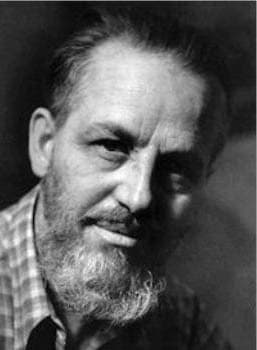
Rex Todhunter Stout was an American writer noted for his detective fiction. His best-known characters are the detective Nero Wolfe and his assistant Archie Goodwin, who were featured in 33 novels, and 41 novellas and short stories between 1934 and 1975.