“Love, and a woman, are two things that make a man lose his reason.”
— Spoken by Tristan, observing Diana's erratic behavior due to love.

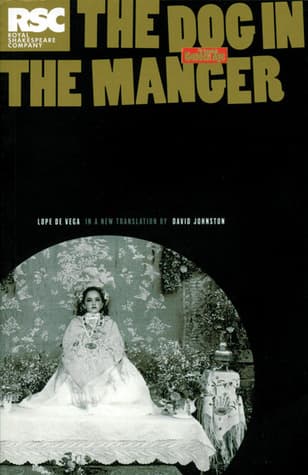
Lope de Vega (2005)
Genre
Fiction
Reading Time
120 min
Key Themes
See below
Sign in to track this book
A fiery countess, caught between pride and passion, struggles with the hilarious and heartbreaking dilemma of loving her clever secretary, who may or may not be a nobleman, in this Golden Age comedy of social climbing and forbidden desire.
The play opens in Naples at the palace of Countess Diana, a beautiful and wealthy noblewoman. Diana's lady-in-waiting, Marcela, is engaged in a secret love affair with Teodoro, Diana's secretary. However, Diana discovers a love letter from Teodoro to Marcela and, in a fit of jealousy, realizes she herself is attracted to Teodoro. Her pride as a countess prevents her from openly pursuing a relationship with a man of lower social standing. This initial conflict establishes Diana's central dilemma: her heart desires Teodoro, but her societal position dictates otherwise, leading to an emotional struggle that drives much of the play's action.
Teodoro, initially devoted to Marcela, finds himself caught in Diana's web of affection and disdain. Diana's erratic behavior—alternately showing him favor and then harshly dismissing him—confuses and entices him. He is ambitious, and the Countess's attention, despite its capriciousness, represents a significant social advancement. This strains his relationship with Marcela, who becomes increasingly suspicious and heartbroken by Teodoro's shifting loyalties. Teodoro's internal conflict between genuine affection and social climbing becomes a key element of his character arc.
Marcela, deeply in love with Teodoro, experiences pain and confusion as Diana begins to interfere. She observes Diana's possessive and manipulative behavior towards Teodoro, which actively sabotages their engagement. Marcela confronts Teodoro, expressing her hurt and demanding clarity, but Teodoro, dazzled by Diana's status and attention, struggles to commit to Marcela. Her pleas and accusations highlight the destructive nature of Diana's 'dog in the manger' attitude, where she neither wants Teodoro for herself nor allows him to be happy with another.
Fabio, Diana's steward, also has feelings for Marcela, adding another layer of complexity to the romantic entanglements. Meanwhile, Tristán, Teodoro's cunning and loyal servant, observes the unfolding drama and quickly identifies Diana's true feelings. Tristán is a key character, advising Teodoro and eventually devising a grand scheme to resolve the social dilemma. He understands the societal constraints preventing Diana and Teodoro's union and begins to formulate a plan that could elevate Teodoro's status, making him a more suitable match for the Countess.
Driven by a moment of clarity or perhaps exasperation with Diana's indecision, Teodoro decides to commit to Marcela and proposes marriage. However, the news of their impending union reaches Diana, who, consumed by jealousy, immediately intervenes. She subtly, yet effectively, discourages Teodoro, making him doubt his choice and once again drawing him back into her orbit. This scene illustrates Diana's 'dog in the manger' nature—she cannot have him, but she also cannot bear the thought of anyone else having him, particularly a woman of her own household.
Realizing the impossibility of Diana and Teodoro marrying due to their social disparity, Tristán devises an elaborate and audacious plan. He proposes that Teodoro pretend to be the long-lost son of Count Ludovico, a powerful and childless nobleman. Tristán believes that if Teodoro gains a noble title, Diana will be free to marry him without compromising her social standing. This scheme highlights Tristán's loyalty to Teodoro and his pragmatic understanding of the societal rules governing love and marriage in their world. He is willing to go to great lengths to ensure his master's happiness and advancement.
Tristán skillfully executes his plan, approaching Count Ludovico and presenting fabricated evidence and a convincing narrative that Teodoro is indeed his long-lost son, kidnapped in infancy. Ludovico, desperate for an heir and easily swayed by Tristán's persuasive storytelling, accepts Teodoro as his son with great joy and relief. This deception elevates Teodoro's social status overnight, transforming him from a humble secretary into a nobleman, and thus, a seemingly acceptable suitor for Countess Diana. The success of this ruse sets the stage for the play's climax.
With Teodoro now recognized as Count Ludovico's son, Countess Diana can finally acknowledge her love for him without social stigma. She expresses her willingness to marry him, seemingly resolving their conflict. However, Teodoro, plagued by guilt and perhaps a desire for honesty in their relationship, confesses the truth of Tristán's deception to Diana. He reveals that his noble lineage is a fabrication, and he is still, in essence, a man of humble birth. This confession throws their future once again into uncertainty, presenting Diana with a renewed social dilemma.
Upon learning the truth, Diana is faced with a social dilemma. She loves Teodoro, but accepting him now, knowing his lack of noble birth, would mean a significant compromise of her status and reputation. The countess grapples with the implications of this revelation, weighing her personal happiness against the rigid expectations of her aristocratic society. This moment encapsulates the central theme of the play: the conflict between love and honor, and the powerful influence of social class on individual choices and destinies. Her decision will determine the fate of both herself and Teodoro.
After much internal struggle, Diana ultimately chooses love. She agrees to marry Teodoro, accepting him despite his true humble origins, effectively prioritizing her personal happiness over strict social conventions. To maintain appearances and avoid scandal, they agree to keep Tristán's deception a secret. Marcela, having been spurned by Teodoro, finds comfort and a new suitor in Fabio, Diana's steward, who has always admired her. The play concludes with two marriages, signifying a resolution where love, albeit with a touch of artifice, triumphs over the rigid social structures of the time.
The Protagonist
Diana evolves from a woman paralyzed by social convention and pride to one who ultimately chooses love and personal happiness, albeit with a clever workaround.
The Protagonist/Love Interest
Teodoro transforms from a simple secretary to a man of assumed noble status, ultimately choosing honesty with Diana before she makes her final decision.
The Supporting
Tristán remains consistently loyal and resourceful, successfully orchestrating the deception that allows the main characters to overcome social barriers.
The Supporting
Marcela experiences heartbreak and betrayal but ultimately finds a stable and loving relationship.
The Supporting
Fabio remains a constant and eventually finds love and marriage with Marcela.
The Supporting
Ludovico goes from a childless nobleman to a joyful, albeit deceived, father.
The Mentioned
Octavio's brief appearance serves to highlight Diana's resistance to conventional marriage.
This is the central conflict of the play. Countess Diana's love for Teodoro is constantly at odds with the rigid social hierarchy of 17th-century Spain. Her pride and the societal expectations placed upon her as a noblewoman prevent her from openly pursuing a relationship with her secretary. This theme is clear when Diana discovers Teodoro's letter to Marcela, sparking her jealousy and realization of her own feelings, yet she cannot act on them directly. The entire plot, especially Tristán's elaborate scheme, shows the lengths people will go to reconcile love with the demands of social standing.
““I love him, but I cannot make him mine, because he is not of my rank.””
Diana's character embodies the destructive nature of jealousy and indecision. She cannot bear the thought of Teodoro with Marcela, yet her pride prevents her from claiming him for herself. This 'dog in the manger' behavior causes suffering for Teodoro and Marcela. Her constant shifts between affection and disdain for Teodoro, as seen when she alternately encourages and then dismisses his advances, create a tumultuous emotional state. This theme explores how unaddressed emotions and societal pressures can lead to manipulative and hurtful actions.
““I want him not, but I will not let you have him.””
The play relies on the distinction between how things appear and how they truly are. Tristán's elaborate deception, where Teodoro is presented as the long-lost son of Count Ludovico, is the most prominent example. This fabrication allows Diana and Teodoro to marry, but it is built on a lie. The resolution of the play, where they agree to maintain the secret, shows that social acceptance and happiness can sometimes be achieved through carefully constructed appearances, rather than outright truth. This theme critiques the superficiality of social structures that value lineage over genuine worth.
““The world is a stage, and we are all actors.””
Servants, particularly Tristán, play a significant and often subversive role in the play. While ostensibly of lower status, Tristán's intelligence and cunning far surpass many of the noble characters. He is the true architect of the plot's resolution, manipulating events and people to achieve his master's happiness. This highlights how those on the fringes of society can often see its flaws more clearly and act more effectively than those bound by its rules. Tristán’s actions demonstrate that wit and loyalty can be more powerful than inherited status.
““A clever servant can untangle knots that perplex his master.””
A literary device describing Diana's possessive and destructive indecision.
This motif, from which the play derives its title, perfectly encapsulates Countess Diana's primary character flaw. Like the dog that neither eats the hay nor allows the ox to eat it, Diana neither fully accepts Teodoro as her lover due to his lower social status, nor does she allow him to pursue a relationship with Marcela. This behavior drives much of the conflict, creating a cycle of hope and despair for Teodoro and Marcela, and highlighting Diana's internal struggle between her heart and her pride.
An unexpected, artificial, or improbable character or device introduced suddenly in a work of fiction or drama to resolve a situation or untangle a plot.
While not a literal 'god from the machine,' Tristán's elaborate scheme to fabricate Teodoro's noble lineage functions as a dramatic equivalent. It is an ingenious, yet highly improbable, solution that suddenly resolves the seemingly insurmountable social barrier between Diana and Teodoro. This device allows for a happy ending that would otherwise be impossible within the strict social conventions of the time, demonstrating the play's comedic and somewhat fantastical nature in its resolution of conflict.
The central deception where Teodoro is presented as someone he is not.
The core of Tristán's plot relies on the device of fabricated identity. By convincing Count Ludovico that Teodoro is his long-lost son, Tristán effectively changes Teodoro's social standing overnight. This manipulation of identity is crucial for overcoming the class barriers that initially prevent Diana and Teodoro's union. It highlights the arbitrary nature of social status and the power of perception in shaping reality, especially in the context of marriage and inheritance.
The audience is aware of the truth of Teodoro's identity, while many characters are not.
Dramatic irony is prevalent, particularly concerning Teodoro's fabricated noble birth. The audience is privy to Tristán's deception from its inception, which creates tension and humor as other characters, like Count Ludovico and eventually Diana (before Teodoro's confession), react to Teodoro's 'new' identity. This device allows the audience to appreciate the cleverness of the scheme and the social critique embedded within the play, as noble characters are easily fooled by a well-crafted lie.
“Love, and a woman, are two things that make a man lose his reason.”
— Spoken by Tristan, observing Diana's erratic behavior due to love.
“Who could imagine that a lady would fall in love with her secretary?”
— Marcela expresses surprise at Diana's feelings for Teodoro.
“It is a strange thing that a woman, who has so many suitors, should not choose one of them.”
— Fabio comments on Diana's inability to choose a husband.
“The dog in the manger neither eats the hay nor lets the ox eat it.”
— A direct reference to the play's title, describing Diana's possessive but uncommitted nature.
“Happy is he who finds a friend, but happier still is he who finds a true love.”
— Teodoro reflects on his fortune in love, despite the complications.
“A woman's 'no' is often a 'yes' in disguise.”
— Tristan advises Teodoro on interpreting Diana's mixed signals.
“To love and not be loved in return is a torment worse than death.”
— Diana laments her unrequited feelings for Teodoro.
“Fortune is blind, and love is blinder still.”
— Tristan observes the unpredictable nature of love and fate.
“One must climb to great heights to fall with a great crash.”
— Teodoro considers the risks of his ambition and love for Diana.
“There are no secrets that time does not reveal.”
— A general observation on the inevitable exposure of hidden truths.
“Honor is a fragile thing, easily broken, hard to mend.”
— Count Ludovico discusses the importance and vulnerability of reputation.
“Suspicion is a poison that corrupts the heart.”
— Diana struggles with her jealousy and distrust.
“To live without love is not to live at all.”
— Various characters express the profound importance of love in their lives.
“A lady's whim is a law unto itself.”
— Servants discuss Diana's unpredictable and demanding nature.
Ready to see how well you understood this book? Take our interactive quiz with 10 questions.
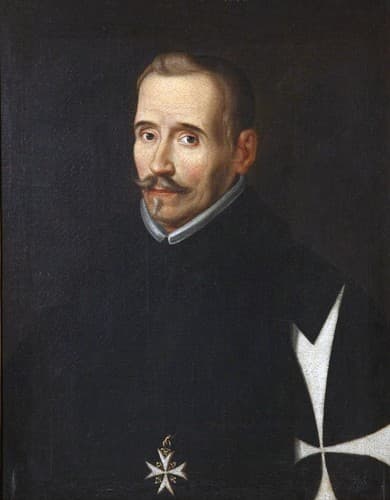
Biography coming soon.

Ashley Antoinette
4.6

Mark McDonald
4.4
Luo Guanzhong
4.4

Mia McKenzie
4.3
Dorothy Parker
4.3
Joaquim Maria Machado de Assis
4.3
James Thurber
4.2

Terry Kay
4.2