“Oh, my dears, the things one has to put up with in this country! Load shedding, water shortage, and now this new fashion of everyone being a political pundit.”
— Butterfly lamenting common Pakistani inconveniences and the rise of political talk.

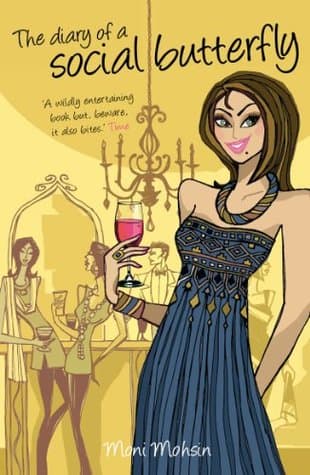
Moni Mohsin (2008)
Genre
Fiction
Reading Time
240 min
Key Themes
See below
Sign in to track this book
Amidst Pakistan's turbulent news, the charmingly unaware socialite Butterfly navigates high society's parties and mishaps, her biggest worry a chipped manicure rather than a changing world.
The story begins with Butterfly introducing herself, a self-described fixture of Pakistani high society, especially in Lahore. She writes about her daily life, which centers entirely on social events: coffee mornings, lunches, dinners, parties, and shopping. Her diary entries are marked by her unique, often wrong, perspective and her distinct 'Lahori English' way of speaking. Early entries show her surface-level concerns, such as the newest designer clothes, the quality of appetizers, and the social standing of her friends. She mentions global events like 9/11, but only in how they inconvenience her travel plans or affect the availability of imported goods, showing her deep separation from the wider world's realities.
Butterfly's diary often details her efforts to keep and raise her social status. She is obsessed with 'who's important' and 'who's not.' She carefully records who attended which party, who wore what designer, and who is considered 'old money' versus 'new money.' Her entries are full of hidden criticisms and gossip about her rivals, especially those she thinks are trying to take her place. She is very sensitive to insults, real or imagined, and often sees social interactions as competition. For example, she tells how she strategically avoids certain people at events or subtly criticizes their fashion choices to her friends.
While her social life is most important, Butterfly sometimes mentions her family. Her husband, Janoo, is always there, though often in the background. She often complains about his lack of interest in her social life, his preference for staying home, and his perceived stinginess about her shopping trips. Their relationship is shown as comfortable, if not romantic, co-existence, with Janoo mostly letting her have her way. Her children, especially her daughter, are mentioned mainly in terms of their possible marriage prospects or their occasional demands for attention that interrupt her social schedule. She often dismisses their worries as unimportant compared to her own.
As Pakistan goes through significant political instability, including military coups, protests, and the killing of Benazir Bhutto, Butterfly's diary entries show these events, though filtered through her self-centered view. She often misunderstands or misinterprets the seriousness of situations, focusing instead on how they affect her ability to attend parties, travel, or buy luxury items. For example, curfews are an inconvenience preventing her from meeting friends, and political rallies cause traffic jams. The killing of Benazir Bhutto is a shocking event, but her main concern is the cancellation of social events and the general 'sadness' that might lower her spirits.
Shopping, both locally and internationally, is a main part of Butterfly's life. Her diary is full of detailed accounts of her purchases: designer handbags, shoes, clothes, and jewelry. She is obsessed with brand names and the status she thinks they give. She often talks about the quality of 'do number ka maal' (fake goods) versus real items, always aiming for the real ones. Her shopping trips to Dubai, London, or even local high-end shops are described with excitement usually saved for major life events, showing her deep materialism and the role consumerism plays in her identity and social standing within her elite group.
Butterfly is very concerned with her appearance and getting older. She often talks about her 'problem areas,' such as wrinkles, weight gain, or sagging skin. Her diary entries detail her visits to skin doctors, plastic surgeons, and beauty salons for various cosmetic procedures, including Botox, fillers, and elaborate facials. These procedures are often discussed with a mix of excitement and worry, always aiming to keep a young and socially acceptable image. She shares her experiences with friends, often recommending or criticizing different clinics and treatments, showing the pressure to meet beauty standards within her social group.
Butterfly's home is run by a team of household staff, including cooks, drivers, and maids. Her interactions with them often show a bossy, yet demanding, attitude. She often complains about their competence, their perceived laziness, or their occasional 'cheek' (rudeness). However, she also relies heavily on them for her daily life and social events to run smoothly. Her entries sometimes reveal a surprising, though brief, moment of concern for a staff member, quickly overshadowed by her own needs or a new social event. These interactions subtly show the large class divide in Pakistani society.
A main source of humor in the diary comes from Butterfly's frequent social errors and her general misunderstanding of various ideas. She misuses English phrases, misinterprets common sayings, and is often unaware of the true meaning of news or conversations. For instance, she confuses 'S&M' with 'SMS' and 'GT' with 'Get-Together.' These instances show her sheltered life and her lack of involvement with anything beyond her immediate social bubble. Her innocent yet outrageous misunderstandings often lead to funny situations, which she records without irony, further highlighting her unique perspective.
Throughout the diary, Butterfly's world is presented as a 'separate universe,' clearly distinct from the realities faced by most Pakistanis. Her concerns—designer clothes, exclusive parties, gourmet food—are very different from the political, economic, and social struggles happening in the country. She lives in a bubble of privilege, where national crises are simply inconveniences that might disrupt her social calendar. This consistent portrayal highlights the significant socio-economic differences and the isolation of the elite class, as seen through Butterfly's unquestioning, self-focused view.
As the diary continues through various years and events, Butterfly's basic character remains mostly the same. She continues her constant pursuit of social engagements, gossip, and luxury goods. While she occasionally expresses brief concern or 'sadness' over national tragedies, these feelings are quickly overshadowed by her next party invitation or shopping opportunity. The book ends with Butterfly's life continuing in much the same way, suggesting a repeating pattern to her existence and the lasting, though superficial, nature of her social world. Her final entries often hint at upcoming events, reinforcing the idea that her search for social importance is never-ending.
The Protagonist
Butterfly's character arc is largely static; she remains fundamentally unchanged throughout the diary, highlighting the insularity of her world.
The Supporting
Janoo remains a constant, stable presence, largely unaffected by Butterfly's social whirlwind.
The Supporting
Babloo's character is consistent, a loyal companion in Butterfly's social endeavors.
The Supporting
Mummy's role is static, providing a generational reference point for Butterfly.
The Supporting
The staff members are static, serving as background figures enabling Butterfly's life.
The Mentioned
This collective is static, forming the backdrop and driving force of Butterfly's social world.
The novel clearly shows the deep separation between Pakistan's wealthy elite and the realities faced by most of the country. Butterfly's diary entries consistently show her unawareness of political unrest, economic hardship, or social issues, focusing instead on her immediate, privileged concerns. For example, national curfews are simply an inconvenience stopping her from attending a dinner party, and the killing of a major political figure is mainly a reason for social events to be canceled. This theme is central to the satire, highlighting how a part of society can exist in a 'separate world,' untouched and mostly unaffected by the struggles of their fellow citizens.
“What to do? Everyone is so depressed about the Benazir thing. All the parties are cancelled, even Salma's birthday. It's too much, baba. I mean, what is the point if we can't even enjoy?”
A main force in Butterfly's life is her strong desire for luxury goods and designer brands. Her diary records shopping trips, fashion choices, and the pursuit of the newest expensive items, from handbags to shoes. This theme shows how material possessions are not just desired objects but also markers of social status and identity within her group. Butterfly's detailed accounts of 'do number ka maal' (fake goods) versus real items, and her constant concern with looking fashionable, illustrate the superficiality that can come with extreme wealth. The search for external approval through buying things is always present.
“I mean, what is the point of going to Dubai if you don't even buy a new Birkin? Such a waste of plane ticket, baba.”
The novel makes fun of the customs, ranks, and concerns of Lahore's high society. Through Butterfly's unquestioning view, the absurdity of endless coffee mornings, elaborate dinners, and competitive socializing is revealed. The constant gossip, the subtle attempts to outdo others, and the obsession with guest lists and seating arrangements show a world where appearances and social standing are most important. Butterfly's own mistaken words and misinterpretations of common phrases (e.g., 'S&M' for 'SMS') further highlight the inherent silliness and self-importance of this exclusive world, often without her realizing the humor.
“Everyone knows me. All of Lahore, all of Karachi, all of Isloo—oho, baba, Islamabad—half of Dubai, half of London and all of Khan Market and all the nice, nice bearers in Imperial Hotel also...”
Butterfly's identity is closely tied to her social status and how she sees herself as a key figure in high society. Her diary entries constantly assert her relevance and importance, even as her actual understanding of the world around her is limited. Her self-image is carefully built through her fashion choices, her social engagements, and her perceived connections to influential people. This theme explores how people in certain social classes get their sense of self from external approval and the constant performance of a particular role, rather than from inner thought or engagement with wider societal issues.
“No ball, no party, no dinner, no coffee morning, no funeral, no GT —Get-Together, baba—is complete without me.”
The story is told entirely through Butterfly's personal diary entries.
This device allows the reader direct access to Butterfly's thoughts, opinions, and unique voice. The informal, stream-of-consciousness style, complete with misspellings and malapropisms, is integral to creating her character and the comedic tone. It provides an unfiltered, albeit highly subjective, view of her world, allowing the satire to emerge through her unwitting observations and self-absorbed perspective. The diary format also emphasizes the insularity of her world, as her entries rarely extend beyond her personal experiences and social sphere.
The author uses humor and exaggeration to criticize Pakistani high society.
The novel employs satire as its primary comedic and critical tool. Butterfly's character, with her exaggerated concerns and profound obliviousness, is a satirical representation of a certain segment of the elite. The irony lies in Butterfly's earnest recounting of her trivial concerns against the backdrop of significant national and global events. The reader understands the gravity of the situations, while Butterfly remains blissfully unaware, creating a humorous yet pointed critique of social detachment and materialism. The humor is derived from the contrast between what Butterfly perceives and what the reader understands.
Butterfly's distinctive, often incorrect, use of English.
Butterfly's language is a key plot device, serving both comedic and character-defining functions. Her frequent malapropisms (e.g., 'S&M' for 'SMS,' 'GT' for 'Get-Together') and her unique blend of English and Urdu phrases, often referred to as 'Lahori English,' highlight her charming naiveté and her limited understanding of the world beyond her social bubble. This linguistic style is central to her identity and the novel's humor, allowing the author to subtly comment on issues of class, education, and cultural identity within the Pakistani elite. It makes her voice instantly recognizable and memorable.
Placing trivial concerns against significant national events.
The novel frequently juxtaposes Butterfly's mundane, often superficial, concerns with major political and social upheavals in Pakistan and the world. For example, her worries about a chipped manicure or a cancelled party are placed alongside mentions of 9/11, military coups, or Benazir Bhutto's assassination. This stark contrast emphasizes the insularity and self-absorption of the elite class, highlighting their detachment from the realities faced by most citizens. This device is crucial for the novel's satirical effect, underscoring the 'parallel universe' theme.
“Oh, my dears, the things one has to put up with in this country! Load shedding, water shortage, and now this new fashion of everyone being a political pundit.”
— Butterfly lamenting common Pakistani inconveniences and the rise of political talk.
“One must always be prepared for any eventuality, especially when it comes to social climbing. A new dress, a clever remark, and a well-placed 'darling' can go a long way.”
— Butterfly's internal thoughts on navigating social circles and maintaining her status.
“I mean, what is the point of having a designer lawn suit if you can't even get decent pictures taken for your Instagram? It's a travesty, I tell you!”
— Butterfly expressing frustration over not being able to properly showcase her new outfit on social media.
“My husband, Janoo, bless his cotton socks, is absolutely clueless about anything beyond his golf handicap and the stock market. But he is a good provider, and that, my dears, is what truly matters.”
— Butterfly reflecting on her husband's lack of social awareness but appreciating his financial contributions.
“The problem with democracy is that it gives everyone a voice. And frankly, some voices are just not meant to be heard.”
— Butterfly's elitist view on political participation and the general public.
“One simply cannot survive in Lahore without a reliable driver, a good cook, and a steady supply of gossip.”
— Butterfly outlining her essential requirements for a comfortable life in Lahore.
“Oh, the drama! The sheer, unadulterated drama of it all! One simply lives for these little moments of delicious scandal.”
— Butterfly delighting in a new piece of gossip or social controversy.
“I always say, if you're going to do something, do it with flair. Or don't do it at all. Especially when it comes to throwing a dinner party.”
— Butterfly's philosophy on entertaining and making a grand impression.
“These new money types, they just don't understand the nuances, do they? All flash and no substance. It's truly tragic.”
— Butterfly's disdain for those who have recently acquired wealth without the 'proper' social graces.
“One must always maintain one's composure, even when faced with the most vulgar of situations. A raised eyebrow, a subtle sigh, and a well-timed exit are usually sufficient.”
— Butterfly's advice on how to handle uncomfortable or uncouth social encounters.
“The youth of today, with their iPhones and their selfies and their complete disregard for tradition. It's a different world, my dears, a very different world.”
— Butterfly observing and slightly disapproving of modern youth culture.
“Sometimes, one simply needs a good cup of chai and a sympathetic ear to complain about the state of the nation. And the price of mangoes.”
— Butterfly seeking comfort and companionship to vent about everyday concerns.
“Oh, the sheer exhaustion of being fabulous all the time! But someone has to do it, my dears, someone has to keep up appearances.”
— Butterfly's internal monologue about the effort required to maintain her social image.
Ready to see how well you understood this book? Take our interactive quiz with 10 questions.

Ashley Antoinette
4.6

Mark McDonald
4.4
Luo Guanzhong
4.4

Mia McKenzie
4.3

Dorothy Parker
4.3

Joaquim Maria Machado de Assis
4.3

James Thurber
4.2

Terry Kay
4.2