“The Church is a mother, not a judge.”
— The priest reflects on the nature of the Church's role.


Georges Bernanos (2001)
Genre
Fiction
Reading Time
8-10 hours
Key Themes
See below
Sign in to track this book
An ailing young priest confronts the spiritual emptiness of his rural French parish, finding humility and an unexpected path to holiness amidst struggles of faith and doubt.
The unnamed young priest arrives in Ambricourt, a small, poor parish in northern France. He immediately notices the spiritual apathy and hidden resentments among his parishioners. Suffering from a chronic stomach ailment and a deep sense of inadequacy, he begins his duties with earnest but often awkward enthusiasm. He finds little comfort or understanding from his fellow priests, especially the cynical Curé de Torcy, who offers harsh, direct advice. The priest's initial attempts to connect with the villagers are met with indifference or hostility. He struggles to find his place in this seemingly godless community, often feeling isolated and misunderstood in his mission.
The priest's early days include several minor failures and misunderstandings. His attempts to organize a catechism class are poorly received, and his sincere efforts are often seen as naive or intrusive. He becomes aware of local gossip about the wealthy Countess, whose daughter, Chantal, is rebellious and troubled. The priest's health continues to worsen, increasing his feelings of loneliness and spiritual emptiness. He struggles with his diet, often eating only bread and wine, which further weakens him. His diary entries show his deep introspection and his constant fight against despair as he tries to understand God's will amidst Ambricourt's squalor and spiritual decay.
The young priest is called to the chateau to speak with the Countess, who is consumed by grief over her young son's death years earlier. She has abandoned her faith and lives in bitter despair, blaming God for her suffering. During a long, intense night, the priest engages her in a spiritual discussion, patiently listening and challenging her hardened heart. Despite his own physical weakness and deep fatigue, he breaks through her defenses, helping her confess her sins and find some peace before her sudden death later that night. This encounter is a turning point, affirming his priestly mission and giving him a brief sense of purpose.
After the Countess's death, the priest is immediately subjected to suspicion and gossip. Her husband, the Count, and their daughter, Chantal, accuse him of pressuring her or even causing her death. The local doctor is also critical, and the community's general dislike for him intensifies. Despite the spiritual triumph he feels, the external circumstances are harsh. He finds little support from his church superiors or even from the Curé de Torcy, who, while not directly accusing him, offers little comfort. The priest deals with the injustice of the accusations, finding comfort only in his continued faith and the belief that he acted according to God's will, even if misunderstood by others.
Chantal, the Countess's rebellious daughter, approaches the priest, initially trying to manipulate him and spread more rumors about his role in her mother's death. She is a troubled young woman, resentful of her father and her deceased mother, and desperate for love and attention. The priest, seeing through her facade, confronts her with gentle but firm spiritual guidance. Eventually, Chantal breaks down, confessing her deep unhappiness and her feeling of being trapped and unloved. This confession, though not leading to an immediate change, marks another instance of the priest's ability to reach a hardened soul, even as his own suffering deepens.
Overwhelmed by his physical and spiritual burdens, the priest travels to visit a former seminary friend, Dufréty, who has left the priesthood and now works as a clerk. He hopes for some understanding or relief, but Dufréty's cynical view offers little comfort. During this visit, the priest's stomach pain becomes unbearable, forcing him to seek medical attention. The doctor delivers a devastating diagnosis: he has stomach cancer, and his condition is terminal. This news confirms the priest's long-held feeling of impending death, yet he accepts it with quiet resignation, seeing it as part of God's plan for him.
Knowing his end is near, the priest returns to the care of the Curé de Torcy, who, despite his gruff exterior, shows surprising concern. The Curé arranges for him to stay in a small room, where the priest's physical suffering intensifies. Despite the pain, he maintains his spiritual clarity and continues to record his thoughts in his diary, reflecting on his life, his faith, and the nature of grace. He receives visitors, including Dufréty, who witnesses his peaceful acceptance of death. In his final moments, the priest's deep humility and unwavering faith shine through, ending in his serene passing, leaving his diary as a record of his spiritual journey.
The novel ends with an entry from the Curé de Torcy, who recounts the young priest's final moments and his death. He reflects on the priest's innocence, his suffering, and his holiness, which he had initially failed to fully recognize. The Curé, a pragmatist and a realist, is moved by the quiet dignity and spiritual strength the young priest showed even in his agony. He acknowledges the priest's dying words – "All is grace" – a statement of a life lived in complete surrender to God's will, even amidst great physical and spiritual pain. The Curé's reflection confirms the young priest's holiness and the lasting power of his faith.
The Protagonist
From a struggling, misunderstood priest riddled with self-doubt, he evolves into a figure of profound spiritual grace and acceptance, finding peace in suffering and death.
The Supporting
Initially critical and detached, he grows to appreciate and ultimately revere the young priest's spiritual depth and sanctity.
The Supporting
From a hardened, despairing atheist, she experiences a dramatic spiritual conversion before her death.
The Supporting
Remains largely rebellious, but shows moments of vulnerability and seeks solace from the priest, hinting at potential future change.
The Supporting
Remains largely unchanged in his skepticism but is deeply moved by the young priest's peaceful death.
The Supporting
Remains largely unchanged, representing the entrenched habits and perspectives of the parish.
The Supporting
Remains a professional and scientific figure, providing the crucial medical diagnosis.
The novel explores the link between physical and spiritual suffering and the idea of divine grace. The young priest's chronic stomach ailment and constant spiritual emptiness are presented not just as burdens but as ways to a deeper understanding of God's love and the redemptive power of suffering. His physical weakness makes him vulnerable, allowing grace to appear more purely. The Countess's suffering also helps her spiritual conversion. The priest's dying words, 'All is grace,' summarize this theme, suggesting that even in the darkest moments, grace is present and changes things.
“What does it matter? All is grace.”
The young priest feels deep isolation throughout the novel, both from his parishioners and often from his fellow clergy. His intense spiritual life and earnest zeal are often misunderstood as naivety, weakness, or interference. The villagers are indifferent or hostile, the Count and Chantal accuse him, and even the Curé de Torcy initially offers little comfort. This solitude forces the priest into deeper thought and reliance on God, showing the often lonely path of true faith. His internal diary becomes his only confidante, reflecting his struggle to connect with a world that often fails to understand his spiritual mission.
“My parish is bored stiff. Like so many others. Sloth, boredom, stupidity. The world is eaten up with boredom.”
Bernanos examines the complexities of faith, showing it not as simple, unwavering belief but as a constant struggle against doubt, despair, and God's apparent absence. The young priest often questions his own worth, his effectiveness, and even God's presence in his suffering. His faith is formed in this struggle with doubt, making it more authentic and strong. The Countess, who has abandoned faith, and Dufréty, who has lost it, serve as contrasts, illustrating different responses to spiritual challenges. Ultimately, the priest's journey affirms that true faith can exist alongside deep doubt and suffering.
“It is so easy to hate, and so much harder to love. But true love is a hard, hard thing. It does not come by itself. It is a gift, and a grace.”
The novel makes the seemingly ordinary and often squalid reality of rural parish life a setting for deep spiritual drama. The priest's daily struggles with his health, his parishioners' indifference, the gossip, and the poverty are not romanticized. Instead, they are presented as the very setting in which holiness is formed. His holiness is not found in grand miracles but in his humble persistence, his quiet suffering, and his unwavering commitment to his priestly duties, even when they seem to yield nothing. This theme suggests that grace fills everyday life and that spiritual heroism can be found in the most ordinary and unglamorous circumstances.
“I often think of the saints. They are like us, only they have a secret. They know how to suffer.”
First-person narrative providing direct access to the protagonist's inner life.
The novel is presented as the young priest's personal diary entries. This first-person perspective offers intimate access to his thoughts, doubts, spiritual struggles, and physical pains. It allows the reader to experience his profound introspection directly, making his spiritual journey deeply personal and immediate. The diary entries are often fragmented, reflecting his deteriorating health and emotional state, but they consistently reveal his unwavering faith and his constant self-examination. This format also creates a sense of authenticity and raw honesty, as the priest is writing solely for himself and God, not for an audience.
The priest's chronic stomach ailment as a metaphor for spiritual and worldly burdens.
The young priest's severe and ultimately terminal stomach cancer is a central symbolic element. It represents not only his physical vulnerability but also his spiritual suffering and the 'sickness' of the world he inhabits. His physical pain is inextricably linked to his spiritual anguish and his struggles with the indifference and sin of his parish. This suffering is not merely a plot point but a path to grace, purifying him and allowing him to experience a deeper communion with Christ's passion. His physical deterioration mirrors his spiritual ascent, culminating in his peaceful, grace-filled death.
The experienced, cynical priest as a foil to the naive protagonist.
The character of the Curé de Torcy serves as a crucial foil to the young priest. Torcy is older, more experienced, and deeply cynical about human nature and the challenges of the priesthood. His blunt, often harsh advice and his pragmatic worldview stand in stark contrast to the young priest's idealism and spiritual sensitivity. This contrast highlights the different paths to faith and ministry. While Torcy initially seems to represent a lack of spiritual depth, his eventual recognition of the young priest's holiness reveals his own hidden faith and humility, adding complexity to both characters and illustrating that holiness can be perceived and appreciated even by the most jaded.
The recurring theme of God's perceived absence and the priest's feeling of abandonment.
A significant plot device is the recurring motif of the priest's feeling of spiritual desolation and the apparent absence of God. Despite his fervent faith, he frequently experiences periods of profound loneliness, doubt, and a sense of being abandoned by God. This 'dark night of the soul' is not a sign of weak faith but rather a crucial component of his spiritual journey. It challenges him to trust in God even without palpable comfort, deepening his humility and reliance on grace alone. This device allows Bernanos to explore the raw, unadorned reality of a lived faith, stripped of superficial consolations.
“The Church is a mother, not a judge.”
— The priest reflects on the nature of the Church's role.
“It seems to me sometimes that the world is a huge cemetery where souls are laid out, waiting for someone to come and wake them.”
— The priest's contemplation on the spiritual state of humanity.
“To be a saint is to give oneself entirely to God, not to be perfect.”
— His understanding of sainthood, struggling with his own imperfections.
“God has no need of our good works, but only of our love.”
— A central theological idea for the priest, emphasizing love over mere ritual.
“Hate is a prison. Love is a liberation.”
— The priest's internal struggle with negative emotions and his pursuit of grace.
“The greatest joy of all is to be forgotten by men and remembered by God.”
— Reflecting on humility and the true source of recognition.
“Everything is grace.”
— The priest's dying words, summarizing his ultimate understanding of life and suffering.
“The world is eaten up by boredom. You can't imagine what a lot of people are bored.”
— Observation about the spiritual desolation he perceives in his parishioners and society.
“One does not choose one's cross; one is chosen by it.”
— Reflecting on the burdens and suffering assigned by fate or God.
“What does it matter if I am a bad priest, as long as I am a priest?”
— His internal struggle with self-doubt and his unwavering commitment to his vocation.
“The only real sadness, the only real failure, the only real tragedy, is to not be a saint.”
— His profound belief in the ultimate calling for every soul.
“Youth is a dream, a form of delirium.”
— Contemplating the fleeting and sometimes illusory nature of youth.
“It is easier to give one's life for Christ than to live it for Him.”
— Reflecting on the daily grind and persistent effort required for a life of faith.
“The most dangerous illusion is that there is no illusion.”
— A philosophical insight into self-deception and the nature of reality.
Ready to see how well you understood this book? Take our interactive quiz with 10 questions.
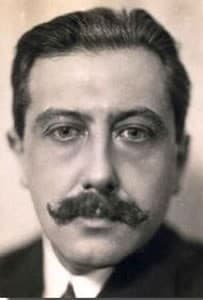
Louis Émile Clément Georges Bernanos was a French author, and a soldier in World War I. A Catholic with monarchist leanings, he was critical of elitist thought and was opposed to what he identified as defeatism. He believed this had led to France's defeat and eventual occupation by Germany in 1940 during World War II. His two major novels "Sous le soleil de Satan" (1926) and the "Journal d’un curé de campagne" (1936) both revolve around a parish priest who combats evil and despair in the world. Most of his novels have been translated into English and frequently published in both Great Britain and the United States.

Ashley Antoinette
4.6

Mark McDonald
4.4
Luo Guanzhong
4.4

Mia McKenzie
4.3

Dorothy Parker
4.3

Joaquim Maria Machado de Assis
4.3

James Thurber
4.2

Terry Kay
4.2