“There was no point in asking why. The answer was in the wind, in the shrivelling leaves, in the dust. The answer was death.”
— John Custance reflects on the unfolding famine.

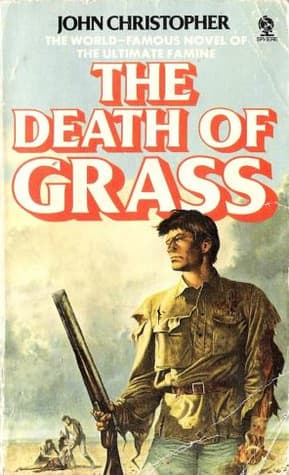
John Christopher (1956)
Genre
Science Fiction
Reading Time
220 min
Key Themes
See below
Sign in to track this book
As a plague turns the world's grasslands to dust, a man must lead his family through a collapsing Britain to reach a rumored sanctuary.
John Custance, a London engineer, is at first unconcerned by news of the Chung-Li virus destroying rice crops in Asia. However, the situation quickly worsens as the virus mutates and begins to affect all grass crops in Europe, including wheat, barley, and oats. Government reports are vague, but John's brother, David, a farmer in the Westmorland valley, warns him of the coming disaster and urges him to prepare. John's wife, Ann, is doubtful, but the increasing food shortages and the government's panic convince them that strong actions are needed. They begin to gather supplies and consider their options, as the world around them begins to fall apart.
As the food crisis grows, the British government uses harsh measures, including rationing and forced labor. John, using his contacts, uncovers a secret government plan to move important people to safe places, leaving most of the population to survive on their own. Realizing the city will be a death trap, John, Ann, and their children, Jane and Davy, decide to leave London. Their destination is David's secluded farm in Westmorland, a place they hope will offer safety. They plan to travel with John's friend, Roger Buckley, and his family, forming a small group for the dangerous journey north.
The Custance and Buckley families, along with Roger's wife, Olivia, and their children, begin their trip in their cars. Immediately, they meet the breakdown of law and order. Roads are full of desperate refugees, and fuel is hard to find. They see looting, violence, and no effective authority. Their initial attempts to stay civil quickly fail as they must defend themselves. During an encounter with looters, Roger's car is stolen, and he is badly hurt. This event changes things, forcing the group to face the brutal facts of their new world and the need to adapt to survive.
Continuing their journey on foot with limited supplies, the Custance family and a recovering Roger meet an armed and organized gang led by Pirrie. Pirrie, seeing John's intelligence, offers them an alliance, knowing that a larger, more coordinated group has better chances of survival. This alliance is tense, as Pirrie's methods are brutal and his followers are unruly. John must make difficult moral decisions to protect his family, including letting Pirrie's men raid other desperate survivors for food and resources, which further reduces his sense of humanity.
As resources decrease and the journey becomes harder, the moral compromises grow. Roger Buckley, still recovering from his injuries, becomes a burden, and his wife, Olivia, and their children are seen as extra mouths by Pirrie's men. In a cold moment, John decides that the Buckleys must be sacrificed for his family and the rest of the group. He arranges their murder, a decision that scars him and marks his complete change from a civilized man to a ruthless survivor. This act makes his position in the group stronger but leaves him deeply conflicted.
The journey north continues, with constant watch against other desperate groups and the threat of starvation. Pirrie's authority is challenged by his own men, and John becomes more involved in keeping order through force. They meet a large, organized group of survivors who try to ambush them. In the resulting chaotic battle, many lives are lost on both sides. John takes part in the fighting, showing a cold efficiency born of desperation. The violence hardens everyone, especially John and Ann, who see their children quickly grow used to the horrors around them.
As they near Westmorland, the tension between John and Pirrie reaches a breaking point. Pirrie, always looking for opportunities, sees John as a rival and decides to eliminate him before reaching David's farm. He tries to ambush John, but John, expecting the betrayal, turns the tables. A brutal fight follows, ending in Pirrie's death and the scattering of his remaining followers. This event makes John the leader of the remaining group and shows his complete willingness to use violence to protect his family and secure their future. He is now the most dangerous man in the group.
After weeks of travel and bloodshed, John, Ann, their children, and the few remaining survivors finally reach the entrance to David's secluded valley. The valley seems untouched by the widespread destruction, a green place in a brown world. David, a practical and equally hardened farmer, greets them, relieved but also wary. He has fortified his farm and created a self-sufficient community, but the arrival of John's group, especially the armed and traumatized survivors, brings a new challenge. The initial relief of arrival is mixed with the understanding that their fight for survival is not over, and new conflicts are coming.
David explains the strict rules governing his valley community: resources are limited, and outsiders are viewed with suspicion. He has already had to defend the valley from desperate attacks. His farm is well-stocked and defended, but he makes it clear that every new person is a burden. John introduces the few remaining members of his traveling group, who are quickly taken in, though watched closely. The valley, while a safe place, is not a paradise. It is a small version of the new world, where resources control power and the threat of invasion is constant. John recognizes that the fight for survival has only changed locations.
Just as the Custance family begins to settle into the valley, news arrives from David's scouts: a large, organized group of armed survivors, possibly a government-backed militia or a powerful gang, is heading their way, systematically clearing out smaller communities. This new threat is far more serious than anything they have faced. The valley, once a sanctuary, now becomes a possible battleground. John, with his experience of the outside world's brutality, and David, with his knowledge of the land, must combine their strengths to prepare for the inevitable fight, understanding that the peaceful existence they hoped for is impossible.
John and David, along with the other able-bodied members of the valley community, work to strengthen their defenses. They create traps, build watchtowers, and organize patrols. John's strategic thinking from his engineering background is valuable, while David's practical farming knowledge helps with resource management. The women and children prepare food and tend to essential supplies. The atmosphere is tense, a grim determination replacing the initial relief of arrival. They know this will be a fight for their existence, and failure means starvation or enslavement. The valley residents, once diverse, unite against the common threat.
The invading force arrives, a well-equipped and numerous group. A fierce and bloody battle follows for control of the valley. John and David lead the defense with efficiency, using guerrilla tactics and their knowledge of the terrain. Casualties are high on both sides. The fight is long and desperate, pushing everyone to their limits. John, now without his former civilized restraints, takes part in the killing without hesitation, driven by the need to protect his family and the community they have found. The valley becomes a scene of horrific violence, showing humanity's capacity for both survival and savagery.
Against great odds, the valley community repels the invaders, driving them back with heavy losses. The victory, however, is not without cost. Many defenders are dead or wounded, and the land is scarred by the battle. John and Ann see the changes in their children, who have been exposed to horrors and have learned to kill. The cost of survival has been immense, stripping them of their humanity and forcing them to commit acts they once thought impossible. The valley is safe for now, but the peace is fragile, built upon blood and the sacrifice of their former selves.
After the battle, John and David, now leaders, establish a new, practical order in the valley. They understand that the old world's laws and ethics no longer apply. Resources are tightly controlled, and security is most important. They implement strict measures to ensure the community's long-term survival, including rationing and harsh penalties for disagreement. The valley becomes a self-sufficient fortress, isolated from the chaos of the outside world, but also reflecting its brutality. John, once a mild engineer, has fully accepted his role as a tribal leader, able to make life-or-death decisions without hesitation, forever changed by the journey.
As a new harvest season nears, John and Ann observe their children, who have grown up in this brutal new world, adapting to its harsh realities. They are survivors, but their innocence is gone. John reflects on the journey, the terrible choices he made, and the man he has become. The world outside the valley remains a mystery, but they know it is still dangerous. The family has survived, but at the cost of their former selves. The novel ends with a chilling sense of the future, where humanity's survival depends on its ability to embrace a more primitive, ruthless existence, and the question of whether anything truly civilized can last.
The Protagonist
Transforms from a civilized, mild-mannered man into a hardened, ruthless leader willing to commit any act for survival.
The Supporting
Initially resistant to the brutality, she becomes hardened and pragmatic, fully supporting John's ruthless decisions for their family's survival.
The Supporting
From a self-sufficient farmer, he becomes a hardened, territorial leader of a survivor community.
The Supporting
Goes from a hopeful friend to a tragic victim, embodying the weakness of civility in a collapsing world.
The Antagonist/Supporting
From an opportunistic gang leader, he becomes a catalyst for John's transformation and ultimately a victim of John's growing ruthlessness.
The Supporting
Loses her childhood innocence, becoming a hardened survivor accustomed to violence.
The Supporting
Grows up entirely within the post-apocalyptic world, showing no memory or attachment to pre-collapse civility.
The Supporting
A symbol of vulnerability and a tragic casualty of the new world's merciless logic.
The novel shows the quick breakdown of societal structures and ethics when facing widespread disaster. As basic needs like food become scarce, government authority disappears, and people must abandon their morals for survival. John Custance's change from an engineer to a ruthless killer shows how quickly humanity can become savage when threatened. The journey from London to Westmorland is a literal and metaphorical descent into a world where only the strong survive, and compassion is a weakness. The children's acceptance of violence, Jane and Davy, further highlights this societal and moral collapse.
“The death of grass was the death of man's humanity.”
This theme drives the story, exploring the extreme actions people will take to ensure their own and their family's survival. John Custance's journey is a series of increasingly difficult moral choices, ending in the murder of the Buckley family and Pirrie. The novel suggests that in a post-apocalyptic world, traditional ethics are luxuries that can lead to death. The characters are stripped of everything but their most basic instincts, showing that the will to live can override all other considerations, leading to acts of cruelty. The fortified valley, while a safe place, also represents a community built on the harsh lessons of this survivalist way of life.
“There was no right or wrong anymore, only life and death.”
The novel clearly shows how fragile civilization is. The Chung-Li virus, by destroying the global food supply, quickly unravels centuries of social progress, law, and order. The government's inability to cope, the quick rise of gangs, and widespread panic show how dependent society is on its basic systems. The immediate shift from an orderly urban environment to a lawless, every-man-for-himself landscape highlights how easily human society can collapse into a primitive state when its basic needs are threatened. The speed of this collapse is perhaps the most terrifying aspect, showing that stability is a privilege, not a guarantee.
“It had taken only weeks for the world to turn from green to brown, and from order to chaos.”
This theme is explored through the changes in John and Ann, but most clearly through their children, Jane and Davy. The children, exposed to violence and death early on, quickly adapt to the brutal new reality, losing their childhood innocence and becoming hardened. John and Ann, while surviving, also grieve the loss of their former selves and the moral compromises they've made. The novel questions what kind of humanity can last in such a world, suggesting that survival might come at the cost of the qualities that define human compassion and morality. The ending leaves the reader considering the future of a generation raised in barbarity.
“They were no longer children, but small, efficient survivors, their eyes holding the knowledge of death.”
The catalyst for global collapse and the central conflict.
The Chung-Li virus is the inciting incident of the novel, a global pandemic that specifically targets and destroys all grass crops. Its rapid mutation and spread serve as the ultimate external antagonist, driving the entire plot. It represents an unstoppable force of nature that exposes the inherent fragility of human civilization and its dependence on agriculture. The virus is not a character, but its devastating effects dictate every decision made by the protagonists, forcing them into a struggle for survival that reshapes their morality and the world around them.
A physical and metaphorical descent into barbarism.
The journey from London to David's farm in Westmorland serves as both a literal plot device and a powerful metaphor. Physically, it is a perilous trek through a collapsing country, encountering various manifestations of societal breakdown. Metaphorically, it represents John Custance's descent from a civilized man into a ruthless survivor. Each encounter, each act of violence or moral compromise along the way, marks a further step in this transformation. The journey is a crucible that strips away the veneer of civilization, revealing the raw instincts beneath, and its completion signifies John's full embrace of the new world order.
A symbol of isolated, self-sufficient survival and a new, harsh societal model.
David Custance's secluded farm valley initially represents a sanctuary, a last bastion of hope and self-sufficiency away from the chaos of the cities. However, it quickly becomes clear that even this isolated haven is not immune to the brutal realities of the post-apocalyptic world. The valley transforms into a fortified stronghold, a microcosm of the new society where resources are tightly controlled and defense is paramount. It symbolizes the necessity of forming insular, self-sufficient communities in a world devoid of larger governmental structures, but also highlights the harsh, pragmatic, and often violent principles required to maintain such an existence.
A recurring narrative element forcing characters to choose between ethics and survival.
Throughout the novel, John Custance and his family are repeatedly confronted with dire moral dilemmas, forcing them to make choices that challenge their pre-collapse values. The decision to abandon the city, the alliance with Pirrie, and most significantly, the murder of the Buckley family, are all critical junctures. These compromises are not presented as easy or without internal conflict, but as necessary evils for survival. This device highlights the central theme of the collapse of morality, demonstrating how quickly ethical boundaries erode when faced with existential threats, and how these choices fundamentally reshape the characters' identities.
“There was no point in asking why. The answer was in the wind, in the shrivelling leaves, in the dust. The answer was death.”
— John Custance reflects on the unfolding famine.
“The rule was simple: if you had, you kept. If you didn't, you died.”
— Describing the brutal new social order.
“Civilization, John thought, was a very thin veneer, easily scratched away.”
— Observing the rapid descent into savagery.
“The greatest danger, he realised, was not the hunger, but the knowledge that there was no end to it.”
— John contemplates the psychological toll of the crisis.
“They were no longer men and women, but animals driven by the single, overriding instinct to survive.”
— Reflecting on the dehumanizing effects of the famine.
“The law was gone. There was only the will to live, and the strength to enforce it.”
— As societal structures disintegrate.
“He understood then that true evil was not a sudden act of malice, but the slow, grinding erosion of humanity.”
— John's grim realization about the nature of their struggle.
“The world had not ended with a bang, but with a slow, agonising whimper of starvation.”
— A reflection on the quiet, devastating nature of the apocalypse.
“Every man for himself, and the devil take the hindmost. It was no longer a proverb, but a blueprint for living.”
— The new philosophy of survival.
“The silence was the worst. The silence of dead fields, dead towns, dead hope.”
— Describing the desolation of the landscape.
“He had imagined the end of the world differently. With fire, perhaps, or flood. Not with the slow, insidious spread of a blight.”
— John's initial expectations versus the grim reality.
“The strong survived, not because they were good, but because they were strong.”
— A cynical observation on the new rules of existence.
“There was no room for sentiment, no time for regret. Only the next step, the next breath, the next meal.”
— The pragmatic focus required for day-to-day survival.
“The green had gone, and with it, the future.”
— A poignant summary of the ecological disaster.
Ready to see how well you understood this book? Take our interactive quiz with 10 questions.
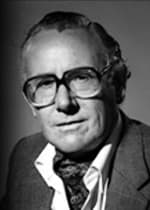
Biography coming soon.