“I'm a detective because I'm too lazy to work and too nervous to steal.”
— The Continental Op introduces himself, reflecting on his cynical view of his profession.

Dashiell Hammett (1929)
Genre
Mystery
Reading Time
300 min
Key Themes
See below
Sign in to track this book
A detective navigates family secrets, cults, and murders to find the truth behind a diamond heist and the cursed woman at its center.
Edgar Leggett hires the Continental Op to investigate a diamond theft from his San Francisco home. Leggett claims the thief, a man named Fitzstephan, dropped a small bag of diamonds in his yard. The Op finds the situation suspiciously neat, especially after finding a single large diamond seemingly overlooked by the thief. He interviews Leggett's wife, Gabrielle, a young woman with a troubled past who seems to be on drugs. The investigation uncovers deceit, with Leggett pushing the Op to focus on Fitzstephan. The Op's instincts tell him there is more to the story, especially about Gabrielle and her behavior, and the family's staff and routines.
Gabrielle Dain-Leggett disappears from her home, leaving a note saying she is running away. The Op learns that Gabrielle has a history of mental instability and drug addiction. She is also connected to a cult called the 'Holy Grail,' led by Owen Fitzstephan. Suspecting a deeper plot, the Op travels to Fitzstephan's compound in the country. He enters the cult, observing its rituals and Fitzstephan's hold over his followers, including Gabrielle, who seems deeply involved and alienated from reality.
At the Holy Grail compound, the Op sees disturbing events. A cult member, likely a rival or disillusioned follower, is found murdered. The Op also discovers that the 'Gabrielle' he has been interacting with at the compound is not the real Gabrielle Dain-Leggett but an imposter, possibly Alice Dain, Gabrielle's cousin. This revelation deepens the mystery, suggesting a plot to manipulate the Op and others. He realizes that the diamond theft, Gabrielle's disappearance, and the cult are all connected parts of a larger scheme, with Fitzstephan at its core.
The Op finds the real Gabrielle Dain-Leggett, who has been held captive and drugged to keep her from interfering. He learns about the 'Dain Curse,' a generations-old belief that bad luck, violence, and madness affect the Dain family, often resulting in sudden deaths or disappearances. This curse is used by various characters to explain the events around Gabrielle and her family. The Op starts to suspect that the curse is not supernatural but a cover for human malice and manipulation, especially concerning the Dain family's wealth and control over Gabrielle's inheritance.
The Continental Op confronts Owen Fitzstephan, slowly exposing his deceit. Fitzstephan, a manipulator, has been using the cult to control Gabrielle and exploit her family's wealth. The Op reveals how Fitzstephan planned the diamond theft, used the imposter Alice Dain to mislead investigators, and manipulated the 'Dain Curse' story. Fitzstephan's charm and intelligence make him a strong opponent, but the Op's pursuit of facts and his ability to see through the charades begin to dismantle Fitzstephan's reality, bringing him closer to revealing the person behind the scheme.
Edgar Leggett, Gabrielle's stepfather, is found murdered. This murder complicates the investigation, as Leggett was initially the Op's client and seemed to be a victim. However, the Op had always found Leggett's behavior suspicious, especially his eagerness to blame Fitzstephan and his strange relationship with Gabrielle. Leggett's death opens new inquiries, and the Op begins to suspect that Leggett might have been involved in the diamond theft or other bad activities, or that his death is a result of his own hidden agenda, pointing to a deeper conspiracy within the Dain family.
Through careful investigation, putting together clues, and using his reasoning, the Continental Op unmasks the person behind the Dain Curse and all the related crimes. It is Alice Dain, Gabrielle's cousin, who was not just an imposter but a key player. Alice, driven by greed and a desire to control the Dain fortune, planned the diamond theft, manipulated Fitzstephan, impersonated Gabrielle, and committed the murders. She used the family's reputation for madness to hide her actions. Her motive was to eliminate Gabrielle and inherit the Dain estate.
Confronted by the Continental Op with evidence, Alice Dain confesses to her scheme. She admits to planning the diamond theft, murdering Edgar Leggett, and trying to frame Fitzstephan and drive Gabrielle insane through drugs and manipulation. Her confession shows her cunning and ambition to gain control of the Dain family's wealth, using the 'Dain Curse' as a cover. The Op's investigation and refusal to be swayed by appearances finally end Alice's terror, exposing the human evil behind the supposed curse.
With Alice Dain caught, Gabrielle is freed from captivity and drugs. However, her mental and emotional state remains fragile due to the trauma and manipulation. The Op thinks about the case's impact, acknowledging the psychological toll it has taken on him, especially the pervasive deceit and human depravity. He recognizes that while the 'Dain Curse' was a fabrication, the real curse was the greed and evil within the Dain family itself. The case ends with justice achieved, but also a lingering unease about the darkness in human hearts.
The Protagonist
He begins as a detached investigator but becomes increasingly personally invested in Gabrielle's fate, ultimately experiencing a profound weariness from the case's depravity.
The Supporting/Victim
She begins as a confused, drugged victim and ends as a survivor, albeit one deeply scarred by her experiences.
The Antagonist/Red Herring
He is initially presented as the ultimate villain but is ultimately revealed to be a pawn in a larger scheme, losing his influence and freedom.
The Supporting/Victim
He transitions from a seemingly concerned client to a suspicious figure, ultimately becoming a victim whose death reveals deeper layers of the conspiracy.
The Antagonist
She begins as a minor character and imposter, gradually revealed to be the calculating, murderous mastermind behind all the crimes.
The Supporting
Serves a static role, providing expository information about Gabrielle's past.
The Mentioned
They remain largely static, serving as a collective example of Fitzstephan's manipulative power.
The Mentioned
Static, providing support to the Op's investigation.
The novel has many layers of deception, where nothing is what it seems. The 'Dain Curse' itself is an illusion used to hide human greed and murder. Characters like Fitzstephan and Alice Dain create false realities, from the staged diamond theft to Gabrielle's impersonation and the manipulation of a cult. The Continental Op's main task is to remove these illusions, constantly questioning appearances and motives, as seen when he finds the 'stray' diamond, which is too perfectly placed, or when he realizes the 'Gabrielle' at the cult is an imposter.
“It was a nice little family party, but I didn't get invited.”
At the core of the crimes in 'The Dain Curse' is a strong desire for wealth. The Dain family fortune is the prize that drives Alice Dain to commit murders, plan deceptions, and psychologically torture her cousin. Even the initial diamond theft, though a red herring, is for money. The novel shows how greed can corrupt morality, leading people to commit acts against family members and innocent parties, turning a supposed family curse into a cover for financial exploitation.
“It was a case of money, as most of them are.”
Gabrielle Dain-Leggett shows fragile identity and sanity. Her history of mental instability, drug addiction, and psychological manipulation blurs who she is. The 'Dain Curse' story uses this, suggesting that madness runs in the family. The Op constantly tries to tell the real Gabrielle from her manipulated state or her imposter. This theme shows how easily one's sense of self can be damaged by outside forces, drugs, and psychological abuse, leaving people vulnerable to exploitation, as seen in Gabrielle's repeated drugging and captivity.
“She was a mess of nerves and drugs, but there was a spark in her eyes.”
The novel explores the contrast between calculating evil and the Op's pursuit of justice. Alice Dain represents a chilling evil, without conscience and driven by self-interest, using a facade of family and spirituality to hide her malice. Owen Fitzstephan, while manipulative, is a lesser evil, a pawn in Alice's larger scheme. The Continental Op, despite his cynical exterior, embodies a practical good, fighting against darkness with logic and persistence. The story suggests that evil is not a supernatural curse but a human choice.
“I've seen enough of the world to know that the worst devils aren't the ones with horns and tails.”
Misleading clues and suspects designed to divert the Op's investigation.
Hammett masterfully employs red herrings throughout 'The Dain Curse.' The initial focus on Owen Fitzstephan as the primary villain, the 'stray' diamond, and the entire concept of the 'Dain Curse' itself are all designed to mislead the Continental Op and the reader. These diversions create complexity and suspense, making the Op's job more challenging as he must constantly sift through false leads and manufactured evidence to uncover the true culprits. The imposter Gabrielle is another significant red herring, making the Op question his own judgment and the reality of what he sees.
The Op's subjective perspective and limited knowledge as he pieces together the truth.
While the Continental Op is a highly observant and rational character, the narrative is filtered through his first-person perspective, making him an 'unreliable narrator' in the sense that he, like the reader, is constantly being deceived and must revise his understanding of events. He doesn't have all the answers from the start, and his deductions evolve as new information comes to light, sometimes leading him down false paths. This device creates a more immersive and suspenseful reading experience, as the reader experiences the unraveling of the mystery alongside the Op's own discoveries and frustrations.
A supposed supernatural affliction serving as a cover for human crimes and manipulation.
The 'Dain Curse' is a central plot device, presented as a generations-old family affliction of madness, misfortune, and violence. It functions as a powerful narrative element that provides a convenient, seemingly supernatural explanation for the bizarre events surrounding Gabrielle and her family. However, the Op ultimately proves that the 'curse' is a fabrication, a clever smokescreen used by the true villains, particularly Alice Dain, to conceal their calculated crimes, including murder, theft, and psychological torture. It highlights the human tendency to attribute evil to external forces rather than internal malice.
A character assuming another's identity to deceive and manipulate.
The impersonation of Gabrielle Dain-Leggett by her cousin, Alice Dain, is a critical plot device. This act of identity theft creates immense confusion and misdirection for the Continental Op, making it difficult for him to track the real Gabrielle and understand the true motives of the characters involved. It underscores the theme of deception and illusion, as the Op must penetrate this carefully constructed facade to uncover the truth. The physical resemblance between the cousins makes the impersonation plausible, adding a layer of cunning to Alice's elaborate scheme.
“I'm a detective because I'm too lazy to work and too nervous to steal.”
— The Continental Op introduces himself, reflecting on his cynical view of his profession.
“The world is full of things that are none of my business.”
— The Op remarks on his pragmatic approach to cases, avoiding unnecessary involvement.
“I don't mind a reasonable amount of trouble.”
— The Op expresses his tolerance for the complexities and dangers of his investigations.
“You can't expect to find the truth if you're afraid to look for it.”
— The Op advises on the necessity of courage in uncovering mysteries.
“People are always more complicated than they seem.”
— The Op observes the depth and contradictions in human nature during the case.
“A good detective knows when to listen and when to act.”
— The Op shares a principle of his investigative method, emphasizing balance.
“Fear is a poison that clouds the mind.”
— The Op comments on how fear affects judgment in the mysterious events of the curse.
“There's no such thing as a coincidence in my line of work.”
— The Op dismisses chance, insisting on looking for connections in the case.
“The past has a way of catching up with you, whether you like it or not.”
— The Op reflects on how history and secrets resurface in the Dain family curse.
“Sometimes the quietest people have the loudest secrets.”
— The Op notes that unassuming characters often hide the most in the mystery.
“You can't fix a problem if you don't understand it first.”
— The Op emphasizes the importance of thorough analysis in solving the case.
“In this business, you learn to trust your gut, but verify with facts.”
— The Op describes his approach to balancing intuition and evidence in detective work.
“Greed and fear are the two things that make people do stupid things.”
— The Op observes the motivations behind the crimes and deceptions in the story.
“The truth is often simpler than the lies we tell to hide it.”
— The Op remarks on how deception complicates the mystery unnecessarily.
Ready to see how well you understood this book? Take our interactive quiz with 10 questions.
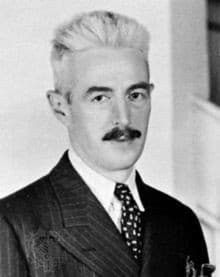
Samuel Dashiell Hammett was an American writer of hard-boiled detective novels and short stories. He was also a screenwriter and political activist. Among the characters he created are Sam Spade, Nick and Nora Charles, The Continental Op and the comic strip character Secret Agent X-9.