“It was a cruel month, April, when the trees sagged and the ground was sodden, when the sky was the colour of slate and the air was raw.”
— Describing the weather and atmosphere of April in Three Pines, setting a somber tone.

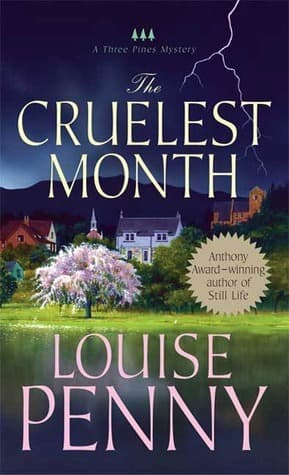
Louise Penny (2008)
Genre
Mystery
Reading Time
6-8 hours
Key Themes
See below
Sign in to track this book
In the peaceful village of Three Pines, an Easter séance meant to drive out evil instead leads to a death, forcing Chief Inspector Gamache to face both spectral and human darkness.
As spring arrives in Three Pines, villagers gather at the supposedly haunted Old Hadley House for an Easter séance. Led by spiritualist Jeanne Chauvet, attendees include the house's owner, Madeleine Favreau, village residents Peter and Clara Morrow, Myrna Landers, Ben Haddad, and Paul Gélinas. The séance aims to clear the house of a perceived evil. During the ritual, the lights go out, and a scream fills the air. When the lights return, Paul Gélinas is found dead, his eyes wide open in terror. Initial assessment suggests he died of fright, but the suspicious circumstances prompt a call to the Sûreté du Québec.
Chief Inspector Armand Gamache, with Jean-Guy Beauvoir, arrives in Three Pines to investigate Paul Gélinas's death. Gamache immediately notices the house's heavy atmosphere and the villagers' reluctance to share details, especially about their true feelings for Paul. He learns Paul was a generally disliked, manipulative man who had recently returned to the village. Gamache also observes the unusual dynamics among the séance group, sensing tensions and hidden pasts. The initial autopsy is inconclusive, confirming fright but not ruling out other causes.
Gamache and Beauvoir interview the séance participants and other villagers. They discover Paul Gélinas, an author, was good at exploiting people's weaknesses and secrets. He had a difficult relationship with Madeleine Favreau, the Old Hadley House's owner, and hints of a shared, painful past involving her sister, Simone, who died years ago. Paul had also been causing trouble among villagers, seemingly enjoying their discomfort. Myrna Landers, the bookstore owner, reveals Paul was writing a new book, its subject a mystery but seemingly connected to the village's past.
The investigation repeatedly turns to the death of Simone Favreau, Madeleine's younger sister, who died by suicide in the Old Hadley House years ago. It becomes clear that Paul Gélinas was deeply involved with Simone before her death, and many villagers believe he caused her despair. Madeleine, especially, resents Paul, believing he drove her sister to suicide. Gamache suspects the 'evil' the séance aimed to expel is the lingering trauma and guilt from Simone's death, not a literal ghost. The house itself seems to hold this collective pain.
During the investigation, another villager, Ben Haddad, becomes seriously ill after drinking tea. It is quickly determined he was poisoned with belladonna, a powerful hallucinogen that can mimic extreme fear and cause death. This changes the case, suggesting Paul Gélinas's death was not just from fright but from similar poisoning. Belladonna is traced to a plant in the Old Hadley House's garden, making it accessible. This second poisoning shows a deliberate and dangerous killer is at work, targeting those connected to the séance and Paul's past.
The presence of belladonna becomes a key clue. Gamache and Beauvoir investigate who in the village would know about the plant's properties and how to prepare it. They discover Clara Morrow, an artist and gardener, knows a lot about plants, including their toxic uses. This makes Clara a suspect, though Gamache finds it hard to believe she could be involved. The belladonna also explains how Paul Gélinas could have died of 'fright' — the hallucinogen would have caused extreme terror, leading to a fatal heart attack. The killer is not using supernatural means but a planned chemical attack.
As Gamache digs deeper, Three Pines' calm exterior begins to crack. He uncovers old resentments, jealousies, and betrayals among residents. Peter and Clara Morrow's marriage shows strain, made worse by Clara's artistic success and Peter's struggles. Myrna Landers reveals her own complicated past with Paul Gélinas. Madeleine Favreau's grief over Simone is raw, hinting at a desire for revenge. Gamache realizes the killer is likely someone close to the victims, familiar with the small community's relationships.
Gamache's team discovers a hidden passage in the Old Hadley House, showing someone could move unseen through the walls. This explains how the killer could have given the poison during the séance without being seen. Belladonna in the garden and its use in traditional remedies further links the house to the murders. Gamache also learns the house was built with a 'priest hole,' a secret room, later changed into a passage. This architectural detail becomes central to understanding the killer's method.
Gamache eventually connects the evidence, realizing Myrna Landers is the killer. Her motive comes from a deep, protective love for Clara Morrow. Paul Gélinas had been blackmailing Clara, threatening to reveal a past secret that would ruin her reputation. Myrna, unable to see Clara suffer, decided to kill Paul. She used belladonna, knowing its effects, and gave it during the séance, using the darkness and confusion. The second poisoning of Ben Haddad was a diversion, meant to make others suspect someone else, or a panicked attempt to silence someone who knew too much.
With Myrna's confession, the truth of the murders is clear. Gamache, though saddened, understands Myrna's desperate act of love and protection. He thinks about Three Pines' deceptive calm, where deep pain and dark secrets can exist under a peaceful surface. The case makes Gamache face his own weaknesses and human nature's complexities, confirming his belief that even in peaceful places, evil can take hold. The Old Hadley House, now free of its heavy atmosphere, stands as a silent witness to the events.
The Protagonist
Gamache confronts his own past 'ghosts' and the illusions of peace, reaffirming his understanding of human nature's complexities.
The Supporting
Beauvoir continues to learn from Gamache, deepening his understanding of human motivation and the subtleties of investigation.
The Victim
Gélinas's past actions and current manipulations lead directly to his demise, serving as a catalyst for revealing deeper village secrets.
The Supporting
Madeleine slowly comes to terms with the true nature of her sister's death and the 'evil' in the house, finding a path towards healing.
The Antagonist/Supporting
Myrna's character arc reveals her hidden capacity for extreme action, driven by love and loyalty, leading to her confession and the revelation of her true depth.
The Supporting
Clara confronts the secret from her past and the strains in her marriage, finding a renewed sense of self and purpose.
The Supporting
Peter confronts his envy and insecurity, beginning a path towards reconciling with his wife and his own artistic identity.
The Supporting/Victim
Ben's poisoning serves as a critical plot point, confirming the use of a hallucinogen and escalating the stakes of the investigation.
The Supporting
Jeanne's initial belief in supernatural evil is challenged by the reality of human malice.
Three Pines, with its charm and close community, seems like a peaceful village. However, Gamache continually reveals deep resentments, hidden secrets, and old pain beneath the surface. The 'evil' in the Old Hadley House is not a literal ghost, but human cruelty, guilt, and unresolved trauma. This theme questions the idea that physical beauty or calm means inner peace, showing how even picturesque settings can hold deep darkness and complex human relationships.
“Evil isn't a supernatural force. It's human. It's us.”
The novel explores how past tragedies, especially Simone Favreau's suicide, continue to affect the present. Madeleine's lasting grief and the collective memory of Paul Gélinas's role in Simone's life drive much of the plot. Characters cannot move forward because they are trapped by memories and unresolved past pain. The Old Hadley House itself holds these memories, making it feel 'haunted.' The theme highlights the powerful and often destructive nature of unaddressed grief and how it shapes individual and community identities.
“The past isn't dead. It's not even past.”
The 'evil' the séance participants try to remove is human, specifically Paul Gélinas's manipulative and cruel nature. His enjoyment in tormenting others and exploiting their weaknesses is central to the story. However, the novel also explores 'evil' from desperate acts born of love and protection, as seen in Myrna's actions. Gamache grapples with different aspects of human cruelty, from clear malice to the destructive results of well-meaning but misguided acts. The book suggests that evil is not an outside force but a part of being human.
“The greatest evil is not done in the dramatic gestures of villains, but in the quiet, almost invisible actions of ordinary people.”
Despite the darkness, the novel also explores the power of love and loyalty. Myrna Landers's motive for murder is a deep, protective love for Clara Morrow, showing how far someone might go to shield a loved one. This theme explores the complex and sometimes dangerous aspects of devotion, where the desire to protect can lead to morally unclear or even criminal acts. It asks questions about loyalty's limits and sacrifices made for love, providing a contrast to the destructive forces at play.
“There are some people you just can't let suffer. Not if you can stop it.”
The artistic rivalry between Peter and Clara Morrow highlights envy, insecurity, and the struggle for identity. Peter's inability to match Clara's success fuels his resentment and strains their marriage. Their artistic pursuits, which should bring joy, instead become a battleground for ego and self-worth. This theme explores how creative identity can intertwine with personal relationships and how outside approval affects an artist's self-perception and ability to connect with others.
“He loved her art, but he hated that it wasn't his.”
A spiritualist gathering that provides the initial setting and apparent cause of death.
The séance at the Old Hadley House serves as a classic red herring, initially suggesting a supernatural explanation for Paul Gélinas's death. It creates an atmosphere of suspense and fear, allowing the killer to exploit the confusion and darkness to administer poison. This device also allows the author to introduce all the key suspects in one location and immediately establish the underlying tensions and beliefs about the 'haunted' house, laying the groundwork for Gamache to dismantle the supernatural theory in favor of human motive.
A seemingly haunted house that embodies the village's hidden secrets and trauma.
The Old Hadley House is more than just a setting; it acts as a character itself. Its oppressive atmosphere, history of tragedy (Simone's suicide), and the villagers' belief in its haunting make it central to the mystery. The discovery of the hidden passage within its walls is a crucial plot point, explaining the killer's method. The house physically manifests the theme of the past's hold, as it literally contains the secrets and painful memories that drive the characters' actions and motivations.
A potent hallucinogen used to mimic death by fright and later cause a second victim's illness.
The use of belladonna is a key plot device that transforms the initial 'death by fright' into a meticulously planned murder. It allows the killer to exploit the séance's atmosphere and the victim's own anxieties, while providing a tangible, scientific explanation for the death. Its discovery, particularly the plant growing in the Old Hadley House garden, narrows the suspect pool to those with botanical knowledge. The second poisoning with belladonna confirms the killer's method and escalates the stakes, moving the investigation beyond an isolated incident.
Paul Gélinas's use of a character's past secret to manipulate and control them.
Paul Gélinas's blackmail of Clara Morrow, threatening to expose a past secret, serves as the primary motive for Myrna Landers's actions. This device creates a powerful emotional driver for the killer, emphasizing the lengths to which loyalty and love can push an individual. It also reveals the darker side of Paul's character and the pervasive nature of secrets within the seemingly tranquil village, highlighting how hidden vulnerabilities can be exploited and lead to tragic consequences.
“It was a cruel month, April, when the trees sagged and the ground was sodden, when the sky was the colour of slate and the air was raw.”
— Describing the weather and atmosphere of April in Three Pines, setting a somber tone.
“Goodness had nothing to do with it. Evil was just… evil. It didn't need a reason. It didn't need a past.”
— Armand Gamache reflecting on the nature of evil during the investigation.
“The only thing necessary for the triumph of evil is for good men to do nothing.”
— A classic quote cited within the narrative, emphasizing the theme of inaction.
“Sometimes the smallest things take up the most room in your heart.”
— A general observation that resonates with the emotional depth of the characters, particularly their relationships.
“The past is never dead. It's not even past.”
— Another well-known quote referenced, highlighting how past events influence the present mystery.
“We all have our demons. Some are just better at hiding them than others.”
— Reflecting on the hidden struggles and secrets of the residents of Three Pines.
“Fear was a powerful thing. It could make people do terrible things, and it could also make them do nothing at all.”
— Gamache contemplating the role of fear in the actions and inactions of the characters.
“It's hard to hate someone when you know their story.”
— A profound insight into empathy and understanding, a recurring theme in Penny's work.
“The greatest trick the devil ever pulled was convincing the world he didn't exist.”
— Referenced in the context of unseen forces or hidden malevolence at play in the mystery.
“Truth was like a stubborn weed, persistent and difficult to eradicate, no matter how much you tried to bury it.”
— Describing the inevitable surfacing of truth in the course of an investigation.
“Silence was not always golden. Sometimes it was just empty.”
— Contrasting the peaceful silence of Three Pines with the unsettling silence of unspoken truths or grief.
“Courage isn't the absence of fear, but the triumph over it.”
— A common but poignant reflection on the nature of bravery, especially in facing difficult truths.
“Sometimes, the only way to heal a wound is to expose it to the light.”
— Relates to the process of revealing secrets and confronting painful past events to find resolution.
“Hope was a fragile thing, easily broken, but also surprisingly resilient.”
— Reflecting on the enduring human spirit even amidst tragedy and despair.
“The difference between a house and a home was that a home had a heart.”
— A gentle observation about the emotional core of the community and the personal spaces of the characters.
Ready to see how well you understood this book? Take our interactive quiz with 10 questions.

Biography coming soon.