“He that marries a country wife, first, marries a fool, then marries a foe.”
— Horner's cynical view on marriage to a naive woman.

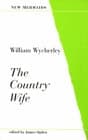
William Wycherley (1675)
Genre
Fiction
Reading Time
200 min
Key Themes
See below
Sign in to track this book
A notorious rake pretends to be impotent to access London's virtuous wives, while a country innocent navigates urban courtship.
The play begins with Mr. Horner, a notorious rake, planning with his surgeon, Quack, and a matchmaker, Lucy. They spread a rumor that he became impotent from a venereal disease. His goal is to make husbands trust him and allow him free access to their wives, believing he poses no threat. Sir Jasper Fidget, a foolish cuckold, is the first to believe the deception, readily accepting Horner's 'condition' and promoting it to other husbands. Horner then begins his plan with Lady Fidget and Mrs. Dainty Fidget, who, despite their initial modesty, are intrigued by his supposed 'safe' company. This setup establishes Horner's cunning and the widespread hypocrisy in London society.
Mr. Pinchwife, an older, intensely jealous man, arrives in London from the country with his young, naive wife, Margery, and his sister, Alithea. He is determined to protect Margery from the city's corrupting influences and rakes, especially Horner, whom he dislikes. He keeps Margery almost imprisoned, telling her to pretend to be ugly and avoid all male company. Meanwhile, Alithea is engaged to the dull and pretentious Mr. Sparkish, a fop who cares more about appearing witty and fashionable than about Alithea. Alithea, however, is secretly attracted to Mr. Harcourt, Sparkish's friend, who genuinely loves her. This scene shows Pinchwife's extreme possessiveness and sets up the contrasting romantic situations.
Margery Pinchwife, despite her husband's strict rules, is curious and quickly gets bored with her confinement. She watches the fashionable ladies and gentlemen from her window, especially intrigued by Horner. When Pinchwife takes her out, disguised as a boy, she meets Horner, who immediately recognizes her and flirts with her. Margery, new to such attention, is captivated. Pinchwife, unaware of Horner's true nature due to the rumors, only cares about keeping Margery away from other men. This interaction marks the start of Margery's awakening to the world beyond her husband's control and her growing interest in Horner.
Horner's deception grows as he entertains Lady Fidget, Mrs. Dainty Fidget, and Mrs. Squeamish. These ladies, believing him harmless, visit his lodging often, supposedly to admire his 'china' collection. The 'china' is a euphemism for their sexual encounters with Horner. Their maids and even Sir Jasper Fidget are involved or willfully ignorant, maintaining the illusion of Horner's impotence. This scheme exposes the elaborate hypocrisy of upper-class women who pretend to be virtuous while secretly indulging desires, enabled by Horner's clever trick and the husbands' gullibility.
Margery, smitten with Horner, writes him a love letter expressing her feelings and a desire to meet. Pinchwife intercepts the letter, furious at her disobedience. He forces her to rewrite it as a letter of rejection, threatening to kill her if she does not comply. However, Margery, with surprising wit, secretly replaces the dictated letter with her original love letter, ensuring Horner receives her true message. This incident shows Margery's developing cunning and her growing defiance of her husband's control, hinting at her potential for liberation.
Harcourt, determined to win Alithea, tries to persuade her not to marry Sparkish. He constantly points out Sparkish's vanity, superficiality, and lack of genuine affection. Sparkish, oblivious and self-absorbed, often helps Harcourt's cause by acting foolish, revealing his true character as a fop who values appearances above all else. Alithea, though initially resistant due to her honor and commitment, begins to see the truth in Harcourt's words and is drawn to his sincerity. This subplot provides a contrasting, more genuine romantic pursuit amid the play's comedic deceptions.
Pinchwife, desperate to keep Margery away from Horner, decides to take her to a convent, believing it to be a safe, male-free environment. However, Horner, anticipating Pinchwife's moves, arranges to be there. Margery, seizing the chance, slips away from Pinchwife and meets Horner. Their encounter further strengthens their mutual attraction and Margery's growing desire for freedom. This scene shows the irony of Pinchwife's efforts; his attempts to control Margery only push her further towards Horner, highlighting his ineffectiveness.
A scene occurs in Horner's lodging when Lady Fidget, Mrs. Dainty Fidget, and Mrs. Squeamish arrive at the same time, each expecting an exclusive meeting with Horner. They discover each other, and realizing they have all been sharing Horner's 'china,' they have a heated, but suppressed, confrontation. To protect their reputations, they agree to a pact of silence, pretending ignorance of each other's activities. This scene exposes the collective hypocrisy of these 'virtuous' ladies and their willingness to prioritize social appearances over genuine morality, solidifying Horner's success.
Margery's desire for freedom and Horner grows stronger. She tricks Pinchwife into believing she is going to meet Alithea. Instead, she plans to meet Horner, having disguised herself in Alithea's clothes and veil. This impersonation is a bold move, showing her increasing assertiveness and cunning. The disguise also creates more confusion and comedic misunderstandings, especially when Pinchwife believes he has taken Alithea (who is actually Margery) to be married to Sparkish, while the real Alithea is elsewhere, pursuing her own romantic destiny with Harcourt.
The play ends in chaotic events. Alithea, with Lucy's help, rejects Sparkish and marries Harcourt. Margery, still disguised as Alithea, is almost married to Sparkish but is reunited with Horner. Pinchwife is driven to near madness by his wife's perceived infidelity and his inability to control her. The truth about Horner's impotence deception is almost revealed by the enraged Pinchwife and Sir Jasper Fidget, but Quack and Lucy intervene. They successfully convince everyone (including the husbands) that Horner is indeed impotent, protecting his reputation and the ladies' honor. The play concludes with Horner triumphant, Margery free, and Alithea happily married.
The Protagonist/Antagonist
Horner remains largely static, a successful manipulator from beginning to end, his 'impotence' a shield he never truly sheds.
The Protagonist
Margery transforms from a naive, oppressed country wife into a cunning, assertive woman who seeks and achieves her own desires.
The Antagonist
Pinchwife's jealousy and attempts at control are consistently thwarted, ending in his utter humiliation and failure to control his wife.
The Supporting
Alithea moves from a reluctant engagement to a fop to a happy marriage with the man she truly loves, prioritizing sincerity over social standing.
The Supporting
Harcourt successfully navigates social obstacles to win the hand of the woman he loves, demonstrating sincerity's triumph.
The Supporting
Sparkish remains a self-absorbed fop, ultimately losing Alithea due to his own vanity and lack of genuine affection.
The Supporting
Lady Fidget remains a hypocritical figure, successfully maintaining her reputation despite her illicit affairs, thanks to Horner's ruse.
The Supporting
Sir Jasper remains a deluded cuckold, never truly understanding his wife's infidelity or Horner's deception.
The Supporting
Lucy consistently uses her wit and position to assist her mistresses and others in achieving their desires, remaining a clever and effective manipulator.
The Supporting
Quack remains a loyal and effective co-conspirator to Horner, successfully maintaining the deception to the end.
This is a central theme, present in almost every character. Horner's entire scheme relies on the difference between his feigned impotence (appearance) and his actual virility (reality). The 'virtuous gang' of ladies (Lady Fidget, Mrs. Dainty Fidget, Mrs. Squeamish) publicly denounce rakes and uphold moral standards while secretly having affairs with Horner, using 'china' as a euphemism for their activities. Mr. Sparkish cares only for the appearance of wit and fashion, not genuine affection. Even Pinchwife's attempts to control Margery are about maintaining the appearance of a chaste wife, rather than addressing her true desires. The play constantly shows the gap between what people say and what they do, and how society often accepts comforting lies over inconvenient truths.
“A pox on 'em, the jades! I cannot be civil to 'em, though I could wish 'em well, for they are my own sex. But I hate 'em, for they are my rivals, and I cannot bear to see 'em enjoy what I would fain have myself.”
The play explores the tension between society's repression of female sexuality and the human desire for pleasure and freedom. Mr. Pinchwife's extreme efforts to repress Margery's sexuality ironically lead to her awakening and cunning pursuit of Horner. The married ladies, believing Horner is impotent, find a safe way to express their desires. Horner himself is a figure of male sexual liberation, challenging conventional morality. The play suggests that repression is useless and often counterproductive, and that desire will find a way to appear, often through deception. Margery's journey shows a woman breaking free from sexual repression.
“I will go abroad, that's certain; and I will see plays, and go to visits; and I will have fine clothes, and go to Court, and see the King, and the Queen, and all the fine things.”
Mr. Pinchwife embodies the destructive nature of extreme jealousy and possessiveness. His constant attempts to control Margery, to keep her ignorant and confined, are unsuccessful and actively push her towards the infidelity he fears. His jealousy makes him blind to his wife's intelligence and resourcefulness, and he becomes a figure of ridicule. The play shows that love and fidelity cannot be forced; true affection must be freely given. Pinchwife's paranoia contrasts with Horner's casual conquests, highlighting the ineffectiveness of his approach.
“A wife is like a fly, which you may keep in a glass, but she will buzz and flutter till she breaks her wings against it, and then dies.”
The play satirizes Restoration London society as superficial, morally corrupt, and obsessed with appearances. The characters, from fops like Sparkish to the hypocritical 'virtuous gang' of ladies, care more about maintaining their social standing and reputation than about genuine virtue or sincerity. Horner's success in his deception is a direct result of this societal corruption and gullibility. The city is portrayed as a place where innocence (like Margery's) is quickly lost, and where wit and cunning are valued above honesty. The play critiques the moral decay beneath the polished surface of urban gentility.
“He has a great deal of wit, and I love a man of wit, let him be never so ugly.”
Deception drives the entire plot, primarily through Horner's feigned impotence. The play shows how carefully constructed lies and strategic language can manipulate perception and control outcomes. The euphemism of 'china' is a prime example of how language can hide illicit activities in plain sight. Margery's clever letter-swapping also shows her growing mastery of deception. The characters constantly engage in verbal sparring, using wit and double entendre to conceal their true intentions or to expose others. The play highlights language as a powerful tool for both control and liberation.
“I have been for the china, and am sure, if you had been in the next room, you might have heard the jingling of the china.”
Horner's feigned impotence allows him unrestricted access to married women.
This is the central plot device, a master deception orchestrated by Horner. By spreading the rumor that he has been rendered impotent by venereal disease, Horner transforms himself from a notorious rake into a 'safe' companion in the eyes of jealous husbands. This ruse enables him to freely interact with and seduce married women without suspicion, as their husbands believe he poses no threat. It functions as the engine for most of the play's comedic situations and exposes the widespread hypocrisy and gullibility of society.
The word 'china' serves as a code for sexual encounters with Horner.
The repeated use of 'china' as a euphemism is a brilliant comedic device. When the married ladies visit Horner, their stated purpose is to admire or acquire his 'china' collection. However, it quickly becomes clear that 'going for china' or 'breaking china' refers to their sexual liaisons with Horner. This device allows the characters to maintain a veneer of respectability while openly discussing their illicit activities, highlighting the hypocrisy and coded language prevalent in Restoration society. It creates a layer of knowing humor for the audience, who are privy to the true meaning.
Characters use disguises to achieve their goals, leading to comedic confusion.
Disguise and mistaken identity are employed for comedic effect and to advance the plot. Margery Pinchwife disguises herself as a boy to go out and later as Alithea to meet Horner, leading to humorous confusion, particularly for Pinchwife. Harcourt also uses a disguise (as a parson) to gain private access to Alithea and try to win her over. These devices create chaotic situations, allow characters to behave in ways they normally couldn't, and ultimately contribute to the resolution of the various romantic and sexual entanglements.
A letter written by Margery is intercepted by Pinchwife, leading to a clever substitution.
Margery's love letter to Horner, intercepted by Pinchwife, is a pivotal device that demonstrates her burgeoning cunning. Pinchwife forces her to rewrite it as a letter of rejection, but Margery cleverly substitutes the original, ensuring Horner receives her true message. This not only advances her relationship with Horner but also highlights her growing assertiveness and ability to outwit her oppressive husband. It's a moment where the seemingly naive character reveals unexpected depth and resourcefulness, turning a potential setback into a triumph.
“He that marries a country wife, first, marries a fool, then marries a foe.”
— Horner's cynical view on marriage to a naive woman.
“I have been so long kept up, I am e'en mouldy.”
— Margery Pinchwife's complaint about her confinement.
“A pox of all that are so civil as to love me for my money!”
— Sparkish's complaint about those who feign affection for his wealth.
“I am resolved to be a rake and to love nothing but my pleasure.”
— Horner's declaration of his libertine lifestyle.
“Sure, 'tis a fine thing to be a lady!”
— Margery Pinchwife's naive observation about the life of a city woman.
“We are like the ladies at a coronation, who, when the show is done, are ready to go home to bed.”
— Alithea's witty comparison of women's roles.
“I am not so young as to believe that virtue is always rewarded.”
— Mrs. Squeamish's realistic view of morality.
“A husband is a necessary evil, but a lover is a delightful one.”
— Lady Fidget's frank assessment of male relationships.
“The only way to be safe from women is to be out of the world, or to be a eunuch.”
— Pinchwife's extreme paranoia about women's fidelity.
“I love to be a little mischievous, to keep myself in countenance.”
— Dainty Fidget's justification for her flirtatious behavior.
“Ignorance is the best armor for a wife.”
— Pinchwife's belief that keeping his wife uneducated will preserve her fidelity.
“She's a country-girl, and thinks every man a husband that's civil to her.”
— Horner's observation on Margery Pinchwife's naivety.
“To be a cuckold is to be a fashion.”
— Sparkish's flippant remark about cuckoldry.
“I'll never marry a fool; for I know the price of 'em.”
— Alithea's practical stance on choosing a husband.
Ready to see how well you understood this book? Take our interactive quiz with 10 questions.
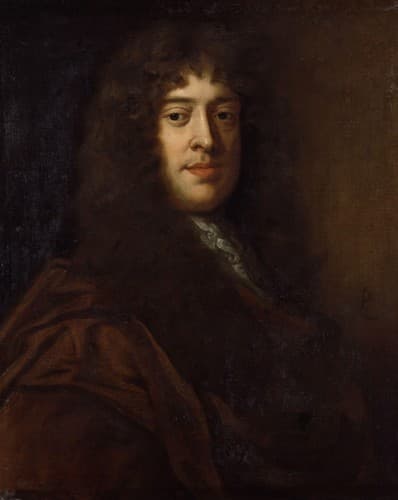
Biography coming soon.
Ashley Antoinette
4.6

Mark McDonald
4.4
Luo Guanzhong
4.4

Mia McKenzie
4.3

Dorothy Parker
4.3
Joaquim Maria Machado de Assis
4.3
James Thurber
4.2

Terry Kay
4.2