“The coast of Maine is a long, irregular line, like the profile of a man's face, with its chin to the eastward.”
— Opening lines, describing the Maine coast.


Sarah Orne Jewett (2021)
Genre
Fiction
Reading Time
162 min
Key Themes
See below
Sign in to track this book
A summer visitor to a remote Maine fishing village discovers the quiet dignity, lasting friendships, and solitude in the lives of its resilient, sea-weathered inhabitants.
The unnamed narrator, a writer looking for a quiet summer retreat, arrives by steamboat in the remote coastal village of Dunnet Landing, Maine. She finds lodging with Mrs. Almira Todd, an independent woman who gathers and sells herbs. Mrs. Todd's deep knowledge of local plants and her connection to nature define her work. Her house, near the sea and surrounded by an herb garden, appeals to the narrator with its simplicity and rustic charm. The narrator first plans to use an old schoolhouse as her writing studio, but soon finds village life and Mrs. Todd's company more interesting than strict solitude. She observes Mrs. Todd's routines and begins to join the quiet life of the community.
After some time, the narrator moves her writing desk to the empty schoolhouse, which offers more solitude and a different view of the village. She enjoys the quiet and the sense of history in the old building. Here, she meets Captain Littlepage, an elderly retired sea captain who lives nearby. Captain Littlepage has traveled the world and has a sharp mind and a philosophical outlook. He visits the narrator at the schoolhouse and shares stories of his voyages, especially his interest in a legendary 'country of the pointed firs' he once heard about, a place of mystery and old wisdom. Their talks reveal his thoughts on life, memory, and a changing world.
The narrator learns about Mrs. Todd's younger brother, William, who lives in a small house next to their mother's, away from the main village. William is a quiet, gentle, and somewhat reclusive man, known for his shyness and devotion to his mother. He rarely speaks and seems happy with a solitary life of fishing and simple tasks. Mrs. Todd often speaks of him with affection and concern, hinting at his long-standing unrequited love for a woman named Esther. The narrator observes William from a distance, noting his calm manner and his deep connection to the land and sea, a contrast to the more outgoing villagers. His presence adds a quiet sadness to the household.
The narrator often goes with Mrs. Todd on her daily trips to gather herbs from the fields and woods around Dunnet Landing. These trips are not just for collecting plants; they are chances for Mrs. Todd to share her extensive knowledge of local botany, folk remedies, and the hidden stories of the landscape. As they walk, Mrs. Todd points out various plants, explaining their medicinal properties and traditional uses, often adding stories about the people who once used them. The narrator gains a deeper appreciation for Mrs. Todd's connection to nature and her role as a healer and caretaker of the community's well-being. These trips also allow Mrs. Todd to share her thoughts on life, death, and the lasting power of nature.
Mrs. Todd invites the narrator to join her on a boat trip to Green Island, a small, isolated island where Mrs. Todd's elderly mother, Mrs. Blackett, lives with William. The journey across the water is an important event, and the narrator experiences the beauty and solitude of the Maine coast. Upon arriving, they are warmly greeted by Mrs. Blackett, a remarkable woman in her nineties who has a sharp mind and a gentle spirit. The narrator is deeply impressed by Mrs. Blackett's resilience and her deep connection to her island home. William is also there, continuing his quiet devotion to his mother. The visit offers a look into the close-knit family life and the lasting strength of these island dwellers, living simply and in harmony with nature.
Mrs. Todd invites the narrator to the annual Bowden family reunion, a major social event held on a remote point of land. This gathering brings together many of Mrs. Todd's relatives and friends, some traveling long distances. The reunion is a lively display of community spirit, with plenty of food, conversation, and shared memories. The narrator observes the complex relationships and the strong tradition that ties the community together. She is struck by the genuine warmth and hospitality of the Bowden family, and how they honor their past while celebrating their current connections. This event shows the importance of family and community in the lives of the Dunnet Landing residents.
During one of their talks, Mrs. Todd shares the sad story of Joanna, a young woman from a nearby island who, after being left by her lover, withdrew completely from society. Joanna moved to a small, isolated island and lived alone for many years, refusing all contact with the outside world. She eventually died there, a solitary figure whose story became a local legend. Mrs. Todd tells Joanna's tale with sympathy and understanding, recognizing the depth of her pain and her fierce independence. Joanna's story is a reminder of the harsh realities of love and loss in a secluded community, and the impact of individual choices.
While exploring the countryside, the narrator finds a solitary, unmarked grave overlooking the sea. Mrs. Todd tells her it belongs to an unknown sailor who washed ashore years ago and was buried by the local community. The grave is a strong symbol of life's fleeting nature and the sea's constant presence in the villagers' lives. The narrator thinks about how short human life is and how the community silently honors its dead, known or unknown. This quiet discovery highlights themes of isolation, memory, and the deep connection between the people of Dunnet Landing and the natural world, especially the ocean.
To the community's surprise and delight, William, Mrs. Todd's shy brother, finally finds happiness. His long-awaited marriage to Esther, the woman he had loved for so long, takes place on Green Island. The wedding is a simple but meaningful event, attended by close family and friends. The narrator observes William's quiet joy and Esther's gentle affection, seeing the fulfillment of a long-held hope. This event brings a sense of closure and contentment, especially for Mrs. Todd and Mrs. Blackett, who had long wished for William's happiness. The wedding symbolizes the lasting power of love and the possibility of late-life happiness even in a quiet, secluded world.
As summer ends, the narrator gets ready to leave Dunnet Landing. She reflects on her time in the village, the friendships she made, and the impact the quiet lives and wisdom of its people have had on her. She visits Mrs. Todd one last time, thanking her for the hospitality and the unique insights she gained. Their parting is bittersweet, marked by quiet understanding and a promise to remember. The narrator leaves feeling refreshed and with a deeper appreciation for the simple, lasting values of community, nature, and the human spirit she found in the 'country of the pointed firs.' The landscape and its people have left a lasting mark on her.
The Protagonist
She arrives seeking solitude but leaves with a profound connection to the community, her perspective on life broadened by the simple wisdom of the villagers.
The Supporting
Her character remains consistent, serving as a pillar of wisdom and tradition who reveals the enduring spirit of her community.
The Supporting
Initially a symbol of quiet solitude and unfulfilled love, William ultimately finds happiness and companionship in marriage, showing that even the most reclusive can find connection.
The Supporting
Her character remains consistent as a figure of enduring wisdom and grace, a matriarch who symbolizes the deep roots of the community.
The Supporting
He serves as a static character whose past experiences and philosophical musings provide a counterpoint to the localized wisdom of the other villagers.
The Mentioned
Her story is a completed arc, a tragic legend that underscores themes of loss and isolation.
The Supporting
She moves from an object of quiet longing to a fulfilled partner, bringing happiness to William and the community.
The novel explores the strength of a close-knit community in a remote place. Despite isolation, the people of Dunnet Landing maintain strong family bonds, friendships, and shared history. The Bowden family reunion shows this, bringing together many relatives to celebrate their heritage and strengthen their connections. Mrs. Todd's role as an herb gatherer and storyteller also shows how individuals contribute to the community's well-being and memory. Simple acts of visiting, sharing meals, and telling tales create a rich system of mutual support and belonging, showing that true wealth lies in human relationships.
“I had been a stranger, and they had taken me in; I had been a lonely, self-perplexed woman, and they had given me a clue to the simple life.”
Nature, especially the rugged Maine coast and the sea, is always present and shapes the lives and characters of Dunnet Landing's people. Mrs. Todd's knowledge of herbs and her daily trips in the fields show a deep, almost spiritual, connection to the land. The sea is also a source of livelihood, memory, and sometimes tragedy, as seen in the story of the unknown sailor's grave. The isolation of Green Island, where Mrs. Blackett and William live, further highlights a life lived directly with the elements. This theme suggests that living in harmony with nature builds resilience, wisdom, and a strong sense of place.
“The sea-coast and the sea are always at a struggle with the land. The one is always trying to encroach upon the other.”
The novel values the dignity and wisdom found in simple lives, often away from complex city society. The characters of Dunnet Landing, despite lacking formal education or material wealth, understand life, death, and human nature. Mrs. Todd's practical wisdom, Mrs. Blackett's calm resilience, and William's quiet contentment all show this theme. The narrator, initially an observer, learns that true insight often comes from experience, connection to the land, and an unpretentious approach to life. The story celebrates the richness found in daily routines and real human interaction.
“I often found myself laughing aloud in the schoolhouse, thinking of the world and its great affairs, and then of the simple, unhurried, genuine concerns of Dunnet Landing.”
Storytelling is an important part of life in Dunnet Landing. It is the main way history, values, and individual lives are remembered and passed down. Mrs. Todd is a skilled storyteller, weaving personal anecdotes, local legends (like Joanna's story), and practical wisdom into her conversations. Captain Littlepage's tales of his voyages and the 'country of the pointed firs' also show the power of memory and imagination. Through these shared stories, the community keeps its identity and connects generations. The narrator, as a writer, carries these stories, ensuring that the unique spirit of Dunnet Landing is not lost but remembered through her observations.
“There was a little air of that great world, the world of ships and sea, in Captain Littlepage's talk, which was like a refreshing breeze from the outer ocean.”
The story is told through the perspective of an unnamed summer visitor.
The novel employs a frame narrative, with an unnamed female writer serving as the primary observer and narrator. This device allows for an outsider's perspective on the unique community of Dunnet Landing. The narrator's initial detachment and later immersion into village life provide a gradual reveal of the characters and their stories. Her role as a writer also justifies her keen observations and reflections, inviting the reader to experience the setting and its inhabitants through her sensitive and analytical lens, making the exotic familiar and the familiar profound.
The narrative unfolds through a series of interconnected vignettes and character sketches.
Instead of a single overarching plot, the novel is structured as a series of loosely connected episodes, character sketches, and observations. Each chapter or section often focuses on a particular character, a shared event (like the reunion), or a specific conversation, revealing different facets of Dunnet Landing life. This episodic nature mirrors the unhurried pace of the village and allows the reader to gradually build a comprehensive picture of the community and its inhabitants, much like the narrator herself pieces together her understanding through daily interactions and shared stories.
Natural elements like the sea, firs, and herbs represent deeper meanings.
Nature in 'The Country of the Pointed Firs' is deeply symbolic. The pointed firs themselves represent the enduring, rugged spirit of Maine and its people, reaching towards the sky yet firmly rooted. The sea symbolizes both connection and isolation, livelihood and danger, the vastness of the world and the limits of human control. Herbs, gathered by Mrs. Todd, symbolize healing, traditional wisdom, and a profound connection to the earth. These natural elements are not merely setting but active participants in the characters' lives, reflecting their inner states and the enduring truths of existence.
“The coast of Maine is a long, irregular line, like the profile of a man's face, with its chin to the eastward.”
— Opening lines, describing the Maine coast.
“I had not been long in Dunnet Landing before I became well acquainted with the people.”
— Narrator's early observations in the village.
“It was a day of sweet, sunny weather, with a light wind blowing from the sea.”
— Describing a pleasant day in the village.
“There was a dignity in this old woman's look that was not to be gainsaid.”
— Referring to Mrs. Todd, the central character.
“She was a woman of excellent sense, with a power of observation and a fund of shrewd, humorous wisdom.”
— Further description of Mrs. Todd's character.
“There was a constant sound of the sea, a deep, continuous murmur, that never ceased.”
— The ever-present sound of the ocean in the village.
“It was a world of women, a world of grandmothers and aunts and cousins, and of their daughters and granddaughters.”
— Reflecting on the matriarchal community.
“The best of life is always to be found in the common things.”
— A philosophical reflection on everyday life.
“People that are always lookin' for somethin' new, they miss a great deal.”
— A piece of advice or observation from a character.
“The sea was like a great pasture, where the ships went grazing.”
— A poetic metaphor for the sea and ships.
“There was a great feeling of peace and quiet, as if the world had come to an end, and only this little corner of it was left.”
— Describing the tranquility of certain moments.
“It was a world of their own, where the great currents of life ran deep and strong, but without much outward show.”
— Reflecting on the insular nature of the community.
“Some things must be true, whether we believe 'em or not.”
— A character's musing on truth and belief.
“The little island seemed to lie like a great green ship at anchor.”
— Describing an island viewed from the mainland.
“There was a certain shyness and reserve about these country people, which made their friendliness all the more touching.”
— Narrator's observation about the local inhabitants.
Ready to see how well you understood this book? Take our interactive quiz with 10 questions.
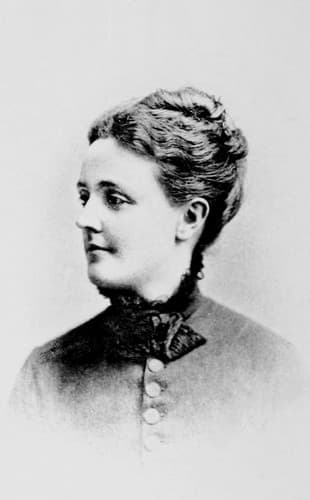
Theodora Sarah Orne Jewett was an American novelist, short story writer and poet, best known for her local color works set along or near the southern coast of Maine. Jewett is recognized as an important practitioner of American literary regionalism.

Ashley Antoinette
4.6

Mark McDonald
4.4

Luo Guanzhong
4.4

Mia McKenzie
4.3

Dorothy Parker
4.3

Joaquim Maria Machado de Assis
4.3

James Thurber
4.2

Terry Kay
4.2