““I’m not a child, Maisie. And I’m certainly not afraid of a bit of mud.””
— Maisie's early interaction with the young evacuee, Anna, as Anna asserts her independence.

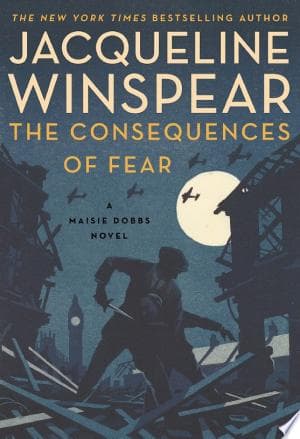
Jacqueline Winspear (2021)
Genre
Fiction
Reading Time
360 min
Key Themes
See below
Sign in to track this book
In Nazi-occupied Europe, Maisie Dobbs, working for the SOE, must solve a murder witnessed by a young messenger. The crime unexpectedly connects to her secret war efforts and threatens to expose a dangerous conspiracy from the Great War.
In October 1941, during the Blitz in London, twelve-year-old Freddie Hackett works as a message runner for a government office. On a delivery, he takes shelter in a bombed doorway and sees an argument between two men. One man, with a distinct scar, shoves the other, who falls, hits his head, and dies. Terrified, Freddie hides until the killer leaves. At his delivery destination, Freddie recognizes the scar-faced man as the message recipient. The police dismiss his murder report, so Freddie remembers Maisie Dobbs, an investigator he once met, and decides to ask for her help.
Freddie Hackett, ignored by the police, goes to Maisie Dobbs' office. Maisie, who remembers Freddie, listens to his story. Despite her secret work for the Special Operations Executive (SOE) assessing French Resistance agents, Maisie is concerned by Freddie's sincerity and his detailed account. She believes the boy and agrees to investigate quietly, understanding the dangers of getting involved in a wartime murder, especially one linked to government operations. Her commitment to justice for a vulnerable child overrides her immediate SOE duties.
Maisie Dobbs starts her investigation, using her contacts to identify the dead man as George Fisher, a relatively unknown figure with minor government connections. She also begins a subtle search for the scar-faced killer. Her two worlds collide when she sees the killer, now known as Robert MacFarlane, a man recently interviewed as a potential SOE candidate. This discovery immediately alerts Maisie that the murder might be more complex and politically charged than a simple street crime. She must now balance her SOE responsibilities with the need to solve Fisher's murder.
As Maisie investigates, she learns more about Robert MacFarlane. He is a decorated First World War veteran, known for his bravery but also for a troubled past. Her SOE superior, Robbie, presses her to finish her assessment of MacFarlane, who is being considered for a key mission in France. Maisie's suspicions about MacFarlane's role in Fisher's death are confirmed, but she cannot openly share her findings without compromising her SOE cover and potentially national security. She must be careful, using her psychological insights and investigative skills to find the truth without exposing her secret work or endangering the war effort.
Maisie's investigation into Robert MacFarlane's past reveals a difficult history. He suffered severe psychological trauma during the First World War, especially from a brutal experience in a prisoner-of-war camp. She finds that George Fisher, the murder victim, was also a Great War veteran and had some connection to MacFarlane's unit, though their exact relationship is unclear. Maisie suspects the murder is not random but stems from events before the current war, possibly linked to unresolved traumas and betrayals from the past. She begins to see MacFarlane not just as a killer, but as a man haunted by his history.
Freddie Hackett, already a vulnerable child in wartime London, is deeply affected by witnessing the murder and the police's dismissal. He becomes more anxious and withdrawn, fearing for his safety and feeling responsible for the unsolved crime. Maisie Dobbs, with her psychology background, recognizes Freddie's trauma. She understands the importance of validating his experience and ensuring justice, not only for the victim but also for Freddie's mental well-being. She reassures him and gives him a sense of purpose, even as her own investigation becomes more dangerous.
As Maisie continues her investigation, she uncovers connections involving MacFarlane, Fisher, and a secret Free French intelligence operation. Fisher appears to have been involved with this network, possibly as a courier or informant, and MacFarlane's potential SOE mission also relates to French Resistance efforts. Maisie realizes the murder might be tied to the complex and often conflicting intelligence activities of various Allied groups. This discovery raises the stakes, turning a seemingly individual crime into an issue with potential international consequences for Britain's war efforts.
Maisie Dobbs, carefully balancing her SOE duties and her commitment to justice, arranges a discreet confrontation with Robert MacFarlane. She uses her psychological skill to get his story. MacFarlane, burdened by his past, eventually confesses. He reveals that George Fisher was responsible for a betrayal during their time as WWI POWs, which led to the deaths of several comrades. Fisher had been blackmailing MacFarlane, threatening to expose his own wartime secrets, and the argument Freddie witnessed was the result of years of resentment and fear, triggered by Fisher's latest demand.
With MacFarlane's confession, Maisie faces a difficult ethical problem. He is a killer, but his actions are rooted in deep trauma and a perceived act of wartime justice. Also, MacFarlane is considered vital for a key SOE mission in France. Bringing him to official justice would compromise the mission and potentially expose sensitive intelligence operations. Maisie must weigh the individual murder against the greater good of the war. She seeks a resolution that honors justice for Fisher and Freddie, while also protecting national security, a task that tests her moral sense and cleverness.
Maisie understands that Freddie Hackett's well-being is most important. She carefully explains the complex circumstances of the murder to him, giving him closure without revealing sensitive intelligence. She assures him his testimony was important and that justice, though perhaps not in the usual sense, has been served. Maisie also arranges ongoing support for Freddie, recognizing the lasting impact of his trauma. Her actions give Freddie validation and help him begin to heal, reinforcing her role as a protector of the vulnerable, even amid the chaos of war.
The case's resolution, while discreet and unconventional, leaves Maisie Dobbs thinking about the consequences of fear and war. She has made hard choices, balancing individual justice with national necessity. MacFarlane's fate, though not detailed as a traditional arrest, handles his actions and removes him from the SOE mission, within the shadows of wartime intelligence. Maisie is left to deal with the moral uncertainties of her work, recognizing that in war, justice often takes different forms, and past conflicts' scars can shape present actions with devastating force.
The Protagonist
Maisie grapples with the ethical compromises demanded by war, learning to balance individual justice with national security and the greater good.
The Supporting
Freddie moves from a state of trauma and disillusionment to finding validation and a path towards healing through Maisie's intervention.
The Antagonist/Complex Figure
MacFarlane's arc reveals the devastating long-term effects of war trauma, culminating in a confession that exposes the roots of his violent act.
The Mentioned/Victim
His death serves as the inciting incident, and his past actions are revealed posthumously to explain the killer's motives.
The Supporting
Remains largely static, representing the institutional demands Maisie must navigate.
The novel shows how past conflicts' psychological wounds continue to affect people, even decades later. Robert MacFarlane's violent act results directly from untreated trauma and perceived betrayal from his WWI prisoner-of-war experience. This theme also appears in Freddie Hackett's reaction to witnessing the murder, showing how even indirect exposure to violence leaves lasting scars. The story suggests that war's impact goes beyond the battlefield, influencing personal choices and destinies long after the fighting ends, as seen in MacFarlane's inability to escape his past.
““The war was not just out there, on the battlefields, it was inside us too, carving out its own territory.””
This theme looks at the difficulty of achieving justice during a global conflict, where normal legal processes are often replaced by national security concerns and moral uncertainties. Maisie Dobbs faces a hard choice: bringing a killer to justice versus potentially compromising a vital war effort. The novel questions what 'justice' means when a perpetrator is also a traumatized veteran and a potential asset to the country. It explores the ethical compromises and hard decisions made when individual rights conflict with the perceived greater good, forcing Maisie to find an unconventional solution.
““In a war, justice often wore a different uniform, and sometimes, no uniform at all.””
Secrets, both personal and national, drive much of the plot. Robert MacFarlane's murder of George Fisher comes from a long-held secret of betrayal from their shared WWI past, which Fisher used for blackmail. Maisie herself works with layers of secrecy due to her SOE work, complicating her murder investigation. The novel shows how secrets, when ignored, can grow and lead to destructive outcomes, and how betrayal, whether personal or perceived, can have devastating, long-lasting consequences, ultimately leading to violence and moral compromise for those involved.
““Some secrets were like shrapnel, buried deep, waiting for the right moment to tear you apart.””
The story emphasizes war and violence's impact on children, especially through Freddie Hackett. Freddie, already living amid the Blitz's dangers, is further traumatized by witnessing a murder and being dismissed by the police. His psychological well-being becomes a major concern for Maisie, highlighting the lost innocence and emotional burdens placed on the younger generation. The theme stresses the importance of protecting and validating children's experiences, even when adults are focused on larger conflicts, showing Freddie as a symbol of wartime's hidden casualties.
““Children saw everything, felt everything, even when adults thought they were hidden.””
The novel subtly questions and redefines heroism, particularly through Robert MacFarlane. He is a decorated WWI hero, yet his trauma and actions complicate this image. The story suggests that heroism is not always simple or pure, and that qualities making a hero in one context can lead to destructive behavior in another. Maisie's quiet, ethical dedication to justice, even when it conflicts with national priorities, also shows a different, more nuanced form of heroism—one rooted in moral courage and empathy rather than battlefield valor.
““A hero's medals could not always cover the wounds beneath.””
Freddie Hackett's credible testimony is dismissed by authorities, forcing him to seek Maisie's help.
Freddie Hackett, a child, witnesses a murder but is immediately dismissed by the police due to his age and perceived unreliability. This device is crucial because it forces Freddie to seek out Maisie Dobbs, initiating the central conflict and drawing her into the case. It also highlights the institutional biases and the vulnerability of individuals in a society overwhelmed by wartime priorities, underscoring Maisie's role as a champion for those overlooked by the system. The dismissal of Freddie's account elevates the stakes and complexity of the investigation.
Maisie Dobbs' simultaneous roles as an investigator and an SOE operative create inherent conflict and moral dilemmas.
Maisie's position as both a private investigator committed to justice and a secret SOE operative assessing agents for dangerous missions creates constant tension and ethical challenges. Her two worlds collide when the murder victim and the killer become intertwined with her SOE assignments. This device allows the narrative to explore themes of individual justice versus national security, forcing Maisie to navigate a complex moral landscape where her duties often conflict, making her decisions more profound and impactful.
Events and traumas from the First World War directly influence the motivations and actions of characters in the present.
The First World War, though decades in the past, is not merely background but an active force shaping the present narrative. Robert MacFarlane's murder of George Fisher is a direct consequence of a betrayal and trauma he experienced as a POW during WWI. This device emphasizes the long-lasting psychological and societal impact of conflict, demonstrating how unresolved issues from one war can manifest violently in another, highlighting the cyclical nature of trauma and the deep-seated roots of human behavior.
Robert MacFarlane's potential SOE mission serves as a critical element that complicates Maisie's investigation.
While not a literal object, Robert MacFarlane's suitability and importance for a vital SOE mission in France functions as a MacGuffin. It is a plot element that drives the narrative forward and creates significant obstacles for Maisie. His potential role in the war effort makes his apprehension for murder incredibly complicated, forcing Maisie to weigh personal justice against national security. This device raises the stakes of her investigation and underscores the ethical dilemmas inherent in her dual roles.
““I’m not a child, Maisie. And I’m certainly not afraid of a bit of mud.””
— Maisie's early interaction with the young evacuee, Anna, as Anna asserts her independence.
““Fear, Maisie knew, was a contagion as potent as any virus.””
— Maisie's reflection on the pervasive atmosphere of anxiety during wartime London.
““There were some secrets, she understood, that were best left buried, not for the sake of the living, but for the peace of the dead.””
— Maisie's internal debate about revealing a long-held secret that could cause more harm than good.
““Even in the darkest times, the human spirit found ways to shine, if only in small, defiant flickers.””
— Maisie observing acts of kindness and resilience among ordinary Londoners during the Blitz.
““The war had a way of stripping away the inessential, leaving only the stark, unvarnished truth.””
— Maisie's observation about how the pressures of war revealed true character and priorities.
““Justice, Maisie often reflected, was a long, winding road, and sometimes the destination was not what one expected.””
— Maisie's thoughts on the complexities of her investigations and the pursuit of justice.
““Every choice, no matter how small, carried its own ripple of consequences.””
— Maisie contemplating the interconnectedness of events and decisions in her case.
““It was not the bombs that destroyed the soul of a city, but the loss of hope.””
— Maisie's internal monologue about the psychological toll of prolonged war.
““There was a bravery, she realized, not in facing danger, but in facing oneself.””
— Maisie reflecting on personal growth and self-discovery amidst external conflict.
““The past, like a stubborn ghost, always found a way to make its presence known.””
— Maisie's realization that old cases and past events often influence current investigations.
““Sometimes the greatest strength lay not in fighting, but in enduring.””
— Maisie's observation of the quiet resilience of people living through constant hardship.
““The world, even in its brokenness, still held moments of profound beauty.””
— Maisie finding solace and appreciation for small moments of beauty amidst the devastation of war.
““Trust, once broken, was a delicate thing to mend, and sometimes the cracks remained, no matter how carefully one tried to piece it back together.””
— Maisie's thoughts on relationships and the impact of betrayal she observes in her case.
““Silence, Maisie had learned, could be as revealing as the most impassioned confession.””
— Maisie using her investigative skills to interpret unspoken cues and silences during interviews.
Ready to see how well you understood this book? Take our interactive quiz with 10 questions.

Biography coming soon.

Ashley Antoinette
4.6

Mark McDonald
4.4
Luo Guanzhong
4.4
Mia McKenzie
4.3

Dorothy Parker
4.3

Joaquim Maria Machado de Assis
4.3
James Thurber
4.2

Terry Kay
4.2