“I to the world am like a drop of water that in the ocean seeks another drop.”
— Antipholus of Syracuse laments his search for his lost family.

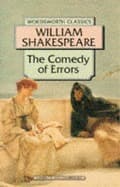
William Shakespeare (1734)
Genre
Fiction
Reading Time
90 min
Key Themes
See below
Sign in to track this book
Two sets of long-lost twins accidentally meet in Ephesus, causing a flurry of marital trouble, public fights, and legal problems that only a grand courtroom reveal can fix.
Egeon, an old merchant from Syracuse, is brought before Solinus, the Duke of Ephesus, after being caught for entering the city illegally. Ephesian law says that any Syracusan in Ephesus must pay a thousand marks or die. Egeon tells his sad story: years ago, he and his wife, Emilia, had twin sons, both named Antipholus, and bought twin servants, both named Dromio. During a shipwreck, the family was split up. Egeon, one Antipholus, and one Dromio were saved by one ship, and Emilia with the other twins by another. Egeon has spent years looking for his lost family, which brought him to Ephesus, unaware that his lost son and servant live there. Duke Solinus, moved by the story, gives Egeon one day to find the ransom.
Antipholus of Syracuse (Antipholus S.) and his servant Dromio of Syracuse (Dromio S.) arrive in Ephesus, not knowing about their twin counterparts. Antipholus S. sends Dromio S. to the Centaur inn with his money and instructions to wait. Soon after, Dromio of Ephesus (Dromio E.), the twin servant of Antipholus of Ephesus (Antipholus E.), approaches Antipholus S., mistaking him for his master. Dromio E. scolds Antipholus S. for being late for dinner, saying his wife, Adriana, is angry. Antipholus S. is very confused, thinking Dromio E. is his own Dromio but acting strangely. He beats Dromio E. for being rude and sends him away, making the misunderstanding worse.
Adriana, wife of Antipholus E., and her sister Luciana, wait for Antipholus E. to come home for dinner. Dromio E. returns, telling Adriana that his master (Antipholus S.) beat him and said he didn't know his own wife or house. Adriana, believing her husband is cheating or has gone mad, confronts Antipholus S. in the street, mistaking him for her husband. Despite Antipholus S.'s strong denials and confusion, Adriana insists he come home for dinner. Luciana tries to help, but Adriana's jealous accusations take over. Antipholus S., confused but a little interested in Luciana, reluctantly agrees to go to Adriana's house for dinner, seeing no other way to escape the accusations.
Meanwhile, the real Antipholus E. and Dromio E. return to their house, only to find the doors locked. Dromio S., following Antipholus S.'s earlier orders, is inside, thinking he is guarding his master's things. From inside, Dromio S. exchanges insults and denials with Antipholus E. and Dromio E., who are angry about being locked out of their own home. Antipholus E., furious at what he thinks is his wife's disloyalty and Dromio's rudeness, decides to eat elsewhere and seek comfort from a courtesan. Before leaving, he tells Angelo, a goldsmith, to make a gold chain for Adriana. Unknown to him, Antipholus S. has already told Angelo he would pick up a similar chain.
After being locked out, Antipholus E. goes to eat with a courtesan. At the same time, Angelo the goldsmith approaches Antipholus S., mistaking him for Antipholus E., and gives him the gold chain. Antipholus S., completely confused but seeing no reason to refuse, takes the chain, promising to pay later. Angelo leaves, expecting payment from the man he thinks is his regular client. This exchange leads to more confusion, as the chain becomes a key object in the growing series of mistaken identities and money disputes.
Later, Angelo meets Antipholus E. and demands payment for the gold chain. Antipholus E., who never received the chain, denies knowing anything about it and refuses to pay. Angelo, sure he gave the chain to Antipholus E. earlier, is angry and calls for an officer to arrest Antipholus E. for debt. Antipholus E. is taken into custody, unable to understand the strange turn of events, believing he is being unfairly treated. This arrest further complicates the plot, adding legal problems to the domestic and personal confusion.
Antipholus E., now under arrest, sends Dromio E. to Adriana to get money for bail. Meanwhile, Antipholus S., having the chain, is still at Adriana's house, where he also needs money. He sends Dromio S. to get money from his own purse. The two Dromios inevitably meet, causing more funny confusion and mistaken identities. Each Dromio thinks the other is their own twin, leading to a humorous exchange of insults and claims of madness, further confusing their already bewildered masters.
Adriana, convinced her husband (Antipholus E.) has gone mad because of his strange behavior and denial of their marriage, sends for Doctor Pinch, a local exorcist. Antipholus E., having escaped custody with the help of Dromio E. (who brought the wrong money), gets even angrier when Pinch tries to 'cure' him. Dromio E., meanwhile, is sent by Adriana to get a rope to beat Antipholus E. with, to try and drive out his supposed madness. The scene becomes slapstick as Antipholus E. and Dromio E. are tied up and beaten.
After many beatings, accusations, and near-arrests, Antipholus S. and Dromio S. are chased by Adriana, Luciana, Doctor Pinch, and a group of officers, all thinking they are the mad Antipholus E. and Dromio E. Fearing for their lives and sanity, Antipholus S. and Dromio S. run into a nearby abbey, seeking safety from the perceived madness of the Ephesians. The Abbess, Emilia, gives them refuge, promising to protect them from their pursuers, increasing the drama and setting the stage for the climax.
Duke Solinus arrives in the public square, with his attendants, to oversee Egeon's execution. Egeon, still unable to raise the ransom, makes a final plea for his life, telling his sad story again. As the Duke prepares to carry out the sentence, the chaotic events involving the twins come together around the abbey. This moment brings all the main characters and plot lines together, preparing for the big revelation and solution to the play's central mystery.
As Egeon faces execution, Adriana, Luciana, Angelo, the Courtesan, and others arrive at the abbey, each with complaints against Antipholus E. or S. The Abbess, Emilia, comes out with Antipholus S. and Dromio S. The two sets of twins finally meet, leading to a moment of shocked recognition. Egeon recognizes his long-lost son, Antipholus S., and the Abbess reveals herself to be Emilia, Egeon's wife and the twins' mother. All the confusions and mistaken identities are resolved, and the family is happily reunited.
With the twins' identities finally clear, all the misunderstandings, accusations, and arrests are resolved. Adriana apologizes for her jealousy, Angelo for his mistaken demands, and the Courtesan for her pursuit. Egeon is pardoned by Duke Solinus, and the entire family is reunited, overcoming the separation and chaos of the past. The play ends with a happy celebration of family, forgiveness, and the return of order, as the two sets of twins, once separated, accept their newly found connections.
The Protagonist
From a lost and confused wanderer, he finds his family and a potential wife, gaining clarity and belonging.
The Protagonist
From an irritable and confused man, he is restored to his rightful place and reunited with his family, understanding the cause of his torment.
The Supporting
From a confused but loyal servant, he reunites with his twin and master, gaining clarity and understanding.
The Supporting
From a confused and abused servant, he reunites with his twin and master, finding release from his torment.
The Supporting
From a jealous and accusatory wife, she learns patience and understanding, realizing the truth behind her husband's actions.
The Supporting
From a confused but virtuous sister, she falls in love with Antipholus S., finding a suitor of her own.
The Supporting
From a condemned and despairing old man, he is miraculously reunited with his entire family, finding joy and peace.
The Supporting
From a grieving Abbess who believed her family lost, she is miraculously reunited with her husband and sons.
The Supporting
From a confused and wronged merchant, he understands the truth behind the unpaid debt.
The play's main theme, caused by two sets of identical twins separated at birth. Every major plot point, from Adriana's jealousy to Antipholus E.'s arrest, comes directly from characters mistaking one twin for the other. The play explores the humor of this confusion, showing how easily appearances can trick people and the absurd situations that happen when relationships and social order are based on wrong ideas. The constant misidentification of the Antipholuses and Dromios creates a world where reality seems to bend, making characters question their own sanity and what is true, until the final reveal.
“I think you are my glass, and not my brother: / I see by you I am a senseless man.”
Beyond just mistaken identity, the play looks at what makes up a person's identity. Characters like Antipholus E. and Dromio E. are repeatedly denied their own names, homes, and relationships, making them question who they truly are. Adriana's struggle to identify her husband, and Luciana's confusion about Antipholus S.'s advances, show how identity is often linked to social roles and how others see us. The play suggests that identity is not just an inner feeling but is also shaped by outside interactions and how society views us. The ending, where each twin is finally recognized, confirms how important individual recognition is for a clear sense of self.
“Am I in earth, in heaven, or in hell? / Sleeping or waking? mad or well-advised?”
The play clearly shows the contrast between initial order and the growing chaos that takes over Ephesus. Egeon's first problem introduces a strict legal order, but this is quickly disrupted by the arrival of the Syracusan twins, throwing the city into confusion. The domestic order of Antipholus E.'s home is broken by Adriana's jealousy and the perceived madness of her husband and servant. The whole city seems to fall into a state where logic fails and violence (beatings, arrests) becomes common. The play's ending, with the family reunion, means order is restored, both personally and socially, suggesting that chaos is a temporary, though entertaining, disruption.
“This town is full of cozenage, / As, nimble jugglers that deceive the eye, / Dark-working sorcerers that change the mind, / Soul-killing witches that transform the body...”
The theme of love is explored through the relationships between Adriana and Antipholus E., and the new attraction between Luciana and Antipholus S. Adriana's love for her husband is strong, but it is damaged by extreme jealousy and possessiveness, made worse by the mistaken identity plot. Her accusations of cheating, though based on error, show the destructive power of unchecked jealousy. In contrast, Luciana's gentler and more virtuous approach to love offers a different view. The play ultimately resolves these romantic conflicts by clarifying identities, suggesting that true love can grow once misunderstandings and suspicions are gone.
“A man is master of his liberty; / Time is their master, and when they see time, / They'll go or come: if so, be patient, sister.”
Two sets of indistinguishable twins as the primary source of conflict.
The core plot device is the existence of two sets of identical twins: Antipholus of Syracuse and Antipholus of Ephesus, and their respective servants, Dromio of Syracuse and Dromio of Ephesus. Their physical indistinguishability drives virtually every comedic misunderstanding, mistaken identity, and farcical situation in the play. Without this device, the plot would not exist. It creates a fertile ground for both physical comedy and verbal wit, as characters struggle to reconcile what they see with what they believe to be true, pushing the boundaries of logical coherence.
The backstory of separation and the eventual reunion.
This device establishes the initial tragic premise of Egeon's tale and provides the ultimate resolution. The separation of the family by shipwreck and their subsequent twenty-five-year search creates a powerful emotional undercurrent beneath the farce. It gives purpose to Antipholus S.'s journey to Ephesus and provides the dramatic stakes for Egeon's life. The eventual reunion at the abbey brings a sense of closure, transforming the chaotic comedy into a heartwarming tale of familial restoration, fulfilling the dramatic promise set up in the play's opening scene.
A physical object that becomes a symbol of confusion and debt.
The gold chain serves as a tangible prop that embodies the escalating confusion and financial entanglement. Ordered by Antipholus E. for Adriana, it is mistakenly delivered to Antipholus S. This leads to Angelo demanding payment from the wrong Antipholus, resulting in Antipholus E.'s arrest for debt. The chain is not just an object; it's a catalyst that pushes the plot forward, creating concrete consequences for the abstract errors of identity. It adds a layer of economic and legal conflict to the personal and domestic misunderstandings.
A place of refuge that facilitates the final revelation.
The abbey functions as a crucial plot device by providing a safe haven for Antipholus S. and Dromio S. when they are being pursued by the enraged Ephesians. More importantly, it is the location where all the main characters converge in the final act, including Duke Solinus and Egeon. The Abbess, Emilia, holding the twins within, controls the timing of the grand reveal, allowing for a dramatic and satisfying resolution. It creates a focal point for the unraveling of the entire mystery and the ultimate family reunion.
“I to the world am like a drop of water that in the ocean seeks another drop.”
— Antipholus of Syracuse laments his search for his lost family.
“We came into the world like brother and brother; And now at length, like brother and brother, We live and laugh.”
— Antipholus of Ephesus, after the reunion, reflects on their shared fate.
“There's not a man I meet but doth salute me as if I were his well-acquainted friend.”
— Antipholus of Syracuse is bewildered by the mistaken greetings in Ephesus.
“Sure, sir, I live here in the city; and have done these twenty years.”
— Dromio of Ephesus tries to assert his identity to Antipholus of Syracuse.
“If you are merry, then I am so too.”
— Dromio of Syracuse, ever loyal, reflects his master's mood.
“A man may break a word with you, sir, and not break his own neck.”
— Dromio of Syracuse humorously discusses the consequences of breaking promises.
“The one, I think, is in the right, the other in the wrong: but in this place I cannot tell right from wrong.”
— A merchant observes the escalating confusion.
“Why, what an intricate impeach is this! I think you all have drunk of Circe's cup.”
— The Duke of Ephesus expresses his exasperation at the conflicting stories.
“Sweet recreation barred, what doth ensue but moody and dull melancholy, kinsman to grim and comfortless despair?”
— Adriana laments her husband's perceived neglect.
“Small curs are not regarded when they grin; But great men tremble when the lion roars.”
— Dromio of Syracuse, in a moment of wit, contrasts the power of the weak and strong.
“Methinks you are my glass, and not my brother: I see by you I am a senseless man.”
— Antipholus of Syracuse, seeing his identical brother, reflects on his own state.
“I am an ass, I am a very dog.”
— Dromio of Ephesus, confused and beaten, laments his perceived fate.
“After so long grief, such festivity!”
— Aemilia, the Abbess, expresses joy at the family's reunion after years of separation.
“He that his wife expects, must hold his house, and make a bond of love to dwell therein.”
— Adriana, in her frustration, expresses her view on a husband's duties.
“The capon burns, the pig falls from the spit, the clock hath strucken twelve upon the bell.”
— Dromio of Ephesus comically conveys the chaos and urgency of the forgotten dinner.
Ready to see how well you understood this book? Take our interactive quiz with 10 questions.
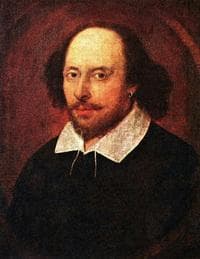
William Shakespeare was an English playwright, poet and actor. He is widely regarded as the greatest writer in the English language and the world's pre-eminent dramatist. He is often called England's national poet and the "Bard of Avon". His extant works, including collaborations, consist of some 39 plays, 154 sonnets, three long narrative poems, and a few other verses, some of uncertain authorship. His plays have been translated into every major living language and are performed more often than those of any other playwright. Shakespeare remains arguably the most influential writer in the English language, and his works continue to be studied and reinterpreted.

Ashley Antoinette
4.6

Mark McDonald
4.4
Luo Guanzhong
4.4

Mia McKenzie
4.3

Dorothy Parker
4.3
Joaquim Maria Machado de Assis
4.3
James Thurber
4.2

Terry Kay
4.2