“The Discworld moved through space on the back of four giant elephants which were themselves on the back of a giant turtle.”
— The opening lines describing the fundamental cosmology of the Discworld.

Terry Pratchett (2014)
Genre
Fiction
Reading Time
180 min
Key Themes
See below
Sign in to track this book
On a discworld hurtling through space on the back of a giant turtle, an inept wizard and his naive, walking-luggage-toting tourist embark on a chaotic, belief-fueled journey to the very edge of their flat planet, encountering dragons that only exist if you believe in them.
The story begins in the chaotic city of Ankh-Morpork, a place known for its thieves' and assassins' guilds. A naive tourist named Twoflower, an 'inn-sewer-ants' salesman from the Agatean Empire, arrives, bringing with him a large, sentient Luggage with hundreds of little legs and an insatiable appetite. His arrival immediately draws attention due to his unusual appearance, his gold, and his habit of taking 'pictures' with a 'pict-o-graph'. The Patrician of Ankh-Morpork, Lord Vetinari, concerned by the potential for international incident and the disruption Twoflower causes, assigns Rincewind, a failed and cowardly wizard, to be Twoflower's guide and protector, much to Rincewind's dismay.
Rincewind reluctantly takes Twoflower to the Broken Drum tavern, a rough establishment where Twoflower's gold quickly makes him a target. Despite Rincewind's warnings, Twoflower attempts to pay for drinks with a solid gold coin, causing a brawl. During the chaos, a fire, accidentally started by Twoflower's dropped pict-o-graph flash, rapidly engulfs Ankh-Morpork, consuming the wooden city. Rincewind and Twoflower, along with the loyal Luggage, manage to escape the fire, fleeing the city on a cart, their adventure having barely begun but already marked by widespread destruction.
After escaping Ankh-Morpork, Rincewind and Twoflower find themselves in a strange forest and soon stumble upon the Temple of Bel-Shamharoth, a dark and ancient place dedicated to a cosmic entity of pure nothingness. Twoflower, ever curious and oblivious to danger, insists on exploring it, believing it to be a tourist attraction. Inside, they are captured by a sacrificial cult. Rincewind, despite his cowardice, attempts to save Twoflower. They encounter the terrifying, eight-legged, multi-dimensional creature, Bel-Shamharoth itself, which feeds on concepts and fear. They narrowly escape, aided by the Luggage's surprising ferocity and Rincewind's accidental discovery of a dimension-shifting spell.
Following their escape from Bel-Shamharoth, Rincewind and Twoflower are unexpectedly picked up by a 'dragon' and taken to the Wyrmberg, a mountain stronghold inhabited by dragon riders. Here, dragons exist purely through belief; they are conjured into existence by the will and imagination of their riders. The leader of the Wyrmberg, Lio!rt, sees Twoflower as a potential threat or a valuable asset due to his unique perspective and his ability to 'believe' dragons into being. They meet Liessa, Lio!rt's daughter, a dragon rider herself, who takes an interest in Twoflower's unusual way of seeing the world.
Rincewind and Twoflower are caught in a power struggle within the Wyrmberg. Liessa, ambitious and cunning, plans to take over from her father, Lio!rt. Twoflower, with his vivid imagination, inadvertently conjures a powerful, if clumsy, golden dragon named Ninereed, which further complicates the situation. During a dramatic dragon battle meant to decide the leadership, Rincewind and Twoflower seize an opportunity to escape. They get away on Twoflower's newly manifested golden dragon, leaving the warring dragon riders behind, but not before seeing the power of belief in shaping reality.
After their escape from the Wyrmberg, Rincewind and Twoflower continue their journey across the Discworld. They meet a group of barbarian heroes, including Hrun the Barbarian, who is initially interested in Twoflower's Luggage, but eventually becomes an ally. Their travels are filled with strange phenomena and dangerous encounters, constantly pushing Rincewind's already strained nerves. Twoflower, however, remains optimistic and curious, viewing every peril as another exciting sight to 'picture'. Their ultimate destination, driven by Twoflower's wanderlust, becomes the very Edge of the Discworld, a place of cosmic significance and unknown dangers.
Rincewind and Twoflower finally reach the Rimfall, the colossal waterfall where the Discworld's oceans cascade into the void. This terrifying destination, the literal edge of their flat world, is where the Great A'Tuin, the giant turtle carrying the Discworld, is visible. Twoflower, exhilarated, wants to see the stars and the turtle's head up close, despite Rincewind's terror. They encounter a group of 'edge-dwellers', who live precariously close to the drop. Twoflower's desire to capture a 'picture' of the Rimfall leads them to the very brink, where the forces of gravity and the unknown are most potent.
While attempting to get a better 'picture' of the Rimfall, Twoflower inadvertently tumbles over the edge of the Discworld. Rincewind, in a rare moment of courage, attempts to save him but also falls. As they plummet through the void, seemingly to their doom, they are unexpectedly caught in a peculiar net. They find themselves inside a bizarre, alien spacecraft, piloted by a race of beings who are observing the Discworld. These beings, known as the Creator, are attempting to guide the Great A'Tuin through space, and their intervention saves Rincewind and Twoflower from certain death.
Inside the alien spacecraft, Rincewind and Twoflower learn that the 'Creator' beings are not gods in the traditional sense, but rather a scientific race who seeded the Discworld and are now monitoring its progress. They explain that the Discworld is part of a larger cosmic experiment, and that the Great A'Tuin is on a journey to a specific destination in the universe. The Creator beings are trying to determine A'Tuin's sex, as this will influence the future trajectory of the universe. They see Rincewind and Twoflower as anomalies but also as a source of valuable data regarding the Discworld's inhabitants.
After their bewildering encounter with the Creator beings, Rincewind and Twoflower are returned to the Discworld. They are deposited back onto the surface, somewhat disoriented but largely unharmed, landing in a new, unknown location. Their journey has taken them across vast stretches of the Discworld and even beyond its physical boundaries. Despite the perils and the cosmic revelations, Twoflower remains largely unfazed and optimistic, ready for the next adventure. Rincewind, however, is more terrified than ever, having faced the very edge of existence and the unknown, but his reluctant companionship with Twoflower seems destined to continue.
The Protagonist
Rincewind begins as a completely self-serving coward but develops a grudging loyalty to Twoflower, even showing moments of unexpected bravery.
The Protagonist/Catalyst
Twoflower remains largely unchanged throughout the story, his unwavering optimism and curiosity acting as a constant force.
The Supporting
The Luggage's character is consistent; it remains a loyal, dangerous, and mysterious entity.
The Supporting
Liessa attempts to consolidate power within the Wyrmberg, using Twoflower's abilities to her advantage.
The Supporting
Hrun acts as a temporary ally, showcasing the absurdity of 'heroism' on the Discworld.
The Antagonist
Bel-Shamharoth remains a static force of cosmic evil, representing the dangers of the unknown.
The Supporting
Vetinari remains a consistent, calculating figure of authority.
The Mentioned
A'Tuin's role is foundational and unchanging, the silent mover of the Discworld.
The novel explores the idea that reality on the Discworld is shaped by belief and imagination. This is most evident in the Wyrmberg, where dragons only exist because people believe in them. Twoflower's unwavering belief in the fantastical, even in the face of danger, often makes improbable things happen. The Discworld itself, carried on the back of a giant turtle, is a reality that defies conventional logic, suggesting that what people collectively believe can manifest into tangible forms. This theme asks the reader to consider the power of perception and narrative in shaping existence.
“On the Discworld, the reason that the sun set was because it got bored of the sky and went somewhere else. This was not a scientific explanation, but it was certainly a poetic one.”
Rincewind embodies extreme cowardice, constantly trying to avoid danger, yet he repeatedly finds himself in heroic situations, often by accident or through Twoflower's naive prodding. This contrasts with the stereotypical barbarian hero, Hrun, who is brave but dim-witted. The book mocks traditional fantasy tropes, showing that heroism isn't always about courage or strength, but sometimes about simply enduring or accidentally doing the right thing. Rincewind's survival skills, born of terror, are more effective than the bravado of others, highlighting the comedic absurdity of both extremes.
“He'd faced death a hundred times and survived, not because he was brave, but because he was very good at running away.”
Twoflower's arrival as the Discworld's first tourist creates a cultural clash. His foreign customs, his concept of 'insurance,' his use of money, and his pict-o-graph are alien and often misunderstood by the inhabitants of Ankh-Morpork and beyond. His unwavering optimism and naiveté in the face of danger are a constant source of both humor and peril. This theme explores how different worldviews can collide, leading to chaos, misunderstanding, and unexpected outcomes, as Twoflower's innocent perspective forces the Discworld to confront its own peculiarities.
“He was a tourist, and he had no idea what it was like to live in a world where the gods were real and sometimes put their feet through the ceiling.”
Despite Rincewind's constant attempts to avoid adventure and danger, fate seems to relentlessly drag him into perilous situations. The concept of 'destiny' or a predetermined path is a subtle undercurrent, especially with the intervention of the 'Creator' beings and the Great A'Tuin's cosmic journey. While characters like Rincewind struggle against their perceived fate, their actions often inadvertently contribute to a larger, unfolding narrative. This theme explores the tension between free will and destiny, suggesting that even the most reluctant participants play a role in the grand scheme of things, however unwillingly.
“Some destinies are inescapable, even for a wizard who can't spell.”
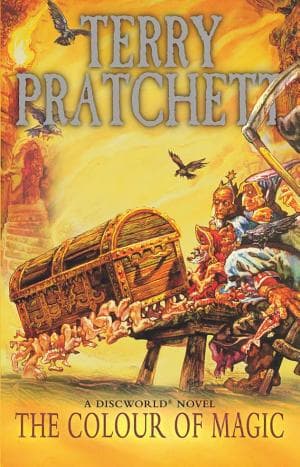
A sentient, mobile, and fiercely loyal travel chest.
The Luggage serves as a mobile plot device, often appearing conveniently to save Rincewind and Twoflower from certain doom, or to provide an unexpected means of transportation or escape. Its insatiable appetite and indestructibility allow for humorous and surprising resolutions to dangerous situations, preventing the protagonists from being truly helpless. It also acts as a visual symbol of Twoflower's alien nature and the Discworld's inherent absurdity, consistently defying logic and physics to serve its narrative purpose.
Twoflower's magical camera that captures images.
The pict-o-graph is a key device that highlights Twoflower's tourist nature and acts as a catalyst for several events. Its 'flash' inadvertently starts the great fire of Ankh-Morpork, and its ability to capture images fascinates and confuses the Discworld inhabitants. It serves to illustrate the cultural clash between Twoflower's advanced (for the Discworld) technology and the more primitive setting, while also providing a means for Twoflower to 'document' his adventures, driving him to seek out new and dangerous sights.
Dragons that exist purely through the power of human imagination and belief.
This unique concept is a central plot device in the Wyrmberg section. It directly illustrates the novel's theme of reality being shaped by belief. The dragons' existence dependent on belief creates a unique magic system and a compelling power dynamic within the Wyrmberg society. It allows Twoflower's naive imagination to have significant, tangible effects on the world, such as conjuring his own dragon, and provides a fantastical element that is both magical and philosophical, driving the conflict and resolution within that particular arc.
The literal end of the flat Discworld, where the oceans fall into space.
The Edge of the World serves as the ultimate destination for Twoflower's tourist ambition and a dramatic setting for the climax. It represents the ultimate unknown and a boundary between the Discworld and the wider cosmos. As a plot device, it forces the characters into an extreme situation, leading to their fall and subsequent encounter with the 'Creator' beings, thus expanding the narrative's scope beyond the Discworld itself and introducing cosmic elements into the story.
“The Discworld moved through space on the back of four giant elephants which were themselves on the back of a giant turtle.”
— The opening lines describing the fundamental cosmology of the Discworld.
“Rincewind was not a hero. He was a coward, and he knew it. He was also a wizard, and he knew that, too. And he was very, very good at running away.”
— Introducing Rincewind's defining characteristics and his primary skill.
“It wasn't a question of good or evil. It was a question of being alive, and being dead.”
— Rincewind's pragmatic and survival-focused perspective on life and danger.
“The problem with being a wizard was that you were expected to know things.”
— Rincewind's internal monologue about the pressures and expectations of his profession, despite his lack of actual magical skill.
“Twoflower was a tourist, the first tourist, and the Discworld was about to discover what that meant.”
— Introducing Twoflower and the profound impact his presence will have on the Discworld.
“The universe was, after all, a seriously weird place.”
— A general observation about the nature of reality within the Discworld, often reflected in its events.
“The world was a stage, but the play was badly written.”
— A cynical observation about the chaotic and often nonsensical events unfolding.
“The Luggage was, of course, entirely unique.”
— Introducing the sentient, multi-legged, and fiercely loyal Luggage.
“He had a mind like a steel trap, only not quite as sharp.”
— A humorous description of a character's intellect, or lack thereof.
“Magic was like that. It didn't always make sense. In fact, it rarely made sense.”
— Reflecting on the unpredictable and often illogical nature of magic on the Discworld.
“The most important thing about magic was knowing when not to use it.”
— A rare moment of wisdom from Rincewind, highlighting the dangers of uncontrolled magic.
“There was a sound like a wet towel slapped across a bald man's head.”
— A vivid and unusual simile used to describe a particular sound, characteristic of Pratchett's writing.
“He didn't want to die. He just wanted to be somewhere else.”
— Rincewind's constant desire to escape dangerous situations.
“The gods play games with the lives of men.”
— A recurring theme acknowledging the whimsical and often cruel interference of the Discworld's pantheon.
Ready to see how well you understood this book? Take our interactive quiz with 10 questions.
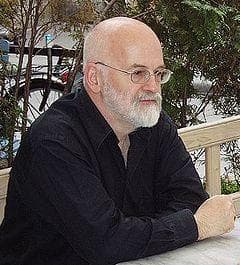
Sir Terence David John Pratchett was an English humorist, satirist, and author of fantasy novels, especially comical works. He is best known for his Discworld series of 41 novels.

Ashley Antoinette
4.6

Mark McDonald
4.4
Luo Guanzhong
4.4

Mia McKenzie
4.3

Dorothy Parker
4.3
Joaquim Maria Machado de Assis
4.3
James Thurber
4.2

Terry Kay
4.2