“History is not a set of facts, but a process of discovery.”
— John confronts the difficulty of uncovering the true story of the incident.

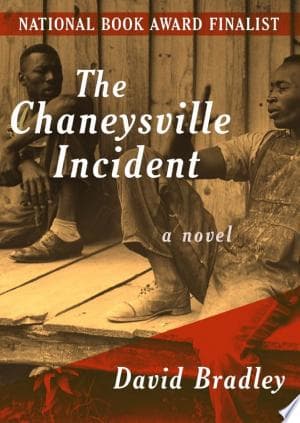
David Bradley (2013)
Genre
Fiction
Reading Time
1500 min
Key Themes
See below
Sign in to track this book
A historian returns home to investigate his father's death, uncovering a forgotten tragedy of thirteen escaped slaves who died in Chaneysville after reaching freedom, their reasons lost to time.
Dr. John Washington, a history professor from Philadelphia, returns to Chaneysville, Pennsylvania. He received a call about Old Jack, the aging hunter who, with Moses Washington, raised him. Old Jack is gravely ill, and John feels a deep obligation to him. While caring for Jack, John must confront the unresolved mystery of his father, Moses Washington's, death decades earlier. Moses, a local legend and self-taught historian, supposedly died in a hunting accident. However, the circumstances were always vague. John discovers a trove of his father's organized research materials, suggesting Moses pursued something deeper and more intentional before his death, not just an accident.
As John examines Moses's papers, he uncovers his father's lifelong obsession: the Chaneysville Incident. This historical mystery involves thirteen escaped slaves who, after reaching apparent freedom in Chaneysville, died there for unknown reasons. Moses had collected a large amount of detail, including maps, genealogical charts, historical documents, and personal notes. He tried to reconstruct the lives and deaths of these thirteen people. John, initially doubtful of his father's 'folk history,' becomes increasingly interested in the narrative. He recognizes the intellectual rigor and emotional investment Moses put into this project. The papers suggest Moses was not just documenting history, but actively seeking to understand *why* they died, believing it held a deep secret.
John's research into the Chaneysville Incident is often interrupted and informed by his own memories of growing up in Chaneysville. He recalls his complex relationship with Moses, a man of intellect and a connection to the land and its history, but also distant. He remembers Old Jack's steady presence, teaching him hunting and survival skills, and the realities of the 'Hill,' the Black community where he was raised. These personal memories, triggered by documents or locations, begin to connect with the historical narrative. They suggest Moses's pursuit of the past was deeply personal, perhaps a form of self-discovery or reckoning. John begins to see his father not just as a childhood figure, but as a man consumed by a monumental historical and moral quest.
Through Moses's detailed notes, John begins to piece together the individual stories of the thirteen enslaved people. He learns about their dangerous journey north on the Underground Railroad, the hardships they faced, and their hopes. The narrative describes their escape from various plantations, their resourcefulness, and the dangers from slave catchers and hostile terrain. The documents reveal how they eventually reached the perceived safety of Chaneysville, only for their lives to end there under mysterious circumstances. John's reconstruction is not just a dry historical account; it is an empathetic reimagining of their lives, struggles, and collective tragedy. This makes their deaths resonate with a deep sense of injustice and unanswered questions.
Despite his declining health, Old Jack is a living record of local history and the oral tradition Moses valued. In his clear moments, Jack shares anecdotes, half-remembered stories, and cryptic remarks. These, combined with Moses's written research, begin to explain the deeper context of the Chaneysville Incident. Jack’s memories connect historical facts to the community's lived experiences. They offer insights into racial tensions, the Underground Railroad's covert operations in Bedford County, and unspoken truths passed down through generations. His accounts confirm Moses's belief that some truths are preserved not in books, but in the collective memory of a people, and that his father accessed this valuable source.
As John investigates further, he uncovers the core of Moses's theory: the thirteen enslaved people did not die accidentally or naturally, but chose collective suicide. Moses's research suggests that after reaching Chaneysville, they learned of impending recapture. Rather than return to bondage, they decided to die free. This revelation shocks and moves John deeply. Moses had gathered evidence, including local legends, death patterns, and historical parallels, to support this interpretation. This act, Moses believed, was not despair but ultimate defiance. It asserted their humanity and agency in the face of immense oppression, a 'final freedom' achieved through death.
The more John understands Moses's research, the more he recognizes the psychological and emotional toll it must have taken on his father. Moses was not just an academic; he was a man deeply connected to his ancestors and their struggles. The weight of uncovering such a profound act of defiance and despair, along with the systemic racism and historical silencing, became Moses's personal burden. John begins to suspect that Moses's 'hunting accident' was not an accident at all, but a deliberate act, a form of spiritual exhaustion, or perhaps a symbolic gesture mirroring the defiance of the thirteen. The line between historical investigation and personal identification blurs, suggesting Moses sacrificed himself to bear witness to their truth.
As John pieces together the final puzzle of the Chaneysville Incident and the truth about his father, he confronts his own long-suppressed grief for Moses. His initial academic detachment gives way to a deep emotional reckoning. He understands that Moses's life demonstrated the power of history and the importance of remembering, even painful truths. John realizes that his father's pursuit was not just about history, but about identity, dignity, and the spirit of his people. The revelation about the thirteen slaves' suicides and Moses's own end prompts John to re-evaluate his own life, his relationship with his heritage, and his responsibility as a historian to tell these stories, ensuring the forgotten are remembered.
With a full understanding of the Chaneysville Incident, John performs a symbolic act of remembrance for the thirteen enslaved people. He visits their unmarked graves, acknowledging their sacrifice and giving voice to their silent defiance. This act is for them, for himself, and for Moses. It represents a spiritual burial, a final laying to rest of historical trauma and personal grief. In this moment, John fully grasps the message his father left behind: that true freedom, even in death, is a powerful assertion of humanity, and that remembering the past is essential for understanding the present and shaping the future. He accepts his role as a keeper of these stories, continuing his father's legacy.
After John's investigation and personal reckoning, Old Jack dies. Jack's death marks the end of an era and a symbolic transition for John. With both his father and his surrogate father gone, John fully embodies the knowledge and responsibility they imparted. He is no longer the detached academic but a man deeply connected to his roots, history, and community. The experience of unraveling the Chaneysville Incident and understanding Moses's life and death transforms John. It gives him a renewed sense of purpose and a deeper appreciation for African American history and his place within it. He is now ready to carry forward the stories that need to be told.
The Protagonist
John transforms from a detached academic into an emotionally engaged historian who embraces his personal and ancestral history, finding a new sense of purpose and connection.
The Deceased Father / Catalyst
Revealed posthumously, Moses's arc shows a man consumed by a historical mystery, ultimately sacrificing himself to bear witness to a profound act of defiance, leaving a legacy that transforms his son.
The Supporting / Mentor
Jack serves as a dying repository of knowledge, facilitating John's understanding of his father and history, before passing on, leaving John to carry the torch.
The Supporting
Judith's role is largely static, serving as a catalyst for John's self-reflection, rather than undergoing significant personal change herself.
The Collective Protagonists (historical)
Their collective 'arc' is revealed retrospectively, detailing their journey from bondage to a final, defiant act of self-liberation through death.
The Mentioned / Antagonistic
Mr. Cates's role is static, representing the established, flawed historical record that the Washingtons challenge and correct.
The novel explores how history, both personal and collective, shapes individual and communal identity. Moses Washington's dedication to uncovering the Chaneysville Incident shows the need to remember and confront past traumas, especially those of enslaved people. John's journey mirrors this, as he moves from academic detachment to a personal engagement with his family's and community's past. The narrative shows that history is not just facts but lived experience, passed down through oral tradition and deeply affecting the present. Remembering the forgotten, like the thirteen slaves, is an act of justice and spiritual liberation. For example, Moses's collection of oral histories alongside written documents shows how different forms of memory contribute to a full understanding of the past.
“History is not just about what happened, but about what we remember, and what we choose to forget.”
John Washington's struggle with his identity as a Black intellectual, alienated from his rural roots but drawn back to them, is central. He grapples with what it means to be a Black man in America, caught between academic success and the historical burdens of his ancestors. His journey to understand his father's obsession is a journey of self-discovery. He reconciles his present self with his past heritage. The novel suggests that true identity connects to one's history and community, and neglecting this connection leads to rootlessness. His final embrace of his father's legacy and the stories of the thirteen signifies his acceptance of his place within this complex lineage.
“He had always tried to escape Chaneysville, but Chaneysville, like a shadow, had always followed him.”
The most powerful part of this theme is the revelation that the thirteen escaped slaves chose collective suicide over re-enslavement. This act is presented not as despair, but as the ultimate form of resistance. It is an assertion of agency and humanity in the face of immense oppression. By choosing death, they denied their captors the power to re-enslave their bodies and spirits, achieving a 'final freedom.' Moses's dedication to uncovering this truth and John's eventual understanding elevate this act to a heroic, though tragic, form of defiance. The novel argues that resistance can take many forms, from overt rebellion to the quiet assertion of dignity, and that even in death, the human spirit can triumph over tyranny.
“They chose not to be owned. They chose to be free, even if freedom meant the grave.”
Both Moses and John carry the burden of uncovering and witnessing painful truths. Moses's dedication to the Chaneysville Incident eventually consumes him, showing the psychological toll of confronting such historical trauma. John, initially resistant, comes to understand that witnessing the suffering and defiance of the past is a moral imperative, even if it brings personal pain. The novel implies that some truths are so profound and disturbing that they demand a sacrifice from those who uncover them. Telling these stories, giving voice to the voiceless, is a sacred duty, but one that comes with a significant personal cost.
“To know the truth was one thing; to live with it was another.”
Freedom is explored on many levels. For the escaped slaves, freedom is the ultimate goal, a physical state of being unchained, but also a spiritual and psychological liberation. Their choice of suicide redefines freedom, asserting that true freedom is ownership of one's self and destiny, even if it means choosing death over return to bondage. For Moses, freedom is the intellectual and moral liberty to pursue truth, unconstrained by conventional narratives. For John, freedom is liberation from his own emotional and historical alienation. He finds peace and purpose in embracing his heritage and its responsibilities. The novel suggests that freedom is a complex, multifaceted concept, often hard-won and sometimes tragically defined.
“Freedom, he realized, was not just a place, but a state of mind, a final, terrible choice.”
Multiple layers of storytelling, including John's present, his memories, and Moses's historical reconstruction.
The novel employs a complex nested narrative structure. The primary narrative is John Washington's present-day return to Chaneysville. Within this, there are extensive flashbacks to John's childhood and his relationship with Moses and Old Jack. Crucially, John's reading of Moses's papers creates a third, detailed historical narrative: the reconstructed story of the thirteen escaped slaves. This layering allows for a rich exploration of how personal memory, oral tradition, and historical research intertwine to form a comprehensive, multifaceted understanding of the past. The shifts between these layers deepen the reader's immersion and highlight the interconnectedness of different timelines and experiences.
John's initial detachment and skepticism color his perception of his father and the Chaneysville Incident.
Initially, John Washington serves as a subtly unreliable narrator, not through intentional deceit but through his emotional detachment and academic skepticism. His cynical worldview and intellectual distance lead him to initially dismiss his father's work as mere 'folk history' and to downplay the emotional significance of his own past. This unreliability creates dramatic tension as the reader witnesses John's gradual awakening and the dismantling of his preconceived notions. His journey is one of self-correction, as he sheds his biases and embraces a more empathetic and holistic understanding of the truths he uncovers, thereby becoming a more reliable guide by the novel's end.
The mysterious deaths of the thirteen slaves serve as the central motivating force for both Moses and John.
The 'Chaneysville Incident' – the unresolved mystery of why thirteen escaped slaves died upon reaching freedom – functions as a powerful MacGuffin. While its resolution is the central aim of the plot, its true significance lies not just in the answer itself, but in how its pursuit transforms the characters. For Moses, it became a lifelong obsession, a quest for historical justice and personal meaning. For John, unraveling this mystery forces him to confront his own identity, his relationship with his father, and the broader legacy of African American history. The incident is the engine of the plot, providing focus and driving the characters' internal and external journeys.
The novel contrasts and integrates spoken narratives and documented facts to construct a comprehensive history.
A key plot device is the dynamic interplay between oral tradition and written history. Moses Washington's research meticulously combines local legends, family stories, and Old Jack's recollections (oral tradition) with historical documents, genealogical records, and maps (written history). John, initially favoring academic, written sources, learns the profound value of the spoken word and community memory. This device highlights the limitations of official histories and champions the authenticity and emotional depth found in narratives passed down through generations. It argues that a complete understanding of history requires integrating both forms of knowledge, particularly for marginalized communities whose stories are often absent from written records.
“History is not a set of facts, but a process of discovery.”
— John confronts the difficulty of uncovering the true story of the incident.
“The past is not dead. It is not even past.”
— A recurring theme as John investigates the long-reaching effects of historical injustice.
“Every man has a story, and every story has a truth, even if it's not the one he tells.”
— John reflecting on the hidden motives and untold narratives of the characters.
“Sometimes the only way to move forward is to go back.”
— John's journey necessitates a deep dive into historical records and family secrets.
“The greatest weight a man can carry is the weight of his own unexamined past.”
— John's personal struggle with his heritage and the secrets surrounding his father.
“Silence is not always consent. Sometimes it's just the sound of a story waiting to be told.”
— The townspeople's reluctance to speak about the Chaneysville Incident.
“Memory is a tricky thing. It shows you what it wants to show you, not always what was.”
— Judith's struggle with her own recollections and the malleability of memory.
“There are some things you can't just read about. You have to feel them.”
— John's realization that intellectual understanding isn't enough for true comprehension of the past.
“The dead don't bury themselves. They leave behind stories, and it's up to us to find them.”
— The central premise of John's quest to uncover the truth behind the incident.
“A lie can travel halfway around the world while the truth is still putting on its shoes.”
— Reflecting on how quickly misinformation spreads and persists.
“The past isn't just a collection of events; it's a living, breathing thing that shapes the present.”
— The pervasive influence of historical events on the current lives of the characters.
“To truly know a man, you must know his history, and the history of his people.”
— John's understanding of his father deepens as he uncovers the broader historical context.
“Some questions aren't meant to be answered with simple facts, but with understanding.”
— The complex moral and emotional dimensions of the Chaneysville Incident.
“The greatest freedom is to know your own story, even the parts that hurt.”
— John's journey towards self-acceptance and reconciliation with his past.
Ready to see how well you understood this book? Take our interactive quiz with 10 questions.

David Bradley may refer to:

Ashley Antoinette
4.6

Mark McDonald
4.4
Luo Guanzhong
4.4
Mia McKenzie
4.3
Dorothy Parker
4.3

Joaquim Maria Machado de Assis
4.3
James Thurber
4.2
Terry Kay
4.2