“The void was not a place of peace, but a howling emptiness that echoed the chaos of their lives.”
— Describing the emotional state of the characters after Barry Fairbrother's death.

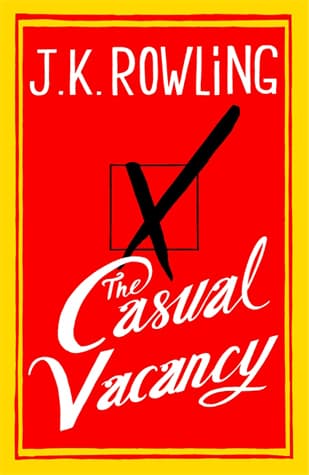
J.K. Rowling (2012)
Genre
Mystery
Reading Time
1000 min
Key Themes
See below
Sign in to track this book
In the quiet English village of Pagford, a sudden death starts a bitter fight over class, family secrets, and politics, revealing the rot beneath its perfect surface.
The novel begins with the sudden death of Barry Fairbrother, a well-liked member of the Pagford Parish Council, from a brain aneurysm. His death creates an empty seat on the council, leading to immediate political maneuvering and personal reflection in the community. Barry had strongly supported keeping the Fields, a poor council estate, within Pagford's area. This view put him against wealthier residents like Howard Mollison and Simon Price. His death not only leaves a gap in his family — his wife Mary and children Paul and Leo — but also reveals the simmering tensions and hypocrisies beneath Pagford's pretty surface. This sets the stage for a difficult election and widespread gossip.
After Barry's death, the race to fill his parish council seat starts. Three main candidates appear: Howard Mollison's son, Miles Mollison, a solicitor pressured by his father to run; Colin Wall, the deputy headteacher of Winterdown School, who was a close friend of Barry's and supports his views on the Fields; and Simon Price, an ambitious and unstable man who sees the council as a way to advance himself. The main issue of the election quickly becomes the future of the Fields estate and its addiction clinic. The Mollisons and their allies want to separate it from Pagford and move it to the nearby town of Yarvil. This debate shows the deep class divisions and prejudices in Pagford.
Krystal Weedon, a 16-year-old girl living in the poor Fields estate, deals with abuse, neglect, and the responsibility of caring for her younger brothers, Robbie and baby Paul. Her mother, Terri Weedon, is a heroin addict and prostitute. Krystal is forced into a dangerous life, often selling her body to support her family and her mother's habit. Despite her situation, Krystal is smart and wants a better life. She has a complicated relationship with Barry Fairbrother's son, Stuart 'Fats' Wall, and later develops feelings for Robbie Weedon, Colin Wall's son. Her story clearly shows the systemic problems in the Fields and the vulnerability of its residents.
An anonymous user, 'The Ghost of Barry Fairbrother,' starts posting scandalous revelations about Pagford's residents on the parish council website forum. These posts expose hypocrisies, affairs, and hidden secrets, targeting both election candidates and other important figures. The 'Ghost's' identity becomes a central mystery, causing widespread paranoia and suspicion. The posts often support Barry's original view on the Fields, subtly influencing public opinion and further dividing the community. The 'Ghost' uses private knowledge of people's lives, suggesting an insider. The revelations create huge personal and political chaos, threatening to expose the carefully built facades of many Pagford residents.
Stuart 'Fats' Wall, Barry Fairbrother's oldest son, is a rebellious and smart teenager. He struggles with his father's death and his own identity. He is drawn to Krystal Weedon, at first using her for sex, but their relationship becomes more complex. Fats sees Krystal as a way to rebel against his privileged life and his mother's expectations. Krystal finds a brief sense of connection and escape from her hard reality. Their interactions often involve power imbalances, emotional manipulation, and moments of real, though troubled, intimacy. These interactions reflect the broader class and social divides of Pagford.
Simon Price, one of the parish council candidates, is a deeply flawed and abusive man. He often beats his wife, Ruth, and verbally abuses his sons, Andrew and Paul. Simon's ambition comes from a desire for status, but he struggles with a gambling addiction and a quick temper. His son Andrew, who secretly loves Gaia, Simon's stepdaughter, suffers under his father's control. The family's dysfunction clearly shows domestic abuse and its terrible effects. Simon's public image as a respectable candidate sharply contrasts with his private cruelty.
It is slowly revealed that 'The Ghost of Barry Fairbrother' is not one person but a collaboration among several teenagers: Andrew Price, Gaia Bawden (Simon's stepdaughter), and Sukhvinder Jawanda. Each of them posts revelations using information they learned from their parents' talks or personal observations. They are often motivated by a desire to expose hypocrisy or lash out against perceived injustices. Their combined efforts fuel the town's paranoia and lead to several public arguments and private breakdowns. This adds another layer of chaos to the already tense election campaign and reveals the deep resentments among the younger generation.
The parish council election ends with a victory for Colin Wall, who supports Barry Fairbrother's view on the Fields. However, the election does little to solve the deep divisions in Pagford. The campaign has revealed too many secrets and created too much animosity. The Mollisons are humiliated, and the class conflict between 'old Pagford' and the Fields continues to simmer. The outcome shows that political victories, though important, cannot instantly heal the social wounds and prejudices that have troubled the community for so long. Many characters are left dealing with the aftermath of the intense campaign.
In a tragic turn, Krystal Weedon and Robbie Weedon, Colin Wall's son, drown in the local weir. Krystal, desperate to escape her life and wanting a moment of peace, takes Robbie, her younger half-brother, to the river. Robbie, fascinated by the water, accidentally falls in. Krystal, trying to save him, is also swept away. Their deaths are a devastating blow to the community, especially to Colin Wall and Terri Weedon. This tragedy highlights the deep vulnerability of the children from the Fields and the systemic failures that led to their desperate situation. It leaves a lasting scar on Pagford.
The deaths of Krystal and Robbie leave Pagford shocked. Many residents must face their direct or indirect role in the lives of the Fields residents. Terri Weedon is distraught, and her addiction worsens. Colin Wall and his wife Tess are shattered by the loss of their son. The tragedy harshly reminds everyone of the consequences of neglect, prejudice, and social inequality. While the immediate political battle over the Fields may have ended, the deeper moral and social issues remain unresolved. This leaves a sense of lingering guilt, grief, and the stark reality that Pagford's problems are much deeper than a single council seat.
The Catalyst/Supporting
His death sets the entire plot in motion, and his ideals are championed by others post-mortem, though his absence leaves a void that no one can truly fill.
The Protagonist
Krystal desperately tries to escape her abusive life, seeking connection and a future, but ultimately succumbs to the harsh realities of her environment.
The Protagonist
Fats grapples with his identity and grief, lashing out at societal hypocrisies, but ultimately remains trapped in his own self-destructive patterns.
The Protagonist/Supporting
Colin strives to honor Barry's legacy and improve his community, but ultimately faces profound personal tragedy that shatters his resolve.
The Antagonist
Howard's attempts to consolidate power and remove the Fields from Pagford's jurisdiction are largely thwarted, leading to his frustration and humiliation.
The Antagonist/Supporting
Simon's ambition and abusive nature lead to his public humiliation and further strain on his already fractured family.
The Protagonist/Supporting
Andrew seeks to expose hypocrisy and protect those he loves, but his efforts contribute to the town's chaos and his own personal turmoil.
The Protagonist/Supporting
Gaia adapts to her new life in Pagford, becoming an agent of change by exposing truths, but ultimately struggles with the moral implications of her actions.
The Supporting
Sukhvinder seeks acceptance and uses her intelligence to expose injustices, finding a voice through her involvement with 'The Ghost.'
The Supporting
Terri remains trapped in her addiction and self-destruction, her brief moments of clarity overshadowed by her profound dependency.
The most common theme is the sharp divide between Pagford's wealthy, established residents and the poor people of the Fields estate. The novel carefully details the prejudice, condescension, and systemic neglect faced by the Fields, especially through Krystal Weedon's experiences. The parish council election becomes a battleground for this class conflict. The debate over whether to separate the Fields from Pagford symbolizes 'old Pagford's' desire to distance itself from perceived social problems. The wealthy residents often blame the poor for their own situations, while ignoring their own privileges and hypocrisies, as seen in Howard Mollison's constant campaign against the Fields.
“What Pagford wanted, Pagford got. Unless Pagford was the Fields, in which case Pagford could go to hell.”
Pagford, on the surface, looks like a perfect English town. But underneath this appearance lies a web of secrets, affairs, and moral compromises. Many characters, especially the 'respectable' community members, lead double lives. Simon Price's domestic abuse sharply contrasts with his public ambition. 'The Ghost of Barry Fairbrother' is the main way these hidden truths are exposed, revealing the affairs, prejudices, and personal failures of various townspeople. This theme shows how destructive it is to maintain appearances and how unaddressed moral failings harm individuals and the community.
“All that was solid melted into air. All that was sacred was profaned.”
The novel deeply explores the struggles of its teenage characters, including Krystal Weedon, Stuart 'Fats' Wall, Andrew Price, Gaia Bawden, and Sukhvinder Jawanda. They deal with parental neglect, abuse, societal expectations, growing sexuality, and a deep sense of disappointment with adults. Their rebellion often takes destructive forms, such as Fats's drug use and Krystal's self-harming behaviors. It also appears in their collective identity as 'The Ghost of Barry Fairbrother,' using technology to expose their elders' hypocrisy. This theme highlights the vulnerability of young people and how much adult actions affect the next generation.
“They were all young and they were all unhappy, but their unhappiness was not of the same kind.”
The idea of 'community' in Pagford is deeply broken. While some hope for a united, traditional English village, the reality is a town torn apart by internal conflicts, class divisions, and a lack of empathy for its most vulnerable members. The debate over the Fields estate directly questions who 'belongs' in Pagford and whose well-being matters. Barry Fairbrother's initial commitment to inclusion contrasts sharply with the exclusionary attitudes of characters like Howard Mollison. The tragic deaths at the end force the community to face its failures to care for all its members, showing how fragile true communal bonds are when prejudice and self-interest dominate.
“Pagford, a place where people knew their place, and where the rich had a moral obligation to look down on the poor.”
Addiction, especially heroin addiction, is an important theme, mainly explored through Terri Weedon and its terrible effect on Krystal and their family. The addiction clinic in the Fields is a point of disagreement, symbolizing the town's struggle to address social problems. The novel clearly shows the cycle of dependency, the desperation it creates, and how it traps individuals in poverty and exploitation. Simon Price's gambling addiction also shows how addiction can cross class lines and destroy lives, regardless of social standing.
“The needle was the only thing that could make her feel safe, or nothing at all.”
The literal empty seat on the parish council.
The 'casual vacancy' left by Barry Fairbrother's death is the central inciting incident of the novel. It acts as a catalyst, setting off the chain of events that exposes Pagford's social, political, and personal conflicts. The election to fill this seat becomes a proxy war for the deeper ideological battles within the town, particularly concerning the future of the Fields estate. The vacancy is not just a political opportunity but a void that allows suppressed tensions and ambitions to surface, forcing characters to reveal their true natures and motivations.
An anonymous online commenter who exposes town secrets.
This anonymous online persona serves as a narrative device to reveal the hidden hypocrisies and secrets of Pagford's residents. It creates widespread paranoia and suspicion, accelerating the town's unraveling. Operated by a group of teenagers, 'The Ghost' allows the younger generation to voice their frustrations and expose the moral failings of their elders. This device also introduces elements of mystery and suspense, as characters try to uncover the Ghost's identity, while simultaneously highlighting the power and dangers of online anonymity and social media in a small community.
The impoverished council estate, a focal point of conflict.
The Fields estate functions as a symbolic plot device, representing the stark class divisions and social injustices within Pagford. It is the physical manifestation of the town's 'dirty secret' – the poverty, addiction, and neglect that the wealthier residents wish to distance themselves from. The debate over whether to keep the Fields within Pagford's jurisdiction is the central political conflict, driving the parish council election. The estate is also the setting for many of the novel's most tragic events, underscoring the real-world consequences of systemic neglect and prejudice.
A local landmark that becomes a site of tragedy.
The weir, a natural landmark near Pagford, initially appears as a place of childhood fascination and beauty. However, it transforms into a potent symbol of danger and tragedy. Its strong currents and hidden depths are foreshadowed and ultimately claim the lives of Krystal and Robbie Weedon. The weir represents the unforgiving and uncontrollable forces at play in the characters' lives, particularly for those from the Fields who are most vulnerable. It serves as a stark reminder of the harsh realities that lie beneath Pagford's picturesque surface, and the devastating consequences of neglect and despair.
“The void was not a place of peace, but a howling emptiness that echoed the chaos of their lives.”
— Describing the emotional state of the characters after Barry Fairbrother's death.
“Children are not a consolation for your own failures, but a magnification of your own anxieties.”
— Fiona, a social worker, reflecting on parents' motivations and the pressures on children.
“The poor are always with us, but the rich are always with themselves.”
— A cynical observation about social class divisions in Pagford.
“You can always tell a lot about people by the way they treat those they don't need.”
— A character's insight into true character, often applied to how people treat service staff or the less powerful.
“The truth was not a single, solid thing, but a series of shifting perspectives.”
— Reflecting on the various interpretations and secrets surrounding Barry's death and the subsequent parish council election.
“There was a kind of beauty in the ugliness, a raw honesty that refused to be ignored.”
— Describing the less glamorous, more authentic aspects of Pagford and its inhabitants.
“Gossip was the only real currency in Pagford, and everyone was both a banker and a borrower.”
— Highlighting the pervasive nature of gossip and its influence within the small town.
“Some people are so afraid of failure that they never even try to succeed.”
— A general observation about human nature and the fear of taking risks.
“The greatest cruelty is not the one inflicted by the strong upon the weak, but the one inflicted by the indifferent upon the desperate.”
— A powerful statement on the impact of apathy and neglect.
“Youth was a time of exquisite torture, when every emotion was amplified and every slight felt like a mortal wound.”
— Describing the intense and often painful experiences of the teenage characters.
“The dead leave a silence behind them that is louder than any shout.”
— Reflecting on the profound impact and lasting absence of Barry Fairbrother.
“It was amazing how quickly a community could turn on itself when fear and self-interest took hold.”
— Observing the town's reaction and internal conflicts during the parish council election.
“Happiness, when it came, was often a fleeting thing, a momentary respite before the next wave of trouble.”
— A somber reflection on the transient nature of happiness amidst the characters' struggles.
“The world was full of people who wanted to be seen, but few who wanted to truly see.”
— A commentary on the superficiality of social interactions and the lack of genuine understanding.
Ready to see how well you understood this book? Take our interactive quiz with 10 questions.

Joanne Rowling, best known by her pen name J. K. Rowling, is a British author and philanthropist. She wrote Harry Potter, a seven-volume children's fantasy series published from 1997 to 2007. The series has sold over 600 million copies, been translated into 84 languages, and spawned a global media franchise including films and video games. The Casual Vacancy (2012) was her first novel for adults. She writes Cormoran Strike, an ongoing crime fiction series, under the alias Robert Galbraith.