“The world is a book, and those who do not travel read only one page.”
— A common saying, but here applied to the idea of interpreting different tarot spreads as 'pages' of a larger story.

Italo Calvino (2010)
Genre
Fiction
Reading Time
180 min
Key Themes
See below
Sign in to track this book
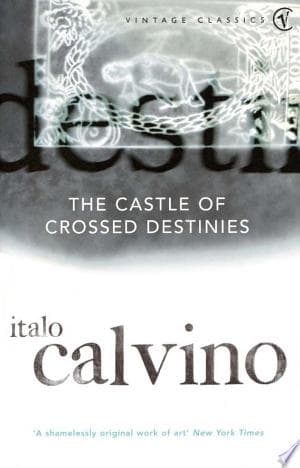
In a castle where speech is forbidden, silent travelers tell their stories using tarot cards, weaving a narrative of human experience.
A group of tired travelers, having come through a dense, enchanted forest, arrive at a desolate castle. They find a long table set for dinner, but soon discover they have all lost their voices. Among them are a knight, a monk, a queen, a courtesan, and the narrator, who is also voiceless. The host, a cheerful but equally silent man, introduces a deck of tarot cards. He lays out a sequence, and one by one, the travelers, using the cards, begin to tell their individual stories. The narrator, watching this silent scene, tries to understand the complex, intertwining narratives that appear from the symbolic images.
The first traveler, a knight in worn armor, arranges cards that the narrator interprets as Orlando's story. The knight's narrative, told through the Major Arcana, shows Orlando's brave deeds, his unrequited love for Angelica, and his subsequent madness when he finds her betrayal with Medoro. The cards illustrate his rage, his discarding of armor, and his wild rampage. The knight's own sad manner suggests a deep personal link to this tale of lost love and broken identity, hinting at his own past.
After the knight, a beautiful woman with sad eyes lays out her cards. Her story is interpreted by the narrator as Astolfo's, who journeys to the moon on a Hippogriff to retrieve Orlando's lost sanity. The cards show a world of lost things, a vial containing Orlando's reason, and the return to Earth. The woman's tale subtly connects with the knight's, suggesting a cycle of madness and recovery, or perhaps a different view of the same events. The narrator tries to grasp the details, aware that the silent narrative allows for many interpretations.
A scholar-like figure, with an intense gaze, arranges cards that the narrator identifies with the legend of Faust. His sequence illustrates the scholar's strong desire for knowledge and power, leading to a pact with Mephistopheles. The cards show the exchange of his soul for earthly pleasures and forbidden wisdom, his pursuit of Helen of Troy, and his eventual damnation. This narrative introduces themes of intellectual pride and the results of going beyond human limits, adding another layer of dread to the silent storytelling within the castle walls.
A young, innocent-looking man, perhaps a monk or a squire, lays out cards that the narrator understands as Parsifal's tale. His story focuses on a journey from innocence to spiritual understanding, the quest for the Holy Grail, and the healing of the Fisher King. The cards show trials, temptations, and finally, reaching grace through a pure heart and compassion. This narrative contrasts sharply with earlier tales of madness and damnation, offering a bit of hope and redemption within the castle's silent, heavy atmosphere, suggesting a path to spiritual fulfillment.
The scene changes, and the narrator finds himself and the same group of silent travelers in a busy tavern. The atmosphere is less formal than the castle, but they still cannot speak. The narrator, now more confident in his interpretive role, suggests a new way to tell stories: each traveler will lay out cards, and the others will try to interpret them, forming a collective narrative. This new setup emphasizes how their destinies intertwine and how symbols are interpreted subjectively, creating a more fluid and chaotic storytelling experience.
Inspired by the others, the narrator tries to tell his own story using the tarot cards. He struggles to find a clear narrative, as the cards seem to show a fragmented journey through a dense forest and a bustling city, representing confusion and a search for meaning. He sees himself as a seeker, a wanderer caught between different paths and identities. His narrative reflects the act of interpretation itself, highlighting how truth is subjective and how hard it is to define oneself when faced with universal symbols. He grapples with the idea that his own story is merely a reflection of the stories he has interpreted.
A stern-faced traveler lays out cards depicting a king consumed by greed and power, ruling harshly. The narrative, as interpreted by the group, tells of his tyrannical reign, his people's suffering, and the eventual uprising that leads to his downfall. The cards illustrate betrayal, conflict, and the triumph of justice. This story serves as a warning against unchecked power and reinforces the cyclical nature of human history, where oppressors eventually face consequences, mirroring historical and mythical tales of dethroned rulers.
A soft-spoken traveler, perhaps a young woman, lays out cards that depict a tragic love story. The narrative, understood by the group, tells of two lovers separated by circumstance, family feuds, or societal expectations. The cards illustrate their secret meetings, their longing, and their eventual, perhaps doomed, fate. This tale introduces themes of passion, sacrifice, and the lasting power of love in the face of hardship, adding emotional depth to the otherwise intellectual and mythical narratives, and resonating with universal romantic archetypes.
Another traveler, with an air of mystery, lays out cards that the narrator interprets as the story of an alchemist's daughter. Her tale involves a quest for the Philosophers' Stone, the secret of creation and transformation. The cards show her trials in the laboratory, her encounters with mythical creatures, and her eventual, perhaps ambiguous, success in achieving spiritual and material change. This narrative explores themes of hidden knowledge, the pursuit of perfection, and the forces that govern the universe, blending mysticism with intellectual effort.
A shifty-eyed traveler lays out cards that depict a tale of a clever thief. The narrative, as interpreted, follows the thief's plans to get a hidden treasure, involving deception, daring escapes, and confrontations with guards and traps. The cards illustrate the thrill of the chase and the moral ambiguities of ambition. This story introduces a more grounded, though still symbolic, narrative of human desire and how far individuals will go for material gain, contrasting with the more philosophical and spiritual quests told earlier.
As the night goes on and more stories are told, the narrator begins to see the entire world, and all human consciousness, as a vast, connected deck of tarot cards. He realizes that all narratives, whether epic or ordinary, are simply different arrangements of the same basic symbols and archetypes. The silence, at first a barrier, helps deeper understanding, allowing many layers of meaning to appear. He concludes that every person's destiny is linked with others, forming a grand, chaotic, yet coherent existence.
The Protagonist
From a passive observer, the narrator evolves into an active participant and ultimately the unifying voice, synthesizing disparate narratives into a cohesive understanding of human experience.
The Supporting
His story serves as a foundational epic, introducing themes of love, madness, and the cyclical nature of human suffering.
The Supporting
Her narrative complements the knight's, introducing themes of seeking and recovery, and the interconnectedness of destinies.
The Supporting
His story explores the perils of unchecked ambition and the moral compromises made in the pursuit of knowledge.
The Supporting
His tale provides a beacon of hope and spiritual fulfillment amidst the more tragic or complex narratives.
The Supporting
He serves as the initial facilitator, setting the stage for the entire narrative experiment.
The Mentioned
His story details a rise and fall, illustrating the transient nature of power.
The Mentioned
Their story explores the enduring power and tragedy of love in the face of adversity.
The book explores how stories are built, understood, and seen. The characters' forced silence makes them rely on the symbolic language of tarot cards, highlighting the ambiguity and many meanings in any narrative. The narrator's constant effort to interpret and connect these silent tales shows how truth is subjective and how the audience actively helps create meaning. This is clear in how the same cards can tell different stories or how one story (like Orlando's) can be followed by a complementary one (Astolfo's), showing how fluid narratives can be.
“What does a narrative mean, if not the sequence of cards that emerge from the deck, and the order in which they are laid out on the table?”
Calvino skillfully connects individual stories, showing that all human experiences are fundamentally linked. The tarot cards, with their limited set of archetypes, force a connection between seemingly different tales, suggesting that every personal destiny is a variation on universal themes. The travelers' stories often overlap, echo, or complete each other, creating a broad picture of human consciousness where individual lives contribute to a collective, ongoing narrative. This theme is especially strong in the 'Tavern of Crossed Destinies' section, where interpretations become more collaborative.
“Each card, by turns, is the beginning, the middle, the end of a story, or a story in itself.”
Many stories, including the narrator's own fragmented tale, involve characters dealing with their identity, purpose, and place in the world. From Orlando's loss of self in madness to Parsifal's journey of spiritual self-discovery, the tarot narratives reflect humanity's ongoing search for meaning. The inability to speak further emphasizes this internal struggle, as characters lose their usual ways of expressing themselves, forcing a deeper, symbolic engagement with their inner lives. The narrator's difficulty in telling his own story highlights how hard it is to define oneself.
“Each card is a mirror, reflecting not only the image it portrays but also the soul of the one who reads it.”
The novel shows the lasting power of symbols and archetypes in human culture. The tarot cards, with their rich and ancient images, provide a universal language to convey complex human experiences. Calvino demonstrates how these archetypal figures (the Fool, the Emperor, the Hermit, the Lovers) transcend specific cultures and times, forming the foundation of our collective unconscious. The limited number of cards forces creative interpretation, proving that a finite set of symbols can generate an infinite number of stories, each connecting with deep human experiences.
“The world is a great deck of cards, and each man's life is a hand dealt from it.”
The primary tool for storytelling, replacing spoken language.
The tarot cards are the central plot device, serving as the sole means of communication for the mute travelers. Their symbolic nature allows for multiple interpretations, reflecting the ambiguity and richness of human experience. Each card represents an archetype, an event, or a feeling, which the narrator then interprets into a coherent story. This device forces both the characters and the reader to engage with narrative on a deeper, more symbolic level, highlighting the constructive nature of storytelling itself. The limited set of cards also demonstrates how infinite stories can be drawn from finite symbols.
The magical inability to speak, forcing reliance on non-verbal communication.
The magical silence that afflicts all the travelers is a crucial plot device. It removes conventional dialogue, compelling the characters to communicate solely through the visual language of the tarot. This silence heightens the sense of mystery and introspection, making the act of interpretation paramount. It also forces the narrator to project meaning onto the cards, blurring the lines between the storyteller and the interpreter, and emphasizing the subjective nature of understanding and the power of non-verbal cues.
The central consciousness who deciphers and reconstructs the stories.
The unnamed narrator functions as more than just a storyteller; he is the primary interpreter of all the tarot narratives. His role is to piece together the symbolic meaning of the cards into coherent tales, often drawing from classical literature and mythology. This device highlights the subjective nature of interpretation and how personal biases and knowledge shape the understanding of a story. The narrator's own evolving understanding and occasional struggles to interpret reflect the complexities of making sense of the world and other people's experiences.
References to classic literary works and myths.
Calvino heavily employs intertextuality, weaving in allusions to famous literary works such as 'Orlando Furioso,' 'Faust,' and the legends of the Holy Grail. This device enriches the narratives, providing familiar frameworks for the interpretation of the tarot cards. By referencing these well-known stories, Calvino suggests that all human narratives are interconnected and that individual experiences are variations on universal archetypes. It also challenges the reader to recognize and engage with these literary echoes, adding layers of meaning and intellectual play to the reading experience.
“The world is a book, and those who do not travel read only one page.”
— A common saying, but here applied to the idea of interpreting different tarot spreads as 'pages' of a larger story.
“Every story is a story about itself.”
— A meta-fictional reflection on the nature of narrative and how stories inherently contain their own meaning and structure.
“What is written is written. But it can be interpreted in a thousand ways.”
— Exploring the tension between fixed text (the tarot cards laid out) and the fluid nature of their interpretation by different narrators.
“We are all speaking a language that does not belong to us, but to the things themselves.”
— A character reflects on how their narratives are dictated by the images on the cards, rather than their own free will.
“The universe is a collection of stories, not of atoms.”
— A poetic statement emphasizing the narrative construction of reality within the book's framework.
“Every object holds a story, and every story is a path to another.”
— Highlighting the interconnectedness of narratives and the way one image or object can lead to a cascade of tales.
“Silence is the language of the cards, and speech is the language of their interpreters.”
— Distinguishing between the inert symbols of the tarot and the active process of weaving them into a spoken narrative.
“Man is a knot of stories, a network of destinies.”
— A metaphorical description of human identity as being composed of numerous intersecting narratives and predetermined paths.
“The desire to tell stories is born from the desire to understand the world.”
— Exploring the fundamental human drive behind narrative creation as a means of making sense of existence.
“Each card is a mirror in which the narrator sees a piece of himself, or what he wishes to be.”
— The idea that interpretation is subjective, reflecting the inner world and desires of the person telling the story.
“The order of the cards is the order of the world.”
— A statement reflecting the belief that the random arrangement of the tarot cards reveals an underlying cosmic structure or fate.
“Perhaps the only way to speak of truth is through invention.”
— A meta-fictional musing on the nature of truth in storytelling, suggesting that fiction can reveal deeper truths than factual accounts.
“The meaning is not in the cards themselves, but in the connections we make between them.”
— Emphasizing the active role of the interpreter in creating meaning from disparate symbols.
“To be silent is to deny the story within you.”
— A character's internal struggle or external observation about the compulsion to narrate and share one's experiences.
Ready to see how well you understood this book? Take our interactive quiz with 10 questions.
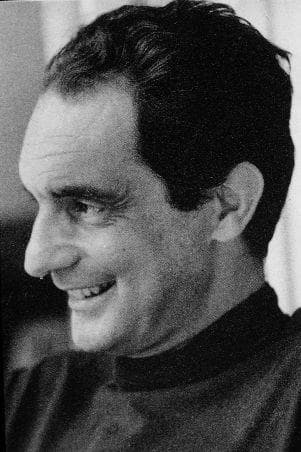
Italo Calvino was an Italian writer and journalist. His best known works include the Our Ancestors trilogy (1952–1959), the Cosmicomics collection of short stories (1965), and the novels Invisible Cities (1972) and If on a winter's night a traveler (1979).

Ashley Antoinette
4.6

Mark McDonald
4.4
Luo Guanzhong
4.4

Mia McKenzie
4.3
Dorothy Parker
4.3

Joaquim Maria Machado de Assis
4.3
James Thurber
4.2

Terry Kay
4.2