“The thousand injuries of Fortunato I had borne as I best could, but when he ventured upon insult I vowed revenge.”
— The opening line, setting the tone for Montresor's motive.

Edgar Allan Poe (1846)
Genre
Mystery
Reading Time
20 min
Key Themes
See below
Sign in to track this book
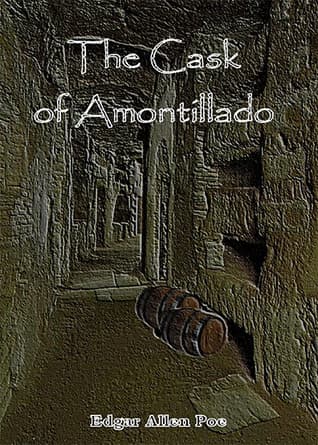
A connoisseur's pride becomes his tomb as a vengeful friend lures him into catacombs with the promise of a rare vintage, only to entomb him alive.
Montresor, the narrator, starts by saying Fortunato caused him 'a thousand injuries,' but a recent 'insult' made him vow revenge. He planned his revenge carefully, ensuring Fortunato would suffer, but Montresor himself would face no consequences. Montresor pretended to be Fortunato's friend, smiling even as he thought of his death. He waited for the right moment to trick Fortunato, making sure no one suspected his true intentions.
Montresor chose Carnival, a time of celebration and drunkenness, to carry out his plan. The city was full of masked people, and Montresor, wearing a cloak and black silk mask, saw Fortunato. Fortunato, a wine expert, was dressed as a jester. He was already quite drunk, which Montresor noted with satisfaction, as it would make his task easier. Montresor approached Fortunato with an exaggerated show of concern and friendship, setting up his deception.
Montresor told Fortunato he bought a barrel of what he thought was Amontillado, a rare and expensive sherry, but doubted its authenticity. He pretended to worry he might have been cheated and wanted Fortunato's expert opinion. Knowing Fortunato's pride in his wine knowledge and his rivalry with Luchesi, another wine expert, Montresor mentioned he was about to ask Luchesi. This immediately sparked Fortunato's interest and vanity, making him eager to prove his superior judgment and dismiss Luchesi.
Fortunato, despite his cough and the damp night air, insisted on going with Montresor to taste the Amontillado. Montresor led him to his palace and then down into the vast, dark, winding catacombs of the Montresor family. These catacombs were both a burial place and storage for their wine. As they went deeper, Montresor repeatedly pretended to worry about Fortunato's health, urging him to turn back, knowing each protest would only make Fortunato more determined.
As they went deeper, the air grew damp and filled with nitre, making Fortunato's cough worse. Montresor kept offering him Médoc wine, supposedly to warm him, but actually to keep him drunk and less aware. Fortunato toasted the dead around them, and Montresor, with dark humor, toasted Fortunato's 'long life.' Fortunato made a Masonic gesture Montresor did not recognize, showing their different social circles and Montresor's exclusion. Montresor then showed a trowel, claiming to be a Mason, further confusing Fortunato.
Montresor led Fortunato through several rooms, past piles of human bones, until they reached a very deep crypt. At the end of this crypt was a smaller recess, about four feet deep, three feet wide, and six or seven feet high. Montresor claimed the Amontillado was in this spot. Fortunato, eager to taste the wine, stepped into the small space, expecting to find the rare sherry. The recess was just big enough for one person to stand, making it a perfect trap.
As Fortunato stepped into the recess, Montresor quickly pulled out a short chain and padlocks from under his cloak. Before Fortunato could react or understand, Montresor quickly fastened him to staples in the granite wall. Fortunato was too shocked and drunk to resist effectively. His bells jingled faintly as he was secured, a chilling sound in the silent catacombs.
Montresor began to wall up the entrance to the recess with stones and mortar he had prepared. He worked fast and carefully, laying the first layer of stones. Fortunato, at first silent from shock, began to moan as he realized his terrible situation. Montresor paused to enjoy the sounds of Fortunato's growing despair. He enjoyed the irony of Fortunato's jester costume, its bells now making a sad sound instead of a festive one.
As the wall rose, Fortunato's moans turned into desperate, angry screams. Montresor, instead of stopping, happily echoed Fortunato's cries, making his own shrieks louder. He wanted Fortunato to know his tormentor was there and enjoying his suffering. Fortunato then tried to appeal to Montresor's reason, crying out 'For the love of God, Montresor!' Montresor chillingly repeated the phrase back to him, savoring the finality of his act.
Montresor finished laying the wall, leaving only one stone to place. Through the small opening, he heard a final, faint jingle of Fortunato's bells, then silence. He called Fortunato's name, but there was no reply. Satisfied that his revenge was complete and Fortunato was entombed, Montresor pushed the last stone into place and sealed it, closing the recess completely. He felt a brief 'sickness' but blamed it on the dampness of the catacombs, refusing to feel guilt for his terrible act.
Montresor ends his story by saying fifty years have passed since Fortunato's burial, and no one has disturbed the bones. Fortunato's skeleton, still chained in its spot, remains untouched. Montresor finishes with the Latin phrase 'In pace requiescat!' ('May he rest in peace!'), a final, ironic statement that highlights his complete lack of guilt and his belief that he committed the perfect, unpunished crime. He achieved his goal of revenge without consequence.
The Protagonist/Narrator
Montresor's character arc is static; he begins and ends as a remorseless murderer, seemingly untroubled by his actions even after fifty years.
The Antagonist/Victim
Fortunato experiences a tragic descent from respected connoisseur to a helpless victim, culminating in his immurement.
The Mentioned
N/A - a static, mentioned character.
The main theme is the careful planning and execution of revenge. Montresor's detailed plan comes from a deep desire to punish Fortunato for 'a thousand injuries' and a specific 'insult.' He defines perfect revenge as one done without punishment, where the victim knows who is hurting them, and the punisher avoids consequences. This theme is clear from Montresor's opening lines, 'I must not only punish but punish with impunity,' and ends with his satisfaction fifty years later that his crime is still hidden.
“I must not only punish but punish with impunity. A wrong is unredressed when retribution overtakes its redresser. It is equally unredressed when the avenger fails to make himself felt as such to him who has done the wrong.”
Montresor is skilled at deception, using flattery, false concern, and Fortunato's weaknesses against him. He keeps a friendly face, smiling at Fortunato even as he plans his death. He uses Fortunato's pride in his wine knowledge and his rivalry with Luchesi to trick him into the catacombs. His repeated fake worries about Fortunato's cough and the dampness are ironic, only making Fortunato more determined. This theme is central to the plot, as Montresor's ability to deceive makes his revenge possible, as shown when he offers Fortunato Médoc to keep him drunk and less aware.
“I was so pleased to see him, that I thought I should never have done wringing his hand.”
Both Montresor and Fortunato show great pride, which drives the story. Fortunato's pride in his expertise and his vanity about his wine taste make him fall for Montresor's bait of the Amontillado. He cannot resist proving himself better than Luchesi. Montresor is also driven by wounded pride from perceived insults to his family's honor. His desire for 'impunity' in his revenge is part of his pride, confirming his superiority and cleverness. This theme is clear when Fortunato dismisses Luchesi's abilities, saying 'Luchesi cannot tell Amontillado from Sherry.'
“He prided himself on his connoisseurship in wine.”
The story is full of images and ideas of death, especially through the catacombs setting. The entire journey happens among the bones of Montresor's ancestors, creating a chilling mood and foreshadowing Fortunato's end. Being buried alive within a wall is a horrific death Poe often wrote about. The constant mentions of nitre, dampness, and skeletal remains serve as a grim reminder of death and the irreversible nature of Fortunato's coming doom, emphasizing the finality of his burial.
“We had passed through walls of piled bones, with casks and puncheons intermingling, into the inmost recesses of the catacombs.”
While not directly stated, underlying tensions about social class and status contribute to Montresor's motive. The Montresor family motto, 'Nemo me impune lacessit' ('No one assails me with impunity'), shows a deep sense of honor tied to their noble background. Fortunato, despite his expertise, might represent social climbing or an offense to Montresor's old aristocracy. Montresor's view of Fortunato as 'rich, respected, admired, beloved,' yet someone who has 'ventured upon insult,' suggests a clash of status where Montresor feels his ancient dignity was disrespected by Fortunato's perceived arrogance.
“The Montresors, I replied, were a great and numerous family.”
Montresor's biased account shapes the reader's perception.
Montresor is the sole narrator, recounting events from his perspective fifty years after they occurred. His account is entirely subjective and self-serving, portraying Fortunato as deserving of his fate and himself as a justified avenger. The reader is given no other perspective, forcing them to question Montresor's motives and the truth of his claims about Fortunato's 'thousand injuries' and 'insult.' This device creates suspense and moral ambiguity, as the reader must discern the reality of the situation through a murderer's biased lens.
Contradictions between appearance and reality, and expectation and outcome.
Irony permeates the story. Fortunato's name, meaning 'the fortunate one,' is tragically ironic given his gruesome end. His jester costume, symbolic of folly, foreshadows his foolish trust in Montresor. Montresor's feigned concern for Fortunato's health and his toasts to Fortunato's 'long life' are deeply ironic, as he is actively leading his 'friend' to his death. The family motto, 'Nemo me impune lacessit,' is also ironic, as Montresor believes Fortunato has assailed him with impunity, and he plans to return the favor with chilling literalness.
Hints and clues that suggest future events.
Poe uses numerous instances of foreshadowing. The setting in the catacombs, filled with bones and dampness, immediately suggests death and decay. Montresor's family motto, 'Nemo me impune lacessit' ('No one assails me with impunity'), directly foreshadows his vengeful act. His revealing of a trowel to Fortunato, claiming to be a Mason, is a dark hint of the masonry work he will soon perform to wall Fortunato in. Fortunato's cough and the nitre-laden air repeatedly warn of danger, which he dismisses, oblivious to his impending doom.
Objects and elements representing deeper meanings.
Key symbols include Fortunato's jester costume, representing his ultimate foolishness and the irony of his fate. The Amontillado itself symbolizes Montresor's lure and Fortunato's fatal weakness. The catacombs symbolize death, burial, and the hidden, dark aspects of human nature. The Montresor family crest, depicting a foot crushing a serpent whose fangs are embedded in the heel, symbolizes the nature of Montresor's revenge: a seemingly injured party (Montresor) strikes back lethally, even at risk to himself (the serpent's fangs).
“The thousand injuries of Fortunato I had borne as I best could, but when he ventured upon insult I vowed revenge.”
— The opening line, setting the tone for Montresor's motive.
“I was skillful in the Italian vintages myself, and bought largely whenever I could.”
— Montresor establishing his shared interest with Fortunato, which he later exploits.
“I perceive you have an excellent general idea of the Italian vintages.”
— Montresor flattering Fortunato, drawing him further into the trap.
“Nemo me impune lacessit.”
— Montresor's family motto, meaning 'No one provokes me with impunity,' revealed to Fortunato.
“For the love of God, Montresor!”
— Fortunato's final, desperate plea from behind the wall.
“I drink to your long life.”
— Fortunato's toast to Montresor, ironic given his impending doom.
“My heart grew sick—on account of the dampness of the catacombs.”
— Montresor's feigned excuse for a momentary pang of conscience.
“True, true. But some people have a knack of it.”
— Montresor subtly insulting Fortunato's lack of true connoisseurship while discussing Amontillado.
“I had told him that I had received a pipe of what passes for Amontillado, and I had my doubts.”
— Montresor's initial lure to attract Fortunato.
“And to your health! I will drink to you, Montresor.”
— Fortunato's repeated toasts, oblivious to the danger.
“It is farther on. But observe the white web-work which gleams from these cavern walls.”
— Montresor urging Fortunato deeper into the catacombs, pointing out nitre.
“I placed my hand upon the solid fabric of the catacombs, and felt satisfied.”
— Montresor's grim satisfaction as he walls up Fortunato.
“A succession of loud and shrill screams, bursting suddenly from the throat of the chained form, seemed to thrust me violently back.”
— Montresor's momentary reaction to Fortunato's screams, quickly overcome.
“My heart grew sick—but the wine was of a dry vintage.”
— Montresor's final, chillingly detached thought about the wine, not Fortunato, after the screams.
“In pace requiescat!”
— Montresor's final words, meaning 'Rest in peace,' after completing his revenge.
Ready to see how well you understood this book? Take our interactive quiz with 10 questions.
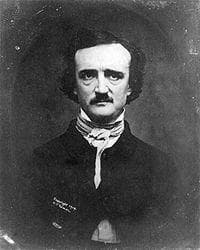
Edgar Allan Poe was an American writer, poet, editor, and literary critic who is best known for his poetry and short stories, particularly his tales of mystery and the macabre. He is widely regarded as a central figure of Romanticism in the United States, and of American literature. He was one of the country's earliest practitioners of the short story, and is considered the inventor of the detective fiction genre, as well as a significant contributor to the emerging genre of science fiction. He is the first well-known American writer to earn a living through writing alone, resulting in a financially difficult life and career.